Videos of Trump repeating his Peace Prize claim resurface
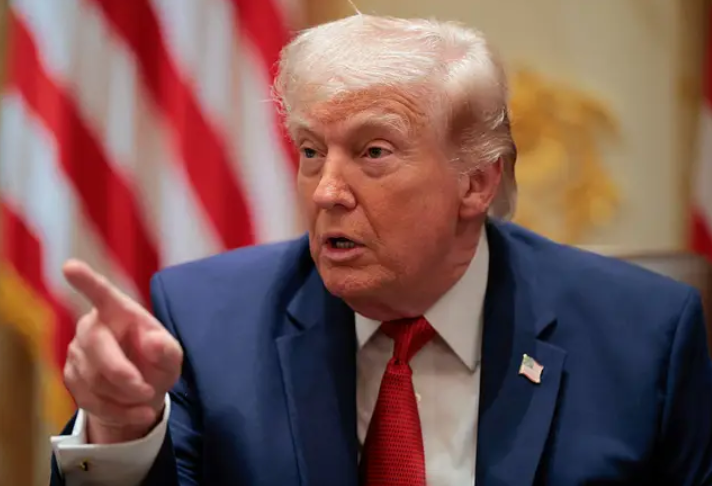
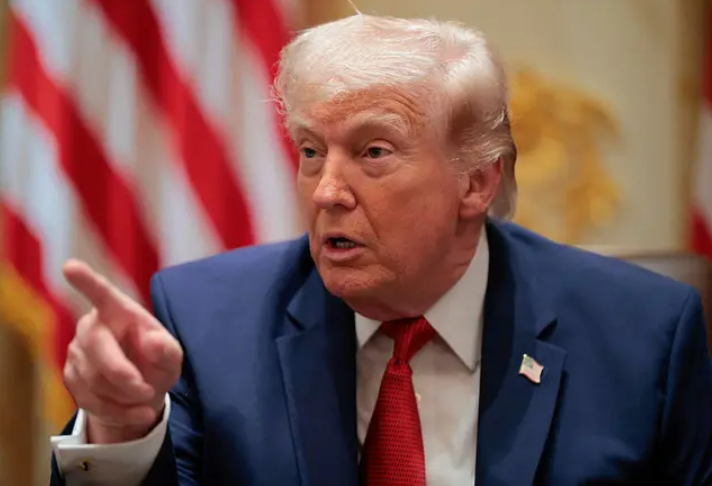
Video clips from a White House press briefing earlier this year have begun circulating again, showing Donald Trump repeating a familiar argument: he believes he deserves the Nobel Peace Prize and says he earned it by ending what he describes as “eight wars.” The renewed attention has reignited a long-running debate over awards, accomplishments, and how the Nobel Peace Prize committee decides its honors.
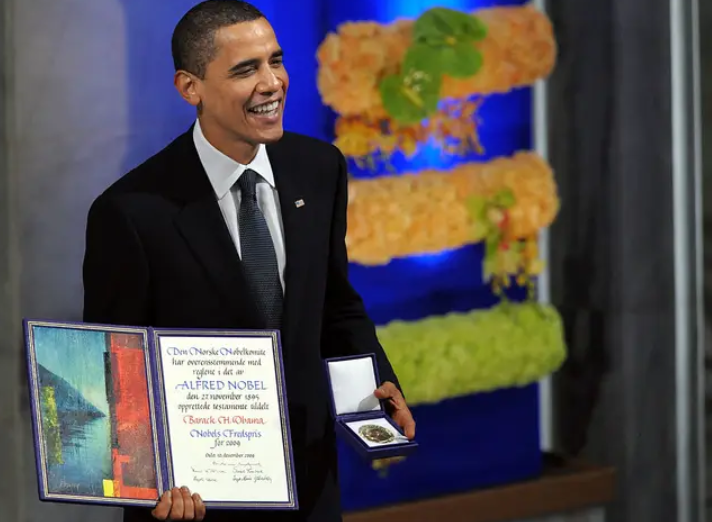
In the resurfaced remarks, Trump contrasts his own record with that of former President Barack Obama. He has often questioned why Obama received the prize in 2009, less than a year into his first term. The Nobel Committee at the time cited Obama’s “extraordinary efforts to strengthen international diplomacy and cooperation between peoples,” highlighting his work on nuclear nonproliferation and resetting relationships with traditional allies and rivals.
Trump, now in his late seventies, has repeatedly said he has done more to stop conflicts than he is given credit for. He argues that the scale and difficulty of the issues he handled were not fully recognized and that the committee overlooked his work. While the clips show him emphasizing outcomes he views as peace achievements, his critics counter that defining and counting “ended wars” is complex and often contested.
Put simply, the dispute centers on two questions. First, what counts as ending a war—an official treaty, a ceasefire, a drawdown of troops, or a period of de-escalation? Second, how does the Nobel Committee weigh such developments against the full record of a leader’s foreign policy? Those questions do not have easy answers, and they help explain why the conversation continues to stir strong feelings on both sides.
Trump’s renewed criticism of Obama’s Nobel Peace Prize
In the White House video from January that is making the rounds again, Trump states, “Whether people like Trump or don’t like Trump, I settled eight wars.” He characterizes them as significant, saying some had dragged on for decades, listing timelines such as 36 years, 32 years, 31 years, 28 years, and 25 years. He also suggests he helped head off a potential crisis between India and Pakistan, which have a long and complicated history marked by periodic tensions and conflicts.
“I got it done in rapid order without nuclear weapons,” he says in the clip, presenting his approach as tough-minded but careful. “I can’t think of anyone in history who should get the Nobel Prize more than me, and I don’t want to be bragging but nobody else settled wars!”
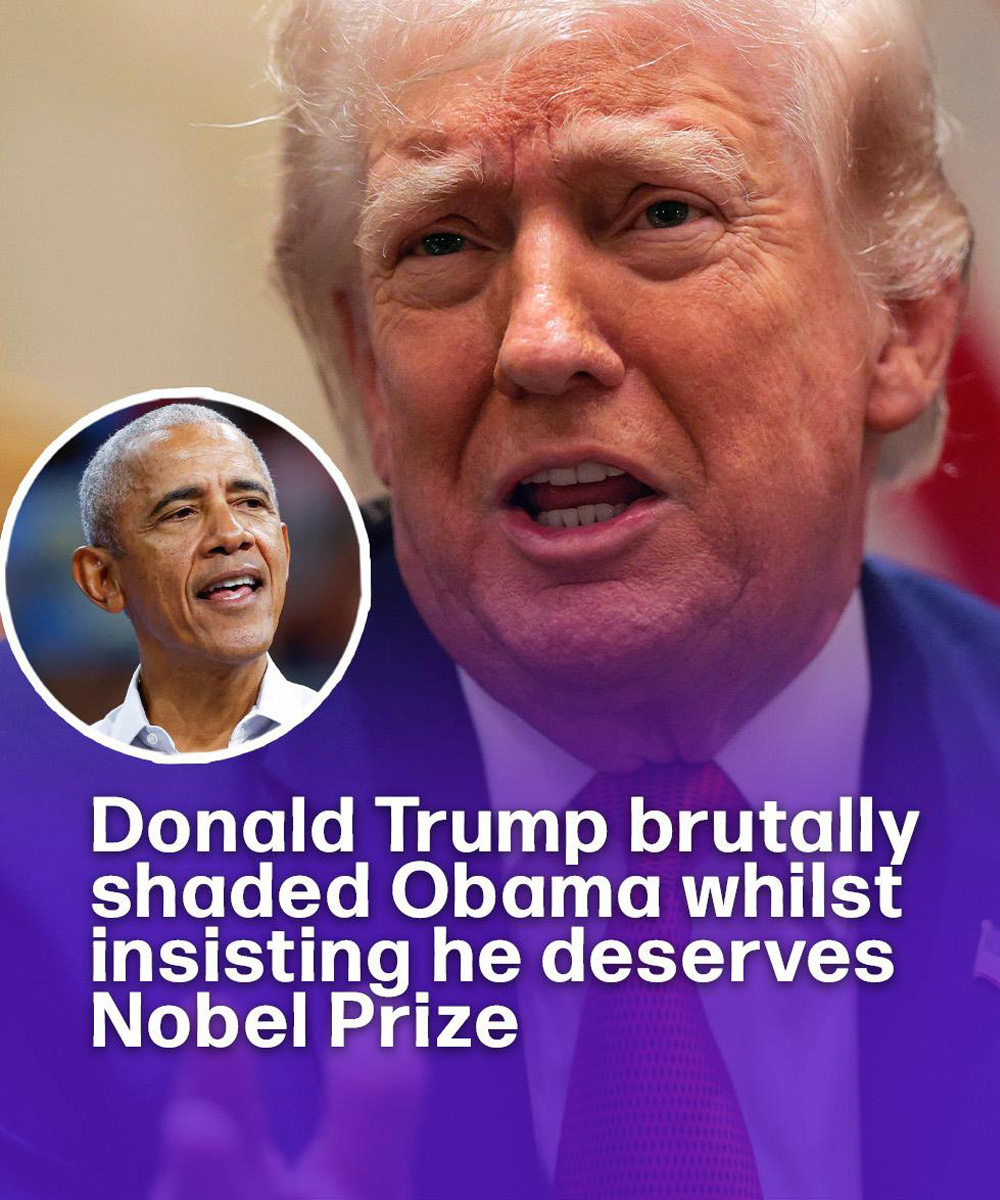
Trump then turns his attention squarely to Obama. “Obama got the Nobel Prize, he had no idea why. He still has no idea. He walks around and says, ‘I got the Nobel Prize.’ Why did he get a Nobel Prize?” he asks. He argues that the award came “almost immediately upon attaining office” and describes Obama as “a bad president” who “didn’t do anything” to merit the recognition at that early stage.
He goes on to say that Nobel recognition should follow concrete results. “You should get the Nobel Prize for every war you stop, major wars. These were wars that nobody thought could be stopped,” he insists, stressing that the bar for such an honor, in his view, should be measurable peace outcomes rather than broad intentions.
In the same remarks, Trump claims that Russian President Vladimir Putin called him to acknowledge the difficulty of resolving some of the confrontations Trump cites. “He said about two of the wars he’s been trying to stop them for 10 years, he wasn’t able to do it. He couldn’t believe it,” Trump says, suggesting that external validation supports his case that these were especially stubborn conflicts.
He concludes the segment with a larger claim about impact. “But I don’t care about that,” he says in reference to the prize itself. “What I care about is saving lives. I’ve saved tens of millions of lives.” Supporters view this as an expression of priorities—that the human outcomes matter more than awards—while detractors question the scale of the numbers and the evidence behind them.
Why Trump’s claim draws both interest and skepticism
When a public figure says they “ended eight wars,” the statement invites scrutiny. Wars do not always start and stop with a single handshake or agreement, and many conflicts simmer in stages with flare-ups, ceasefires, limited accords, and ongoing negotiations. It can be difficult to pinpoint one moment or one person who truly “ended” a complex crisis. In many cases, progress is the product of years of diplomacy, regional pressure, economic shifts, and the decisions of local leaders and combatants on the ground.
Supporters of Trump’s position often mention high-profile initiatives such as the Abraham Accords, which formalized diplomatic relations between Israel and several Arab states and were widely seen as a significant step in reshaping parts of the Middle East’s diplomatic landscape. They also point to pressure campaigns, prisoner exchanges, and moves that they say reduced the immediate dangers of certain standoffs.
Skeptics counter that while these agreements were noteworthy, they did not end the most violent and entrenched conflicts in the region, and some escalated again later. They also argue that troop withdrawals or pauses in fighting do not always amount to a permanent peace. In their view, a lasting end to a war typically includes an enforceable settlement, durable security arrangements, and a sustained decline in violence that holds up over time.
Both perspectives reflect a broader truth about international affairs: durable peace is usually a process rather than a single event. That is part of why claims and counterclaims like these persist and why awards that appear to recognize good intentions or early steps can become controversial for years afterward.
How the Nobel Peace Prize is decided and what the committee considers
The Nobel Peace Prize is awarded by the Norwegian Nobel Committee, which follows the language in Alfred Nobel’s will. Each year, thousands of nominations can be submitted by those eligible to nominate, such as certain government officials, former laureates, and academic experts. The list of nominees is confidential for 50 years. Public campaigns and media attention may surround some names, but the committee does not confirm who is under consideration.
The committee looks for contributions that foster fraternity among nations, reduce standing armies, and advance peace congresses or similar efforts promoting peaceful resolution of disputes. In practice, that has recognized a broad range of achievements, including negotiated settlements, humanitarian work in war zones, advocacy against weapons of mass destruction, and initiatives that reduce the likelihood of conflict.
The prize has sometimes been awarded to encourage ongoing efforts rather than to recognize a final success. That approach can be inspiring to some and frustrating to others. Obama’s 2009 award is often cited as an example of recognition given early, with the hope it would support a positive trajectory. Detractors argued it was premature, while supporters said it acknowledged a meaningful shift in tone, diplomacy, and priorities following years of strain with allies and rivals.
In short, the Nobel Committee’s decisions are informed by both ideals and evidence of progress. They do not always match public expectations, and they rarely settle political debates. Instead, they often spark new ones.
Trump allies say politics kept him from the prize
In the wake of Trump’s comments, allies have argued that politics played a role in why he did not receive the Nobel Peace Prize. Steven Cheung, serving as White House Director of Communications at the time, suggested that the committee preferred to deny Trump recognition regardless of his record. He described Trump as focused on making peace, ending wars, and saving lives, saying his drive and determination made him uniquely effective.
This view reflects a broader belief among Trump’s supporters that his approach—forceful negotiations, pressure when needed, and a willingness to defy diplomatic conventions—yielded results that should weigh heavily with prize committees. Detractors respond that international awards bodies often try to remain above domestic politics and may take a longer view, evaluating how changes hold up and how local actors benefit over time.
Jørgen Watne Frydnes, chair of the Norwegian Nobel Committee, has addressed questions about public campaigns and media pressure. He has noted that the committee has encountered many forms of advocacy over its long history. He emphasizes that decisions are grounded in Nobel’s will and the committee’s independent assessment, not in public relations efforts or pressure from supporters of any candidate.
“In the long history of the Nobel Peace Prize,” Frydnes has said, “this committee has seen many types of campaign [and] media attention.” The committee receives countless letters each year from people expressing their views on what contributes to peace. He underscores that the body makes decisions with a sense of duty to the legacy of past laureates, focusing on courage and integrity rather than public clamor.
Frydnes has explained that the committee’s work takes place surrounded by portraits of previous laureates—figures associated with long struggles for human rights, national reconciliation, nuclear disarmament, and humanitarian relief. The setting, he suggests, serves as a reminder to focus on substantive, lasting contributions to peace, consistent with the original intent outlined by Alfred Nobel.
Understanding the “eight wars” figure
Trump’s exact list of “eight wars” has not been consistently detailed in his public statements, leading to competing interpretations. Some observers believe he is counting certain regional ceasefires, diplomatic recognitions, de-escalation agreements, and troop drawdowns. Others argue that, to qualify as “ending a war,” there needs to be a finalized agreement endorsed by the principal combatants and a sustained absence of renewed hostilities.
In practice, international crises vary widely. A decades-long stand-off may quiet after back-channel talks and public diplomacy, only to reignite years later. A formal treaty might end a war on paper while fresh grievances and proxy skirmishes carry forward in new ways. Because of this complexity, claims about a precise number of “wars ended” often reflect a political interpretation of evolving events rather than a universally accepted count.
For readers trying to make sense of the back-and-forth, it can help to distinguish between four types of developments. First, there are symbolic breakthroughs that open doors, such as formal diplomatic recognition between once-hostile states. Second, there are tactical pauses or ceasefires that can reduce casualties in the short term but may not hold. Third, there are partial settlements that address some but not all points of contention. Finally, there are comprehensive peace agreements backed by security guarantees, monitoring mechanisms, and a proven track record of durability.
Trump’s supporters tend to credit him with the first three types of developments in several places and emphasize that even partial steps can save lives and create momentum toward peace. His critics note that the fourth type—comprehensive and lasting peace—remained elusive in many of the conflicts they cite. Both sides, however, often agree that reducing violence, even temporarily, is meaningful for the people directly affected.
Why this debate continues to resonate
Awards like the Nobel Peace Prize carry symbolic weight beyond a single year’s recipient. They signal what the global community values, and they help define the narrative of an era. When a political figure claims that their work merits such recognition, it naturally triggers questions about whose actions truly shifted the course of events and how to measure those shifts in a fair and consistent way.
For many Americans, the comparison between Obama’s early Nobel and Trump’s unawarded claims serves as a mirror of broader political divides. Supporters of each leader focus on different measures of progress. One side may point to tone, alliances, and international cooperation; the other may point to specific agreements, pressure campaigns, or moments of de-escalation. The gap is not just about facts, but also about how people define success and which outcomes they feel matter most.
The resurfaced video clips have revived these themes, not least because both men’s records are still being assessed in real time by historians, diplomats, and ordinary citizens. As conflicts evolve and archival materials eventually become public, future researchers may bring fresh clarity to the results and lasting impact of various initiatives. For now, the conversation remains heated and, for many, deeply personal.
How the Nobel timeline intersects with political timelines
Another source of confusion is timing. Nobel decisions are made on an annual cycle and are based on judgments that may prioritize long-term impact over short-term headlines. Political leaders, by contrast, operate on faster clocks—election cycles, news cycles, and rapidly changing strategic situations.
It is not unusual for a significant achievement to go unrecognized for years, nor is it unusual for an early award to be given in the hope of encouraging further progress. That mismatch between the slow pace of historical assessment and the fast pace of politics can magnify frustrations, particularly for supporters who feel their preferred leader is not getting fair credit, or for critics who feel recognition was premature.
Even for those who do not follow awards closely, the deeper issue—peace and the saving of lives—resonates. Whether one believes that Trump’s efforts met the Nobel bar or that Obama’s 2009 award was the right call, the human stakes behind these arguments are real. Less violence, fewer displaced families, and more stability are goals that most people share, whatever their politics.
A calm takeaway for readers looking for perspective
When public conversations grow heated, it helps to step back and recall a few steadying points. First, claims about war and peace are best understood in context. Large conflicts are rarely the work of one person to end or continue. Second, independent bodies like the Nobel Committee aim to make judgments rooted in a long view, guided by principles set out more than a century ago. Third, even imperfect steps toward peace can matter—especially for people living through the danger.
Trump’s comments highlight his belief that concrete achievements should weigh more than public relations. The committee’s responses emphasize a careful, principle-driven evaluation that resists campaign-style pressure. Obama’s 2009 award, meanwhile, illustrates that the committee sometimes rewards direction and intent in addition to outcomes. All three pieces add to the picture of how peace is pursued, recognized, and debated.
As the resurfaced videos circulate, they are likely to prompt another round of spirited discussion. Some will feel vindicated; others will be unconvinced. But for anyone curious about how these decisions are made, the most meaningful lessons come from looking closely at the substance of each effort, the durability of the results, and, above all, the people whose lives are touched by conflict and its resolution.
In the end, awards matter because they help tell the story of an age. Whether or not Trump ever receives the Nobel Peace Prize, and whether Obama’s early award will be judged as farsighted or premature, the final verdict will rest with history. That judgment, like most things worth waiting for, takes time, perspective, and a willingness to weigh both intentions and outcomes.