A defense of tax policy that didn’t land as intended
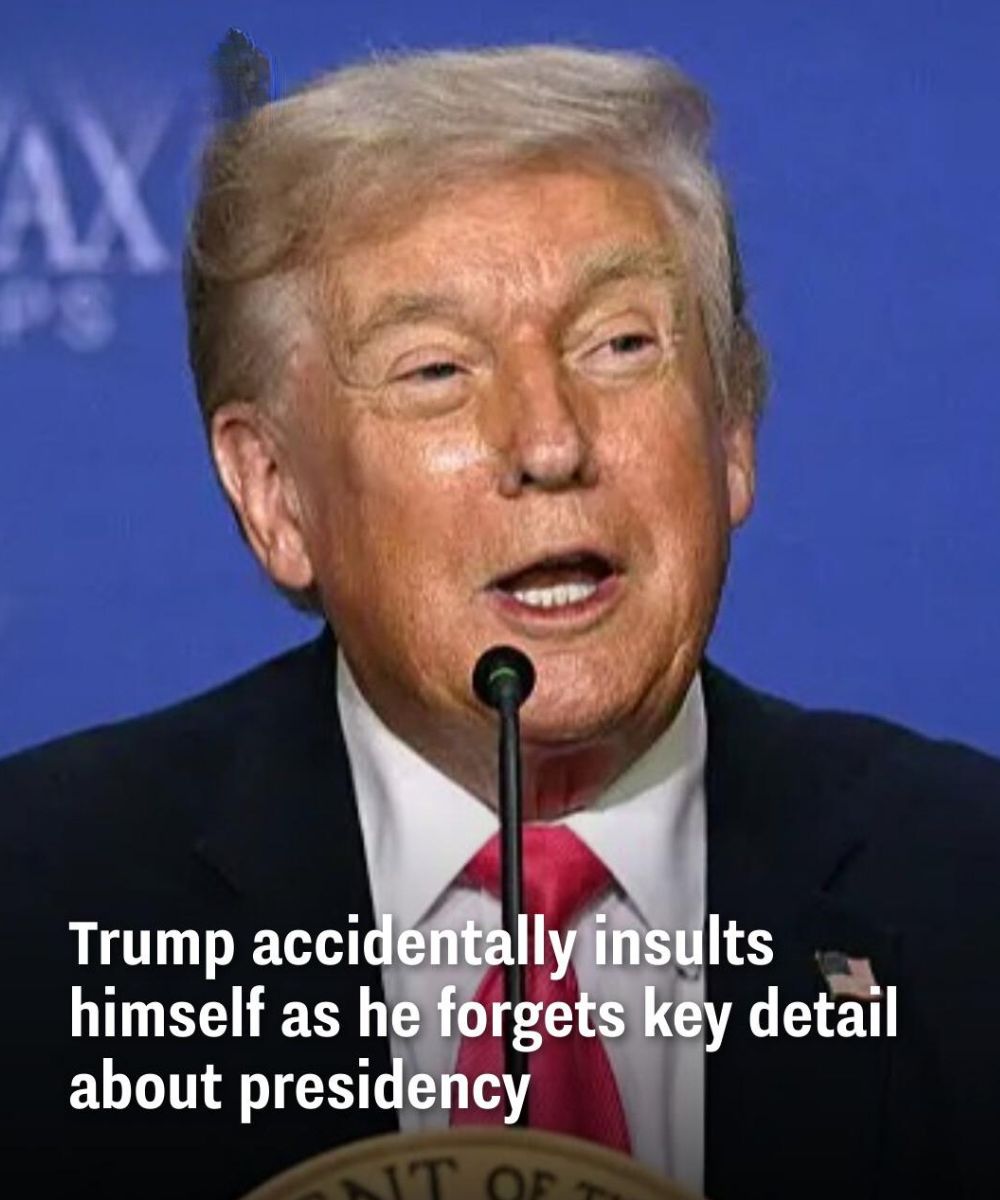
During a recent roundtable discussion focused on taxes, former President Donald Trump set out to promote his administration’s approach to tax policy. The timing came just after millions of Americans had wrapped up their annual filings, a moment when people tend to pay closer attention to what leaders say about how the system treats everyday taxpayers. But instead of simply reinforcing his message, a few remarks caught listeners off guard and quickly became the story.
While describing how the country had supposedly been perceived on the world stage, Trump offered a line meant to contrast the present with the past. In doing so, he said, “A year ago, our country was a laughing stock.” At first listen, it sounded like a familiar political jab. Yet that timeline raised immediate questions, because a year earlier he himself was still president. The comment, intended to criticize his opponents, ended up undercutting his point.

He followed up by saying people around the world had been laughing at the United States but, in his view, “they’re not laughing anymore.” That turn of phrase is one he has used before to signal renewed strength. This time, however, it collided with the basic calendar of his own tenure. Social media users and commentators were quick to point out the contradiction, and the reaction spread fast precisely because it was so unexpected.
Why the “laughing stock” line drew instant attention
Public figures often rely on sharp contrasts to make a point, especially when talking about national pride or international respect. But contrasts work only when the timeline is clear. Here, the central issue was not so much the tone as the fact that the remark seemed to refer to a period when he was still in charge. For many listeners, that made the line feel self-defeating, and it overshadowed the broader message he wanted to communicate about the country’s standing.
It was an example of how a single phrase can change the direction of a conversation. Instead of focusing on the tax issues at hand, much of the attention turned to the slip and the awkwardness that followed. In today’s media environment, small missteps have an outsized impact, because they are easy to share, quick to replay, and simple to summarize. That was exactly what happened here.
The backdrop: tax season and everyday concerns
This roundtable unfolded just as tax season was winding down, a time when Americans—especially those approaching or in retirement—take stock of how their money is treated. Many people in their fifties and sixties manage a mix of income sources, from Social Security to part-time work or retirement accounts, and they naturally care about fairness and predictability. When leaders talk taxes, folks want clear explanations, steady hands, and practical promises that feel grounded in reality.
Against that backdrop, Trump aimed to defend the policies he championed in office. He argued that his approach fostered strength and economic confidence. For supporters, messages like that can be reassuring; for critics, they can prompt tough questions about who benefits and by how much. In this case, the tax policy discussion quickly blended with a broader debate about accuracy, tone, and attention to detail.
A stumble over a common phrase
Another moment that drew attention came when Trump read from prepared remarks and paused over the phrase “corner store.” He questioned what it meant and who had written it, even though the expression is widely used to describe a small neighborhood shop. It was a brief stumble, but it stood out because it happened in a scripted setting. For many observers, it added to the sense that the event wasn’t unfolding exactly as planned.
Anyone who has ever spoken from a script knows that unfamiliar wording can trip you up. Still, hearing confusion about a basic term like “corner store” was jarring to some. The phrase connects to everyday life—picking up milk, buying a newspaper, or grabbing a snack—so the hesitation felt out of step with the down-to-earth language many people expect during discussions about bread-and-butter issues like taxes and household budgets.
Comments about who uses tax deductions
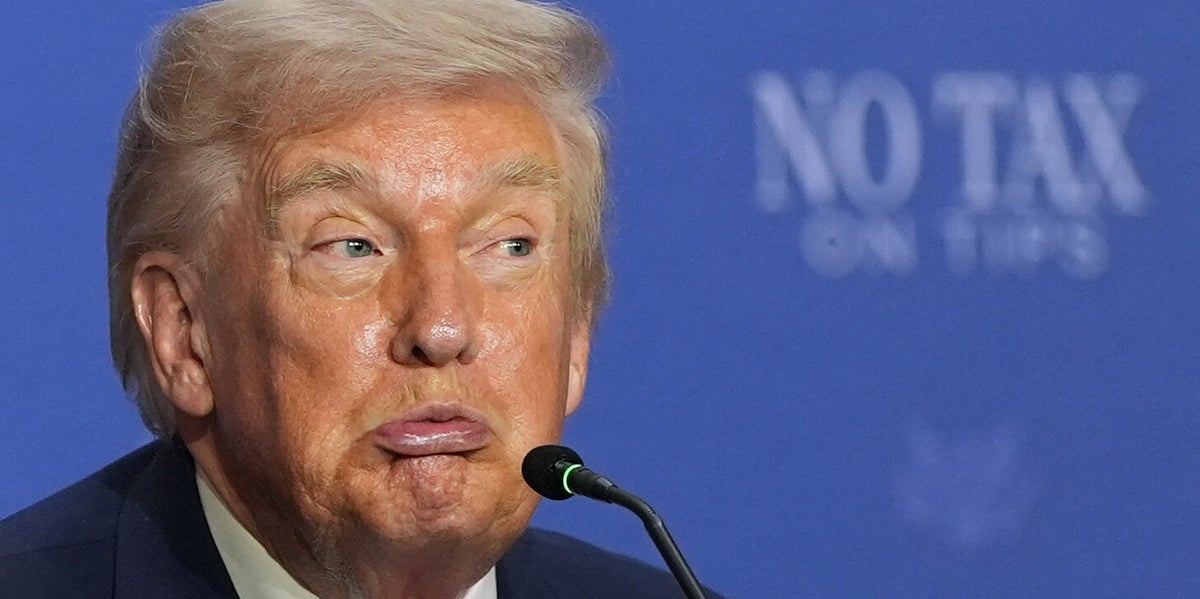
Trump also suggested that wealthy people are more likely to use tax deductions, while middle- and lower-income Americans tend not to think about them in the same way. It was a candid point that touched directly on how different households approach the tax code. His framing implied that higher earners have more reason—and more ability—to comb through the rules, while others focus on simpler filings.
Analysts often note that the structure of tax policy can tilt benefits toward those at the top, in part because they have more expenses and investments that qualify for deductions, and in part because they can afford professional advice. That does not mean everyone else ignores deductions; it simply means that complex strategies are more common when people have more income streams and more to write off. In practice, many middle-income filers use the standard deduction and move on.
What deductions mean in plain language
For anyone who does not follow the fine print, a deduction is an expense the government lets you subtract from your taxable income. If your income is $60,000 and you have $10,000 in qualifying deductions, you might only be taxed as if you made $50,000. The idea is to recognize certain costs—like charitable donations or mortgage interest—so that tax bills better reflect a person’s real financial life.
There are two broad paths: taking the standard deduction, which is a flat amount the government allows most people to subtract, or itemizing, which involves listing specific expenses one by one. Itemizing tends to make sense only if your eligible expenses add up to more than the standard deduction. That is why many households, especially those without large mortgages or major medical bills, find the standard deduction simpler and more beneficial.
Why higher earners often claim more
When people have larger mortgages, business expenses, investment interest, or significant charitable contributions, their eligible deductions can be substantial. Combine that with access to accountants and tax planners, and it is easy to see why higher-income households often claim more deductions. That general pattern aligns with what analysts point out and helps explain why discussions about fairness in the tax code can get heated.
None of this is new, and it is not unique to any one administration. Still, statements about who uses deductions can be sensitive because they touch on perceptions of privilege and opportunity. For someone working long hours and living on a tight budget, the idea that others have a menu of tax strategies at their fingertips can feel frustrating. Leaders who discuss these issues often try to balance candor with empathy so people feel seen, not dismissed.
Reactions from political figures and the public
As clips from the roundtable circulated, the pushback arrived quickly. One notable response came from House Democratic Whip Katherine Clark, who argued that the country had been an embarrassment then and still was, pushing back on Trump’s attempt to draw a sharp positive contrast. Her comment captured the broader critique: that his words undercut his own case and that the inconsistencies were too glaring to ignore.
Public reactions followed a familiar pattern. Supporters tended to downplay the slip and focus on the points he was trying to make about international respect and the need for strong tax policies. Critics highlighted the contradiction, saying it reflected carelessness and invited doubt about the substance behind the rhetoric. In a hyperconnected media landscape, both sides found plenty of examples to circulate that supported their view.
How a single moment can overwhelm the message
Communication experts sometimes call this the “fragile frame” problem. You build an argument with care, but if a single line seems to break the frame, that is what people remember. In this case, the “laughing stock” line did just that. The intention was to convey strength and competence; the effect, once the timing was pointed out, was the opposite. It was a reminder that in public life, precision matters as much as passion.
The stumble over “corner store” added to the impression that the event had rough edges. By itself, it might have been a footnote. Paired with the timeline issue, it suggested a pattern of avoidable distractions. For people who tune in only briefly—catching a headline or a short video clip—those are the details that stick. And when they stick, they shape the way the larger message is received.
What older Americans listening at home may have heard
For many people in their forties, fifties, and sixties, the practical questions come first. Will my taxes go up or down? Are my retirement savings secure? Will my children or grandchildren face a heavier burden? Amid those concerns, the expectation is straightforward: leaders should speak clearly, avoid needless confusion, and offer plans that feel both fair and feasible. When the conversation veers into contradictions or puzzling asides, trust can erode.
That does not mean people expect perfection. Most of us know that anyone can misspeak. But when a moment that should help clarify a policy instead spurs a new round of debate about accuracy, it can be frustrating. The roundtable ended up being less about the nuts and bolts of tax policy and more about the words chosen to defend it. That shift in focus is what kept the story alive longer than it might otherwise have lasted.
The broader lesson about message discipline
Political figures often repeat the same core messages because repetition builds familiarity. Yet repetition only works when every line reinforces the theme. If even one piece cuts against the grain, it gives opponents an opening and distracts supporters. Successful communicators check the timeline, choose terms that feel natural to their audience, and aim for steady, grounded language—especially when the topic is something as sensitive and personal as taxes.
In a way, the episode is a case study. The intention was to reassure people that the country is strong and on the right path. The outcome was a flurry of headlines about a self-contradiction and an odd moment reading from a script. None of that negates the importance of the underlying policy debate; it simply shows how easily the spotlight can move when attention to detail slips.
What endures after the dust settles
Events like these do not last forever in the public mind. Over time, the sharper edges fade, and what remains are the broad impressions. Supporters remember confidence and assertive language. Critics recall the inconsistencies and the stumbles. For many in the middle, the impression is mixed: the desire to hear a steady plan, tempered by concerns about clarity. Those impressions can matter more than any single statistic or promise.
As for the tax discussion itself, the essential questions continue. How do we keep the system simple enough for ordinary filers while ensuring it is fair? How do we balance incentives for growth with protections for those living on fixed incomes? Those are the issues that will outlast any viral clip. They are also the questions most Americans, especially those nearing or in retirement, want answered without the noise.
The takeaway from a memorable roundtable
Trump’s roundtable was meant to reinforce his case on taxes and national standing. Instead, it highlighted how a few unexpected words can turn a policy conversation into a debate about accuracy and tone. The “laughing stock” remark, in particular, overshadowed the rest, precisely because it seemed to point back at the very period he led. The stumble over “corner store,” though minor, added to the sense of an off-key performance.
He also touched on a real tension in the tax system—how deductions tend to be used—sparking a familiar conversation about who benefits most from the rules on the books. Analysts often say higher earners claim more, not because others do not care, but because wealth brings complexity and professional advice. That understanding can help people interpret the debate without getting lost in partisan angles.
Looking ahead
If there is a silver lining, it is that moments like this can encourage clearer communication going forward. Voters deserve straight talk, especially about taxes, retirements, and the cost of living. As future events and speeches come along, the most effective messages will likely be the ones that marry accuracy with empathy, and confidence with care. People want to feel respected, informed, and included in the conversation.
In the end, this roundtable will be remembered less for spreadsheets and more for a single sentence that missed the mark. It is a reminder to every public figure that words carry weight, and that even a small misstep can echo loudly. For those listening at home, the hope remains the same: a clear path, steady leadership, and policies that recognize the realities of everyday life.