Cameras Catch Notes as Trump Addresses Reporters in the Oval Office
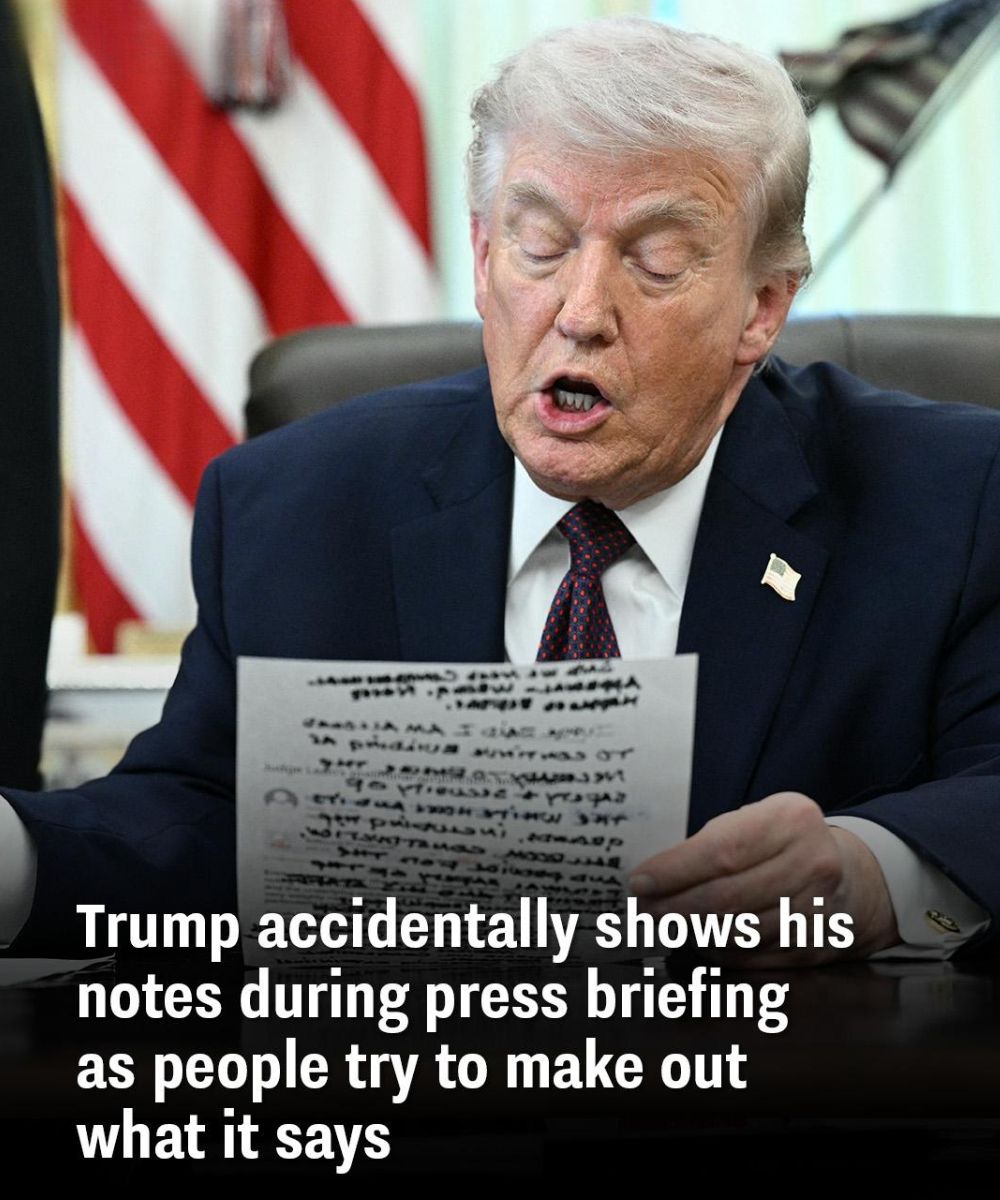
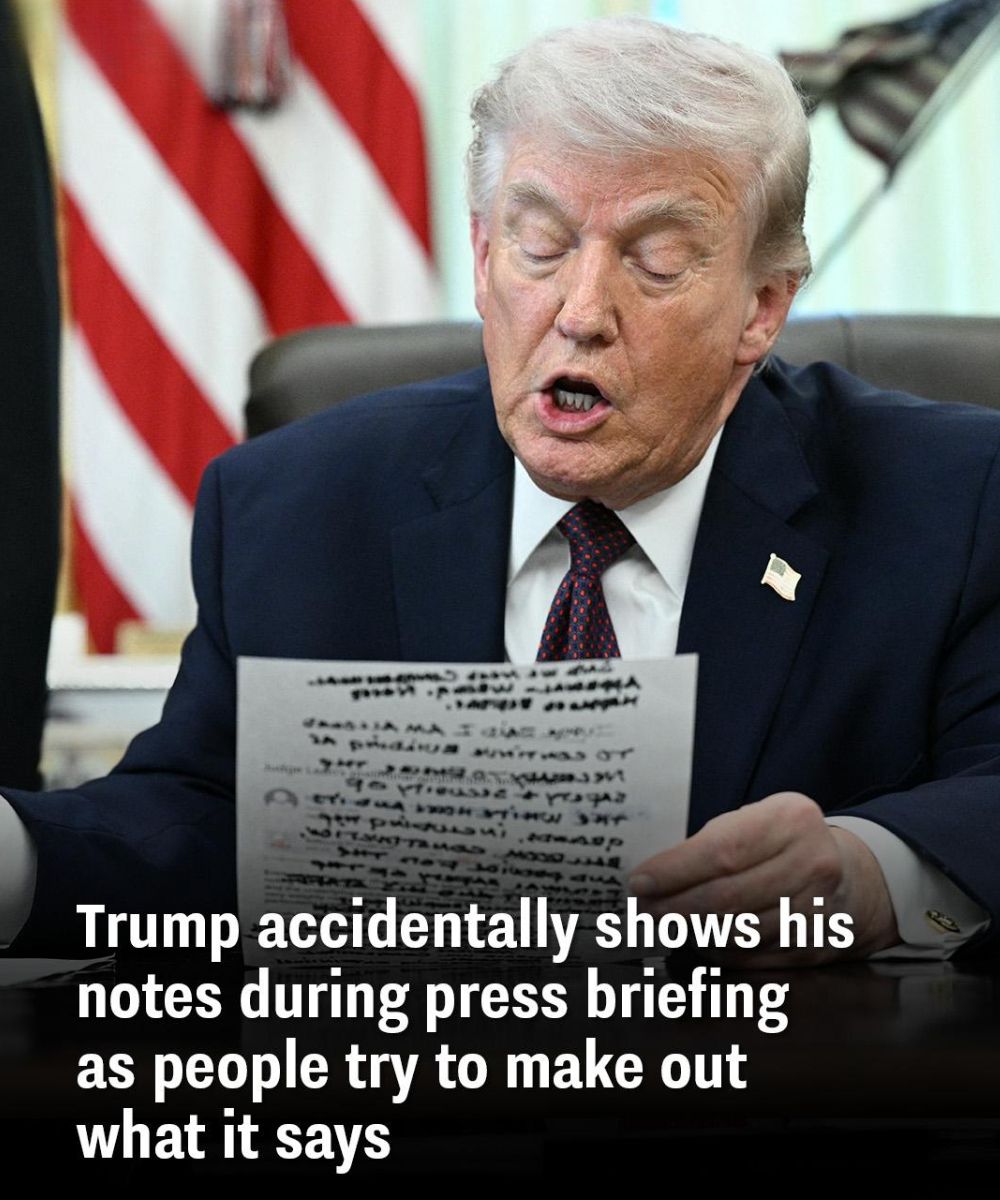
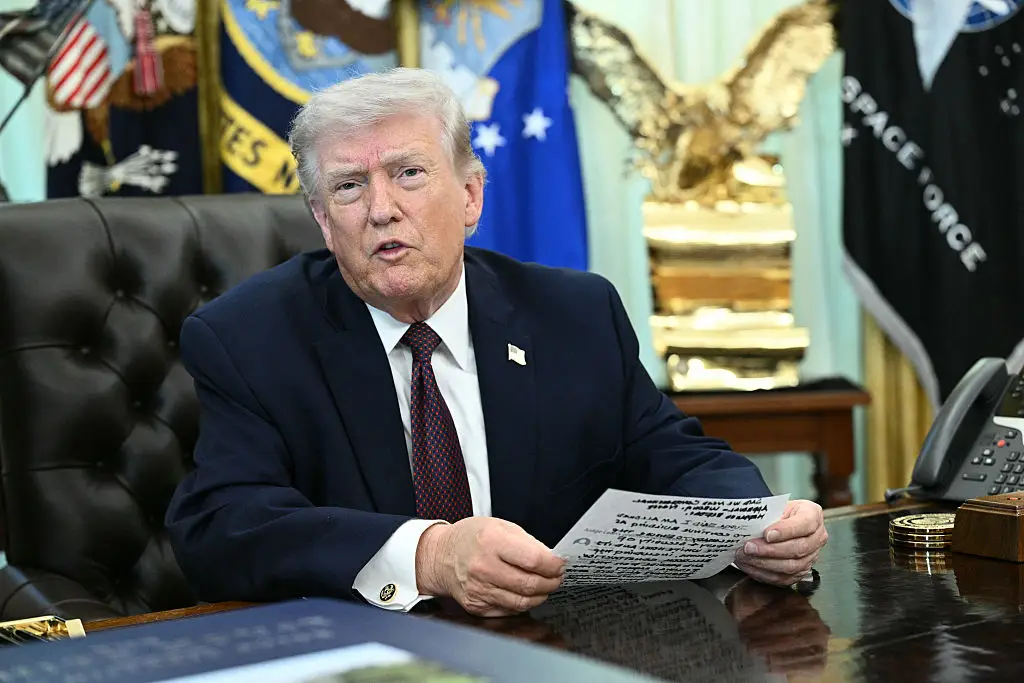
During a recent Oval Office press briefing, television cameras captured a close-up of the notes President Donald Trump was holding, sparking a wave of curiosity from viewers at home. The moment came as the president spoke to reporters shortly after signing an executive order that instructs federal agencies to review how mail-in ballots are distributed during U.S. elections.
The president has long expressed skepticism about widespread mail-in voting and used the appearance to underscore his concerns about election integrity. But as the briefing unfolded, attention also shifted to another headline from the same day: a federal judge had ordered a halt to the construction of a proposed $400 million ballroom at the White House, a project that had reportedly become an important priority for the administration.
What made the scene especially noteworthy was how the cameras, positioned only a few feet away, caught the paper in the presidents hand. With the shot broadcast in high definition, some viewers paused, zoomed, and tried to make out the words. It was a small window into the talking points and reminders a president might carry into a high-stakes conversation, and it quickly became a point of interest online.
On social media, particularly on discussion forums like Reddit, many users speculated about what those notes contained. Several suggested that the page likely summarized comments attributed to U.S. District Judge Richard Leon, who had weighed in on the ballroom proposal earlier in the week.
What the Judge Decided About the White House Ballroom Plan
According to the order described by commentators, Judge Richard Leon temporarily blocked additional demolition or new construction related to the ballroom project. The exception he allowed was for essential tasks needed to keep the area safe and secure and to protect the people working in and around the White House. That carve-out recognizes a basic reality: even when a court pauses a project, basic safety and security must be maintained.
In remarks that drew attention, the judge emphasized a principle that resonates with many Americans. He underscored that the president is, in a very real sense, a caretaker of the White House on behalf of future generations. The message was clear: while a president may shape policies and set priorities, the White House itself does not belong to any one individual. It is a historic home that stands for the nation, carefully preserved and passed down.
Viewers online connected that sentiment to the notes that flashed on camera. One person summed it up simply, pointing out there had been a ruling that day, which made it reasonable to think the president had a reference sheet with the judges key points. Others took a lighter tone, joking that a thick marker made it too easy to read the paper on screen. Whether one laughs at the quip or not, the observation speaks to the power of modern cameras: what looks private up close can become public in an instant when the lens is focused and the lighting is strong.
When a federal judge issues a stop-order on a project of this scale, it is not the final word on the matter, but it does change the pace. Work crews may need to pause, plans may be revisited, and lawyers on both sides consider next steps. In this case, the ruling came even though parts of the East Wing had reportedly already been taken down in preparation for the ballroom. That fact adds a layer of urgency for everyone involved, because a partial teardown raises practical questions about how best to maintain safety, preserve the building, and plan a way forward under court oversight.
For those who have followed White House renovations over the years, none of this is entirely unfamiliar. Significant changes to the property tend to draw close public attention and legal scrutiny. The White House is not only a workplace for the president and staff; it is a symbol of national history. Decisions about major construction on the grounds are often methodical, multi-layered, and subject to checks and balances, both to protect the integrity of the building and to ensure public confidence in how it is managed.
Why Notes on Camera Spark Such Interest
Political briefings move quickly and cover a lot of ground. To keep conversations focused, leaders often bring short lists of reminders: a court ruling here, a policy line there, a phrase to emphasize. Most of the time, no one sees those materials closely. This time, thanks to camera proximity and bold marker ink, a few words appeared readable to the audience at home. That kind of peek behind the curtain can be fascinating, because it reveals the immediate priorities of the day. It also humanizes the process, reminding viewers that even the most seasoned speakers rely on prompts when the topics are complex and fast-changing.
Plenty of people online reacted with humor, suggesting that a thinner pen might have been a better choice. Beyond the jokes, though, the brief visibility of the notes offered a small clue about what the president wanted top of mind as he addressed both the ballot order and the courtroom developments. For a public trying to make sense of shifting headlines, those hints can feel meaningful. They help connect the dots between what leaders say out loud and what they are tracking behind the scenes.
The Administration Pushes Back Through the Courts
Despite the judges ruling, the administration quickly filed an appeal, seeking to overturn or modify the order. Appeals are not a formality; they are a structured way to ask a higher court to review whether a lower court made the correct call. The process typically takes time. First comes the written briefing, where each side lays out its arguments. Then, depending on the court, there may be oral arguments where judges ask questions. Only after that do the appellate judges issue their decision.
Until an appeal is resolved, the lower courts pause generally remains in effect unless a separate order lifts it. That means, for now, only work needed for safety and security might continue. For planners, architects, and crews, this kind of uncertainty can be challenging. Schedules shift, costs may be reassessed, and contingency plans are built. For historians and preservationists, a pause may be a chance to consider how any update to such a significant building can best honor tradition while meeting modern needs.
From a wider perspective, the case reflects an ongoing push and pull common in public projects: the desire to advance a vision against the duty to ensure that changes are lawful, appropriate, and widely understood. Appeals give both sides a fair opportunity to make their case and to seek clarity from a higher court.
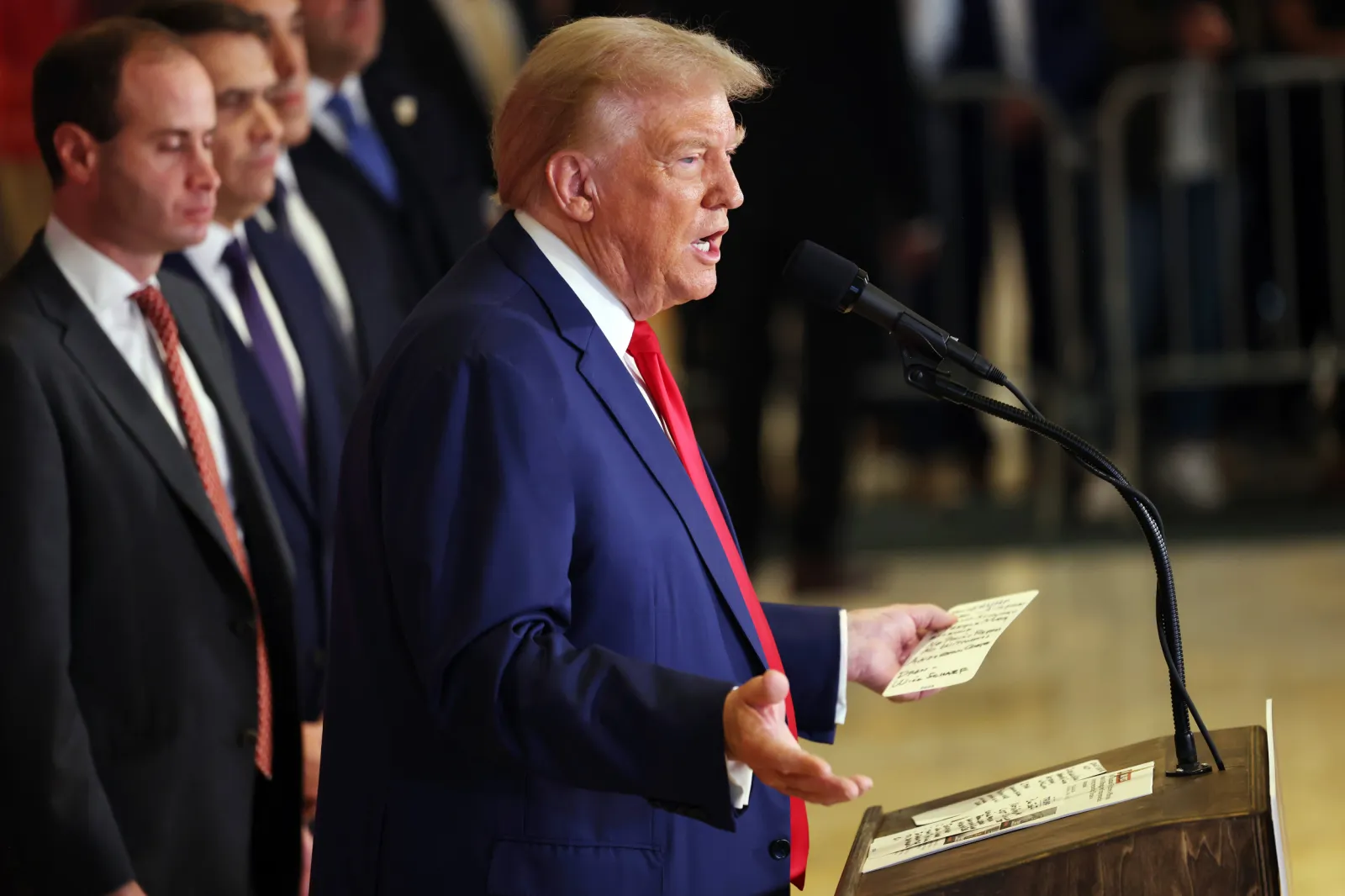
Amid the back-and-forth over the ballroom, the presidents briefing turned to the executive order he had just signed, which directs federal agencies to review how mail-in ballots are distributed nationwide. He framed the move as part of a broader effort to reinforce confidence in elections. As he put it, Its about voter integrity. We want fair and honest elections, because without that, you dont really have a nation.
What Trump Said About Mail-In Voting and How the System Might Work
The presidents remarks echoed a position he has taken repeatedly: strong support for in-person voting and deep concern about broad expansion of mail-in ballots. At the same time, the executive order moves into a practical lane, asking federal agencies to take a careful look at how mail ballots are distributed and handled, especially when the U.S. Postal Service plays a role in getting ballots to and from voters.
Standing beside him, Commerce Secretary Howard Lutnick stressed that states continue to run their own elections. That division of responsibility is a cornerstone of the American system: state and local officials set most of the rules, while federal entities provide support, standards, and, in the case of the Postal Service, the delivery infrastructure. The secretary emphasized that if states choose to rely on mail voting in whole or in part, there should be a common approach for how election mail is handled.
As he explained it, If states choose to use mail voting, each ballot will be assigned a specific code from the Postal Service, ensuring one envelope per vote. The idea behind such codes is straightforward. A unique identifier can help the system recognize a ballot envelope as official election mail, log when it enters the mail stream, and, in some cases, confirm when it is delivered. Importantly, such codes do not reveal a persons choices on the ballot. They are about tracking the envelope itself, much like how a package receives a tracking number to mark its path.
For voters who prefer the mail, that sort of standardization can offer peace of mind by making the process more predictable and visible to administrators. For those who prefer to vote in person, none of this changes the fundamentals of going to a polling place, presenting identification if required by state law, and casting a ballot in the usual way. The executive order does not instantly change election rules nationwide; it sets a review in motion and encourages coordination across agencies that touch parts of the mail-in process.
It is worth underscoring that the Postal Service already uses a variety of tools to move mail efficiently, and election officials use established procedures to verify voter eligibility and ballot authenticity. The conversation now is about whether the federal government can help create a more uniform approach across states that choose to use mail-in voting, and whether doing so would reduce errors and delays while increasing the publics confidence.
What This Could Mean for Voters and Election Officials
For the average voter, nothing changes overnight as a result of this briefing or the order described. States retain their authority over election procedures, and adjustments to how mail ballots are requested, labeled, sent, and returned would typically go through existing state processes. If any nationwide standards eventually emerge, they will likely be framed as coordination with states rather than a replacement for local control.
Election officials already face a demanding task: keeping accurate voter rolls, safeguarding election equipment, training poll workers, and ensuring ballots are counted properly. A federal review that focuses on how ballots move through the mail might help reduce lost or delayed envelopes by encouraging consistent labeling and tracking. For older voters, military families overseas, or anyone who cannot easily reach a polling place, streamlined mail procedures can make a real difference in convenience and confidence.
Of course, there are ongoing debates. Some argue that expanding mail-in options broadly increases participation and offers clear benefits, while others worry it could open the door to confusion or misuse. The presidents position in the briefing leaned firmly toward tightening controls to protect what he calls voter integrity. Supporters of wider access say the best answer is to keep refining safeguards while making voting as accessible as possible. These discussions are likely to continue as lawmakers, courts, and administrators evaluate evidence and adjust practices.
Two Storylines, One Briefing
Taken together, the spotlight on the presidents notes and the legal fight over the ballroom underscore how quickly the news cycle can shift during a single appearance. On one hand, the notes offered a fleeting glimpse of what messages the president wanted to keep front and center. On the other, the judges order signaled that, at least for now, a high-profile construction plan remains on hold pending further review.
Both topics touch on stewardship. In the election context, leaders are stewards of a process that must be secure and trusted by people across the political spectrum. In the White House renovation context, officials are stewards of a building that represents the nations history. In both cases, care, clarity, and accountability matter. That is likely why the judges words about the president serving as a caretaker of the White House struck a chord: they framed the decision in terms of guarding something precious for future generations.
For viewers between the headlines, the simple lesson may be this: small moments can reveal big priorities. A visible note page hinted at what the president considered most important to say that day. A court order reminded everyone that even the most ambitious plans must pass legal and public tests.
Looking Ahead
In the days and weeks to come, the appeal in the ballroom case will move forward. Timelines in appellate courts vary, but it is not unusual for such matters to take some time as judges carefully study the written arguments. While the case proceeds, the existing pause on most construction is likely to remain, with limited exceptions for safety and security. Depending on the outcome, the project may resume, be revised, or face new limits.
Meanwhile, federal agencies will begin the work called for in the executive order. That may include assessing current mail-ballot practices, coordinating with the Postal Service, and exploring how a standardized code or similar identifier could be used by states that choose to conduct voting by mail. Any changes that affect the public directly would come into view gradually and, in most instances, would involve state and local decision-makers.
One certainty is that there will be more briefings, more updates, and more documents to scrutinize. Cameras will keep rolling, and viewers will keep paying attention. If another note page comes into focus, curiosity will rise again. That is part of how modern news works: details that once faded into the background now appear in crisp focus on screens big and small.
For now, the takeaway is straightforward. The administration is pressing its case to move forward with a major White House project, even as a federal judge emphasizes the buildings unique place in American life. At the same time, the president is asking federal agencies to increase coordination around how mail ballots move through the system, with the stated goal of reinforcing public trust in elections. Both efforts face questions and will require patience to resolve. And both will be easier for the public to follow if leaders keep offering clear explanations, open rationales, and understandable next steps.
However the legal and policy debates ultimately unfold, the White House remains more than an address and elections remain more than a date on a calendar. They are institutions linked to the countrys identity. Treating them with care, and communicating about them in everyday language, helps everyone stay informed and confident. That seems to be the deeper thread running through the days news, whether glimpsed on a piece of paper in a presidential hand or spelled out from a podium for all to hear.