
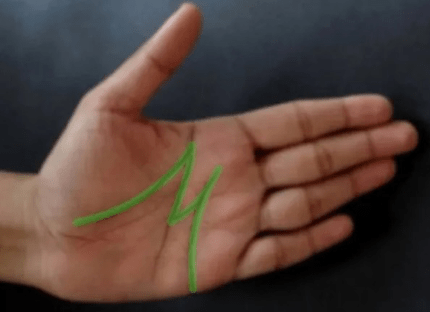
A friendly guide to the “M” on your palm and what your main hand lines might say
For generations, people have looked at the lines in their hands and wondered what stories they tell. The practice is called palmistry, or chirology, and it focuses on a few main lines that most of us can spot very easily. While it is not a science that predicts the future and it should never replace medical or professional advice, many find it to be a gentle, reflective way to think about personality, habits, and life’s turning points. Think of it like a mirror that can spark conversation and self-reflection rather than a strict rulebook.
As you read, take everything with a light and open mind. Some people feel palm reading offers genuine insight into their character or choices, while others enjoy it as an interesting pastime. Either way, exploring the lines can be both calming and fun, especially if you approach it with curiosity.
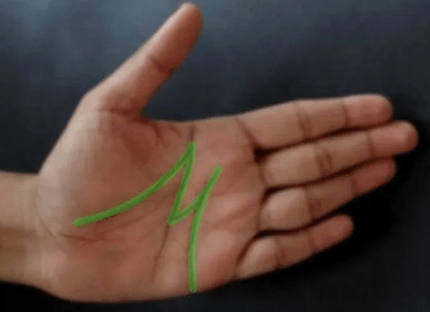
Start by taking a relaxed look at your left palm. Different traditions vary, but many readers look at the non-dominant hand to reflect potential and the dominant hand to reflect how life has unfolded. If you are right-handed, the left palm is sometimes read as the blueprint and the right palm as the story-in-progress, though you can compare both for a fuller picture. There is no rush; good light and a comfortable chair are often all you need.
First impressions of the palm
When you open your hand, you may notice three strong lines that tend to stand out. People often call them the lifeline, the head line, and the heart line. Together with the shape of your hand and fingers, these lines make up the foundation of what readers look at first. You may also see a vertical line in the center known as the fate line. With practice, you will start noticing how these lines cross and curve, how deep or faint they appear, and whether any of them meet or break along the way. All of those small details are what readers interpret.
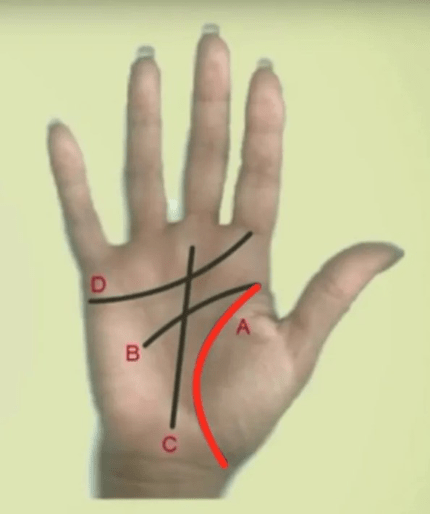
The lifeline, also called Line A
The lifeline typically arcs from the area between the thumb and the index finger down toward the wrist. It is one of the easiest lines to spot because it usually curves around that fleshy mound at the base of the thumb. Despite what its name suggests, the lifeline does not measure how long you will live. Instead, many traditions describe it as a sign of your general zest for life, your stamina, and how you respond to the ebbs and flows that come your way. It can hint at restlessness or steadiness, and at times it appears to mark periods of change.
If your lifeline is long and clearly carved, some readers say it points to robust vitality and a balanced way of handling both activity and rest. This does not mean you will never tire; it simply suggests a steady constitution and a practical approach to life’s demands. A short but deep lifeline is sometimes read as a sign of strong will and the ability to move through physical or day-to-day challenges with surprising resilience, even if you prefer to conserve energy and pick your moments carefully.
You may notice places where the line wavers, bends sharply, or even appears to pause. A crooked or broken lifeline is often taken to indicate unexpected changes that redirect your path. These breaks are not inherently negative; they can represent new beginnings, relocations, or shifts in routine that, in time, become meaningful chapters. On the other hand, a lifeline that is short and faint is sometimes associated with periods of low energy or feeling easily influenced by others. If that sounds familiar, it can be a gentle reminder to set healthier boundaries, rest well, and surround yourself with supportive people.
It is helpful to remember that none of this should be taken as medical fact. If anything in your life or health concerns you, a conversation with a qualified professional is always the best step. In palm reading, these patterns are more like symbols or ideas to reflect on as you think about your habits and hopes.
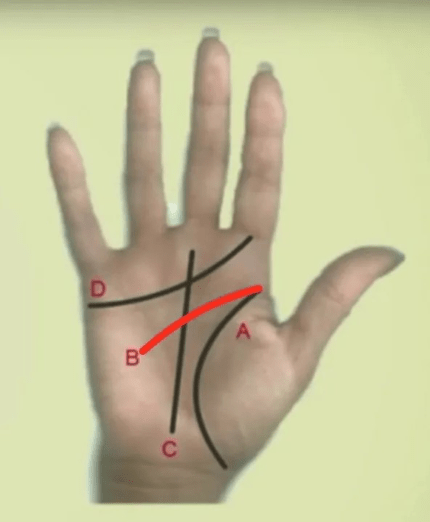
The head line, often called the first line or Line B
The head line usually starts near or just above the lifeline, between the thumb and index finger, and runs horizontally across the palm toward the outer edge. Many readers look at this line for clues about thinking style, communication, and how you approach learning and problem-solving. It can be straight or gently curved, deep or faint, simple or marked with branches.
If the head line is straight and easy to see, it is commonly linked with a practical, clear-thinking approach. People with this type of line are often described as realistic, steady, and good at sorting facts from distractions. When the line is long and intricate, it is sometimes read as a sign of curiosity and strong mental engagement, as though you like to explore topics in depth and keep track of details. A deeper line in this area is often associated with strong recall and a mind that holds onto information with ease.
Pay attention to how the head line relates to the lifeline. When these two lines begin joined together at the start, some traditions say you lean toward caution and balance, weighing choices carefully and honoring both reason and instinct. When the head line starts clearly separate from the lifeline, readers sometimes associate that with a determined streak and a willingness to take on challenges independently. Neither pattern is right or wrong; they are simply different styles of moving through decisions and responsibilities.
Occasionally, you may see small branches that lift upward or downward from the head line. Upward branches are often linked with optimistic thinking and creative ideas, while downward branches might be read as a tendency to worry or to turn inward for a while. If you notice both, that is normal; most of us experience a mix of moods and mindsets as life unfolds.
The fate line, sometimes called Line C
Look for a vertical or near-vertical line that runs up the center of the palm, usually heading toward the base of the middle finger. Not everyone has an obvious fate line, and that is perfectly fine. In many traditions, this line is read as the ebb and flow of outside influences in your life, such as family expectations, work structures, community roles, or shared responsibilities that shape your path.
When the fate line is long and steady, readers sometimes say it points to a strong sense of purpose that formed early on, paired with a steady character that helps you reach goals. If the line is shorter but deep, your path may be more shaped by chance encounters, good timing, or unexpected opportunities that appear when you need them most. A curved or frequently shifting fate line is often read as a sign of flexibility and many changes, as though you have lived a few different lives within one lifetime and adapted as circumstances evolved.
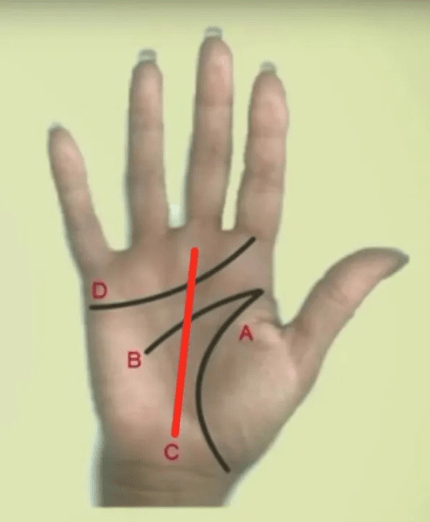
Think of the fate line as a reminder that both personal effort and outside events can influence where you land. Some doors we open through hard work, and others seem to swing open by surprise. Over the years, many people find comfort in recognizing that both kinds of moments matter.
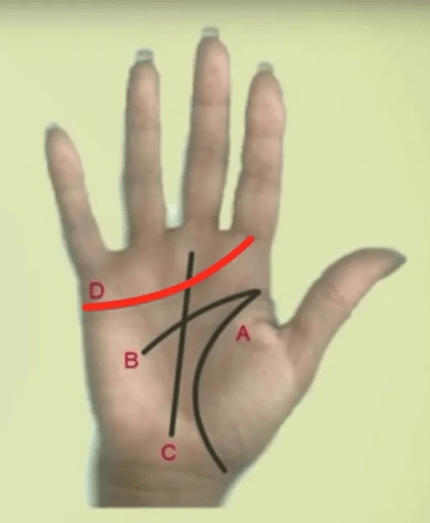
The heart line, also known as Line D
The heart line begins under or near the index finger and travels toward the little finger. Readers focus on it to explore the tone of relationships, emotional expression, and how a person gives and receives care. A heart line that is straight and broad is frequently read as a sign of emotional steadiness and a strong, trusting partnership when the time and person are right. It can suggest that your feelings and your actions support one another without much inner tug-of-war.
If your heart line appears redder and deeper than the surrounding lines, some say this reflects passion, warmth, and a strong capacity for devotion. When partners have heart lines that look similar in length or depth, palm readers sometimes describe that as an easy fit in how both people express affection. On the other hand, a thin heart line is often connected with a quieter or more reserved romantic style, the kind that prefers steady companionship over dramatic displays. Breaks or gaps along the heart line are sometimes interpreted as signs of past hurts or emotional resets, points in time when healing was needed before moving forward.
Readers occasionally look at where the head line and lifeline meet when thinking about the heart line’s story. In some traditions, when the head line intersects the lifeline early, it is thought to mark a sensitive nature that can be more prone to heartbreak if trust is broken. That does not mean heartbreak is inevitable; it simply suggests being mindful about who earns a place close to your heart and honoring your own emotional pace.
It is worth remembering that relationships evolve. Lines can appear to change over time too, especially as your hand’s skin changes with age. Many readers believe the palm’s finer markings can deepen or soften in response to life experience, so checking again after a few years can be an interesting exercise in self-reflection.
What it means when your lines form the letter “M”
Every now and then, the major lines in a hand seem to join in a way that looks like the letter M. In palm-reading folklore, this pattern is seen as special. People with a clear M are often described as practical yet perceptive, with a good sense of when something is genuine and when it is not. You might hear that an M suggests a strong moral compass, an appreciation for honesty, and a knack for spotting inconsistency—qualities that can serve you well in everyday decisions and relationships.
Some readers say the M marks a person who is resourceful and quick to grasp the truth of a situation, even when the details are complicated. In stories and traditions, it is linked with a promising path, not because life becomes effortless, but because character and discernment guide choices. If you glimpse an M on your palm, consider it a friendly nudge to trust your good judgment, to lead with integrity, and to put your talents to work in meaningful ways.
How to look for your own patterns
If you would like to search for an M on your hand, find a spot with soft light and take your time. Notice how the head, heart, and lifeline are arranged. The M shape often appears where the heart and head lines cross over or align with the fate line as it rises up the center of the palm. The shape does not need to be perfect; many people notice a partial M that still carries the same friendly symbolism of insight and steadiness. If you do not see it right away, switch hands, tilt your palm slightly, or relax your hand so the skin’s natural folds become clearer.
As you explore, keep your expectations kind and simple. The goal is not to pass or fail a test, but to spark reflection. Over the years, many people in midlife and beyond say palm reading helps them recognize their strengths and name the lessons they have already learned. Whether you find an M or simply enjoy tracing the lines that have been with you for decades, the act of looking can bring a quiet sense of appreciation for the life you have lived.
Balancing curiosity with common sense
It bears repeating that palm reading is not a medical tool and cannot diagnose health conditions. If your lifeline looks faint, that is not a verdict on your well-being, and if a line breaks, it is not a forecast of loss. These marks are better viewed as symbols that invite gentle conversations with yourself. If something in your life needs attention—your sleep, your stress level, your relationships—the most useful step is to address it directly with practical action and, when needed, the help of trusted professionals.
At its best, palmistry is a way to frame the wisdom you have gained over time. If you see resilience in a deep lifeline, perhaps it reflects the years you have devoted to caring for others or showing up when it mattered. If you notice a thoughtful head line, maybe it echoes your love of learning or the way you choose your words carefully. If your heart line shows both softness and strength, it may remind you that tenderness and courage often live side by side.
Putting it all together, gently
When you combine these impressions—the lifeline’s energy, the head line’s clarity, the fate line’s flow of outside influences, and the heart line’s emotional tone—you get a portrait, not a prediction. If that portrait includes a noticeable letter M, many traditions would call it a sign of keen judgment and steady values. If it does not, you still have a rich set of lines that speak to character, memory, love, and adaptation. What matters most is what you recognize in yourself and how you choose to carry that forward.
Over time, you may find your appreciation of your hands deepening. They have held loved ones, written cards, prepared meals, steered wheels, planted gardens, and built homes. The lines that cross them are part of that story. Reading them with a warm, open spirit is a way of honoring where you have been and welcoming what comes next, one thoughtful step at a time.
So the next time you sit with a cup of tea and a quiet afternoon, take another look at your palms. Notice the familiar curves and the delicate crossings. See whether the head, heart, and lifeline sketch out something that looks like an M. Whether they do or not, let the moment remind you of your own good sense, your resilience, and your capacity for love. In the end, those are the qualities that guide the best chapters of life, no matter what the lines say.