Online rumors about President Trump’s health led to an official response
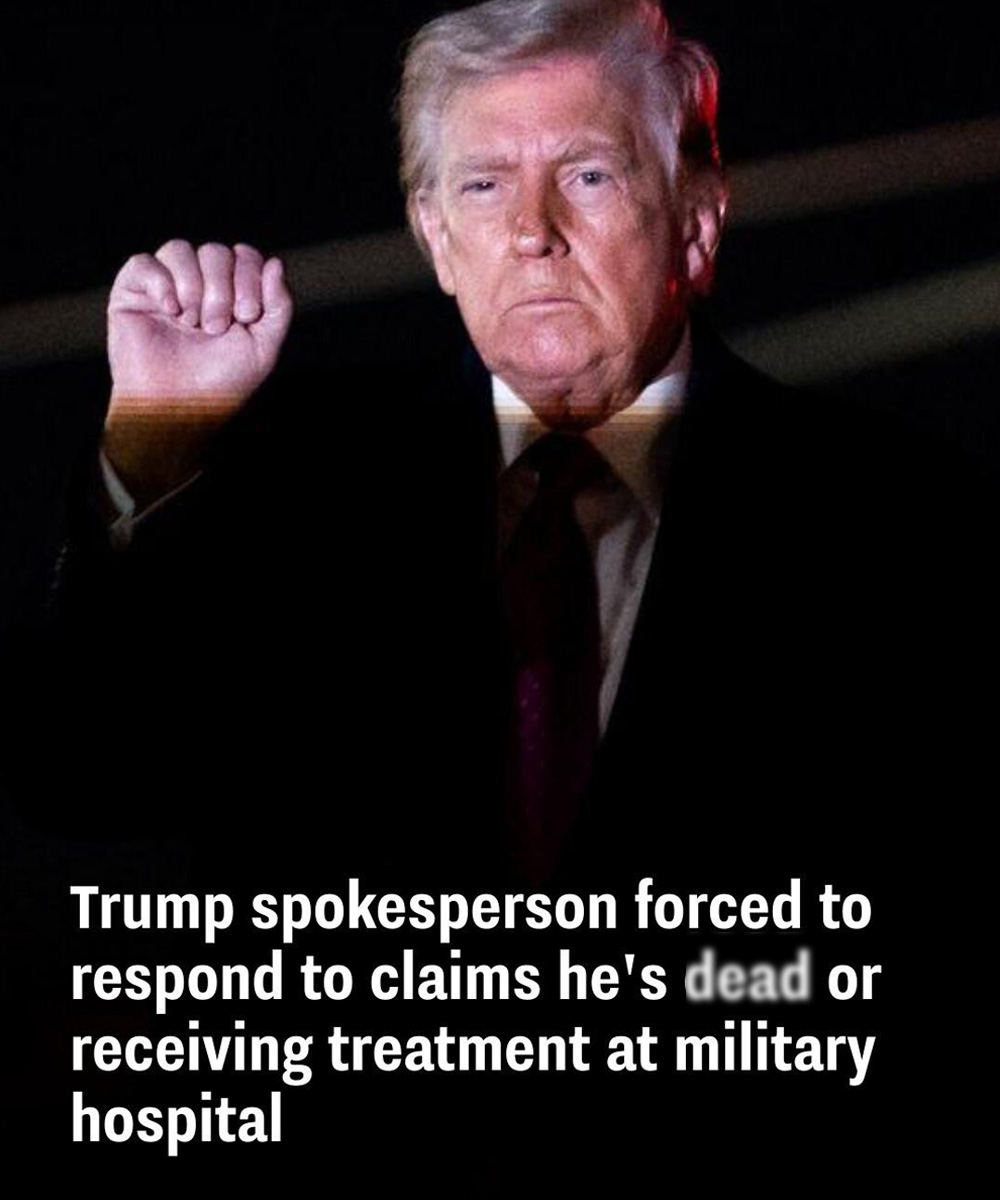
Unverified claims suggesting that President Donald Trump had either died or was being treated in a military hospital spread quickly online, prompting the president’s team to address the speculation directly. The chatter intensified over a weekend, when many people are on social media and routine presidential movements can be limited or private, creating fertile ground for rumors to snowball.
In his current term, the president’s health has been a frequent topic of discussion. Supporters and critics alike have watched his public appearances closely, commenting on his speech, posture, and overall energy. This sort of scrutiny is not unusual; modern presidents live under a microscope, and any small change—an offhand remark, a schedule shift, or a brief absence from public view—often becomes fuel for conjecture.
Months earlier, curiosity sharpened when viewers spotted what looked like marks on the president’s hands. That observation in late 2024 and into 2025 inspired new rounds of online theories about possible medical issues. While such observations rarely come with reliable medical context, they tend to travel widely and quickly, especially when shared with certainty by people who are simply guessing.
Speculation picked up again on August 27, 2025, after Vice President JD Vance commented that he was prepared to assume the presidency if needed. That is a standard responsibility assigned to every vice president under the Constitution, and each vice president is expected to be ready at all times. Still, given the sensitive nature of succession, the remark was interpreted by some as a hint about the president’s condition, and the rumor mill spun even faster.
As these claims resurfaced, the White House and the president’s communications team moved to calm the conversation and clarify what they could. The approach was familiar: respond directly to the core questions, share what is appropriate about the president’s activities, and reaffirm that if there were a serious health issue, the public would be informed through official channels rather than internet gossip.
The White House addressed the newest wave of speculation
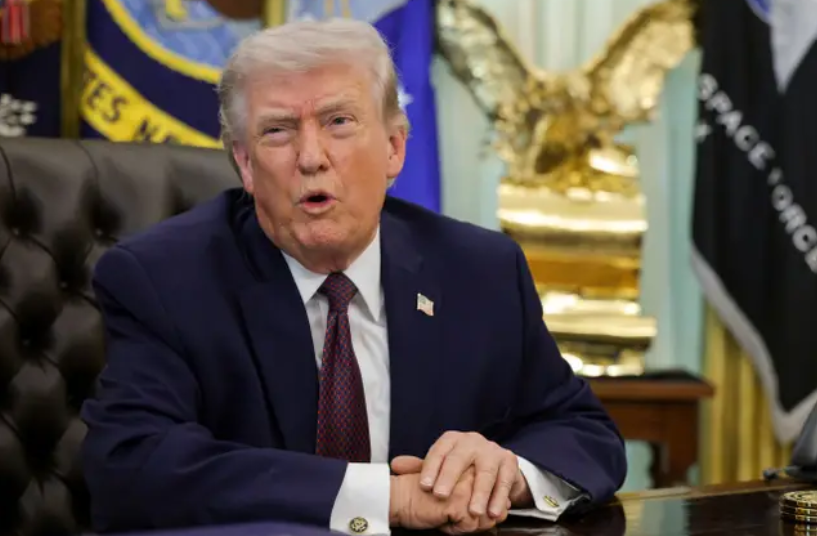
In a post meant to set the record straight, Trump spokesperson Steven Cheung praised the president’s pace and schedule. “There has never been a President who has worked harder for the American people than President Trump,” he wrote, pushing back on the idea that the president was in failing health or undergoing emergency care.
Cheung added a detail aimed at the weekend rumors in particular. “On this Easter weekend, he has been working nonstop in the White House and Oval Office. God Bless him.” The intent was clear: present a simple, verifiable message that the president was at work, carrying out his duties, and not secretly confined to a hospital bed as some posts had alleged.
One especially persistent claim suggested the president had been taken to Walter Reed National Military Medical Center. Because Walter Reed is the nation’s premier military hospital, any mention of a presidential visit often attracts attention, even when the purpose is routine. In the absence of immediate public sightings of the president, that hospital name reappeared in countless posts, repeating the same unverified story without adding new facts.
On Saturday at about 11:08 in the morning, the White House informed reporters that the president would not make a public appearance for the remainder of the day. Simple schedule notes like this are common; presidents regularly hold closed-door meetings, review briefings, or rest without public photo opportunities. Yet the announcement stood out to some observers because President Trump often spends part of his weekends at Mar-a-Lago, where he is sometimes seen golfing. The change fed speculation, even though changes to a president’s schedule are routine and can happen for many reasons.
The president has, at times, visited Walter Reed for standard procedures and evaluations. His most recent known visit was in October 2025, when he underwent an MRI scan. That sort of imaging test is common for a wide range of reasons and does not by itself imply a serious condition. It can be used to take a closer look at everything from joints and muscles to neurological structures, and many people in their sixties and seventies undergo MRIs as a matter of caution or follow-up.
Speaking with reporters aboard Air Force One after that October trip, the president described the imaging as uneventful. “I did. I got an MRI. It was perfect.” The phrasing was brief, but the message—nothing concerning—was unmistakable. In short, he characterized the test as normal, and the topic faded until new questions bubbled up months later.
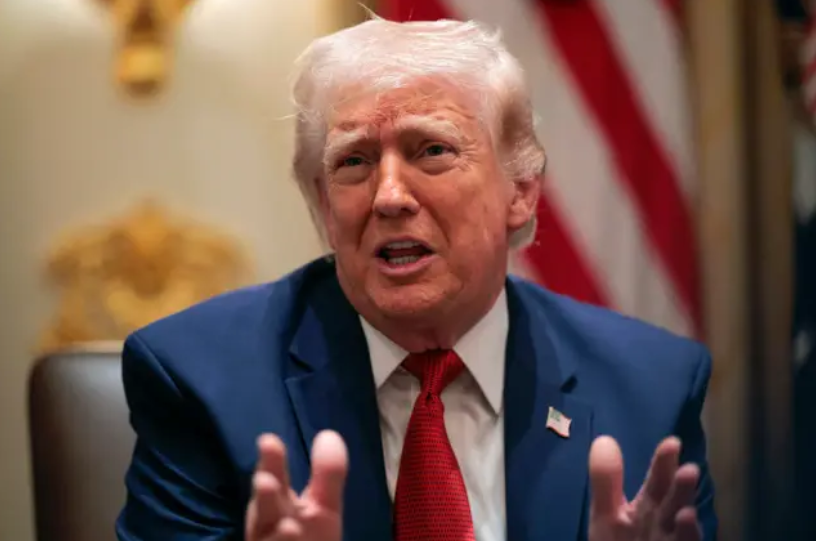
Before the recent round of claims, attention had also turned to the president’s neck, where a scabbing rash appeared to be visible in certain photos and televised moments. Images showing a red patch behind the ear and along the hairline circulated widely, often without context. As happens with many public figures, a small, ordinary medical matter quickly escalated into a narrative of mystery simply because it was seen on camera.
A noticeable neck rash at a March 2 White House ceremony prompted questions
The rash appeared evident during a Medal of Honor ceremony on March 2, and close-up photos spread across social media within hours. The discolored area looked inflamed in certain angles, and the close cropping of some images exaggerated the appearance. For those who have spent time in the sun or used preventive dermatologic treatments, the look was familiar; for others, it seemed alarming, and theories multiplied.
To address the flurry of commentary, White House physician Dr. Sean Barbabella issued a short, direct statement. “President Trump is using a very common cream on the right side of his neck, which is a preventative skin treatment, prescribed by the White House Doctor.” His wording indicated that the appearance, while perhaps unsightly on camera, was expected and intentional rather than a sign of an emergent problem.
Dr. Barbabella also explained the timeline and expected appearance. “The president is using this treatment for one week, and the redness is expected to last for a few weeks.” Many common dermatology creams can cause temporary irritation or peeling as part of their normal course, especially when treating sun-damaged skin or other minor concerns. For people in midlife and older, these treatments are often routine and preventative.
Why rumors take off—and how officials typically respond
Presidential health has always been a sensitive subject. In today’s fast-moving information environment, rumors can travel faster than official statements, especially on weekends or holidays when there are fewer scheduled events. A single unverified post can be copied and repeated until it looks convincing simply because it appears everywhere, not because it is supported by evidence.
When that happens, the White House usually follows a familiar playbook. First, clarify what can be said about the president’s location and work. Second, provide specific, attributable statements rather than vague reassurances. And third, remind the public that if anything serious were to occur, it would be announced through established channels that the press and public can trust. The posts from the president’s spokesperson were aligned with that approach—firm in tone, specific about activity, and dismissive of claims that lacked proof.
There is another reason this topic resurfaces so often: the presidency itself is demanding, and many Americans, especially those in the 45 to 65 age range, know firsthand how health routines evolve over time. Preventive screenings, checkups, and occasional scans become part of staying well. A president’s routine medical step can look like breaking news only because it happens under bright lights and constant attention.
Context from earlier moments that fueled speculation
The vice president’s August 2025 remark about being ready to assume office is a good example of how a standard statement can take on a life of its own. Every vice president must be prepared—this is simply how the office is designed. Yet said aloud during a period of tight news cycles, words that are ordinary in Washington can seem extraordinary online, allowing people to read in meanings that were never intended.
Similarly, photographs of the president’s hands showing what looked like bruising or discoloration in late 2024 and early 2025 set off a new round of conjecture. Lighting, camera angles, and even everyday bumps can appear dramatic on camera. Without clear, factual information about cause and context, images tell only part of the story, and they can easily be misread.
It is also worth remembering that a president’s weekend plans often change. While many associate this president with weekends at Mar-a-Lago and occasional rounds of golf, schedules can shift for briefings, policy work, family time, or rest. The announcement that there would be no public appearance on a given Saturday is not proof of a hidden medical emergency; it can be as simple as a quiet day of meetings or preparation for the week ahead.
What to watch for when health stories break online
For anyone trying to make sense of health rumors, a few commonsense checks can help. Ask whether a claim cites a named, authoritative source. Consider whether multiple reputable outlets have independently confirmed the same detail. Look for on-the-record statements from official spokespeople or the White House medical staff. And pay attention to timing: a claim that appears late at night or during a holiday without supporting facts warrants extra caution.
It is also helpful to distinguish between routine medical care and urgent medical care. An MRI, for example, is a common tool that can be ordered for many reasons—investigating back pain, checking on old injuries, or following up on previous findings. Likewise, a topical skin treatment that causes redness is typically a planned course, not an emergency. The presence of medical activity does not automatically suggest crisis, especially for someone with a busy, high-pressure schedule who is being monitored closely.
When officials do speak, the most useful details are often simple. In this case, Steven Cheung’s note that the president was working in the White House and Oval Office told the public what they needed to know about his whereabouts and activity at that moment. The doctor’s explanation about the skin cream provided a straightforward reason for a visible change. Put together, those statements undercut the more extreme rumors making the rounds.
Where things stand now
As of the latest statements, there has been no verified report that President Trump was hospitalized at Walter Reed or anywhere else over the weekend when the rumors surged. Instead, the official account emphasizes that he remained engaged with work, spending the day without public events. That is consistent with how many presidents balance their time, particularly when the calendar includes both holidays and ongoing policy matters.
There is every indication that, had a serious medical development occurred, the public would have learned of it through a formal announcement, just as has happened in previous administrations of both parties. That is not merely a matter of preference; it is part of the responsibility that comes with the office and the systems built around it. Transparency, within reasonable bounds of privacy, is expected.
For now, the clearest picture is the simplest one. A handful of images and a quiet Saturday were enough to ignite speculation, but the president’s team and physician offered direct explanations that match what was visible: a busy workday without public appearance, and a routine skin treatment that temporarily looked worse than it felt. Combined with the earlier account of an unremarkable MRI back in 2025, the information on record points to ordinary health management, not a hidden emergency.
The bigger takeaway
Public figures live with constant attention, and in the digital age, that attention can turn into rumor at a moment’s notice. For those who remember news cycles before social media, today’s tempo can feel disorienting—stories rise and fall within hours, and certainty is often claimed long before the facts are known. In that environment, short, factual updates from official sources matter more than ever.
As this episode shows, it helps to pause before sharing alarming claims, look for named sources, and consider the most ordinary explanation first. Presidents will have routine medical care. Schedules will change. Photographs will catch unflattering angles. None of that, on its own, amounts to proof of a crisis. What does matter are clear statements from those responsible for the president’s health and schedule, backed up by consistent reporting.
In the end, the rumors that set social media buzzing did not hold up under scrutiny. The president’s spokesperson said he was working in the White House. The physician explained the neck rash as a normal side effect of a common, preventive cream. And a past MRI—described by the president himself as “perfect”—offered a reminder that not every medical headline is an emergency. For anyone following along, that combination of facts provides a steadying view amid the noise.
As with any developing story, if official updates are issued, they will clarify what needs to be clarified. Until then, the available evidence points away from the most sensational claims and back toward a more everyday reality: a president at work, a weekend without public events, and routine health steps that look dramatic only because the cameras are always on.