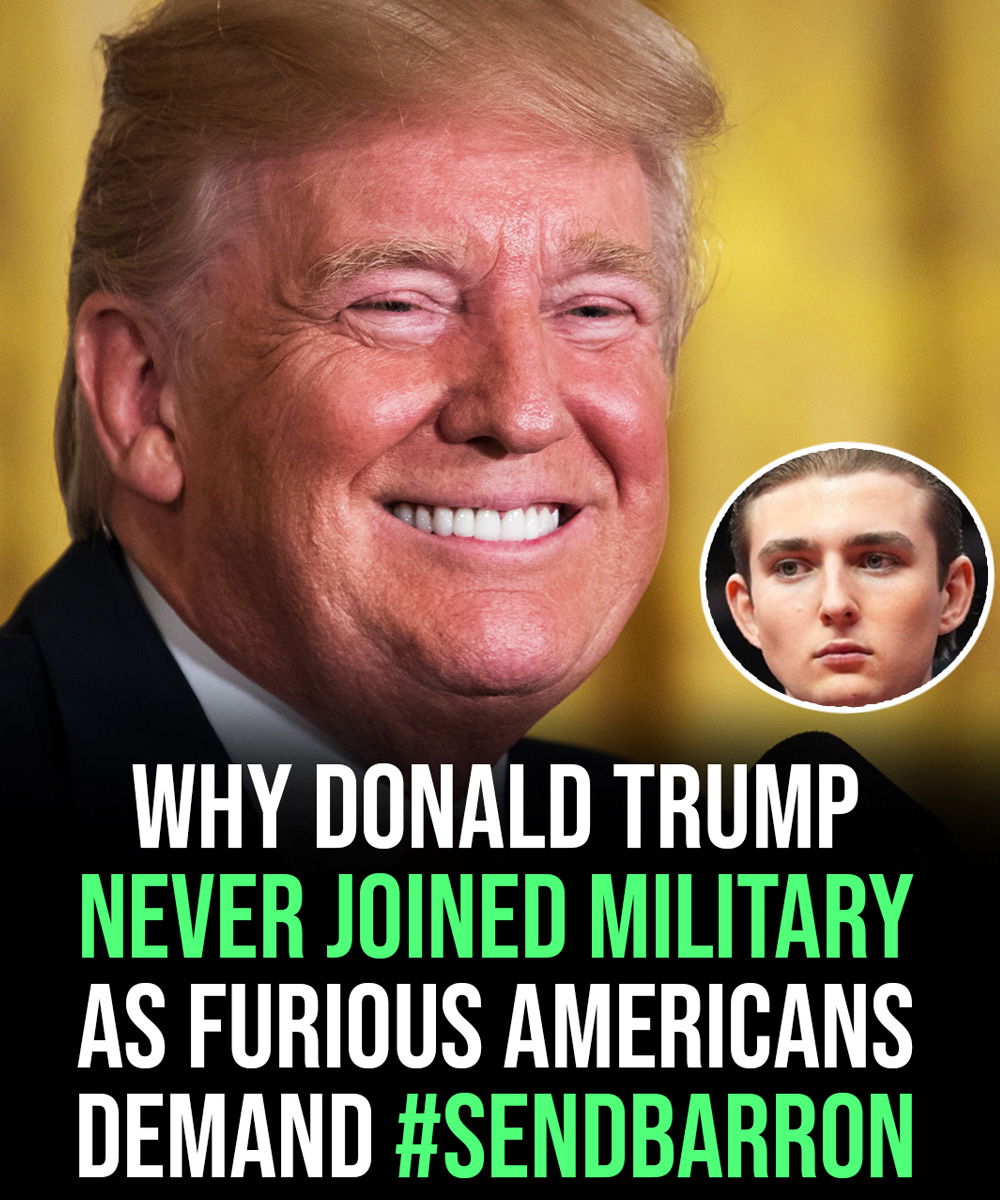
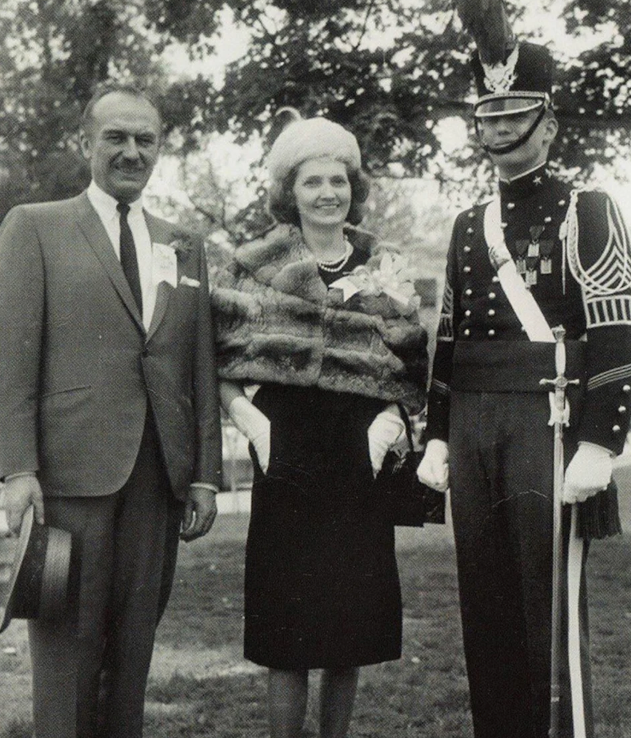
A recent throwback photograph from Donald Trump’s teenage years has set off a new round of discussion about his past and, in particular, why he never served in the U.S. military. The image shows a youthful Trump in a crisp cadet uniform, standing with his parents at the New York Military Academy. For many, it stirred memories of the era and raised questions that have hovered around him for decades.
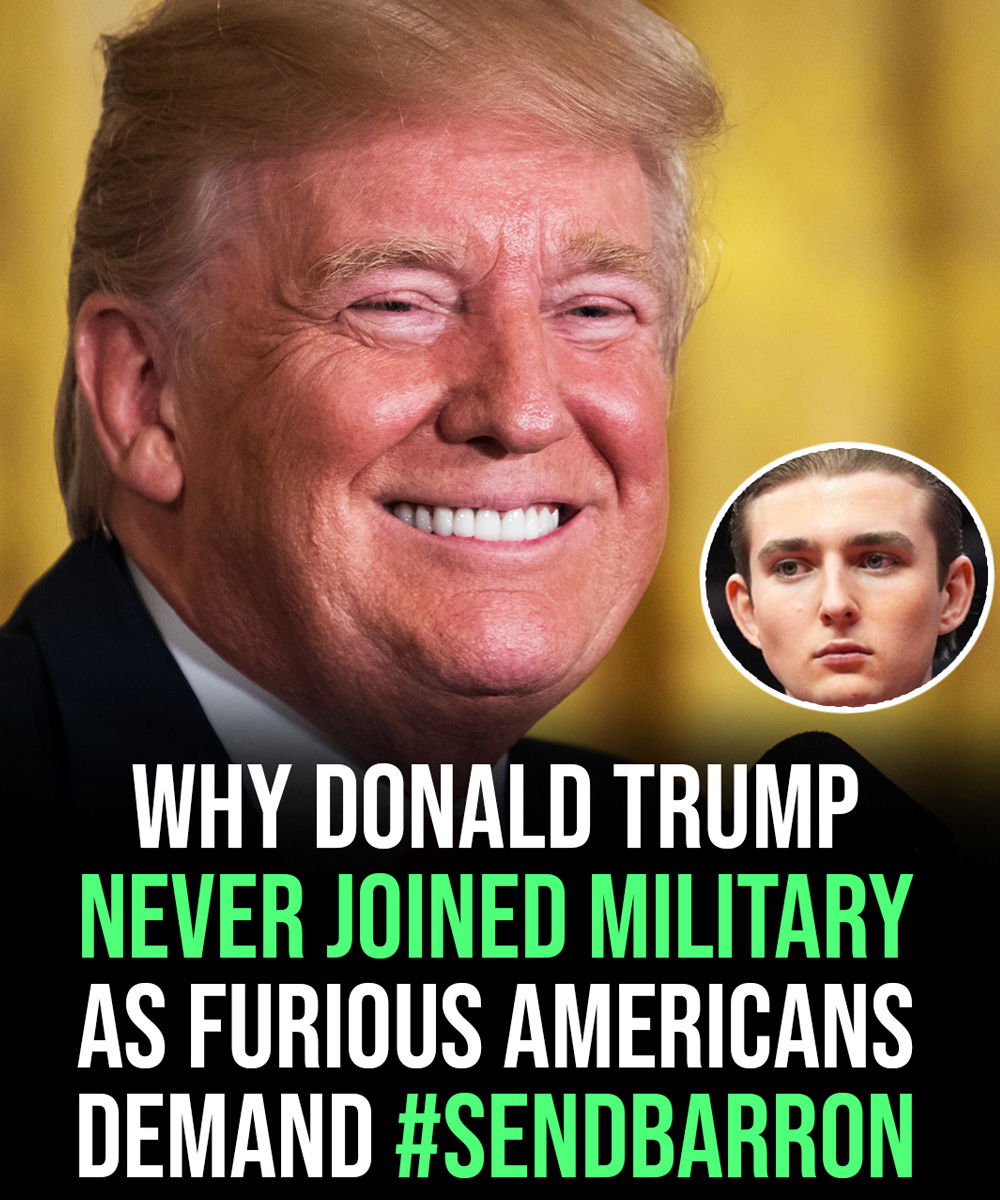
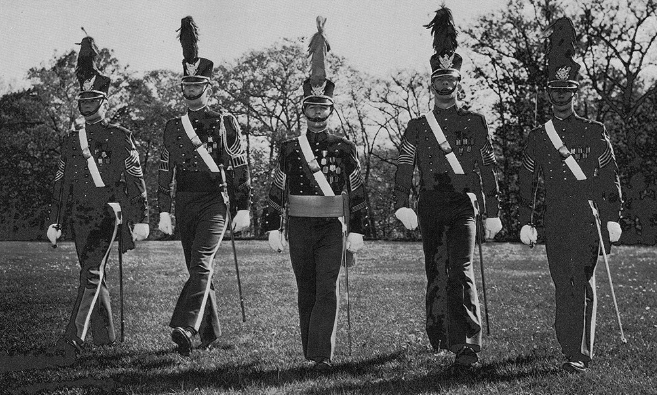
Trump attended the New York Military Academy from age 13 through 18. It was a structured, highly disciplined environment where uniforms, inspections, and drilling were part of the daily routine. Families often chose such schools to help channel a young person’s energy into responsibility and leadership. Still, a military academy of this kind is a private boarding school, not a branch of the armed forces. Graduating from it does not mean a person has joined the military, taken an oath of enlistment, or agreed to deploy. It is, in essence, a civilian education with a military flavor.
In sharing the photograph, Trump wrote a simple, nostalgic note about being at the academy with his parents, Fred and Mary. The sentiment was light, but the reactions were not. The image reminded supporters of a structured, formative chapter in his youth. For critics, it resurfaced a much-debated subject: how Trump, a man of draft age during the Vietnam War, did not serve.
The timing of the post seemed to add to the intensity of the conversation. It appeared online not long after reports that a U.S. military refueling aircraft had gone down in western Iraq, amid a moment of heightened tensions in the Middle East following strikes on Iran. With global affairs feeling fragile and fast-moving, the old topic of military service—who serves, who does not, and why—was bound to attract strong opinions.
Some people praised the photograph as a pleasant look back at a young man’s disciplined upbringing. Others immediately linked it to the longstanding controversy over Trump’s deferments during the Vietnam War era. That chapter, complex at the time and still sensitive now, is part history lesson and part personal biography.
Trump’s Vietnam-era draft deferments
To understand Trump’s path, it helps to remember how the draft worked during the Vietnam War years. The Selective Service System required most men to register at 18. For many, the draft notice felt like a shadow that followed them as they moved through school or into the workforce. Deferments and medical determinations were built into the system, and thousands of men across the country received them for a variety of reasons, including education, health, and family circumstances.
Trump, like many of his generation, received multiple deferments. Four of them were student deferments while he was in college. These educational deferments allowed students to complete their studies before facing the possibility of induction. At the time, it wasn’t unusual for young men to plan their lives semester by semester, watching changing policies and hoping to buy time or improve their long-term prospects.
For a period while he was at Fordham University, Trump participated in the Reserve Officers’ Training Corps, commonly known as ROTC. ROTC is a college program that trains future officers for the U.S. military. Students in ROTC attend classes, wear uniforms for drills, and learn leadership skills. Upon graduation, they are typically commissioned as officers and may expect to serve on active duty. Trump left the program in his second year, as the conflict overseas was escalating and as many young Americans were making difficult choices about their futures.
It was also an atmosphere in which grades and deferments could intersect. Accounts from that time have suggested some professors felt torn about their students being sent to war, and there were instances in which generous grading might help a young man remain in school. Reports indicate Trump was encouraged to improve his grades, though he did not make the dean’s list during his first year. How much grades did or did not influence one student’s fate is hard to quantify, but it was a well-known tension of the era.
After his student deferments, Trump received a medical classification based on a diagnosis of bone spurs in both heels. Bone spurs, or osteophytes, are small, bony growths that can develop along the edges of a bone. In the foot, they can cause pain with walking, running, marching, and wearing rigid footwear—precisely the kind of movements and conditions that define basic training and active duty in many military specialties.
The diagnosis has long been attributed to Dr. Larry Braunstein, a Queens podiatrist. Reports over the years have suggested that the evaluation may have been done as a courtesy to Trump’s father, Fred Trump. Whatever the personal dynamics behind it, the medical conclusion was that Trump should not be drafted at the time. That determination effectively removed him from the pool of men being sent to serve in Vietnam.
Critics have returned to this medical exemption again and again. They argue it amounted to special treatment, or at least a fortunate turn at a time when less-connected young men faced combat. On social media and in commentary, the subject is often summed up in sharp phrases—labels meant to stick and sting. The tone reflects how raw and personal the memory of Vietnam remains for many Americans, especially for those who served or who lost friends and loved ones.
Trump, for his part, has addressed the matter in interviews over the years. He has said the bone spurs were a real issue but also described them as temporary and minor, the sort of condition that faded with time. He has said he could not recall which heel was worse. He has also explained that he was not a supporter of the Vietnam War, calling it a terrible conflict far from home, even though he did not join antiwar protests or threaten to leave the country.
What a medical deferment meant then
For readers who remember the era, but perhaps not the exact terminology, it may help to clarify what such a medical finding implied. In general terms, it meant that a doctor had determined the person was not fit for typical military training and deployment. There have always been medical standards for service, covering everything from eyesight and hearing to orthopedic issues and chronic conditions. Many men were deemed unfit for service during the Vietnam years due to a wide variety of medical reasons, and bone and foot problems were among them.
It is also true that the fairness of those determinations was constantly debated. Some believed well-connected families had an easier time securing helpful evaluations. Others pointed out that the system processed millions of people and that honest medical concerns could not be brushed aside. Both realities coexisted in the public conversation, and they still do when old stories resurface today.
Trump’s own words about the war
When speaking about his youth and the Vietnam years, Trump has said he did not support the war and considered it a tragic mistake. At the same time, he has not presented himself as an activist of the era. He has said he would have been honored to serve, a statement that can seem at odds with his deferments but that also reflects a common sentiment among many Americans who respect the armed forces even if they opposed the policy decisions that sent troops into harm’s way.
For context, roughly 2.7 to 2.8 million Americans served in Vietnam, and the toll was heavy. More than fifty-eight thousand U.S. service members were killed, hundreds of thousands were wounded, and many were listed as missing for years. For families who lived through it, the war is not an abstract policy debate. It is a piece of personal history.
That is part of why a single photo of a teenage cadet in a school uniform can draw so much attention. It becomes a symbol, intentionally or not, for questions about service, sacrifice, and fairness. People respond not just to the person in the picture, but to the memories and emotions the image brings back—of what it meant to be young in the 1960s and early 1970s, and of the choices that faced men of draft age.
The difference between a military academy and the military
Because this topic surfaces so often, it is worth drawing a clear line between an institution like the New York Military Academy and actual service in the U.S. armed forces. A private military academy is a school with uniforms, formations, ranks, and rules designed to teach discipline, leadership, and responsibility. It may help a teenager focus, work well with others, and manage time, but it does not place that student under the authority of the Department of Defense. There is no enlistment, no commission, and no obligation to deploy.
By contrast, joining the military—either by enlisting or by commissioning as an officer through ROTC, a service academy, or Officer Candidate School—is a legal commitment. It includes an oath, a chain of command, and the possibility of training, assignments, and deployments that are not negotiable. Understanding this distinction helps explain why a cadet photo can spark questions about service without answering them.
Why the old debate has new energy
The recent resurgence of this conversation unfolded against a backdrop of international tension. In uncertain times, people naturally think about the military, the men and women who serve, and how the country might respond to crises. That is when the subject of the draft tends to resurface, even though the United States has not had an active draft in decades.
Today, young men are still required to register with the Selective Service System. Registration is a matter of keeping records current in case a national emergency requires a rapid expansion of the armed forces. It does not mean a draft is underway or imminent. But when the world feels unsettled, discussions about who would be called, how they would be chosen, and who might be exempt can quickly become heated.
Barron Trump and the modern draft conversation
As the online debate reignited, it unexpectedly drew in Trump’s youngest son, Barron, who is now nineteen. Some social media comments suggested he should be first in line if a draft were to be reinstated. Such remarks are, in part, the kind of rhetorical barbs that fly during political arguments. But they also reflect enduring questions about who bears the burden of service when the nation is under strain.
Under current law, most males between the ages of 18 and 25 must register with Selective Service. If a draft were ever reactivated, the process would follow an established order, historically focusing first on the youngest eligible group and moving upward. In past lotteries, men turning twenty in the given year were typically called first, followed by twenty-one through twenty-five. This framework is designed to bring in those who are closest to the beginning of adult life, with the idea that they can be trained and serve effectively if needed.
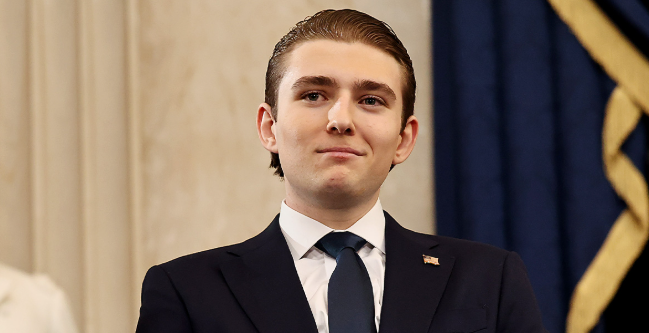
There has been another thread of discussion about Barron Trump’s height. Reports have noted he is approximately six feet seven inches tall. Height can matter in the military, especially in roles that require fitting into tight spaces such as tanks, some armored vehicles, or particular aircraft. The U.S. Army sets height standards for various jobs, and for some specialties the upper limit is around six feet eight inches. A person near or above those thresholds may not qualify for certain assignments, even if they could serve in others. Height, like eyesight or hearing, is simply one of the many practical considerations.
All of this underscores a larger point. At present, there is no active draft, and a return to conscription would require a national decision of enormous consequence. The United States relies on an all-volunteer force, a model that has carried the nation through decades of deployments, including long operations in the Middle East. The conversations we see online may be spirited, but they do not signal that a draft is around the corner.
Looking back with clarity and care
When people ask why Donald Trump never joined the military, the short answer is that he received multiple deferments, including a medical classification for bone spurs, during a time when many American men sought ways to delay or avoid service in Vietnam. The longer answer involves the mood of the country at the time, the way the draft functioned, and the personal stories—of fear, duty, opportunity, and luck—that shaped individual outcomes.
For older readers who lived through the 1960s and 1970s, none of this is theoretical. You remember friends who drew a low lottery number, neighbors who enlisted, cousins who were sent overseas, and others who stayed in school, married, or found medical reasons they could not serve. The paths were not all the same, and fairness was not guaranteed. That unevenness is part of why the topic still stirs strong emotions today.
Trump’s photograph from his academy days is, at one level, a personal keepsake. At another level, it is a reminder of a time when adolescence and adulthood could be defined by a letter in the mail and a bus to basic training. Seeing the image now, with new uncertainties in the headlines, naturally raises old questions about duty and choice. It also invites us to remember the complexities of the past rather than reducing them to easy slogans.
A note on bone spurs and military life
For anyone wondering how something like a bone spur could end a military path before it begins, consider the daily realities of service. Marching in formation, running with gear, climbing, kneeling, and standing for long stretches are all routine. Boots are stiff for protection and support, not comfort. A painful heel or foot can quickly become a serious limitation in that environment, both for the person and the unit. That does not settle the fairness question in any one case, but it explains why such a diagnosis would carry weight with Selective Service and military doctors.
Medical disqualifications were not unique to Trump or to that era. They were part of a vast system managing millions of young people at a time of national strain. Some findings were straightforward, others were murky, but the goal was to balance the needs of the armed forces with the realities of human health.
Ultimately, why Trump never joined the military is both simple and complicated. Simply put, he had deferments, including one for a medical condition, and he was not drafted. In the more complicated view, his experience sits inside a larger American story—of a controversial war, a draft that touched nearly every community, and a society still debating what counts as service and sacrifice.
As world events ebb and flow, this topic is likely to resurface from time to time. Photographs will be posted, quotes will be shared, and memories will rise. When that happens, it helps to keep a few truths in mind. A private military academy is not the armed forces. A medical finding can, quite reasonably, keep a person from marching in boots. And the men and women who did serve in Vietnam, and those who did not, carry very different but equally real histories from a time that shaped a generation.
For readers who wore the uniform, for families who waited at home, and for those who came of age watching the war unfold on evening newscasts, these conversations are never just about one person. They are about an era, and the many roads Americans took through it.