Prince William and Catherine, Princess of Wales, are widely admired for their grace, their service, and their growing family. Yet, like any long-term couple, their relationship has included moments of strain as well as moments of joy. Behind the polished photographs and public engagements lives a very human partnership that has had to learn, adjust, and make room for both individual growth and shared responsibility. For many people watching from afar, it can be reassuring to know that even future monarchs must navigate the same real-life challenges as the rest of us.
Their journey together stretches back to their university days, long before wedding bells, royal titles, and the many duties that now fill their calendars. It’s a story that includes a temporary split, hard conversations, and the choice to rebuild—with patience and understanding—into the household name we know today. While their bond appears strong, royal commentators and those who have followed their path closely often remind us that what looks effortless on the outside usually involves a great deal of effort in private.
From young love to a temporary split
William and Kate first met as students, where their relationship developed in the relatively ordinary rhythm of lectures, friends, and shared meals. But in 2007, several years before their wedding, reports spread that they had gone their separate ways. At the time, there was speculation that the spark had dimmed for William, while Kate, by contrast, was said to have been deeply upset. The rumors stung not only because of the pain of a breakup but also because of the bright public spotlight that made a private situation feel much more public than most young people would ever face.
There were suggestions that William had been out enjoying London nightlife after their split, which some sources claimed added to Kate’s frustration. When emotions run high, words can, too, and it was reported that this period included frank exchanges and a sense that Kate’s image had been put at risk by the attention and speculation surrounding William’s behavior. It was, by many accounts, a formative moment for them both—one that forced each to consider what they wanted and what they were willing to accept.
In the background, there were also theories about what triggered their brief separation. Some royal watchers suggested that outside influences may have played a part, including the idea that senior family members had concerns or opinions about the relationship. Others floated a more personal explanation: that Kate was beginning to fully grasp the lifelong demands and constraints that come with marrying into the Royal Family. The weight of tradition, duty, and permanent public interest can feel daunting, especially to someone still shaping a career and life plans.
Looking back with candor
Years later, when the couple announced their engagement, William and Kate addressed that 2007 pause directly. William acknowledged that they had indeed split for a short time, saying they were both very young and still finding themselves. Kate, for her part, shared that while she hadn’t been happy about the breakup in the moment, it ultimately helped her grow stronger. She reflected that time apart can put a relationship in perspective and can help each person discover who they are as individuals—not just as part of a couple.
That kind of honesty struck a chord with many people. Long marriages often include chapters of uncertainty, and it’s not unusual for couples to regroup and return to each other with clearer priorities. For William and Kate, that season seemed to sharpen their sense of what they wanted from the future—and from each other.
A royal wedding and a very modern family life
In 2011, the world watched as the couple married at Westminster Abbey, a celebration that combined centuries-old tradition with the joy of a new life together. Since then, they’ve welcomed three children—Prince George, Princess Charlotte, and Prince Louis—and taken on a growing share of public responsibilities. In recent years, they have also become the faces of a modernizing monarchy, supporting a more streamlined approach to royal duties.
Even with their public roles, William and Kate have made it clear that they value a grounded home life. Kate’s clothing choices have sometimes included affordable high-street pieces alongside designer items, an approach that has made her seem approachable to many people. The couple have also been intentional about giving their children as normal a childhood as possible, all things considered. Their home life at Adelaide Cottage has often been described as as ordinary as their unique circumstances allow—a place for school runs, family meals, and time together away from the cameras.
Balancing these spheres—public duty and private family—can be tricky. Schedules are demanding. Expectations are high. And in a world where every move can be recorded, scrutinized, and discussed, a single glance or gesture may be picked apart far beyond what was intended. It is within this pressure cooker that William and Kate have learned to keep their partnership on steady ground.
Keeping the spark alive with simple routines
In a time when many assume royal life must be full of grand gestures, those who have observed the couple closely often note that their happiest moments seem rooted in simplicity. Friends and royal commentators have described how, rather than dining in only the most exclusive restaurants, William and Kate enjoy more modest evenings—think fish and chips on a breezy seafront, or a cozy night at home.
Family support also plays a role. When they visit Kate’s parents, they sometimes take advantage of the built-in babysitting so the two of them can slip out for an evening at a local pub, much like any other parents making time for each other. Another favorite is the kind of home-cooked meal many couples share—William preparing a bolognese and the two of them relaxing on the sofa with a show. These ordinary rituals can carry powerful memories, taking them back to their student days when everything was simpler and the foundation of their relationship was laid.
There’s a quiet lesson here for long-term partners of any age: the grandest commitments are often kept steady by small, regular acts of connection. A meal shared, a walk taken, a laugh enjoyed—these add up over years to create the habits of closeness that see couples through tougher times.
When the public sees a private moment
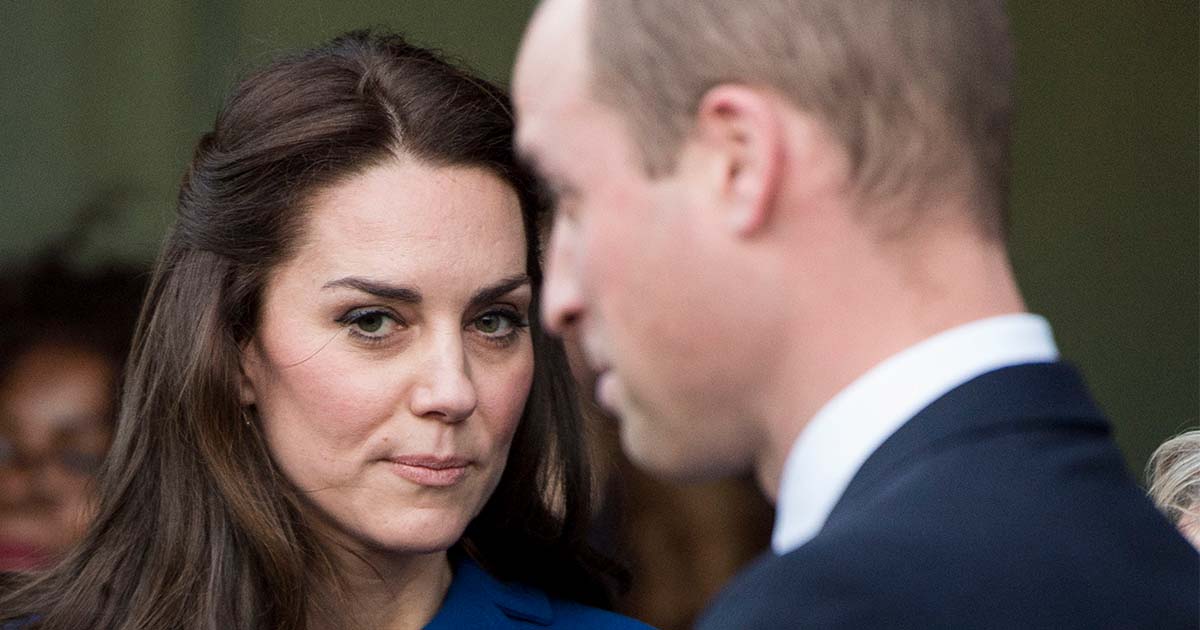
Of course, not every moment is serene. The camera doesn’t discriminate; it will catch both the tender looks and the impatient ones. At a recent royal wedding in Jordan, for example, onlookers and body-language watchers noted an exchange in which William appeared eager to move things along while Kate continued a warm conversation with the bride. Reports suggested he urged her to hurry, with a brisk phrase that sparked a wave of commentary.
Observers pointed out that Kate was not delaying proceedings and that the exchange looked unnecessary and a touch curt. Some called it a rare public glimpse of tension—a reminder that even a well-matched couple can have off-key moments, especially during busy, formal events where timing is tight and protocol matters. To many, this brief instance was not a scandal but a snapshot of normal human behavior under stress, magnified by circumstance.
For those of us who have attended big family weddings or formal gatherings, the scene may feel familiar. One partner is focused on the schedule, the other on the conversation in front of them. A gentle nudge can come across more sharply than intended. And when you are the Prince and Princess of Wales, that small friction is suddenly global news. It’s a humbling reminder that real relationships are lived in the unscripted moments.
“Not as perfect as it might seem”
Royal authors who study the family closely suggest that William and Kate don’t aspire to project perfection. Instead, they work to appear relatable, accepting that, like every couple, they have days when they feel in step and days when they don’t. The difference, these commentators say, is in how they handle those moments—usually calmly, often privately, and almost always without public complaint.
Some have remarked that William tends to echo the late Queen’s measured demeanor, choosing restraint over reaction. Kate, meanwhile, is often described as level-headed and steady, the person most likely to smooth the waters when emotions rise. It’s an approach that has helped them weather disagreements without drama. One observer even quipped that while some couples might hurl heavy objects in anger, William and Kate would be more likely to toss a cushion—an image that underscores their desire to keep conflicts in perspective and under control.
There is also the unending presence of advisers, planners, and logistical staff that surround a working royal couple. Coordinating diaries, managing appearances, and preparing for national and international engagements creates a constant hum of activity. One royal commentator compared it to stepping into a scene from a classic English novel, where the household is always in motion and personal space can feel limited. That background noise can make it even more important for William and Kate to carve out small pockets of peace.
Growth, compromise, and the power of time
For many couples in midlife, William and Kate’s story feels familiar in spirit if not in scale. Careers expand. Children grow and need different kinds of attention. Elderly relatives may require care. Friendships change. Through it all, the relationship itself has to keep evolving. What worked in one decade often needs revisiting in the next.
In their case, the adjustments have been especially visible. They began as university sweethearts with relative privacy. They stepped onto the world stage as newlyweds. They became parents and senior working royals, setting the tone for a new generation of the monarchy. Each transition demanded patience, discussion, and compromise. And each required them to define, over and over, what kind of partnership they wanted to share.
Watching them today, you can see the careful balance they aim for: a willingness to embrace duty while protecting a family life that feels real. That isn’t about never disagreeing or never stumbling. It’s about building routines that anchor the partnership and making course corrections with humility when needed.
Why their story resonates
Part of the fascination with William and Kate is that their life seems impossibly distant, yet the heart of their relationship is so recognizable. We understand the sting of a breakup and the bravery it takes to try again. We understand busy weeks when it’s hard to find time for a quiet conversation. We understand the desire to give our children stability, even when our own schedules feel strained. And we understand that love is not a final destination but a daily practice.
The couple’s decision to keep many things simple—cooking at home, slipping out for a low-key meal, returning to the places where they first fell in love—speaks to a truth that many long-married people know well. It’s the everyday gestures that add up and keep the spark alive. It’s remembering to listen, to forgive, and to laugh at life’s minor mishaps. It’s choosing to look at each other with fresh eyes after a hard day, and to be gentle in the moments when impatience tries to take the lead.
A realistic kind of hope
None of this is to suggest that William and Kate are without flaws or that their path has been smooth. By multiple accounts, they have had sharp words, stressful days, and private disagreements. They have also been scrutinized in ways most couples will never experience. Yet the broad arc of their story offers a realistic kind of hope—the kind that says lasting love is possible when two people keep showing up, keep communicating, and keep choosing one another through change.
It can be comforting, especially for those of us who have weathered our own ups and downs, to know that even under the brightest spotlight, a marriage can remain grounded in ordinary kindness. Perhaps that is their quiet legacy-in-progress: to show that a royal marriage can be less about perfection and more about perseverance, patience, and partnership.
What we can take away
If there is a takeaway from William and Kate’s not-so-perfect, very human story, it’s this. Relationships are not defined by the absence of conflict but by how we move through it. The 2007 split did not end their bond; it reset it. The pressures of public life did not crush their connection; they refined it. The scattered moments of impatience we’ve seen do not define their marriage; they simply remind us that real love exists behind the pageantry.
For anyone who has built a life with another person—navigating careers, raising children, caring for extended family—this might sound familiar. You keep going, one conversation, one compromise, and one shared meal at a time. And in doing so, you create something steady and strong, even if it’s not always perfect. Especially because it’s not always perfect.
Still writing their story
As they continue their work and raise their children, William and Kate remain a couple in motion—learning, adjusting, and setting examples in both public and private ways. They will likely have more moments when the camera catches an awkward glance, and more moments when a small kindness speaks volumes. That is the nature of a life lived in the open and a marriage carried forward with intention.
In the end, their relationship may be best understood not as a fairy tale with a tidy ending, but as a long, unfolding chapter book—one that includes a few dog-eared pages, some margins filled with notes, and plenty of scenes worth revisiting. It’s an honest kind of love story, recognizable to anyone who has ever had to choose patience, try again, and keep the spark burning in the ordinary glow of everyday life.