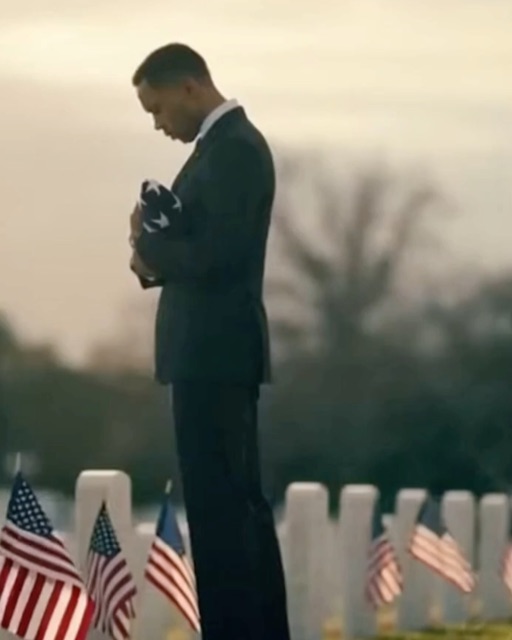
The wind whipped through Arlington as they lowered my father’s casket. No fanfare. No crowds. Just me, clutching a folded flag, staring at the fresh earth.
Dad was a retired SEAL. Quiet guy. Fixed boats for a living after the service. Never bragged about missions or medals. When he dropped dead from a heart attack, his estate was a joke: a paid-off house, some tools, and a beat-up truck.
My brother, Rick, showed up for the reading of the will. “That’s it?” he snorted, eyes scanning the papers like he expected gold bars. Rick’s always been the opportunist – bad investments, endless loans from Dad that he never paid back.
I shrugged it off. Grief does that.
But as the chaplain wrapped up and the rifles cracked the air, a shadow fell over the grave. A four-star general, silver hair, ramrod straight. He didn’t salute. Just extended a hand.
“Served with your father,” he said, voice gravel low. “Go to Geneva. Mention his name at the bank on Bahnhofstrasse. They’ll know.”
My stomach twisted. Geneva? Bank? Dad hated travel – last trip was a fishing weekend in Virginia.
He slipped a plain card into my palm: a phone number, no name. Then he melted into the rows of stones like he’d never been there.
Rick was already in his car, honking. I pocketed the card and drove home to Dad’s empty place. Smelled like coffee and salt.
That night, I couldn’t sleep. Rifled through his desk – bills, fishing lures, nothing. But in the garage, behind a stack of old paint cans, a locked metal box. No key.
Rick texted: Anything valuable? We should split fair.
Fair. Right.
Next morning, I dialed the number. A clipped voice answered: “Name?”
I gave Dad’s.
Silence. Then: “Expected. Bring the death certificate. We have his accounts ready.”
Accounts? My hands shook as I hung up.
Dad wasn’t broke. He was hiding something massive.
I booked the flight that afternoon. Didn’t tell Rick.
But as I packed, I found a photo tucked in Dad’s wallet: me as a kid, him in dress blues, and a woman I didn’t recognize. On the back, scrawled in his handwriting: For when it’s time. Protect her.
Her? Who the hell was she?
The flight to Geneva was a blur of recycled air and bad coffee. My mind was a whirlwind, spinning around three things: a general, a bank account, and a woman’s face.
I felt like a fraud walking onto Bahnhofstrasse. The street oozed wealth. Men in tailored suits and women with pearl necklaces glided past storefronts with names I couldn’t pronounce.
The bank was a fortress of polished marble and hushed whispers. It didn’t have a name on the outside, just a discreet, gilded symbol.
A severe-looking woman with her hair in a tight bun led me to a private room. No windows. Just a heavy mahogany table and two chairs.
“Your father was a valued client,” she said, her voice as crisp as a new banknote. She reviewed the death certificate with an unnerving stillness.
Then, she slid a portfolio across the table. I opened it.
The numbers swam before my eyes. Seven figures. More money than my father could have earned in ten lifetimes fixing boat engines.
My breath hitched. This was life-changing, world-altering money.
“There is also a safe deposit box,” the woman added, unfazed. She produced a single, ornate brass key. “He left instructions. This key is for you. The other is already in your possession.”
I frowned. “I don’t have another key.”
She gave me a thin, knowing smile. “He was certain you would find it.”
Then she handed me a sealed envelope. My name was on the front, in Dad’s familiar, blocky script.
I left the bank in a daze, the portfolio heavy in my briefcase, the letter burning a hole in my pocket. I found a small cafe overlooking the lake and ordered a coffee I didn’t drink.
With trembling hands, I opened the letter.
“Daniel,” it began. “If you’re reading this, I’m gone. I’m sorry I couldn’t tell you this in person. Some things are too heavy to carry in the light of day.”
He went on to explain. It wasn’t about one mission, but a series of them, off the books. Operations that governments couldn’t acknowledge. My dad and his team were sent to recover assets stolen by tyrants and warlords—gold, art, bearer bonds.
Most of it was returned to its rightful owners. But some of it… some of it was untraceable. A percentage was set aside by their handlers, a silent pension for a job that officially never happened.
“It wasn’t for greed, son,” he wrote. “It was for peace of mind. Knowing you and Rick would be okay. Knowing I could fix my mistakes.”
Mistakes? That’s when the letter turned.
“The woman in the photo is named Elara. Her father was an informant who helped us on our last operation in the Balkans. A good man. He gave us the location of a weapons cache in exchange for safe passage for his family.”
My heart started pounding.
“We got the weapons, but we were compromised. They came for him before we could get them out. They took everything from her. I was the one who promised him she’d be safe. I failed.”
He had spent the rest of his life watching over her from a distance. The money wasn’t just for me and Rick. It was for her. It was his penance.
“She doesn’t know about me or the money,” the letter concluded. “She lives a quiet life. Find her. Keep her safe. The key from the bank opens the box in the garage. Everything you need to know is inside. This is my last mission, Daniel. Don’t fail it like I did.”
He’d included an address. Not in some exotic country, but in a sleepy town in rural Vermont.
A wave of understanding washed over me. My dad wasn’t just a boat mechanic. He was a guardian angel, burdened by a promise he couldn’t keep in life. Now, that burden was mine.
I flew back to the States the next day. The first thing I did when I got home was go to the garage. The old metal box was right where I’d left it.
The ornate key from the Geneva bank slid into the lock. It turned with a satisfying, heavy click.
I lifted the lid. There was no treasure inside. No gold, no secret documents.
It was filled with journals. Dozens of them, bound in worn leather, filled with Dad’s handwriting. And beneath them, a series of detailed charcoal sketches.
The drawings were of Elara.
He’d drawn her over the years, from a distance. Elara as a teenager, reading a book on a park bench. Elara in a college graduation gown, a small, sad smile on her face. Elara arranging flowers in the window of a small shop.
He hadn’t just watched over her. He had studied her, chronicled her life, silently sharing in her quiet existence. This box wasn’t a cache of secrets. It was a shrine.
My phone buzzed. It was Rick.
“So, how was Switzerland?” he asked, his voice dripping with suspicion.
My blood ran cold. “What are you talking about?”
“Don’t play dumb with me, Danny. I saw the flight confirmation on the home computer. A trip to Geneva right after the funeral? You found something. Dad’s secret stash. And you were going to cut me out.”
“It’s not what you think, Rick,” I said, my voice low.
“Save it. I want my half. Or I swear, I’ll make your life a living hell.” He hung up.
I knew he meant it. Rick in debt was a cornered animal. But his greed was a sideshow now. My mission was clear.
I packed a bag, put the most recent journal in it, and drove north.
The town in Vermont was exactly as my dad’s letter described: quiet, quaint, nestled in the green mountains. Elara’s address led me to a small bookstore with a floral shop next to it. “Bloom & Verse,” the sign read.
Through the window, I saw her. She was older than in the last sketch, her dark hair streaked with a little gray at the temples, but it was unmistakably her. She was arranging a bouquet of lilies, her movements graceful and focused.
I spent two days just watching, trying to figure out how to approach her. How do you walk into a stranger’s life and tell her your dead father was her secret protector?
On the third day, I saw a black sedan with tinted windows parked across the street. It hadn’t been there before. It didn’t belong in this town of pickup trucks and Subarus.
A prickle of fear ran down my spine. Coincidence? Or was I being followed?
I decided I couldn’t wait any longer. I walked into the shop, a small bell tinkling above the door. The air smelled of damp earth and fresh blossoms.
“Can I help you?” Elara asked, her voice soft, with a faint, unplaceable accent.
“I… I was a friend of Michael’s,” I said, using my dad’s first name.
Her face, which had been open and pleasant, instantly shuttered. A flicker of something—fear, maybe?—crossed her eyes. “I don’t know any Michael.”
“He was a SEAL,” I pushed gently. “He served in the Balkans a long time ago. He knew your father.”
She took a step back, her knuckles white as she gripped the counter. “You need to leave. Right now.”
“Please,” I said, pulling one of the journals from my bag. I opened it to a sketch of her, sitting on a park bench as a girl. “He asked me to protect you.”
Her eyes widened as she saw the drawing. The tough exterior crumbled, and for a second, I saw the lost girl my father had spent his life trying to save.
Before she could speak, the bell on the door chimed again.
Two men walked in. They were large, dressed in dark suits that looked out of place, and their eyes scanned the shop with a cold, professional efficiency. They weren’t here to buy flowers.
The man in front smiled, but it didn’t reach his eyes. “Elara. It has been a long time. The old man’s account was finally accessed. We knew it would lead us to you. And to what your father hid.”
My blood turned to ice. They weren’t my dad’s contacts. They were the enemy. The people he had spent his life protecting her from. Accessing the account had been like setting off a flare.
Elara was pale, her breath coming in short, panicked gasps.
“He doesn’t have anything,” she whispered, looking at me. “My father had nothing.”
“We believe otherwise,” the man said, taking a step forward. “And now we have all the time in the world to find out.”
My mind raced. Dad was a SEAL. I was a guy who designed websites. What could I possibly do? Then I remembered his letter: Everything you need to know is inside. He didn’t just mean the journals.
The men were focused on Elara. I slowly backed away toward the rear of the shop.
“There’s a back door,” I hissed at her. “Go. Now.”
One of the men turned toward me. “Don’t be a hero, kid. You have no idea what you’re involved in.”
Suddenly, the front door burst open. It was Rick.
His face was a mask of fury. “Where is it, Danny? Where’s my money?”
The two men exchanged a look, a mixture of annoyance and opportunity. This was the distraction I needed.
“Rick, you have to get out of here!” I yelled.
But my brother wasn’t listening. He saw the two men, saw the fear on Elara’s face, and his greed-fueled rage faltered, replaced by confusion.
“What’s going on?” he stammered.
The first man chuckled. “Family reunion. How nice.” He pulled a sleek, black pistol from his jacket. “Now, everyone is going to be very calm.”
It was then that Rick saw the gun. For the first time, he understood this wasn’t about money anymore. This was real.
Something shifted in my brother’s eyes. The petulant, selfish man I’d known my whole life seemed to vanish, replaced by the scared older brother who once protected me from bullies in the schoolyard.
“Run, Danny,” he whispered, his voice trembling.
Then he did something I never would have expected. He lunged. Not at me, but at the man with the gun.
It wasn’t a trained, tactical move. It was a desperate, clumsy tackle. He slammed into the man, sending them both crashing into a large display of ceramic pots.
The shop erupted in chaos. The second man rushed to help his partner. I grabbed Elara’s arm.
“Now!” I shouted.
We scrambled out the back door and into a narrow alley. I could hear shouting and a crash from inside the store. I didn’t look back. We just ran.
We didn’t stop running until we were deep in the woods behind the town. We hid in a thicket of pine trees, hearts hammering against our ribs.
I called the number the general had given me. This time, I didn’t just give my dad’s name. I told him everything.
“Stay put,” was all he said. “Help is on the way.”
An hour later, two unmarked black helicopters descended on the town. It was over quickly and quietly.
A man in fatigues found us in the woods. He told us the men were in custody. They were remnants of the same paramilitary group my father had fought twenty years ago. They had been monitoring his accounts, waiting.
He also told me that my brother, Rick, was alive. He had a broken arm and a concussion, but he was alive. He’d bought us the time we needed.
Later, General Harding met me at a small, local airfield.
“Your father was a good man,” he said, his gaze steady. “He carried a weight few could understand. He would be proud of you.”
“And my brother?” I asked.
“He’s a fool,” the general said, without malice. “But he was brave when it counted. He’ll be questioned and released. I suspect he’s learned a valuable lesson.”
He was right. I saw Rick a week later. He was different. Quieter. Humbled.
“I’m sorry, Danny,” he said, not looking at me. “All I saw was the money. I didn’t see what was real.”
There was nothing left to say. I just nodded. It was a start.
Elara decided to leave Vermont. With the threat gone, she was finally free. But the bookstore, the town… it was all tainted now.
I helped her pack. We went through my dad’s journals together. She cried when she saw the sketches, finally understanding the silent, steadfast presence that had guarded her entire life.
“He gave me a life of peace,” she said, her voice thick with emotion. “Even if I never knew it.”
A portion of the money my father left was hers, by right of the promise he had made. She used it to start over, somewhere by the sea, opening a new shop that sold both flowers and books. We stayed in touch, becoming the strange, cobbled-together family my father’s legacy had created.
I never touched the rest of the money for myself. Instead, I used it to create a foundation in my father’s name. It provided support and services for the families of special operators, a quiet pension for those who carry the heaviest burdens in silence.
I finally understood my father’s inheritance. It wasn’t the millions in a Swiss bank. It was the journals, the sketches, the unwavering promise to a fallen friend. His legacy wasn’t wealth; it was a code of honor, a quiet sense of duty that money could never buy. He’d left behind a mission, and in completing it, I had finally, truly, come to know my dad.