
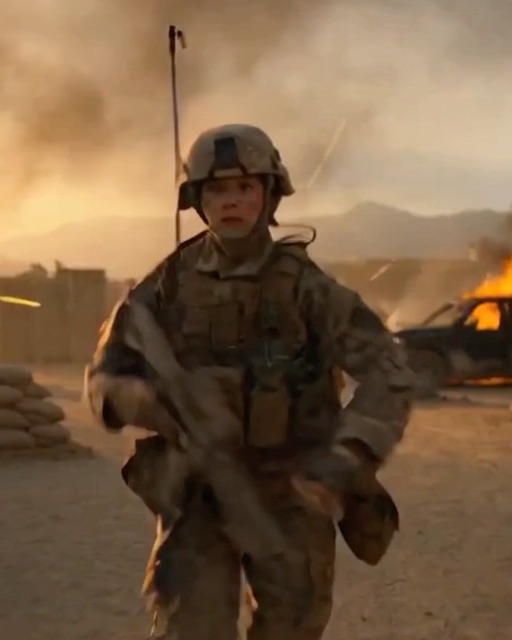
I finally touched down after 14 months dodging bullets in the desert. Sergeant Kara Mills, reporting home – scarred but alive. I’d dragged Corporal Todd Harlan two miles through hell, stitching his gut wound myself while RPGs exploded around us. He lived because of me.
My husband, Brett, waited at the airport with a weak smile and a bouquet. No big hug. Just a quick peck. “Welcome back,” he mumbled, eyes darting away.
We pulled into our driveway. Balloons everywhere. Neighbors grilling burgers for the welcome-home bash. I forced a grin, but my gut twisted. Brett had been weird on the drive – fidgety, checking his phone nonstop.
Then Todd showed up. Clean-shaven in jeans and a polo, looking nothing like the bloody mess I’d saved. He bear-hugged me. “You owe me nothing,” I said. “Just pay it forward.”
The party buzzed. Laughter, beers clinking. But Todd kept glancing at Brett, who hovered by the cooler like a ghost.
Halfway through, Todd pulled me behind the garage. His face went stone-cold. “Kara, I didn’t want to do this here. But before I got hit… I saw something. Your husband wasn’t where he said he was.”
My blood ran cold. “What do you mean?”
He handed me his phone. A photo. Timestamped the week before my unit shipped out. Brett, in bed with…
I froze. My knees buckled. “Todd, tell me this isn’t – ”
It was my best friend, Sarah.
The world tilted on its axis. The sound of the party, the sizzle of the grill, it all faded into a dull, roaring hum in my ears. Sarah. The one who held my hand at my mother’s funeral. The one I called from a dusty outpost just to hear a familiar voice.
Todd steadied me with a hand on my arm. His grip was firm, grounding. “I’m so sorry, Kara. I saw his car at a motel two towns over. I almost didn’t stop, but something felt wrong. I took the picture and forgot about it until… well, until you saved my life. I figured you deserved the same kind of loyalty you give.”
I stared at the screen, at Brett’s arm draped over Sarah’s bare shoulder. They were smiling. It wasn’t a mistake. It was a memory they were making.
I straightened up, my spine locking into place like the bolt of a rifle. The soldier in me took over. Emotion was a liability on the battlefield. Right now, my home was a battlefield.
I walked back to the party, my steps measured and silent. I found Brett laughing with my neighbor, a beer in his hand. He looked so normal. So innocent. The thought made me sick.
“Brett,” I said. My voice was eerily calm. “We need to talk. Inside.”
The smile fell from his face. He saw the look in my eyes. The one my platoon saw when things were about to get bad.
Inside, the house felt cold despite the summer heat. The welcome home banner drooped over the doorway like a sad frown.
I didn’t waste time. I didn’t shout. I just held out Todd’s phone.
He glanced at it and his face went white. He opened his mouth, a pathetic string of excuses already forming. “Kara, baby, it’s not what it looks like. It was a one-time thing. I was lonely. You were gone so long.”
“Was it a one-time thing when you drained our savings account?” I asked, my voice still quiet. The question just popped out, a stray thought I hadn’t even realized I was having.
He flinched. It was a direct hit. “What are you talking about?”
“The money, Brett. The money we were saving for a down payment on a bigger house. The money from my deployment pay. Where is it?”
He started to sweat. “It’s invested! I was trying to surprise you. I found a great opportunity.”
The lies were so clumsy, so insulting. He thought I was stupid. He thought fourteen months of combat had made me weak, not sharp.
“Get out,” I said.
“What? Kara, don’t do this. We can talk about this.”
“There’s nothing to talk about. Pack a bag. Get out of my house.”
He stared at me, his eyes wide with disbelief, as if I were the one betraying him. Then his face hardened. “Fine. You want to be like that? You’ve changed, Kara. The army ruined you. You’re cold.”
“No, Brett,” I said, stepping aside to give him a clear path to the bedroom. “I’m not cold. I’m just not a target anymore.”
The party died a quick, awkward death. Todd helped me explain. A sudden migraine. The jet lag. People nodded with sympathy, their eyes full of pity I didn’t want. They packed up their coolers and their kids, leaving half-eaten burgers on paper plates.
When everyone was gone, Todd stayed. He didn’t say much. He just sat at my kitchen table while I tore down the balloons, one by one, the sound of popping rubber like small gunshots in the silent house.
Brett came downstairs with a duffel bag. He didn’t look at me. He just walked to the door, paused, and said, “My lawyer will be in touch.” Then he was gone.
The silence he left behind was heavier than any sandstorm.
“You okay, Sarge?” Todd asked softly.
“I will be,” I said, stuffing the last of the deflated balloons into a trash bag. “It’s just… a different kind of war.”
The next few days were a blur of logistics. I changed the locks. I called my bank. The woman on the phone was polite but unhelpful. Since it was a joint account, Brett had every right to withdraw the funds. All sixty-thousand dollars of them.
My savings were gone. My marriage was a lie. My best friend was a traitor. I felt hollowed out, like a building after a bomb blast.
Todd refused to leave me alone. He showed up every morning with coffee and a plan. “Okay, first we inventory everything. Then we secure your assets.” He was treating it like a mission, and I was grateful for it. It was a language I understood.
We started with Brett’s office. He’d cleared out his personal files, but he was sloppy. Tucked under a blotter on the desk, we found a receipt. It was from a high-end architectural firm, paid for a few months ago. The payment was for “preliminary blueprints and zoning consultation.”
“What was he building?” Todd wondered aloud, holding the paper up to the light.
My mind raced. Brett was a mid-level marketing manager. He didn’t build things. He sold things.
We kept digging. In the back of his closet, shoved into an old shoebox, was a stack of bank statements for an account I’d never seen before. It was a business account, opened six months ago. The name on it was “The Daily Grind, LLC.” The sole proprietor listed was Sarah Jenkins. My Sarah.
My breath hitched. Todd put a steadying hand on my shoulder.
There were regular, large deposits. They matched the withdrawals from our joint savings. They’d been bleeding me dry, little by little, while I was getting shot at.
The final piece of the puzzle was a folded, crisp document at the bottom of the box. It was a deed. A commercial property deed for a storefront downtown. Purchased in cash three months ago.
They hadn’t just had an affair. They had stolen my future. They had used my money, the money I earned risking my life, to build a new life for themselves. The coffee shop, “The Daily Grind,” was their dream, funded by my nightmare.
The rage that filled me was white-hot and pure. It burned away the grief and the shock. I wasn’t a victim. I was a sergeant in the United States Army. And they had just made a very powerful enemy.
“Todd,” I said, my voice like steel. “I need to make a phone call.”
The lawyer’s name was Evelyn Albright. She was a retired JAG officer, a woman whose reputation was as sharp and unforgiving as a bayonet. When I laid out the documents on her polished mahogany desk, she didn’t offer sympathy. She just nodded slowly, a predatory gleam in her eyes.
“This is clean,” she said, tapping the fraudulent bank statements. “This is classic financial malfeasance wrapped in marital infidelity. They think because you were deployed, you were distracted. They underestimated you.”
“Everyone always does,” I replied.
“We won’t just file for divorce,” Evelyn continued, a thin smile playing on her lips. “We’ll file a civil suit for fraud. We’ll put a lien on the business before they can even open their doors. We’ll freeze every asset they have. By the time we’re done, he won’t be able to afford the coffee he’s planning to sell.”
The plan was surgical. It was precise. It was exactly what I needed.
Over the next few weeks, I operated with military precision. I compiled every piece of evidence. Every bank statement, every email, every text message Brett had foolishly left on the cloud. Todd was my reconnaissance team, my second-in-command. He drove by the downtown property, taking pictures of the construction. He found their new apartment, a luxury high-rise I was apparently paying for.
The whole time, Brett and Sarah were silent. They thought they had gotten away with it. They were probably laughing, decorating their little shop, picking out paint colors with my money.
The day came. Evelyn filed everything at once. The divorce papers. The fraud suit. The emergency motion to freeze their assets.
It was a coordinated attack.
I heard about the aftermath from a mutual friend. A process server walked into the half-finished coffee shop and handed Brett the papers right in front of the construction crew. At the same time, another server found Sarah at her new salon. Their bank accounts were frozen instantly. The credit cards they were using to fund their new life were declined.
Their dream came to a screeching halt.
Brett called me, screaming. He was unhinged, rambling about how I was ruining his life, how I was a monster. I listened calmly, the phone held a few inches from my ear.
“You didn’t just cheat on me, Brett,” I said when he finally ran out of air. “You tried to rob me. You declared war. You just forgot who you were fighting against.”
I hung up.
The legal battle was brutal, but short. The evidence was irrefutable. The judge, a veteran himself, took one look at my deployment records and the timeline of the withdrawals and made his decision quickly.
I got everything. The house. The car. Every single dime they had stolen, plus damages. The coffee shop, “The Daily Grind,” became my property.
Brett and Sarah were left with nothing but crippling legal debt and each other. Their grand romance, built on a foundation of lies and theft, crumbled under the pressure. The last I heard, he was working a dead-end job back in his hometown, and she was living with her parents. They had destroyed each other as effectively as they had tried to destroy me.
For a while, I didn’t know what to do with a half-finished coffee shop. It felt tainted, a monument to the worst year of my life.
Todd had an idea. “Don’t see it as theirs,” he said one afternoon, as we stood in the dusty, empty space. “See it as yours. You fought for it. You won it.”
He was right.
We spent the next six months renovating. We threw out their blueprints and started from scratch. We didn’t call it “The Daily Grind.” We called it “The Stronghold.”
It wasn’t just a coffee shop. It became a hub for veterans. We hired vets who were struggling to find work. We hosted support groups and job fairs. A portion of every sale went to a charity that helped soldiers transitioning back to civilian life.
Todd, true to his word, paid it forward. He wasn’t just a friend anymore; he was my business partner. He ran the day-to-day operations while I handled the outreach. We built something good out of the wreckage. Something strong.
One crisp autumn morning, a year after I came home, I was standing behind the counter at The Stronghold. The place was buzzing with life. Laughter and conversation filled the air, mingling with the smell of fresh coffee and pastries. I looked around at the faces of the men and women I was helping, at the community we had built.
I had walked through fire in the desert and come home to a different kind of war. I had faced betrayal from the two people I trusted most in the world. They had tried to take everything from me, leaving me with nothing but ashes.
But they forgot one thing. A soldier knows how to rebuild from the ashes. We know that the deepest wounds sometimes leave the strongest scars. My battlefield had changed, but the mission was always the same: to survive, to adapt, and to come out stronger on the other side. My strength wasn’t just in the lives I could save under fire, but in the life I could build for myself when the fighting was done.



