Modern medicine and technology have made remarkable progress, giving people with rare conditions more hope than ever before. Doctors and researchers around the world continue to study unusual health issues, learn how they affect the body, and look for ways to ease symptoms and improve daily life. Even so, there are still conditions so uncommon that they remain puzzling, without an official name or clear explanation.
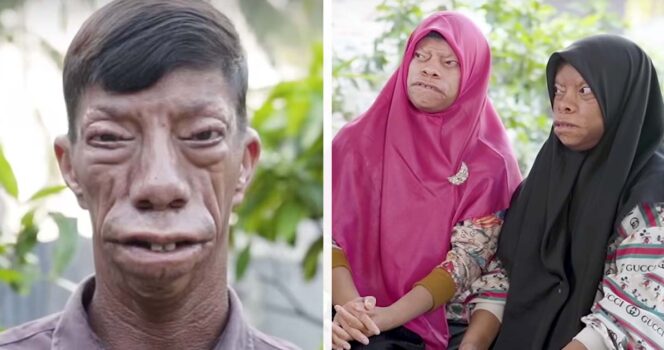
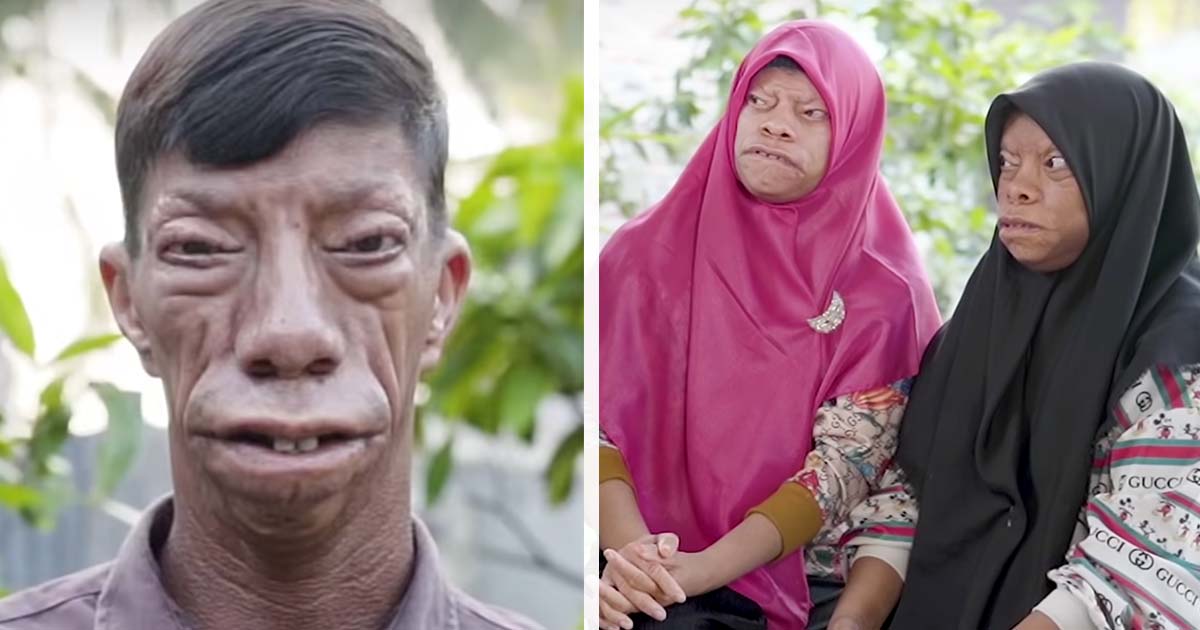
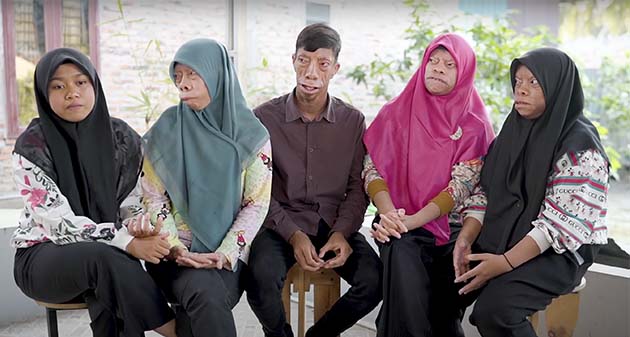
One such mystery has touched an Indonesian family whose story has now reached millions. The Manurung family includes a father and four of six siblings who live with a rare facial condition that has gradually changed their appearance over time. They have not received a confirmed diagnosis, yet they choose to focus on joy, connection, and purpose. Their outlook is warm and resilient, and their journey has made them unexpected stars on social media.
Their experience reminds us of something timeless. No matter where we were born, what language we speak, or what we believe, each of us is unique. Some have strong cheekbones or broad noses; others have tiny ears or hair that thins early. Our differences are part of our story, and celebrating them can bring us closer together. Appearance says little about character, kindness, or courage.
The Manurung family
Over the years, many people have tried changing their looks through cosmetic procedures, hoping to feel more confident. Sometimes that works out, but it can also be risky, and there are well-documented cases where things went terribly wrong. Those difficult stories serve as a reminder that beauty is more than a mirror can show and that health should always come first.
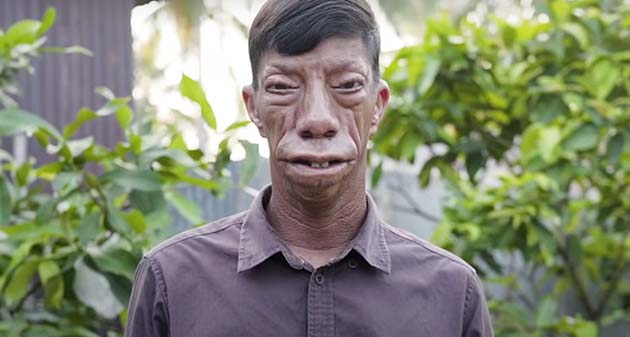
Against that backdrop, the Manurung family stands out not for seeking any kind of perfection but for embracing who they are. They live in North Sumatra, Indonesia, and in most ways they are like any other close-knit family. What sets them apart is a rare, still-undiagnosed condition that has changed the shape of several family members’ faces as they have grown older. Rather than allowing it to isolate them, they have chosen to share their lives openly and with good humor.
For a long time, even the family did not know what to call what they were seeing in the mirror. The changes came slowly and unevenly. Yet amid the uncertainty, their perspective never wavered: they matter to one another, and they deserve a full life, whatever their faces may look like. In today’s world, where social media can make anyone feel judged by a glance or a number of likes, their message is both simple and powerful.
Mother Mardiah and father Syarifudin have six children. Four of them, including their son Surya and daughters Sri, Mairani, and Tiur, have been part of a conversation that has reached far beyond their village. In a candid appearance on the YouTube channel Truly, the siblings talked about daily life with a rare facial condition that causes a gradual change in facial structure. Their willingness to speak openly offered a window into their routines, hopes, and sense of humor.
As the children grew, they discussed many possibilities about why some of them were affected while others were not. Over time they came to feel that genetics provided the most likely explanation. One of the siblings, also named Tiur, who does not share the condition, reflected thoughtfully on what that means for their family.
“I always used to think about it; why am I so different to my sisters and brother?” she said in the interview. “But when I got older, what I realized was that it must be genetics from our parents. My sisters and brother inherited it from my father, and I am more like my mother.”
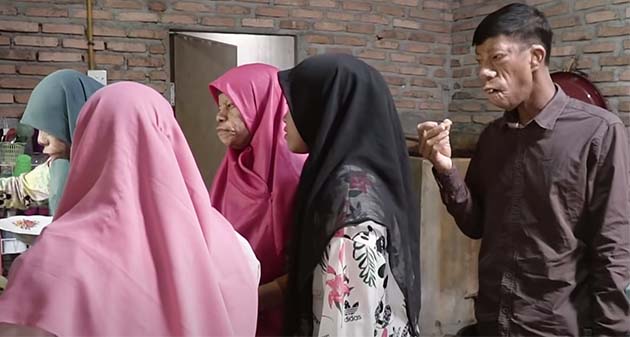
Some years ago, the family shared that they had not yet seen a specialist to fully investigate what was happening. They were open about the fact that they would seek medical help if symptoms began to affect daily life, and they remain attentive to changes. For now, they continue to live, work, and celebrate milestones much like anyone else.
Their condition does not affect their lives
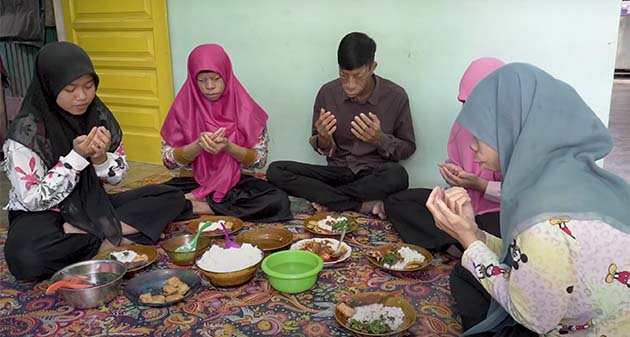
What stands out most is how calmly the Manurungs have faced an experience that might overwhelm many people. Their rare facial differences have not kept them from living active, meaningful lives. They enjoy the same ordinary moments we all cherish, from family meals to neighborhood gatherings. Their approach is practical and hopeful.
“We think that their condition right now isn’t a problem day-to-day. If it did cause problems, like tiredness, they would go to the doctor for a check-up,” explained Tiur. “Now, their condition doesn’t affect their lives, so it’s not an issue.”
Without a firm diagnosis, a few possibilities have been discussed by observers. One condition sometimes considered is Parry–Romberg syndrome, also known as progressive facial hemiatrophy. In that condition, the soft tissues on one side of the face can gradually thin over time. In some people the change stays mild, while in others it becomes more noticeable. Doctors who study the condition have described changes in muscle and fat beneath the skin, and even in the bones of the face in more advanced cases.
Descriptions of Parry–Romberg syndrome note that it can begin near the upper lip or below the nose, often on the left side, and slowly spread toward the eye, cheek, ear, or neck. In a small number of cases, it can be linked with neurological issues such as headaches, facial pain, seizures, or weakness on one side of the body. Some people also experience changes in their jaw or eye area. Treatment focuses on easing symptoms and, when desired, reconstructive procedures to restore fullness to the face. There is no single cure at this time, but supportive care can make a meaningful difference.
Possible explanations that have been discussed
Another condition that is sometimes mentioned in conversations about unusual facial structure is Treacher Collins syndrome. This is a genetic condition that affects how the bones and tissues of the face form before birth. The way it shows up can vary widely from person to person. In some, the features are very subtle; in others, the differences are more pronounced and can affect breathing, hearing, or appearance. People with Treacher Collins syndrome may have eyes that tilt slightly downward and a small notch at the lower eyelid, known as an eyelid coloboma. The condition does not reflect a person’s abilities, spirit, or potential; many people with it live full, active lives with the right support.
A third, much rarer condition known as Barber–Say syndrome has also been considered in general discussions about unusual facial development. It is a genetic difference present from birth that typically affects the outer features of the body, especially the face, more than the internal organs. People described with this condition can have very delicate, thin skin and sometimes unusually thick hair growth. Because it is so rare, information is limited, and experiences can differ significantly from one individual to another.
It is important to keep in mind that these are only possibilities raised in broader conversations about rare facial differences and that the Manurung family has not received a confirmed diagnosis. Their story is shared here not to label them but to reflect the thoughtful way they have navigated uncertainty. They have focused on what they can control: caring for one another, participating in their community, and choosing optimism in the face of questions that do not yet have clear answers.
“Our faces changed, but we accept it”
When you look a little different, curious glances are part of daily life. The Manurungs understand this well. In their village, people know them, greet them, and treat them as neighbors and friends. Out of town, strangers sometimes stare or react with surprise. The family has chosen to meet those moments with grace.
“When we walk around our village, we don’t have any problems. No one makes fun of us, no one insults us in our village,” shared Surya. “But if we leave here and go out of town, people who never seen us before for sure, they look surprised when they do. The fact is our faces changed, but we accept it and just live with it. We are thankful for it, it’s a gift from God. That’s how we see it.”
That outlook has also shaped how the siblings support one another. The sister without the condition has spoken about feeling for her siblings during tough moments. “I feel bad that they’re not like me,” she said gently. “I have a normal life without bullying, without being mocked, without being ridiculed by others. When they feel sad because of that, I do too.” Her words reflect a family bond that has carried them through teasing, questions, and the natural ups and downs of life.
Over time, many people living with rare differences have found strength and confidence by sharing their stories. When others can see the person, not just the condition, it helps dissolve stigma. The Manurungs have leaned into that idea, showing their good spirits and everyday routines to the world.
From village life to social media fame
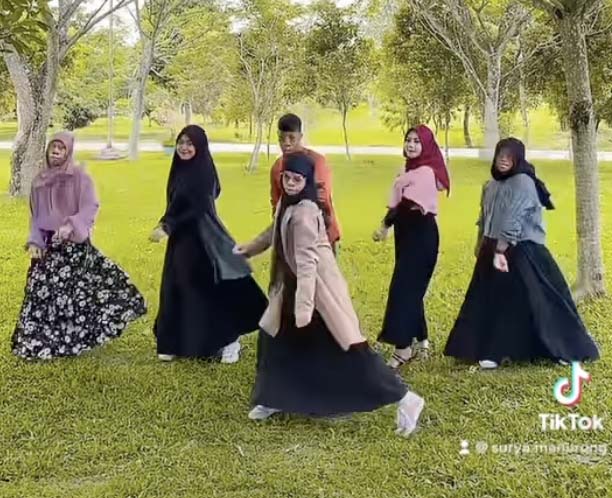
When the video-sharing app TikTok exploded in popularity, Surya and his siblings decided to give it a try. They started posting lighthearted videos, often dancing or simply enjoying time together. Their natural warmth resonated, and the clips began to spread far and wide. Audiences around the globe responded not with pity, but with delight at the family’s humor, energy, and togetherness.
As of March 2026, Surya Manurung has more than 3.5 million followers on TikTok and over 330,000 on Instagram. The family uses their channels to show that life with a rare facial difference can be active, creative, and fun. Their videos are not just entertainment; they are a reminder that behind every photograph or short clip is a full human story filled with love, effort, and hope.
Social media has also helped the Manurungs improve their finances. For a family that once lived entirely out of the public eye, the ability to reach millions has been life-changing. “We went viral on TikTok,” said mother Mardiah. “Since then people thought we did it for pity, but that’s not true. We’ve used this as an opportunity of going viral of hoping to earn a living to raise our living standards.” Their openness has allowed viewers to support them and has turned a personal challenge into a platform for growth.
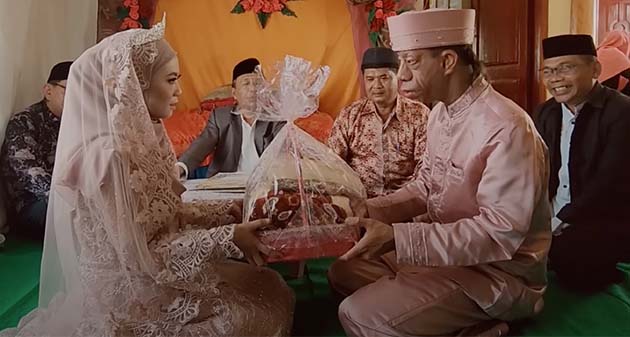
Nearly five years have passed since the family first appeared in a Truly documentary, and their story has continued to unfold in happy ways. Reports in Indonesia have celebrated Surya’s recent marriage to a woman named Shasa Puspita Dew, a milestone that brought the family and their community even closer. It is one more example of how, in spite of challenges and unanswered questions, the Manurungs continue to move forward with optimism and gratitude.
In the end, what makes this family so inspiring is not a diagnosis. It is their attitude. They accept uncertainty without letting it define them. They welcome curiosity without letting it unsettle them. They face the world as they are, and in doing so, they make the world a kinder place for anyone who has ever felt different. Their message is timeless: it is what is on the inside that counts most.
For anyone between big changes and big questions, the Manurungs offer a reassuring example. You do not have to wait for every answer to begin living fully. You can celebrate small joys, look after one another, and take pride in the person you are becoming. That is true at any age and in any place. The faces in this family may have changed, but their hearts, hopes, and humor have remained wonderfully steady—and that is what people everywhere are responding to.
The story of the Manurung family is, at its core, a story about dignity. In their village, they are neighbors. Online, they are entertainers. At home, they are simply a family who cooks, laughs, works, and prays together. By opening the door to their daily lives, they have shown millions what acceptance looks like in practice. They have also reminded us that even in a fast-moving digital world, kindness has a way of traveling farther than anything else.
Whether you first learned about them through a short video or a longer interview, their warmth is unmistakable. Their journey suggests a way forward for anyone feeling alone with a rare condition: you can be seen, you can be valued, and you can be loved exactly as you are. That is not only their lesson; it is their gift.