A night of tradition turns tense within minutes
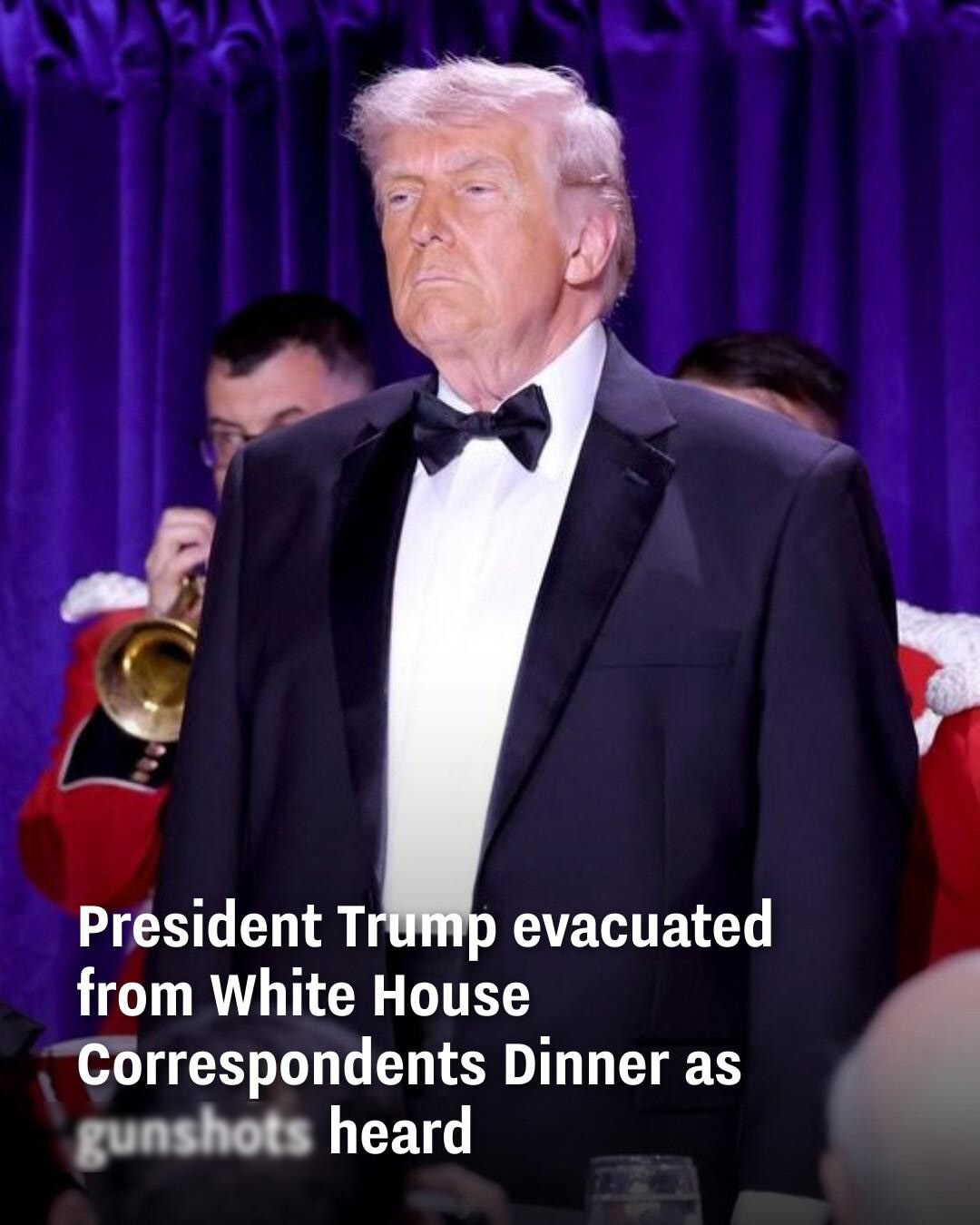
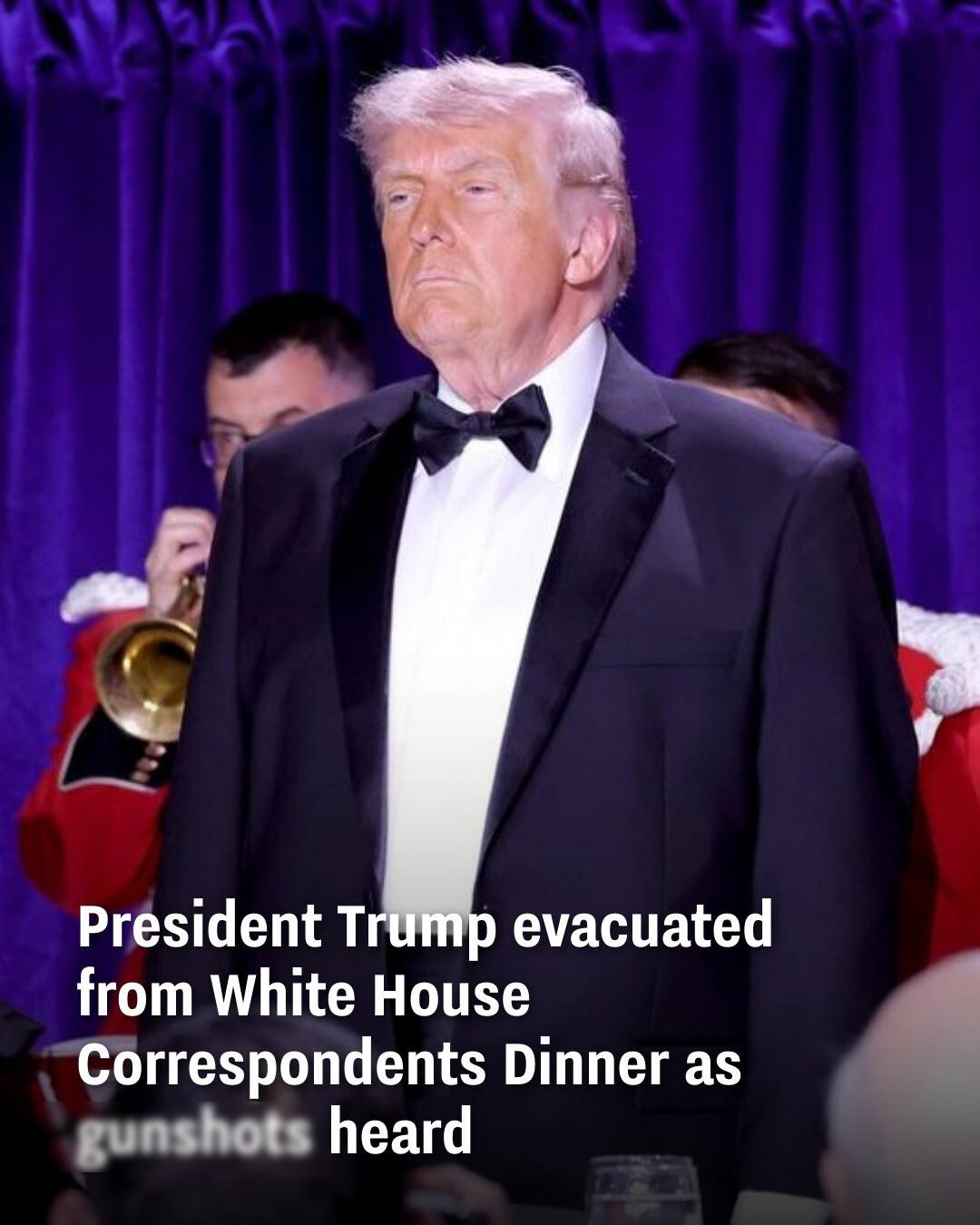
What began as a festive evening honoring journalism and public service quickly became a scene of urgency and confusion. Mere minutes into the White House Correspondents’ Dinner, President Trump was evacuated after gunshots were heard, bringing the program to an abrupt halt and sending a wave of shock through the packed ballroom.
The President had arrived in high spirits, smiling as he took his seat and chatted with White House Correspondents’ Association President Weijia Jiang following her opening remarks. The tone was light and celebratory at first—exactly the kind of social, good-natured evening this annual gathering is known for. That mood changed in an instant.
Attendees reported hearing several sharp, rapid sounds that many initially struggled to identify. In the blur of those first moments, some thought it might have been equipment or backstage noise. But as the sounds continued, Secret Service agents reacted immediately, instructing the President and First Lady Melania Trump to take cover. Within moments, they were swiftly escorted out of the room under tight protection.
Other senior officials were moved quickly as well. Cabinet members were ushered from their tables while agents and security officers spread through the hall, directing guests to remain low, keep calm, and follow instructions. The ballroom—typically a place for speeches, applause, and laughter—fell into a tense hush broken only by urgent voices and shuffling chairs.
Rapid response, early confusion, and a guarded calm
In those early minutes, information was scarce and sometimes contradictory, as is often the case in fast-moving situations. Reporters on site tried to confirm what they could while also following safety guidance. The Associated Press reported that neither the President nor the Vice President had been injured. Meanwhile, CNN initially reported that a shooter was dead, while the Associated Press noted that a person was in custody in connection with the incident. Those conflicting updates underscored how quickly details can shift in the immediate aftermath of a security threat.
Authorities moved to secure the area and evaluate any remaining risk. While guests waited for more clarity, many spoke in hushed tones or kept their eyes on the stage, where staff and organizers were in close contact with law enforcement. Even with an air of uncertainty, there was a shared sense that the responsible thing to do was to remain calm and trust the process.
For those who have attended many Washington events over the years, the professionalism of the response was striking. Secret Service and law enforcement coordinated quickly, balancing the need for caution with an effort to reduce panic. It was a difficult line to walk, but their swift, visible presence helped steady the room.
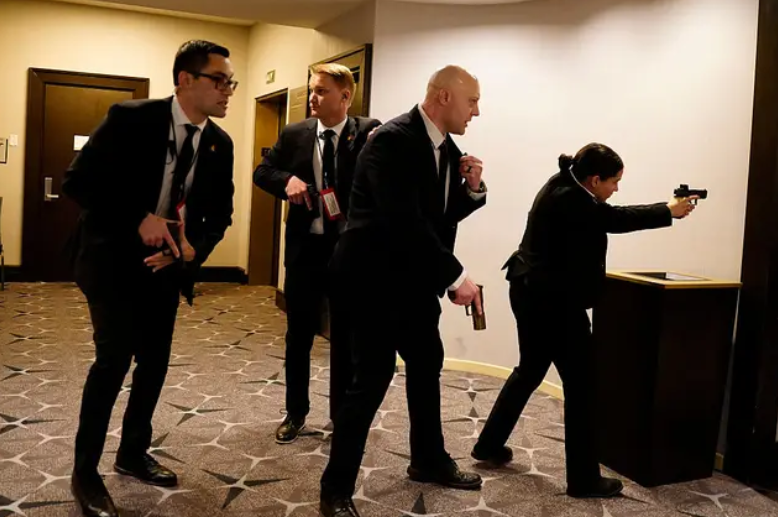
Inside the ballroom: a tense wait and a hope to continue
As the evening unfolded, an overhead announcement informed attendees that further updates would be provided and, at first, suggested the program might still continue. That message was met with a mixture of relief and applause. For a brief time, the room seemed to exhale, hoping the evening could return to normal once authorities completed their assessment.
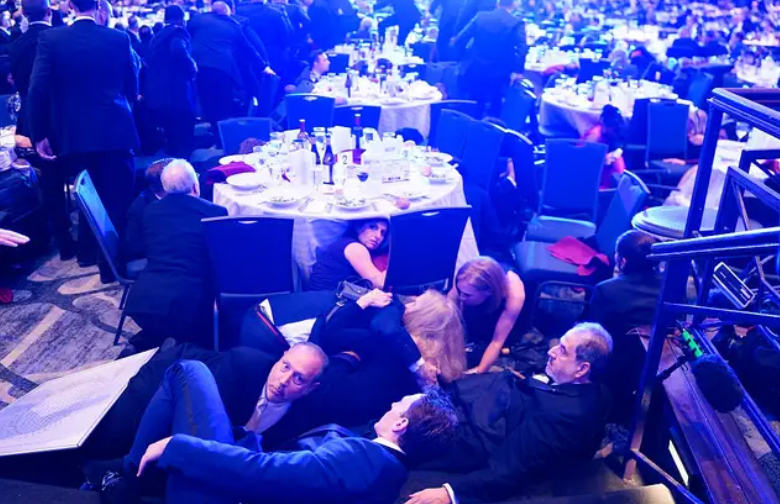
But emotions remained raw. People were visibly shaken, exchanging quiet words with colleagues and friends. Some took deep breaths and stayed in place at their tables; others crouched low or tucked themselves near the base of the stage, watching for signals from security staff. Even with the hopeful line that the program could resume, everyone knew the evening had changed.
Attendees later described the first sounds as coming from inside the Washington Hilton, creating chaos as guests tried to figure out where to go and what to do. Some ducked beneath tables, others moved toward exits under guidance from staff. In moments like these, training and instinct both come into play, and many did exactly what safety officials recommend—stay low, follow instructions, and keep movements orderly.
Human moments amid the emergency
The human side of the evening was impossible to miss. Witnesses described one guest in tears, calling it the scariest experience she had ever lived through. Senator John Fetterman was seen offering a steadying hand to a woman as she rose from under a table, an image that captured the small acts of care and kindness that often emerge in unsettling moments.
Elsewhere, a Secret Service agent carrying a military-style rifle moved decisively through the room, a stark sign of how seriously the threat was being taken. Several tables and chairs were knocked over in the rush to shield the President and senior officials, a snapshot of the urgency that seized the room in those first few minutes.
Video recorded by attendees captured the muffled nature of the sounds, which some said contributed to the delayed reaction. The lack of a clear, unmistakable “bang” meant not everyone recognized what they were hearing right away. Later reporting cited that the incident may have taken place on an upper level of the venue, away from the main ballroom—another reason the sounds were not immediately obvious to those seated for dinner.
In the midst of everything, guests kept looking for reassurance. A few stood near the edges of the ballroom, scanning for official updates. Others remained quietly in their seats, hands folded, faces set. Even seasoned Washington veterans admitted it was a jarring experience.
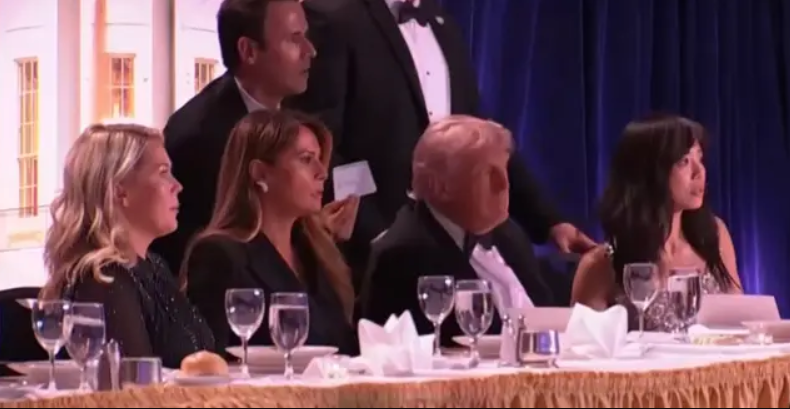
Onstage updates and a cautious plan to proceed
After an initial pause, Weijia Jiang returned to the stage and addressed the audience, acknowledging the tension in the room and promising that more details would be shared as soon as they were available. She emphasized that organizers were working closely with law enforcement to determine the safest path forward. Her message was clear, steady, and respectful of both the gravity of the situation and the audience’s desire for information.
At that moment, it was still uncertain whether President Trump would be able to return to deliver his planned remarks. Those close to the President indicated he was willing to do so if the Secret Service cleared it. That was a hopeful sign for attendees who wanted the evening to return to its original purpose—recognizing journalistic excellence and bringing together people from across public life in a spirit of civility.
As the room waited, the President shared a message on social media praising the quick and brave actions of the Secret Service and law enforcement. He indicated the shooter had been apprehended and said he had recommended letting the show go on, while adding that the final call would rest with law enforcement. He acknowledged that, given what had occurred, the evening would be different than planned and might need to be done again another time.
From cautious optimism to a hard but prudent decision
Over the next stretch of time, those in the ballroom and the surrounding halls awaited a final call. There was cautious optimism that the night might resume in some form. But security considerations remained paramount. Ultimately, shortly before 9:45 p.m. Eastern Time, Weijia Jiang returned with an emotional final update: because of security protocols, everyone needed to leave the building. The event was effectively canceled for the night.
The decision, while disappointing, was widely understood. Safety, particularly in a setting with a sitting President, senior government officials, and hundreds of attendees, has to come first. It was a once-festive evening interrupted by a sobering reality, and ending early was the responsible choice.
There were indications that the President asked for the event to be rescheduled within 30 days, with the possibility of a press briefing at the White House to follow. Those details signaled a desire to preserve the spirit of the dinner while acknowledging the gravity of what had happened. A rescheduled event would allow for the recognition and reflection that the evening initially set out to provide—this time in a more settled and secure environment.
Understanding the urgency: why responses can look sudden and stern
For many in the room—especially guests, honorees, and longtime Washington observers—the response may have felt swift and even startling. That is by design. When any potential threat is detected in proximity to the President, the Secret Service moves immediately to remove him from harm’s way and secure the location. That can mean a flurry of movement, protective formations, and forceful instructions. It can be unnerving to witness, but it reflects years of training built to save lives in unpredictable situations.
It is also common, in the initial minutes of an incident, for reports to vary. Witnesses hear different things from different vantage points; information arrives in pieces; and official statements evolve as authorities sort rumor from fact. In this case, early updates differed on whether the shooter was deceased or in custody. What did not change was the determination to keep people safe and to confirm details before drawing firm conclusions.
For those who have attended the dinner over decades, the contrast with its usual atmosphere was stark. Traditionally, the White House Correspondents’ Dinner is a night of camaraderie, gentle ribbing, and a shared commitment to a free press. Journalists, public officials, and guests gather to celebrate a uniquely American mix of accountability and humor. That is why the hope to resume—even briefly—was so strong. People wanted to reclaim the evening’s purpose. But prudence won out, and for good reason.
What attendees described in the room
Attendees recalled hearing several shots in quick succession and then seeing agents leap into action. Some described the initial sounds as muffled or distant, which is likely why a few moments passed before the room grasped what had happened. Others noticed tables toppling as people ducked for cover or moved to follow instructions. A number of guests later said they were grateful for the clear, firm guidance coming from security and event staff.
There were also simple, powerful acts of compassion. Friends checked on each other. Strangers offered water, reassuring words, or a steady arm to help someone stand. Moments like those remind us that even in unsettling circumstances, people look out for one another. That spirit was evident throughout the night.
Looking ahead: a return to purpose, when ready
By the time the final announcement to evacuate the building came, many attendees had already prepared themselves for the likelihood that the evening was over. Jackets were gathered, bags collected, and conversations turned to making sure colleagues and loved ones were accounted for. The departure was orderly, and outside the venue, people paused to take stock, to call home, and to reflect on what they had just experienced.
In the days ahead, more details about the incident are expected to come into focus, including the identity of the person involved and the motive. For now, what is clear is that the layers of protection around such events functioned as intended, and that those present—organizers, law enforcement, and attendees alike—did their part to minimize confusion and ensure safety.
When the dinner is rescheduled, it will no doubt carry the memory of this night. But it will also offer a chance to fulfill the event’s true aim: to recognize excellence in reporting, to honor the role of a free press, and to share a moment of goodwill, even among people who may disagree on the issues of the day. That is part of what makes the White House Correspondents’ Dinner a distinctive American tradition, and why so many look forward to its return.
A final note on patience, safety, and gratitude
For attendees, viewers, and readers alike—especially those who have followed Washington for many years—this was a sobering reminder that even familiar events can take unexpected turns. It is never easy to sit with uncertainty. But patience and trust in established procedures make a meaningful difference in how safely and smoothly such situations are resolved.
There is also reason for gratitude. The Secret Service and law enforcement responded fast and firmly, and event organizers stayed focused on guiding the room through uncertainty. Those efforts are not always seen in full, but they matter profoundly. The calm demeanor of many in the audience, too, helped keep the situation from becoming more chaotic.
In the end, while the night did not go as planned, the commitment to safety did. And when the dinner returns—on a new date, under careful watch—the hope is that it will bring back the laughter, recognition, and goodwill that have long defined it. Until then, the focus remains on learning exactly what happened and ensuring that future gatherings can proceed with confidence, care, and the respect such occasions deserve.