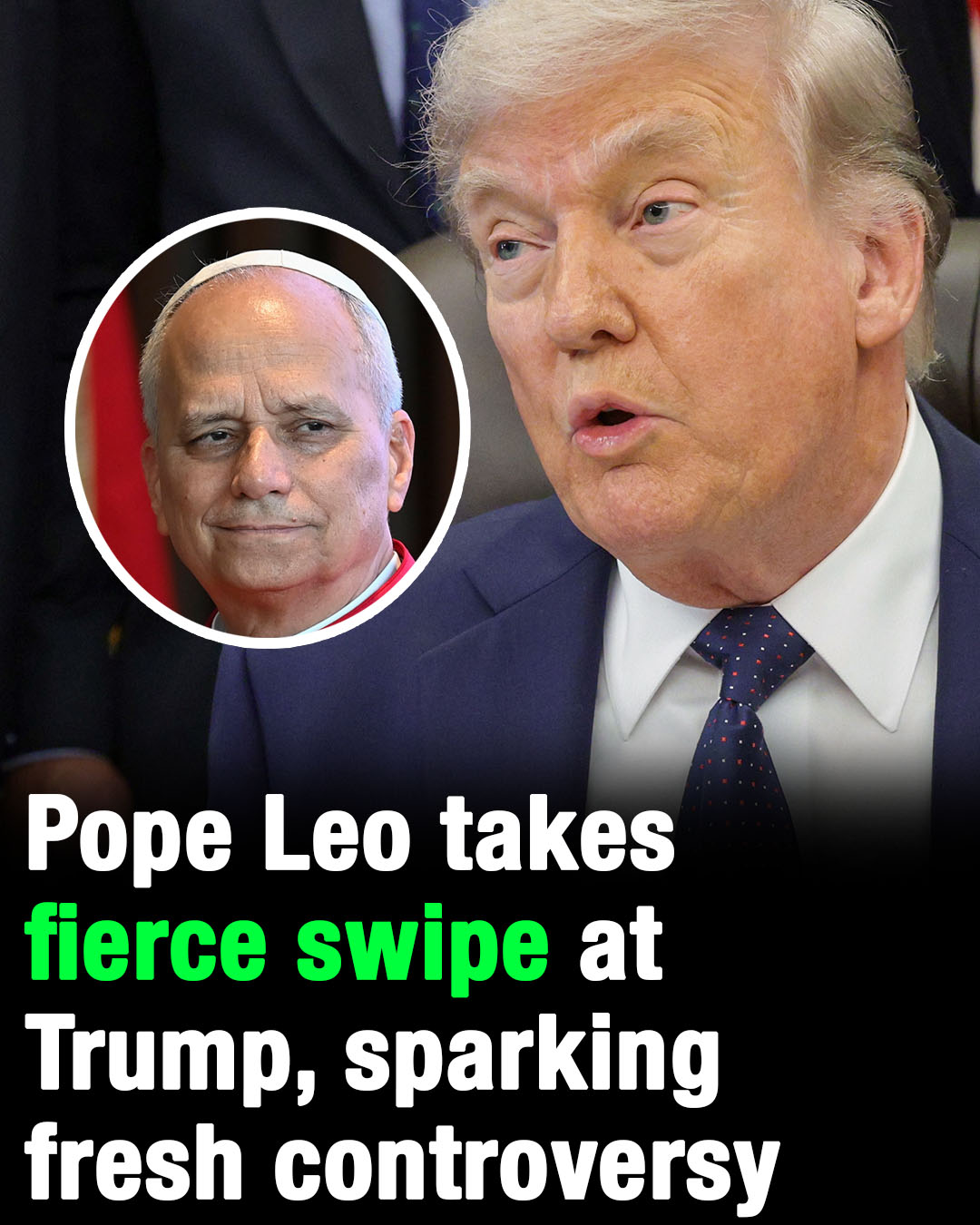
The long-running tension between Pope Leo and President Donald Trump has flared up again, drawing global attention and stirring strong feelings on both sides. In recent days, the Holy Father has spoken out once more against the war in Iran, echoing the steady message he has delivered throughout his papacy: war brings terrible human suffering, and the world must work toward peace and dignity for every person. President Trump, for his part, has pushed back publicly, framing the exchange as a disagreement over Iran’s nuclear ambitions and the risks he believes they pose to world security.
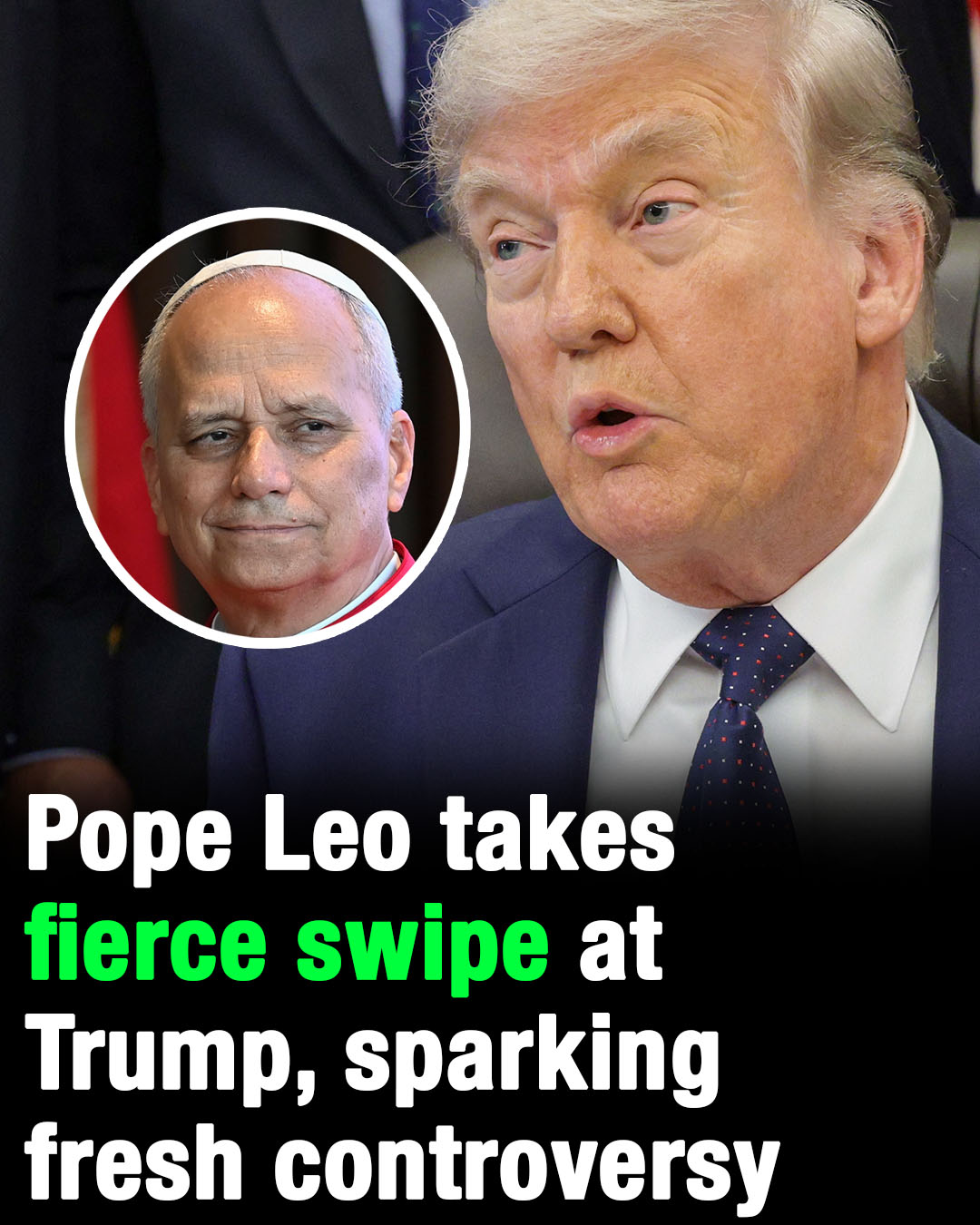
For many people watching from home, especially those who remember earlier moments in history when world leaders and religious figures publicly clashed, this latest chapter may feel familiar. The Pope, seen by many as a moral shepherd on the world stage, is calling for restraint, dialogue, and the protection of innocent lives. The President, elected to make tough policy decisions, is emphasizing strength, deterrence, and national security. These are not new roles, yet the particular circumstances in Iran and the surrounding region give this debate a pressing, modern urgency.
Over the past couple of weeks, the exchange of remarks has grown sharper. Pope Leo, who is American-born, has repeatedly spoken against the war in Iran. In response, President Trump criticized the Pontiff’s interventions, saying the Pope was inserting himself into politics. Vice President JD Vance also weighed in, warning the Holy Father last week about being too outspoken on what he called “matters of theology,” a comment that itself drew attention because the Pope’s remarks were largely focused on the humanitarian and ethical dimensions of war and peace.
As recently as last Thursday, President Trump said he had no plans to meet with Pope Leo. He amplified his warnings about Iran’s nuclear capabilities, urging the world to take the threat seriously. Speaking in stark terms, he said Iran had killed tens of thousands of unarmed protesters and added that allowing Iran to develop a nuclear weapon would put “every single country in the world” in danger. He emphasized that he harbors no personal ill will toward the Pope but believes he must act in what he considers to be the best interest of global security. “I have to do what’s right,” he said.
President Trump also asserted that he and the Pontiff disagree on a crucial point, claiming the Pope believes Iran should be allowed to have a nuclear weapon. That specific claim does not align with Pope Leo’s public record. The Holy Father has, in fact, consistently spoken against nuclear weapons, and his statements—both past and present—have urged countries to pursue disarmament, dialogue, and a safer world order without the shadow of nuclear arms.
Looking back to last year, the Pope’s stance was clear. In June, during a particularly tense period in the region, Pope Leo appealed for responsibility and reason from all sides. He encouraged leaders to commit themselves to a world free from the nuclear threat. He framed peace not simply as an absence of conflict but as a positive project built on justice, fraternity, and the common good. That message, frequently repeated, has guided his comments on Iran and other global flashpoints.
In recent weeks, Pope Leo embarked on a pastoral visit across parts of Africa—a significant journey that took him to Algeria, Angola, Equatorial Guinea, and Cameroon. It was his first trip outside Italy since assuming leadership of the Catholic Church. The tour was deeply pastoral in nature, centering on faith, hope, and the day-to-day concerns of ordinary families. Yet even while traveling, the broader questions of war and peace followed him. During the flight back to Rome, he addressed reporters and returned to the subject of Iran with a fresh sense of urgency.
His words on the plane reflected a wider concern for where the world might be headed if diplomacy falters. Speaking to journalists, he described the back-and-forth between Tehran and Washington—one day “yes,” the next day “no”—as a recipe for uncertainty that rattles global confidence and complicates efforts to stabilize the economy. It was a sober assessment, and it captured his ongoing worry that sudden shifts in tone and policy can unsettle ordinary people far beyond the borders of any single country.
Pope Leo’s latest remarks and why they matter now
The Pope’s newest comments arrived just as a fragile ceasefire, in place since early April, faced renewed strain. At the center of the concern was the Strait of Hormuz, a narrow and vital waterway through which a significant share of the world’s energy supply passes. Any turbulence there has a ripple effect on energy markets, shipping routes, and the daily cost of living for families around the globe. For those who remember past oil shocks and their impact on household budgets, the stakes feel very real.
Against this backdrop, President Trump declared that the United States had “total control over the Strait of Hormuz” and suggested that Iran’s leadership was in disarray. In response, Iran’s Foreign Minister Abbas Araghchi publicly countered that the country’s state institutions were acting with unity, purpose, and discipline. These dueling statements underscored just how tense and uncertain the moment had become—each side projecting strength as the international community watched closely.
Pope Leo used his return flight to Rome to remind the world not to lose sight of the human cost of war. He spoke of the people of Iran—their mothers, fathers, and children—who are living through fear, shortages, and grief. He warned against allowing strategic calculations to drown out the suffering of ordinary families who bear no responsibility for the conflict yet endure its consequences every day. In the same breath, he reiterated his long-standing moral opposition to capital punishment and to any policy or action that unjustly takes human life.
His core message was straightforward and compassionate: when a state or a regime makes choices that lead to the unjust loss of life, such choices should be condemned. It was less a legal judgment than a moral appeal, grounded in the Church’s teaching on the dignity of every person. For many older readers raised with a clear sense of right and wrong, this kind of moral clarity may feel both familiar and necessary in a time when the news can be fast-moving and confusing.
What each side is really saying
Two threads run through this controversy. The first is the Pope’s effort to keep attention fixed on human dignity, peaceful dialogue, and the need to curb the world’s most destructive weapons. The second is President Trump’s insistence that decisive action and pressure are needed to deter Iran and prevent a broader catastrophe. Although the tone has become heated, both speak to concerns that resonate with many people: safety, stability, and the hope that the next generation will inherit a more secure world than the one we have now.
It is worth understanding a key point raised in the back-and-forth. While the President has emphasized the threat he believes Iran poses, the claim that Pope Leo supports Iran having a nuclear weapon is not supported by the Pope’s public statements. Time and again, the Holy Father has urged countries to step away from nuclear arms. He has encouraged leaders to replace fear and hostility with carefully built trust—work that takes time, patience, and the difficult art of diplomacy.
To many, the Pope’s role is to lift the conversation out of the moment’s anger and into a longer view of our shared future. He knows that even when wars end, the grief and trauma of ordinary people can last for decades. He also knows that escalations near strategic chokepoints like the Strait of Hormuz have a profound effect on the global economy. Fuel prices can rise, supply chains can slow, and families living thousands of miles away can feel the pinch in their monthly budgets.
The cost of conflict, measured at home and abroad
Anyone who has lived through periods of international tension understands how quickly faraway events can find their way to the kitchen table. Increases in shipping costs and energy prices tend to ripple through the economy. Businesses adjust. Retirees on fixed incomes pay closer attention to their monthly statements. Parents and grandparents think about how uncertain times could affect young people just starting out. This is part of why debates like this can feel so personal, even when the headlines come from distant shores.
Pope Leo’s words often return to the faces behind the numbers. He speaks of families who live day to day not knowing whether loved ones will come home, or whether medicines and food will be available. He emphasizes that peace is not simply the end of fighting; it is the presence of fairness, the rule of law, and an honest effort by leaders to place the common good above short-term advantage.
President Trump, meanwhile, has staked out a position based on preventing what he sees as a looming danger. He argues that resolve now could head off disaster later. This outlook stresses deterrence—making it too costly for an adversary to continue on a certain path. For supporters of this approach, weakness invites aggression, and clarity, however tough, can save lives by preventing larger wars.
Faith, leadership, and the push for peace
These contrasting perspectives are not easily reconciled, but the conversation they create is an important one. Religious leaders have long believed that raising a moral voice can change the course of history. Political leaders, by contrast, must weigh intelligence reports, military assessments, and domestic responsibilities. When those worlds collide, the conversation can get heated, as it has here. Yet the friction can also reveal where the world most needs healing.
In this case, both the Pope and the President have chosen to speak plainly. Pope Leo has called for de-escalation, protection of civilians, and renewed dialogue grounded in respect. President Trump has called for vigilance, pressure, and a firm hand in the face of threats he considers unacceptable. Around them, allies and rivals are watching and reacting, each calculating what the next move might be.
For many older readers, the patterns may recall earlier eras—the Cold War’s nuclear anxieties, the oil shocks of the 1970s, and the countless diplomatic efforts that tried to turn tension into treaties. Those memories can help make sense of today’s headlines. The stakes feel high because they are. Energy markets watch the Strait of Hormuz. Diplomats count the days a ceasefire holds. Families measure their hopes by the quiet around their homes at night.
Where things stand—and what to watch
As the world assesses the latest statements, several realities remain. The ceasefire in the region is fragile. The Strait of Hormuz remains a strategic artery of global trade, and any disruption there can push up costs worldwide. The moral weight of the Pope’s appeals continues to resonate, especially with people who believe that the test of leadership is whether it protects the vulnerable. And the President’s warnings reflect a calculation that pressure and clear red lines may be the surest way to prevent a larger crisis.
What happens next will depend on choices made in the coming days and weeks. Will diplomacy gain traction and ease tensions, especially around the Strait? Will leaders on all sides find a path that protects civilians and moves away from nuclear brinkmanship? These are the questions many are asking quietly at home, reading the day’s updates and hoping the headlines move toward calm rather than confrontation.
For now, one thing is unmistakable: Pope Leo has not wavered from his consistent position against nuclear weapons and the unjust loss of life. He has urged leaders to rely less on threats and more on dialogue, less on force and more on the slow work of building trust. President Trump, equally unshakable in his outlook, insists that firmness is essential to keep the world safe. The result is a stark and very public disagreement, one that has captured attention precisely because it touches the deepest questions of war, peace, and the value of human life.
In times like these, it can be helpful to step back and remember that history is often moved by steady efforts rather than sudden breakthroughs. Quiet talks can lay the groundwork for peace. Clear moral voices can soften hardened positions over time. And ordinary people—parents, grandparents, and neighbors—can do their part by refusing to give in to despair and by encouraging leaders to choose the difficult road of reason and restraint.
The latest exchange between Pope Leo and President Trump is likely not the last. As tensions ebb and flow, their voices will continue to shape the conversation. For those following along, the measure of progress may be simple: fewer families living in fear, fewer empty chairs at dinner tables, and a future where the world’s most dangerous weapons no longer cast such a long shadow over daily life.