
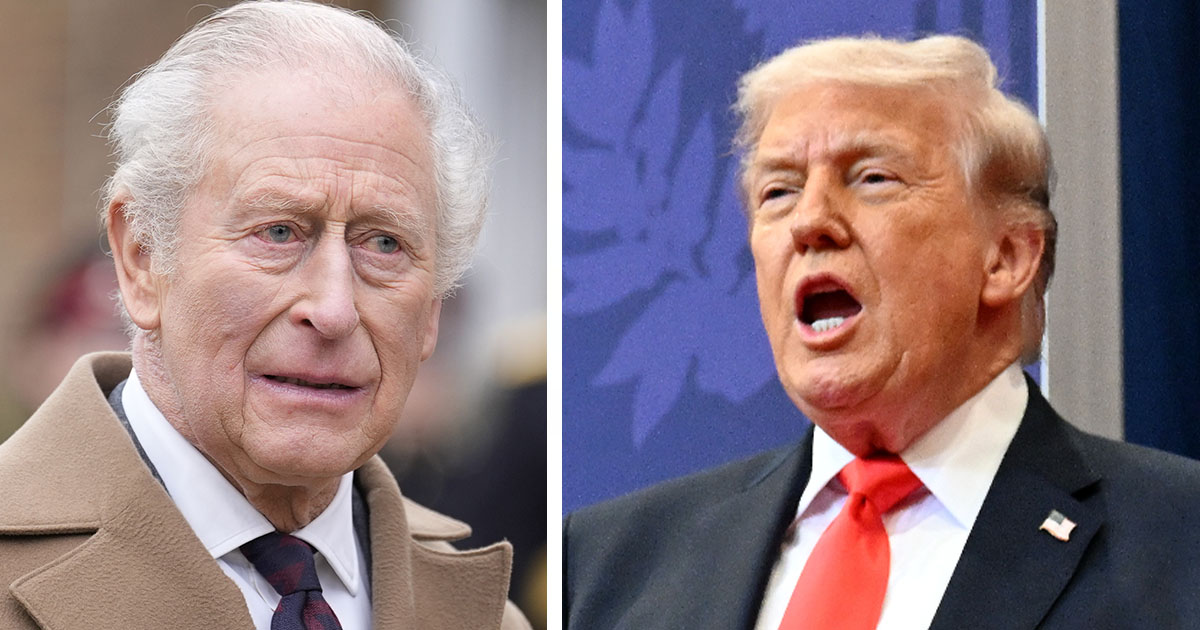
Just days after a high-profile State Visit that brought the pomp and pageantry of the British monarchy to Washington, D.C., President Donald Trump has once again placed King Charles in the middle of an unexpected political moment. What began as a carefully choreographed meeting of ceremony and goodwill has now turned into a headline-grabbing exchange of claims, clarifications, and a surprising promise involving whisky on both sides of the Atlantic.
During their visit, King Charles and Queen Camilla were received at the White House by President Trump and First Lady Melania Trump. It was a formal occasion designed to celebrate the long-standing friendship between the United States and the United Kingdom. Alongside the toasts and handshakes, the visit carried the kind of symbolism that many people appreciate: two enduring allies marking shared history, culture, and cooperation.
However, before the royal couple had even returned home to the United Kingdom, political ripples began to spread from a remark the president made at the State Dinner. In speaking about tensions in the Middle East, President Trump suggested that King Charles agreed with his firm stance regarding Iran and the prevention of nuclear weapons. That implication quickly drew attention, not just because of the sensitive topic, but because the British monarch traditionally stays above partisan politics and avoids any public position on active policy matters.
The Palace moved quickly to restate the royal position. A spokesperson underlined that the King remains mindful of his government’s long-standing view against the spread of nuclear weapons. In simple terms, the message was clear: the monarch did not endorse a politician’s policy or take a side in a dispute. The clarification was in keeping with a principle that has guided the modern monarchy for generations—constitutional neutrality, paired with quiet continuity and service.
For many who follow royal news, none of this was especially surprising. It is common for Buckingham Palace to gently but firmly reiterate the King’s constitutional role whenever public comments risk blurring the line between ceremonial duties and active politics. Yet the timing and the subject matter guaranteed attention, especially given the scale of the State Visit and the global audience watching.
To add a bit of color to the unfolding story, our new podcast offers fresh perspective and thoughtful context on the Royal Family and their public appearances. If you enjoy a calm, conversational take that puts events into plain English, you might appreciate a listen.
Not long after King Charles and Queen Camilla had departed the United States, President Trump made another unexpected move. He announced his intention to remove U.S. tariffs and related restrictions affecting whisky connected with Scotland and its business relationships with bourbon producers in Kentucky. He described this action as being taken in honor of the King and Queen, portraying it as a gesture of goodwill following their visit.
In his message, the president framed the decision as something many people had wanted for a while and referred to it as a step that would foster trade between Scotland and Kentucky. He even suggested that the King and Queen had been the catalysts for the move, saying that they helped bring about what others had been unable to achieve. The statement combined political theater with a recognition of shared cultural touchstones—after all, fine whisky and Kentucky bourbon each carry a powerful sense of heritage, craft, and identity.
Buckingham Palace responded with a tone of gratitude, acknowledging the president’s words and expressing appreciation for a decision described as meaningful for the whisky industry and for the many livelihoods it sustains. The Palace also conveyed that the King would raise a dram—a well-loved Scottish tradition—to recognize the hospitality shown during the State Visit and the warm sentiment behind the president’s announcement.
President Trump later reinforced his message at a press conference, saying he had lifted the restrictions and that Scotland and Kentucky could start doing business again without the earlier hurdles. For those following the economic backstory, this is particularly notable. In recent years, the whisky and spirits industries have faced headwinds amid various trade measures and disputes. When tariffs go up, they can disrupt a delicate web of import and export relationships that support jobs, small family operations, larger distilleries, and the communities that rely on them.
Why this matters for whisky on both sides of the Atlantic
Scotch whisky is more than a beloved drink; it is one of the United Kingdom’s most recognized exports, known for its careful aging, traditional methods, and distinctive regional flavors. The United States is a major destination for Scotch, with American consumers long appreciating the craftsmanship behind single malts and blends alike. On the other side, Kentucky bourbon represents a cornerstone of American distilling, with a proud history stretching back generations. These two traditions, while distinct, have become intertwined through trade, tourism, and shared expertise.
Barrels lie at the heart of that connection. Many Scottish distillers use American oak casks—often barrels that once held bourbon—to mature Scotch. The wood imparts character to the spirit, and the exchange of goods between Kentucky and Scotland helps keep business flowing in both directions. When tariffs and restrictions interrupt this cycle, the impact can be felt from the cooperages that make barrels to the warehouses where whisky patiently rests for years.
For people who care about small businesses and local jobs, these trade policies aren’t abstract. A tariff can be the difference between a comfortable season and a tough one. Reduced demand caused by higher prices can ripple through supply chains, affecting truck drivers, warehouse staff, bar and restaurant workers, and tourism-related jobs. So, when talk of lifting restrictions surfaces, it draws immediate interest from producers and customers alike.
Royal protocol and political boundaries
It is worth pausing to reflect on the role of the British monarch in all this. While the King meets leaders and represents the nation on the world stage, he does not set government policy. That task belongs to elected officials. The Palace’s clarifications this week served as a reminder of that arrangement, ensuring that ceremonial respect and constitutional boundaries remain in place. To many observers, this is precisely what the monarchy does best: provide a stable, unifying presence above the fray, even as governments and policies change.
At the same time, it is entirely in keeping with royal custom to express appreciation for hospitality and gestures of goodwill. Saying thank you, especially when the livelihoods of many are involved, is not the same as lobbying for a particular policy. The Palace’s response struck that balance—gracious yet careful, warm but properly neutral. For supporters of the monarchy’s approach, that tone is a feature, not a flaw.
What the president’s promise could mean, in practical terms
Announcements about tariffs often need to be followed by formal steps to bring them into effect. That can involve detailed government processes, timelines, and adjustments that businesses watch closely. If the restrictions in question are indeed lifted, producers in Scotland may find it easier to compete on price in the U.S. market, and American businesses that sell or import Scotch may see a boost in sales. Meanwhile, Kentucky’s role as a supplier of barrels and a producer of bourbon could benefit as cross-Atlantic partnerships regain momentum.
Consumers could notice changes as well. Prices can be sensitive to tariffs and shipping costs. When barriers come down, it sometimes becomes a little easier to find your favorite bottle at a friendlier price. Even small shifts can encourage retailers and restaurants to expand their offerings, which can be welcome news for anyone who enjoys exploring a range of whiskies and bourbons.
Of course, many factors shape the global market, from exchange rates to harvest conditions to transportation costs. Tariffs are only one piece of the puzzle. Still, removing a known obstacle has the potential to ease pressure on producers and open the door to renewed growth, especially when long-term relationships between distillers and suppliers can flourish without added costs getting in the way.
The week’s first flashpoint: remarks on Iran and nuclear policy
The earlier moment that drew Buckingham Palace’s response came from the State Dinner, where President Trump spoke broadly about efforts in the Middle East and made it sound as though King Charles shared his position on preventing Iran from obtaining nuclear weapons. The Palace’s reply emphasized the King’s awareness of his government’s established stance on nuclear nonproliferation—a careful phrasing that steered away from political endorsement while reaffirming a core British policy across many administrations.
It is easy to see why that clarification was important. The United Kingdom’s constitutional structure depends on a clear separation between the symbolic, steady hand of the Crown and the changing course of daily politics. Whether the topic is international security or trade, that line is essential. It protects the monarchy from being drawn into disputes it is not meant to influence, and it protects elected officials’ ability to shape policy without implying royal favor or disapproval.
A State Visit filled with ceremony—and a fast-moving aftermath
By all accounts, the State Visit itself delivered many of the traditions that people on both sides of the Atlantic enjoy seeing. From formal welcomes to cultural showcases, these occasions remind us that alliances are built on more than just agreements and negotiations. They are also built on mutual respect, shared stories, and the good will that comes from leaders meeting face to face. Those moments can be especially meaningful for older generations who recall key chapters in the U.S.–U.K. relationship and appreciate the dignity these visits bring.
Yet as this week showed, even the most carefully planned ceremonies can be followed by unexpected developments. A few sentences at a dinner, a swift palace clarification, and a surprise announcement about whisky tariffs turned what might have been a routine post-visit period into a lively news cycle. For readers who prefer steady, straightforward explanations, it can feel like a lot to absorb at once. But the main points are simple. The King remains above politics. The Palace thanked the president for a gesture aimed at supporting a cherished industry. And the trade relationship between Scotland and Kentucky could become smoother if the promised changes take effect.
Looking ahead: what to watch for next
In the coming weeks, the most important questions will be practical. How quickly do any tariff changes appear in official form? What details will they include? How will distillers, importers, and retailers adapt? Business owners in both countries pay close attention to these developments, because even small changes in regulation can affect planning, investment, and hiring.
If the restrictions are lifted as announced, some producers may accelerate plans to grow their presence in the U.S. market or deepen cross-border partnerships for barrels and supplies. Others may wait to see how consumer demand responds. Either way, clarity tends to be good for business, and a stable, predictable trade environment is welcome news for anyone tasked with making long-term decisions in an industry where patience is a requirement. After all, whisky-making rewards the long view—casks rest for years, sometimes decades, before their contents are ready.
For those more interested in the royal angle, it is likely that Buckingham Palace will continue to maintain its careful line between gracious public duties and political neutrality. King Charles has often focused on issues like conservation, community, and heritage—areas where encouragement and example can make a difference without crossing into policy-making. Expect future royal visits to continue highlighting shared cultural ties, whether through the arts, environmental projects, or the recognition of outstanding service.
A final word on tone and tradition
The events of this past week offered a reminder of how quickly public conversation can shift. A State Visit meant to honor tradition and friendship spiraled into debates about political comments and the mechanics of trade. Yet woven through it all were reassuring constants: the enduring relationship between two close allies, the steady voice of the Palace affirming constitutional roles, and the shared appreciation for crafts like whisky-making that tell stories of place, patience, and pride.
For many in the 45 to 65 age range, these themes carry a special resonance. They evoke decades of history and a sense that some values—good manners, clear boundaries, and an honest day’s work—still matter. Whether you follow events through the lens of politics, economics, or the Royal Family, the takeaway is straightforward. Respect for roles helps keep public life orderly. Practical steps on trade can support real jobs and communities. And when leaders from different traditions meet, their best legacy is the goodwill they leave behind.
As the dust settles, the focus will shift from headlines to implementation. If tariff relief does arrive as promised, the toast offered in Washington may yet be answered by many more, from Kentucky rickhouses to Scottish warehouses where casks slumber in cool, quiet air. In that spirit, here is to a calmer week ahead, a bit more clarity for businesses that depend on open markets, and a continued appreciation for the ties that bind the United States and the United Kingdom, in both ceremony and substance.



