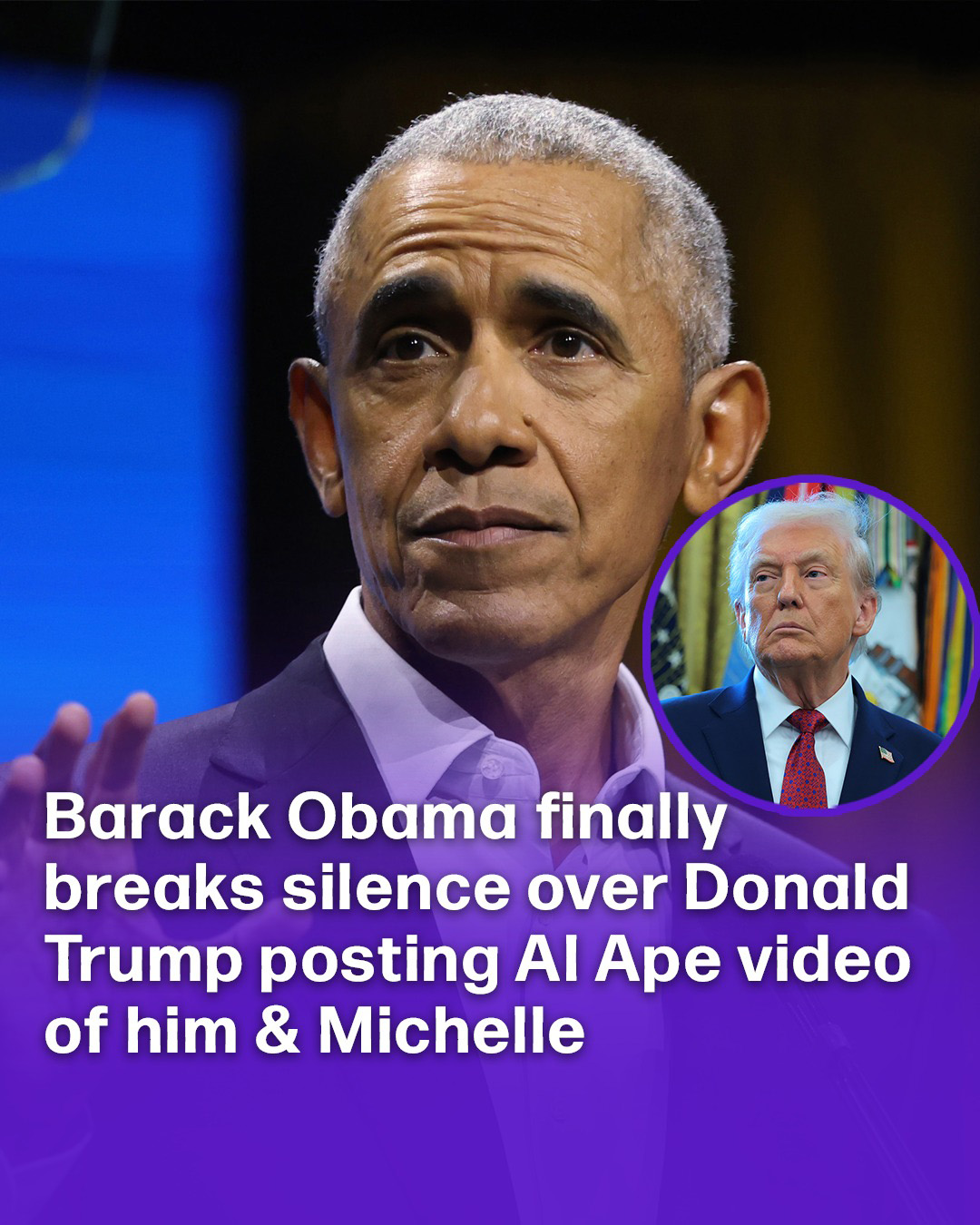
Obama addresses a troubling AI video and draws a firm line around family
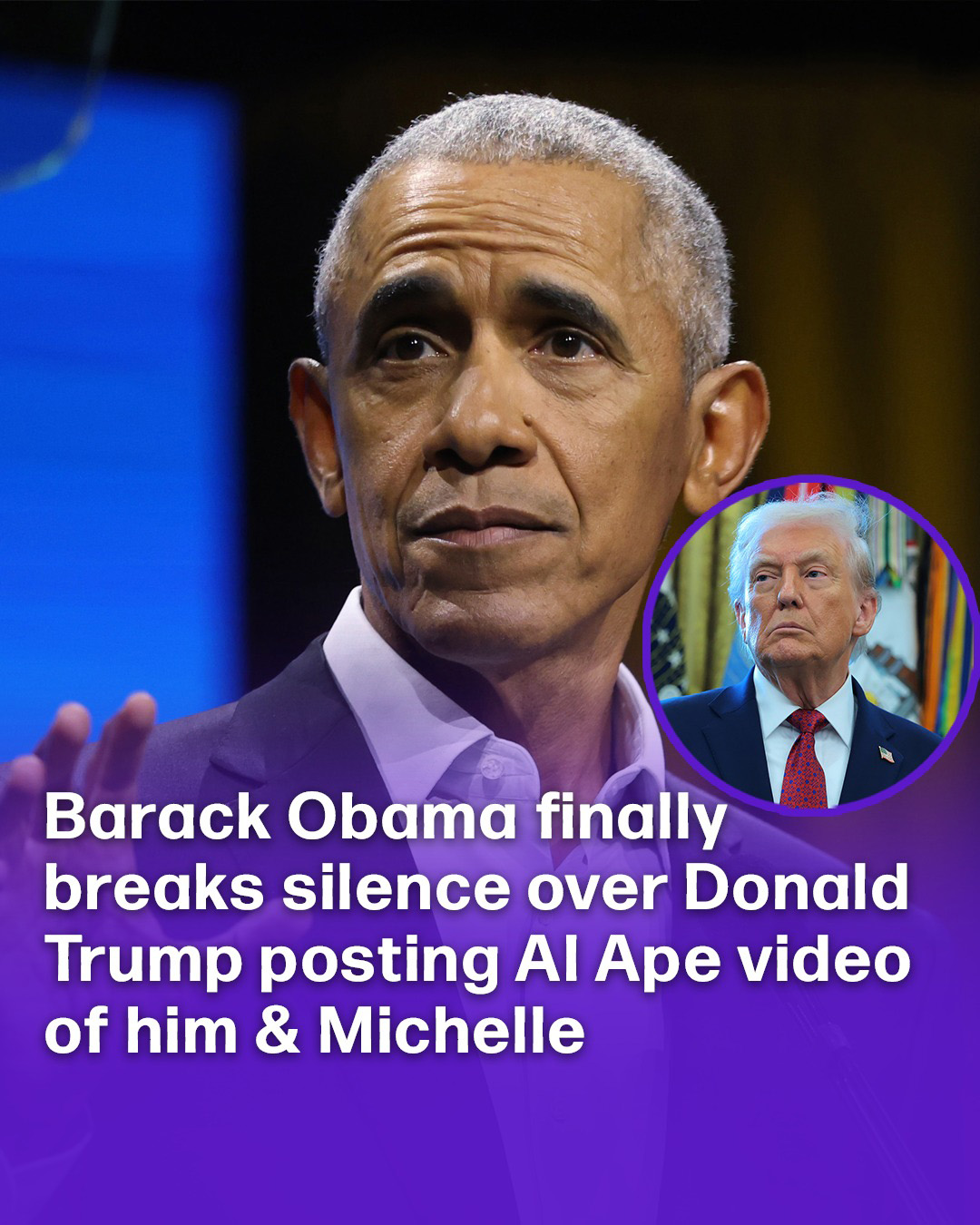
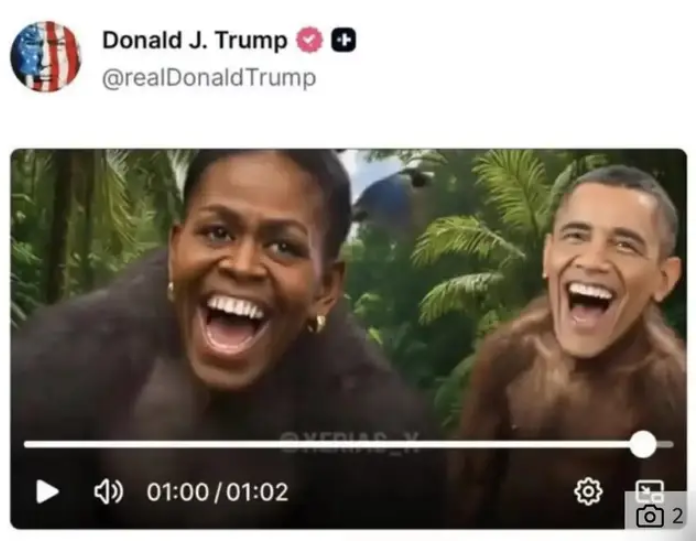
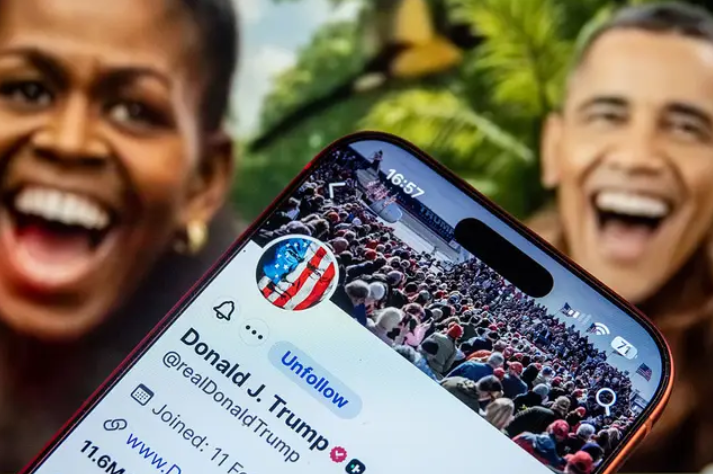
Barack Obama has spoken publicly for the first time about an AI-generated video shared by President Donald Trump that portrayed the former president and Michelle Obama as apes. The clip, which surfaced on Truth Social in February, appeared at the end of a longer video filled with claims of widespread voter fraud. It was the closing image that provoked immediate and widespread condemnation, with many calling it racist and dehumanizing.
For many Americans, especially those who lived through earlier eras of open discrimination, the image struck a deeply unsettling chord. The comparison of Black people to apes has a long, painful history in the United States and beyond. That is why, when the video ended with Obama and the former First Lady superimposed onto the bodies of apes while The Lion Sleeps Tonight played in the background, reactions were swift and intense. Critics argued that, regardless of any larger political message about elections, the choice to include such a depiction crossed a line of basic decency.
In a wide-ranging conversation with The New Yorker, Obama made clear that he does not spend much energy worrying about political attacks aimed at him personally. Life in public office and the years after it have taught him that criticism—fair or not—comes with the territory. But he emphasized something important: he refuses to treat attacks on his family as just part of the game. He said he accepts that his own record and decisions are fair targets in civic debate, yet he believes spouses and children, who did not volunteer for the spotlight, should be off-limits.
Reflecting on the episode, Obama noted that while he does not take every barb to heart, it stings when his wife and daughters are dragged into the fray. In his words, that is a basic standard he expects even from those who disagree with him on almost everything else. He underscored that public life is not a justification for degrading the dignity of people’s loved ones.
What the video showed and why it ignited a backlash
The video in question concluded with the faces of Barack and Michelle Obama placed onto the bodies of apes. Over the image played The Lion Sleeps Tonight, a song many people associate with the classic family film The Lion King. The clip came bundled with other segments that tried to reinforce the notion of widespread voter fraud in recent U.S. elections. But for many viewers, it was not the disputed claims about voting that stood out; it was the closing image that crossed a moral line.
Public figures across the political spectrum condemned the imagery. Some called on Republican leaders to speak out immediately. Others warned that the normalization of such depictions—particularly when amplified by high-profile accounts—can desensitize the public to racism and open the door to worse behavior. The reaction underscored how quickly a single image can overshadow an entire political message, especially when that image carries a charged and harmful history.
The debate also highlighted a newer challenge: the speed and ease with which AI tools can create convincing, provocative content. When these tools are used irresponsibly, they can turn politics into a stream of sensational clips that provoke outrage, generate clicks, and drown out the careful discussion voters deserve.
Trump’s defense and the White House response
President Trump defended the video soon after it drew criticism, saying the larger piece was focused on voter fraud and describing it as powerful and effective. He maintained that the controversial closing segment referencing The Lion King was only a small part of a much longer message. He also suggested the clip had been circulating widely for some time before he shared it.
From the White House podium, Press Secretary Karoline Leavitt dismissed the criticism as manufactured indignation. She characterized the video as a meme casting Trump as the “King of the Jungle” while depicting Democratic figures as characters from the animated movie. In that telling, the imagery was merely a piece of online humor. That explanation did little to calm the furor, however, because critics focused on the racial implications of the final frames and not the earlier parts of the montage.
Pressed on whether there would be an apology for sharing the clip, Trump did not issue one. Instead, he pointed to the attention the video had received, saying it was being viewed widely and that its core message about elections had been made effectively. That answer underscored a central truth of modern political media: attention, measured in views and shares, often becomes the metric that matters most, regardless of the collateral harm.
Why the ape imagery is not just another political jab
To understand why this episode hit such a nerve, it helps to step back. Across generations, many Americans have seen how dehumanizing comparisons strip people of their inherent dignity. For Black Americans in particular, the association with apes is a cruel, old tactic once used to justify exclusion, mockery, and even violence. It is not a harmless joke, and it is not just one more rough-and-tumble political punch. It carries a stigma that echoes far beyond the momentary scandal of a social media post.
For people in their forties, fifties, and sixties, none of this history is abstract. Many recall the civil rights era and the long battle to push such rhetoric out of mainstream conversation. That is why, when a high-profile account recycles imagery that past generations worked to defeat, it feels like a step backward. At a minimum, it distracts from real debates about policy and leadership; at worst, it threatens to lower the country’s standards for how we treat each other in public life.
Obama’s response pointed to a principle that once felt more broadly shared: criticize the politician, but do not demean the person’s spouse and children. While the former president is no stranger to tough critiques, he signaled that using racial caricature to get a laugh or score a political point is beyond the bounds of acceptable discourse.
A wider worry: AI turning serious issues into spectacle
Beyond this single video, Obama said he is more troubled by the broader trend of AI-generated content that treats war and human suffering like a video game. He was especially concerned about clips meant to shock and disgust, including those that show humiliating acts inflicted on ordinary people. When such content is manipulated and spread at scale, it can distort empathy, erode trust, and make it harder for citizens to grasp what is real.
These concerns are not theoretical. AI tools are now widely available and remarkably easy to use. With a few clicks, someone can produce a clip that looks convincing enough to fool a casual viewer. And because so many people get their news from social media feeds, sensational fabrications can outrun careful reporting in a matter of minutes. The result is a public square where feelings are stirred up quickly, but facts arrive late—if they arrive at all.
For older Americans, who have watched the media landscape transform rapidly over the last two decades, this is an important moment to slow down and take stock. When a video seems designed to inflame anger or disgust, it is worth pausing to ask who made it, what the aim might be, and whether any independent sources corroborate it. Simple habits—like seeking a second source before sharing—can make a real difference in keeping misinformation from spreading.
The long arc of a political rivalry
The reaction to this video cannot be separated from the long-running tension between Obama and Trump that has shaped much of the nation’s political narrative over the past decade. Their rivalry spans policy battles, personal jabs, and the powerful sway each holds among different segments of the electorate. There have been earlier episodes involving fabricated content, including the circulation of a fake arrest video targeted at Obama. Each incident leaves a residue of resentment and deepens the sense that political combat is migrating from debates over ideas to battles over reality itself.
When disagreements harden into contempt, it becomes easier to rationalize almost any tactic that might embarrass the other side. But this approach comes at a cost. It lowers the temperature of empathy in our public life, makes compromise feel like betrayal, and lures us into believing that the loudest or most outrageous voice must be the truest. Obama’s comments are a reminder that the health of our politics depends not just on who wins the next argument, but on how we choose to conduct that argument in the first place.
Condemnations and calls for accountability
In the wake of the video’s spread, prominent figures urged leaders, especially within the Republican Party, to denounce the imagery without qualification. Their message was straightforward: regardless of one’s position on elections, immigration, taxes, or foreign policy, there should be a clear standard against racially demeaning content. Others pointed beyond partisan accountability to the platforms themselves, urging stronger guidelines for labeling or limiting AI-generated material that targets individuals with degrading depictions.
Supporters of a tougher approach argue that when the line between satire and slander blurs, reputations can be damaged in an instant and civic discourse suffers. Critics of regulation, on the other hand, worry about overreach and potential censorship. That tension—between protecting free speech and protecting people from targeted, dehumanizing content—will likely shape debates over technology and media for years to come.
No apology, but a teachable moment
As of now, there has been no apology from Trump for sharing the clip. From his point of view, the video succeeded in drawing attention to claims of election wrongdoing, and the uproar over the final image was misplaced or politically motivated. For many Americans, though, this episode is less about who scores a point in a day’s news cycle and more about what kind of politics we are willing to accept going forward.
Here lies the teachable moment. When public figures push boundaries, citizens have choices. We can reward shock and insult with more clicks, or we can insist on a different tone. We can treat AI as a toy for stirring outrage, or we can demand higher standards—asking platforms to clearly label manipulated media, and asking our leaders to model restraint when it comes to demeaning personal attacks.
A practical note for viewers in an age of AI
As AI tools blend the real and the fabricated, a few simple habits can help. If a video feels designed to provoke a strong emotional reaction, pause for a moment. Consider whether the soundtrack, the edits, or the final image might be engineered to leave a lasting impression that drowns out the facts. If possible, look for a reputable outlet that has reviewed the clip. And talk with friends and family before sharing—especially with those who may not spend much time online—about why context matters and how manipulated content can fool even careful viewers.
For many in their late forties through mid-sixties, these conversations are also an opportunity to pass along hard-earned wisdom. You have seen cycles of panic and rumor before, long before smartphones brought a constant stream of headlines to our pockets. You know that stepping back, taking a breath, and checking twice before repeating a claim is not just polite—it is a civic duty.
Where Obama leaves the discussion
In closing his thoughts on the controversy, Obama returned to a point that rises above party lines. He can accept being a target; public service invites scrutiny. But he draws the line at dragging his family into the fray, especially through images that carry a legacy of racism and dehumanization. It is a standard that, not so long ago, many Americans agreed on, even amid sharp political disputes.
Whether the country can reclaim that shared understanding remains to be seen. But this much is clear: the ways we use new technologies, and the choices our leaders make about what to share, have real consequences. They shape what our children and grandchildren come to see as normal. They shape the tone of our communities and the trust we extend to one another. And they shape the kind of democracy we will pass on to the next generation.
The larger lesson for all of us
Politics will always involve hard arguments about goals, values, and priorities. That is healthy. What is corrosive is the slide into demeaning people for who they are, or reducing serious issues to shock-value entertainment. This incident is a reminder that we can hold two thoughts at once: we can debate fiercely about elections and policy, and we can insist on basic respect in how we talk about one another. It is not weakness to reject cruelty; it is strength. It signals a confidence that our ideas can win on their merits—without resorting to images or words that strip people of their dignity.
In that spirit, Obama’s response offers a simple, steadying message. Hold your ground on the issues. Keep your sense of humor. But protect the line that should not be crossed, especially when it comes to family and to the dignity of every person. As AI and social media amplify everything—good and bad—that line matters more than ever.