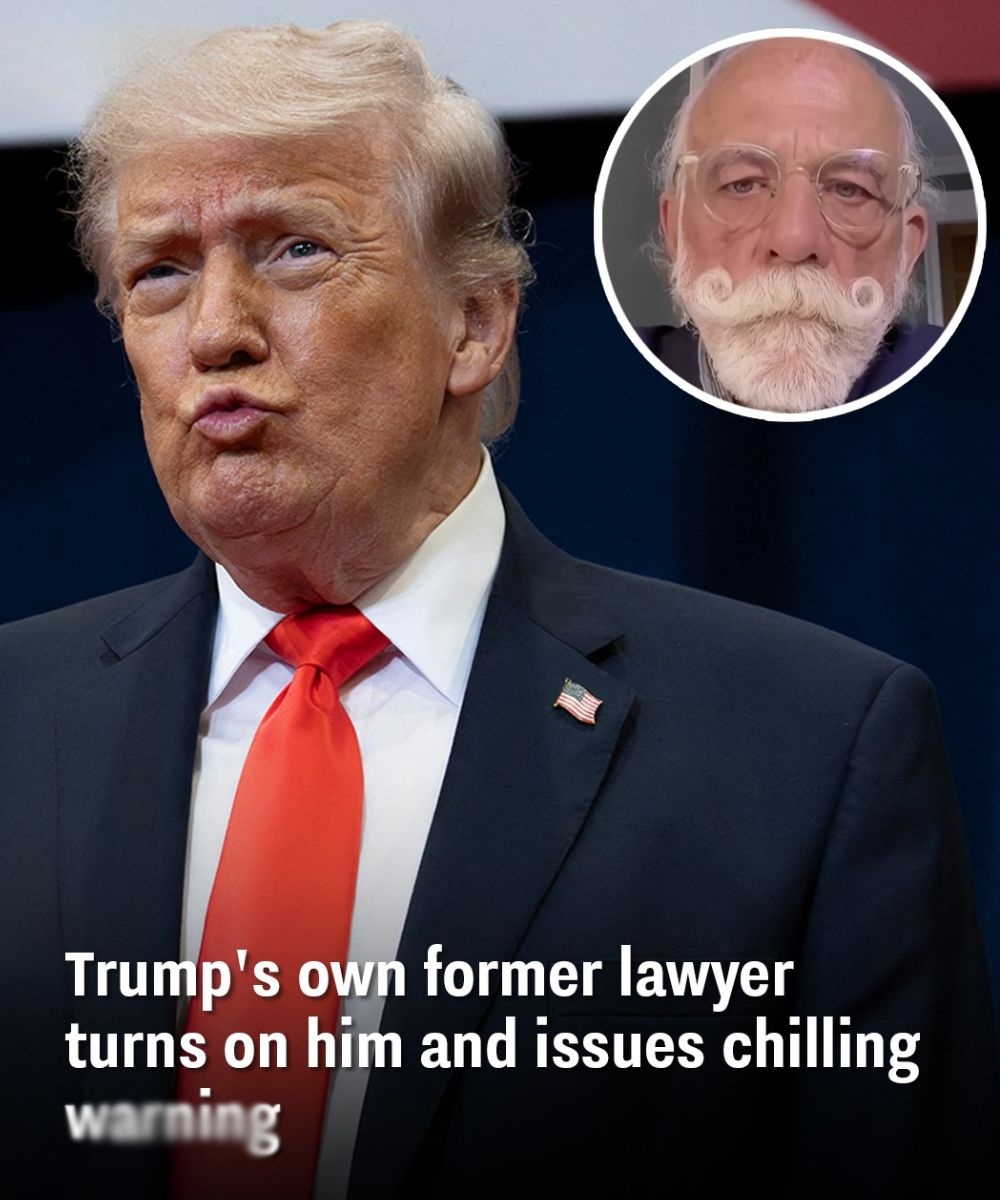
A prominent attorney who once served on Donald Trump’s legal team during his first term is now publicly raising concerns about the president’s mental fitness, marking a sharp break from his former role.
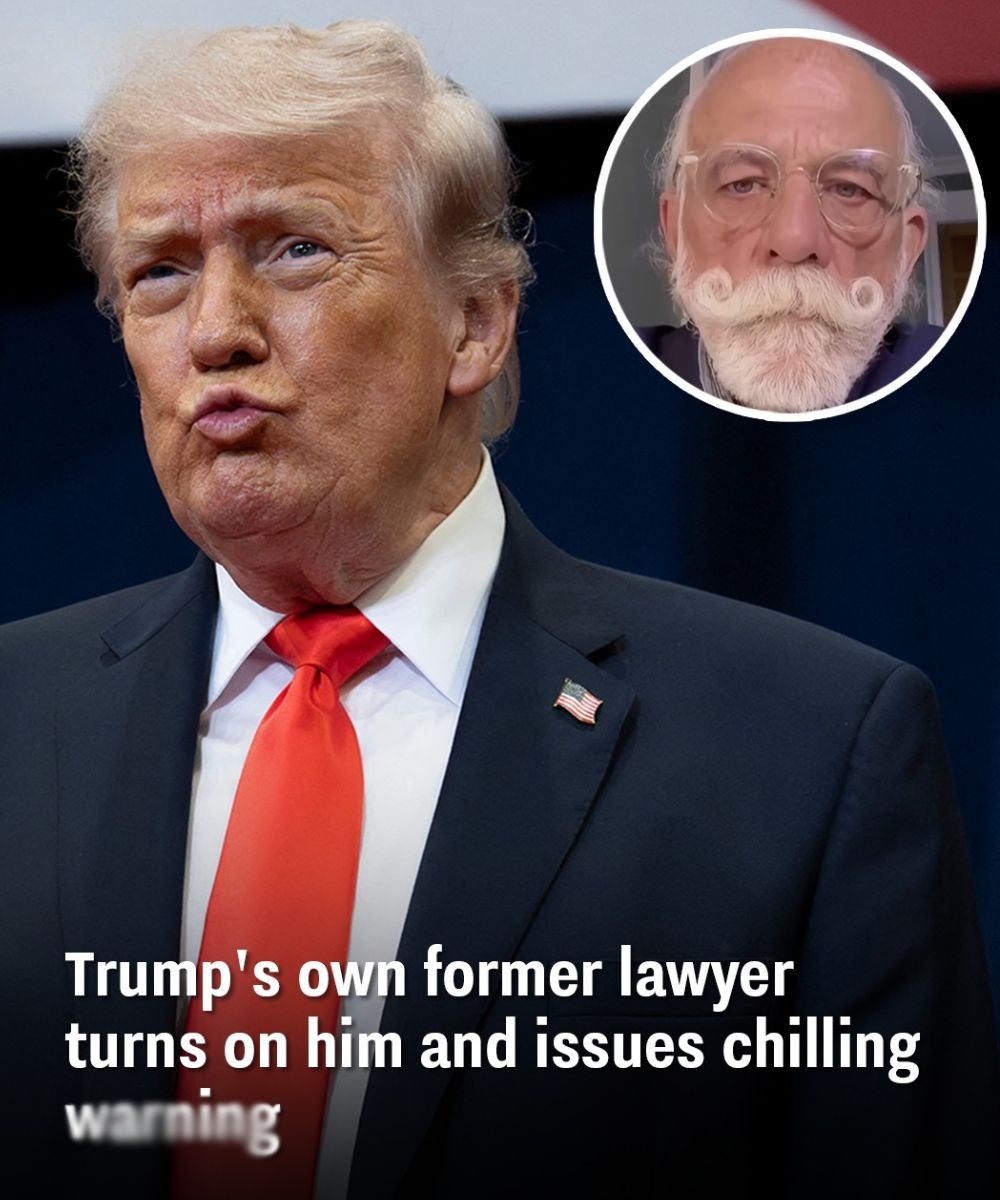
Ty Cobb, a veteran attorney who worked in the White House during the early stages of the Russia investigation, has stepped forward with blunt observations about Donald Trump’s current behavior and decision-making. Cobb helped oversee the administration’s response to Special Counsel Robert Mueller’s probe, and he was seen at the time as a stabilizing legal presence inside a very turbulent West Wing. Today, his message is far different. He is openly questioning the president’s mental sharpness and warning about the risks of a leadership circle that, in his view, has become more deferential and less willing to push back.
For many Americans who watched those events unfold years ago, Cobb’s change in tone may be striking. Back then, he explained his participation as a matter of professional duty in a high-profile federal investigation. Over time, however, his public comments have shifted. Even ahead of the last presidential election, Cobb hinted that an extended period of politics built around the “MAGA” movement could bring serious consequences for the nation’s institutions and norms. Recently, he has gone much further, describing what he believes to be a noticeable decline in Trump’s mental steadiness and a troubling pattern in how advice is received and acted upon at the highest levels.
In a recent interview, Cobb did not claim to be a doctor, nor did he offer a clinical diagnosis. Instead, he spoke as someone who has seen the former president up close, both in private strategy sessions and amid intense public scrutiny. His judgment was direct: he believes Trump’s mental condition has declined in ways that matter for sound leadership. Those who remember the tumult of the Mueller period will recognize why Cobb’s perspective carries weight—he was a participant and an eyewitness to how the president handled stress, setbacks, and mounting legal questions at the time.
At the same time, it is worth noting that Trump has vigorously rejected any suggestion that his cognitive abilities are slipping. He frequently cites standardized cognitive screenings he says he has taken and passed with top marks. Supporters point to his energetic public schedule, his rallies, and his media appearances as signs of endurance and focus. Critics counter that moment-to-moment stamina is not the same as clear judgment under pressure, especially in complex, high-stakes situations that demand careful listening and openness to differing views.
The debate has left many people, especially those who follow public affairs closely, asking a basic question: what should we expect from a president’s mental fitness, and how can the public fairly evaluate it without leaping to conclusions or spreading unfounded claims? Cobb’s remarks do not settle that question. But they do push it into clearer view by focusing on two key areas—how a leader sounds and acts over time, and the quality of the advice and scrutiny that leader receives behind closed doors.
Who Ty Cobb is, and why his view draws attention
Ty Cobb is not a cable commentator or an armchair critic. He is a seasoned attorney who served as Special Counsel to the President in 2017 and 2018, specifically to help manage the response to the Mueller investigation into Russian interference in the 2016 election. In that role, he coordinated with the president’s larger legal team, navigated demanding document requests, and helped frame the White House’s cooperation strategy. His job required close contact with senior staff and, at times, the president himself.
Because of this proximity, Cobb’s observations are not purely theoretical. He has seen how Trump reacted to legal setbacks, to headlines that moved at lightning speed, and to internal disagreements. While many people formed opinions from a distance during those years, Cobb formed his from within the building. That background is part of what makes his current warning stand out.
What Cobb says has changed
Cobb now argues that Trump appears less restrained and more volatile than he was several years ago. He points to a pattern of public remarks and controversies that, in his view, suggest less discipline and more willingness to lean on instinct over deliberation. He is careful not to offer a medical label. Instead, he calls attention to the contrast he perceives: if the earlier Trump was unpredictable, the current version seems more impulsive and less influenced by conventional guardrails.
For many readers, it may be helpful to remember how much the environment around a president can influence behavior. Early in a term, a leader may face constraints from party elders, experienced advisers, and a blend of voices chosen to manage risk. As time goes on, that mix can change. Allies who offer criticism may drift away. Those who remain may be the ones who fully share a leader’s instincts and, fairly or not, reduce the amount of dissent that reaches the top. Cobb’s concern is rooted in this shift. He worries that the team around Trump has grown more loyal and less candid, producing fewer moments where hard questions are asked before important choices are made.
“I took three cognitive tests. I aced all of them,” Trump said recently, adding, “I don’t think Obama could pass it.”
Trump’s response to questions about his mental fitness has been straightforward: he says he has taken cognitive screenings several times and performed extremely well. Cognitive screenings, such as the Montreal Cognitive Assessment (often called the MoCA), are designed to flag potential issues with memory, attention, and problem-solving. Doctors typically use them as quick tools to see if someone may need further evaluation. These screenings are not IQ tests, and they are not full medical workups. Scoring well generally means a person performed within the normal range on that specific screening at that moment in time.
This distinction matters. For some observers, bragging about “acing” such a screening raises as many questions as it answers, because the test is meant as a basic check, not a measure of leadership quality. Others argue that if a leader is willing to take any assessment and make the results public, that transparency is at least a step toward accountability. In both cases, the broader issue remains: how do we fairly assess a leader’s mental fitness, and what role should medical professionals, not political rivals, play in that conversation?
Why the president’s advisers matter so much
Cobb’s second major concern centers on the people surrounding the president. In any White House, the quality of decision-making depends greatly on whether advisers feel free to tell the president what he may not want to hear. Healthy teams allow space for pushback, second thoughts, and sober analysis. When that culture fades, even the most confident leader can drift into choices that have not been thoroughly tested by competing viewpoints.
According to Cobb, Trump’s inner circle has grown more loyal and less likely to challenge him. If true, that would matter in areas ranging from foreign policy to economic decisions, where the cost of a misstep can ripple across markets and alliances. Leaders benefit not only from supporters but also from skeptics willing to point out blind spots. History shows that administrations of both parties function best when advisors balance loyalty with candor. If candor dries up, the quality of decisions can suffer—no matter who sits behind the Resolute Desk.
How today’s climate looks different
Part of what makes Cobb’s warning resonate is the broader political climate. Public life today encourages fast reactions and rewards sharp-edged statements. Social media clips spread in minutes. Headlines flip in hours. In such an environment, any leader can become more reactive and less reflective. The problem, Cobb suggests, is that this tendency has grown stronger, not weaker, around Trump. Combined with a tight circle of like-minded voices, the risk of snap decisions increases.
For Americans who lived through earlier, slower political eras, this pace can feel disorienting. It can also make it harder to tell the difference between genuine concern and routine partisan crossfire. That is why clear, patient explanations matter. Cobb’s comments may be unsettling, but they are also specific: they focus on changes in behavior over time and on the health of the advisory process that shapes presidential choices.
Supporters and critics see very different things
Supporters hear Trump’s confidence about cognitive tests and see a leader who refuses to bend under pressure. They point to his presence on the campaign trail, his ability to command a room, and his continued influence over the national conversation as signs of vigor and sharpness. They often argue that hostile media and political opponents misinterpret off-the-cuff remarks in the worst possible light.
Critics, including Cobb, note that stamina and mental steadiness are not the same. They point to repeated episodes of inflammatory rhetoric, misstatements, or contradictions as red flags. They worry about a decision-making style that rests too heavily on gut instinct and too lightly on structured analysis and independent advice. For them, an inner circle that is too deferential only deepens the problem.
Both sides agree on one point, whether they say it aloud or not: the stakes are very high. Presidential decisions reach into every home through the economy, health care, retirement security, and national safety. That is why questions about fitness, advisory quality, and judgment are not idle chatter. They go straight to the heart of competent self-government.
A practical guide to what cognitive fitness means for leadership
For those in midlife and beyond, this discussion may feel close to home. Many families have watched loved ones go through normal aging, temporary confusion brought on by stress or medication, or more serious cognitive changes that require medical attention. In this context, a few practical notes can help make sense of the headlines.
First, occasional forgetfulness or verbal stumbles can happen to anyone, especially under pressure. These moments alone do not prove decline. Second, standardized screenings are useful tools, but they are just that—tools. A full evaluation, when necessary, involves detailed medical history, neurological exams, lab work, and sometimes imaging. Third, judgment in leadership is not measured only in memory scores. It shows up in how a person weighs risks, receives criticism, changes course when facts demand it, and maintains calm when tensions rise.
These are the qualities Cobb is pointing to when he warns that Trump seems less restrained and less surrounded by independent voices. You do not have to agree with Cobb’s politics to understand the core of his message: over time, a leader’s habits and the culture around him can change, and those changes can carry real consequences.
Why transparency and strong processes matter
One quiet lesson from modern presidencies is the value of routine, professional transparency about health. Many presidents release periodic medical summaries. Some go further when questions arise, inviting specialist involvement or sharing more detailed information. While no leader owes the public every private detail, openness can build trust and calm speculation. Equally important is process—strong systems that make sure key decisions are tested by facts, weighed against alternatives, and reviewed by people with the standing to say “no” when needed.
If Cobb is right that the advisory structure has shifted toward deference, then reinforcing process becomes crucial. That could mean encouraging a wider range of viewpoints in the room, reviving disciplined policy reviews, and relying on experienced professionals who can translate complex information into clear options. These practices are not partisan. They are the guardrails that help any administration steer through difficult choices.
How this debate affects everyday Americans
It is fair to ask how a behind-the-scenes advisory culture affects daily life. Consider retirement savings. Markets respond to signals of stability and predictability. If decision-making appears impulsive, markets can swing, affecting 401(k)s and pensions. Consider Medicare and prescription drug policy. Complex negotiations require patience, credible analysis, and steady implementation. The same is true for foreign policy crises that can influence gas prices or supply chains. Whether one supports or opposes a given president, the method used to reach decisions affects household budgets and family plans.
That is why Cobb’s warning, though unsettling, is not abstract. It urges the public to look beyond the latest headline and ask: are decisions being made with care, supported by facts, and tested by dissenting voices before they reach the Oval Office? Those questions matter regardless of party or personality.
A note of caution and fairness
It is important to approach all claims about mental health with humility. From the outside, none of us can diagnose a public figure. Videos and brief quotes can mislead. Stress, long hours, and the burden of constant attention can make anyone sound sharp one day and tired the next. Responsible citizens can hold two thoughts at once: that medical professionals, not political rivals, should lead health assessments, and that voters deserve confidence that a president is fit to serve.
In that spirit, Cobb’s remarks are best seen as a call for vigilance and strong systems, not as a substitute for medical evaluation. They remind us that leadership is a team sport. Even the strongest personalities benefit from honest counsel, fact-based analysis, and a culture that prizes truth over comfort.
The bottom line
Ty Cobb, who once helped guide the Trump White House through one of its toughest legal stretches, now says he sees troubling changes in the former president’s mental steadiness and in the makeup of his advisory circle. Trump firmly rejects those concerns and points to cognitive tests he says he “aced.” The public is left to weigh two realities: the limits of quick screenings and the central importance of process, restraint, and candor in the Oval Office.
For Americans in their fifties and sixties—people who have seen leaders rise and fall, who have managed teams and families, and who understand how much character and culture shape outcomes—Cobb’s warning may feel familiar. It is a reminder that leadership is not only about energy; it is about judgment. It is not only about confidence; it is about the willingness to listen. No matter your politics, those qualities matter. They shape the policies that touch your savings, your health care, and your security.
In the end, this conversation is bigger than one person. It is about the standards we set for the highest office and the safeguards we expect in place. Cobb’s concerns bring those standards back into focus. They urge all of us to look carefully at how decisions are made, who is in the room when they are made, and whether the system encourages truth to speak plainly to power. That is the kind of leadership that has served the country best across generations, and it remains the surest way forward today.