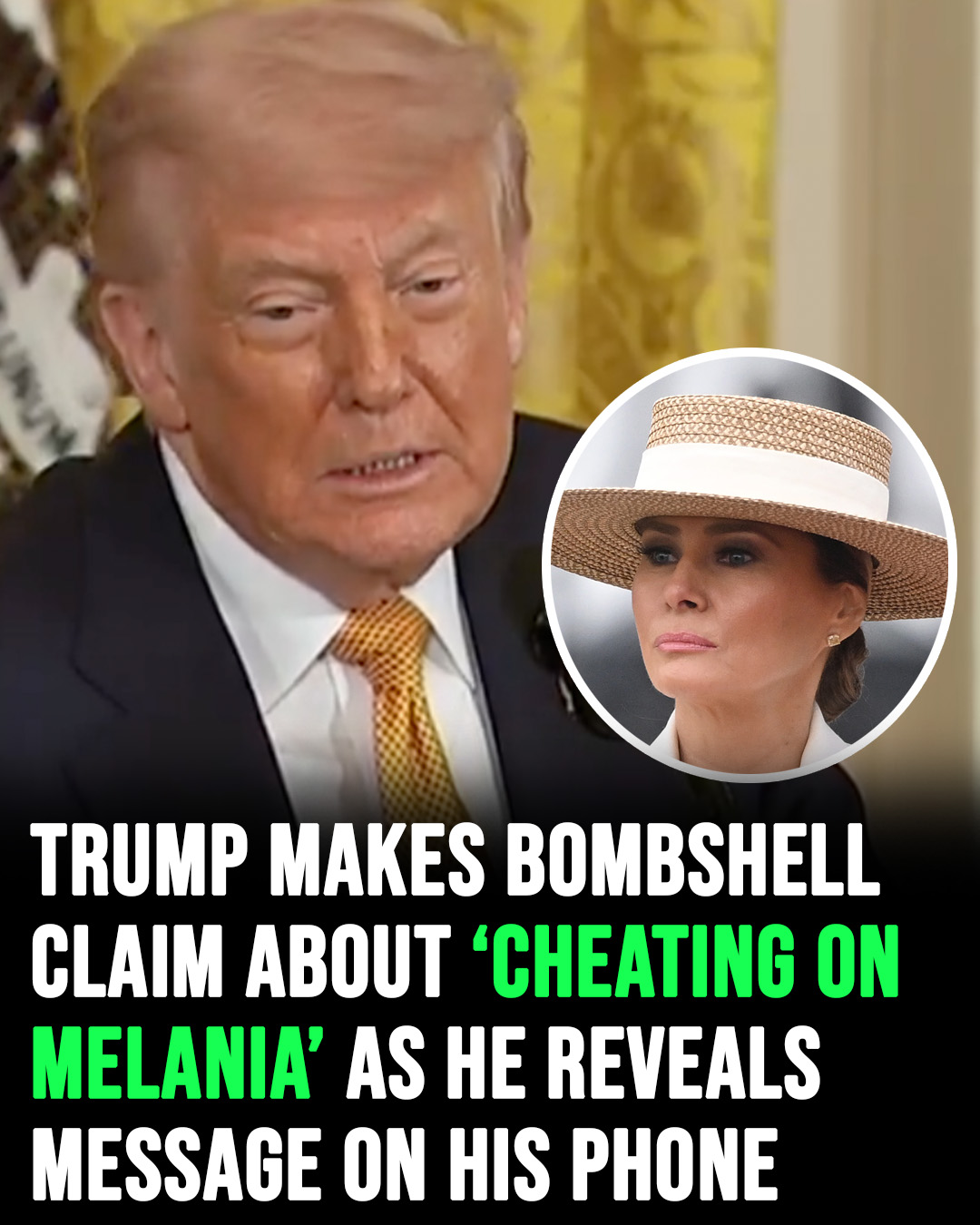
At a recent gathering that honored military mothers, Donald Trump shared a lighthearted story about a texting mishap involving his wife, Melania. While speaking to the audience, he held up his phone and explained how the name “Melania” had been repeatedly changed by autocorrect to “Melody,” leading to confusion, teasing from critics, and more than a few laughs in the room. His tale was a reminder of how even the most public figures run into the same small frustrations the rest of us do with modern technology.
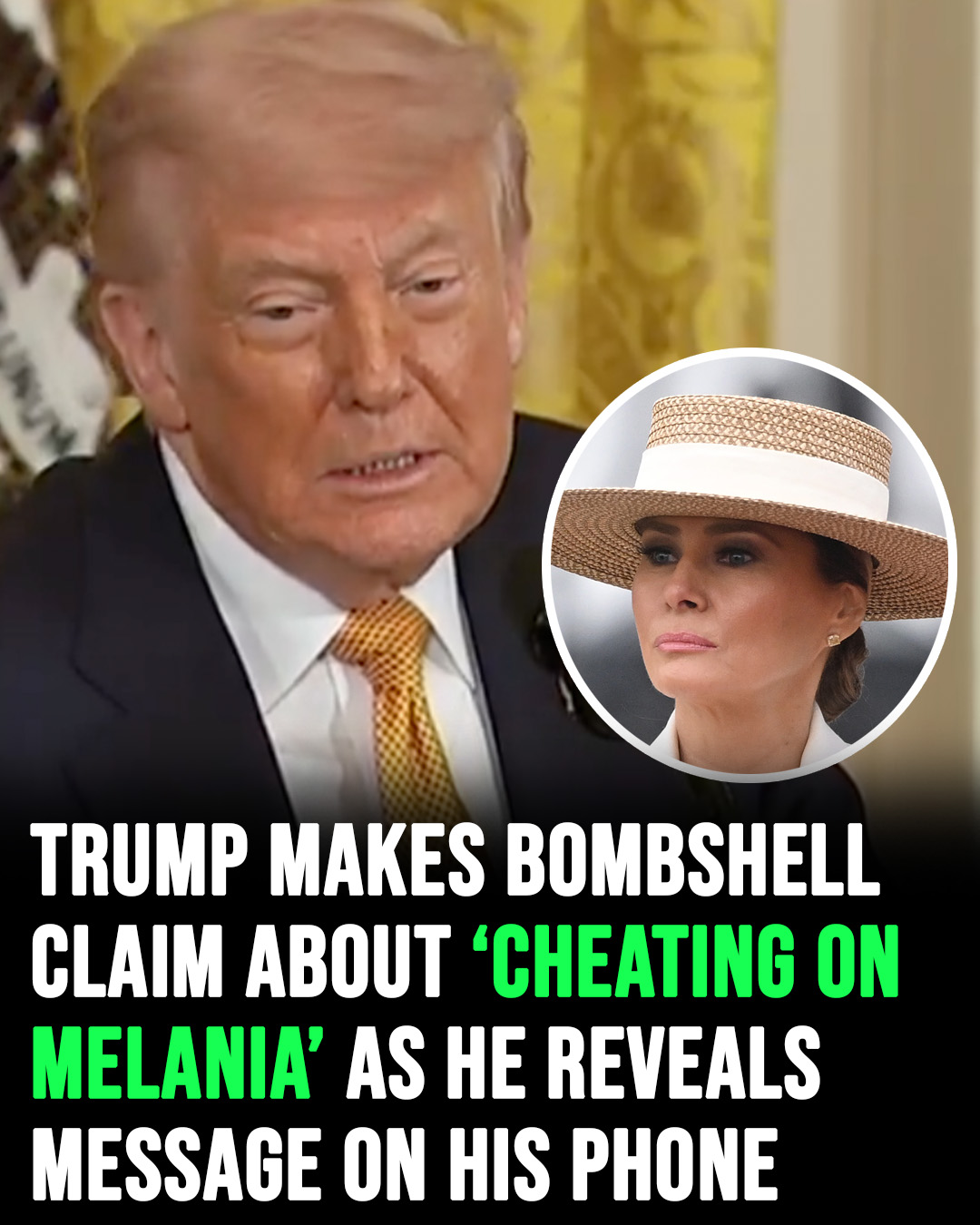
Trump and Melania have been a couple in the public eye for decades. Their relationship began in the late 1990s, and they married on January 22, 2005, at the historic Bethesda-by-the-Sea church in Palm Beach, Florida. The wedding drew a star-studded crowd. Among the guests were Arnold Schwarzenegger and Elton John, and even Hillary and Bill Clinton were in attendance, highlighting how Trump’s social circles have long included a wide range of high-profile figures.
For Melania, it was a first marriage. For Trump, it was his third. His first marriage to Ivana Trump—who sadly passed away in 2022—lasted from 1977 to 1992. In 1993, he married Marla Maples, and the two divorced in 1999, shortly after he first met Melania. Over time, Donald and Melania built a life that blended family, business, and—eventually—politics, operating under the bright lights and persistent attention that fame inevitably brings.
A texting mix-up that sparked laughter
During the military mothers event, Trump described how his phone’s autocorrect frequently changed “Melania” to “Melody.” He said he types quickly and sometimes forgets to review his messages before sending or posting them, which can turn a simple note—like a Mother’s Day greeting—into a small headache. He recalled occasions when he intended to write, “Happy Mother’s Day, Melania,” only to have it appear as “Happy Mother’s Day, Melody.”
He explained that this led to some awkward moments. Critics and commentators seized on the error, joking that he did not know his own wife’s name. Trump told the audience he eventually fixed the problem in his settings, but not before it caused a few rounds of public ribbing. The crowd reportedly laughed along as he recounted the story, and he wrapped up the anecdote with an apology for the mix-ups, noting that “Melania has been called ‘Melody’ a lot” thanks to his phone’s overzealous autocorrect.
For many listeners, the moment felt familiar. Autocorrect can be helpful, but it is far from perfect. It often changes names, uncommon words, or family nicknames that are not in a device’s dictionary, creating errors that are easy to miss when typing fast. Trump’s story, told with humor, resonated with anyone who has ever sent a hastily typed message and noticed an embarrassing change only after pressing send.
Life in the public eye and a marriage in the spotlight
While their relationship has drawn speculation at times—especially during and after Trump’s time in the White House—Donald and Melania have kept most details private. Public schedules, travel, and security demands often meant they were not always in the same place at the same time, which only fed rumors. Still, sources close to them have suggested that the couple shares interests, from interior design to hospitality, and have tried to keep certain routines, like sharing dinner whenever possible.
In January, a source told People magazine that the pressures of public life and the constant spotlight have taken a toll at various points, which is not unusual for couples under such scrutiny. Even so, the same source emphasized that the two have bonded over the home they have created and the projects that matter to them both. No matter what people speculate on social media or in the press, anyone who has maintained a long marriage knows that relationships evolve, they face outside pressures, and they are built on many small, day-to-day moments behind the scenes.
Why “Melania” might become “Melody” on a phone
For those who have not wrestled with autocorrect lately, here is a plain-English explanation. Modern phones try to “guess” what you mean as you type. They learn from the words you use most often and from the language settings on your device. If you type quickly and a name is not recognized, the software may swap in a similar word it thinks you want. That is especially true for names, which can vary widely and often are not stored in a default dictionary.
Sometimes the phone “learns” mistakes if they are sent or accepted more than once. If an incorrect suggestion is not corrected before sending, the phone might treat that wrong word as the new normal in the future. That is likely how “Melania” could keep turning into “Melody.” The good news is that most phones let you add a contact, create a text replacement shortcut, or adjust keyboard settings so the right name sticks. For people who prefer to type without constant changes, it is also possible to reduce how aggressive autocorrect can be.
Trump’s story fits this pattern. He said he works fast, and in the rush, he did not always double-check what the software had changed. That is a familiar scenario for many of us. When sending greetings, making plans with family, or posting on social media, it is easy to focus on the message and not on a sneaky correction the keyboard makes in the background.
Reactions and questions across social media
After the clip of his story circulated online, reactions poured in. Some people found the moment relatable and funny, saying that their phones have turned loved ones’ names into something else more than once. Others were more skeptical and asked pointedly who “Melody” might be, suggesting that a phone only learns names you use. There were also those who explained that different phones handle autocorrect differently. Some devices are quicker to learn new words; others are slower but more conservative with changes. In all cases, missing an incorrect correction can cause it to show up again later.
While a few comments carried a skeptical tone, many simply saw the humor in the story. Public figures seldom share the little bloopers that happen behind the curtain. When they do, people are reminded that everyone deals with clunky tech from time to time. The laughter in the room at the event reflected that. Even in an age of intense debate, a small, human moment can loosen things up.
Looking back at the Trumps’ path together
The couple’s path has spanned business ventures, media appearances, political campaigns, and time in the White House. Their wedding in Palm Beach was one of the most notable society events of the mid-2000s. The presence of entertainment icons and political heavyweights under one roof said a lot about where Trump stood in American culture even then—at a crossroads of celebrity, business, and politics.
Over the years, Melania has cultivated her own public identity, balancing privacy with her interests and projects. Her approach has often been reserved and measured, in contrast to the high-energy, spotlight-ready style of her husband. Together, this contrast has shaped how people view them as a couple: two distinct personalities navigating one very public life.
As with any well-known pair, people have speculated about their dynamics. Schedules that keep them in different places, public events where every body language cue is analyzed, and headlines that come and go all contribute to the chatter. Yet beyond the noise, there are the constants we do not often see—quiet dinners, family discussions, and private decisions about what matters most to them both.
Technology’s quirks and the human touch
There is something oddly comforting about the idea that autocorrect frustrates everyone equally, whether they live in the public eye or not. In households across the country, similar texting mix-ups occur every day. A daughter’s name becomes a song lyric, a neighbor’s name becomes a month, and a grandchild’s nickname gets changed into a completely different word. Marriages, friendships, and families are full of these tiny errors that turn into stories we retell for a smile.
For those who have dealt with these issues, a few simple habits can help. Slowing down for a moment before pressing send often catches the sneaky switch. Adding names to contacts helps the phone recognize them. Creating a keyboard shortcut for a tricky name means the right word pops in every time. And if autocorrect still goes haywire, most devices let you reset the keyboard’s learned words, giving you a clean slate.
In his own way, Trump’s anecdote captured all of this. The moment he described—wanting to send a kind message, working quickly, trusting the phone to do the right thing—reflects how we communicate today. The speed of modern life asks us to do more at once. Technology helps, but it sometimes fumbles at the worst time, especially with names we hold dear.
Why the moment mattered to the audience in the room
The setting for Trump’s story also mattered. An event honoring military mothers carries a warm and respectful tone. Sharing a personal, slightly embarrassing glitch during such a gathering invited the audience to laugh with him rather than at him. In that environment, the tale became less about politics and more about the daily realities that connect us all—family, gratitude, and the occasional hiccup when we try to express both in a hurry.
As the room laughed, the story seemed to underscore an easy truth: our devices try to help us, but they do not always get it right, and sometimes we need to adjust, correct, and keep going. For some, it might have even opened a door to talk with their own families about the funny little mistakes that happen in texts—moments that, told later, become shared memories.
A closing thought on names, messages, and meaning
Names carry weight. They mark our histories, our families, and our relationships. When a phone changes a name, it feels more personal than when it changes a simple word. That is likely why Trump’s story landed so strongly. The idea that a device could scramble a heartfelt message to a spouse strikes a chord, especially around events like Mother’s Day or gatherings that honor family.
It is also a gentle reminder to take a moment with the messages that matter. A second glance before sending, a quick fix in the keyboard settings, or even a short, old-fashioned phone call can help ensure the right words land the right way. Technology is a tool, but it is our intention—the care behind the message—that gives it meaning.
Whether people laughed, rolled their eyes, or nodded in empathy at the tale, the heart of it remains simple. Everyone, from public figures to grandparents sending a birthday wish, runs into a snag with their phone now and then. And if a few letters get switched along the way, there is usually a good story to tell once the moment passes.
For Donald and Melania, the autocorrect mix-up will likely join the long list of stories that come with a very public life. It was, for a few minutes, a reason to smile and a chance for people to see a small, familiar slip—nothing more and nothing less. And for anyone who has ever winced at a message after it was sent, it may be reassuring to remember that even the most watched among us are not immune to the quirks of the little screens we carry everywhere.
In the end, what matters is not a stray switch from “Melania” to “Melody,” but the intention behind the message. A note of appreciation, a word of thanks, or a holiday greeting still gets through, even if autocorrect tries to play composer for a moment. We send another message, fix the name, and share the sentiment again. The feeling remains, and often, the laughter does too.