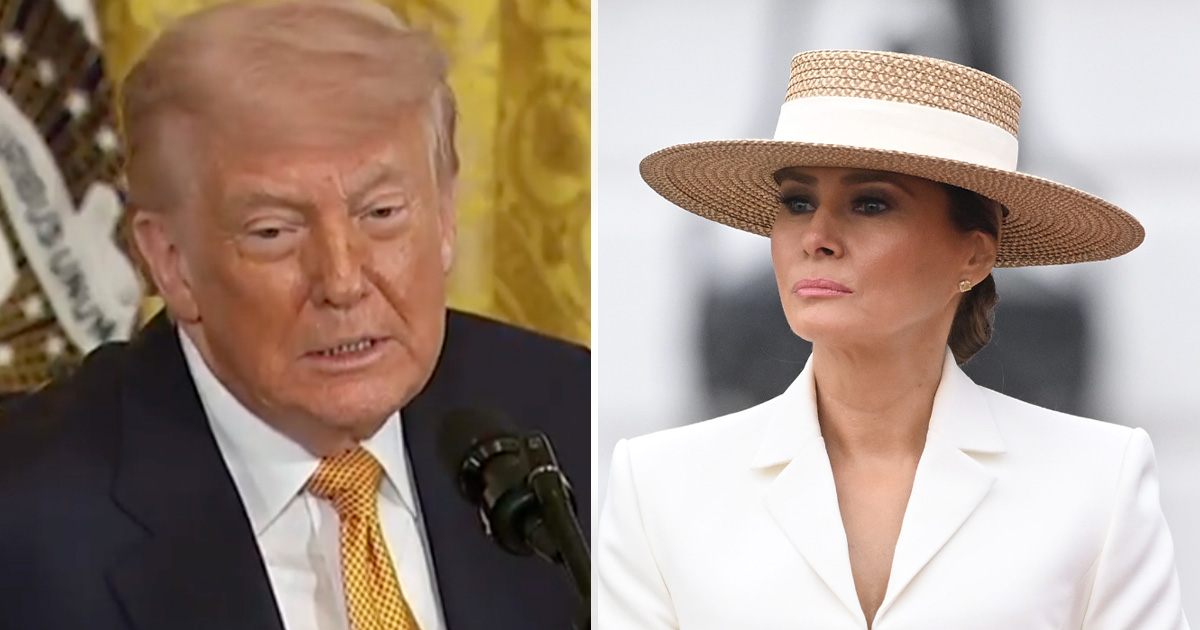
At a recent event celebrating military mothers, Donald Trump shared a story that drew plenty of laughs and a fair bit of curiosity. While speaking from the stage, he described a texting mishap that many people can relate to. According to Trump, autocorrect on his phone kept swapping Melania’s name for “Melody,” leading to some awkward moments when he messaged his wife. He even held up his phone to show how the issue had appeared in his messages, turning a simple greeting into an unintentional mix-up.
The moment felt casual and personal, a rare peek into everyday life for a couple that usually keeps the details of their relationship private. Trump described working quickly on his phone, sending notes of appreciation and affectionate messages to his wife, only to have the device change the name he typed. For people who have shouted at their phone after a message went sideways, the story likely felt familiar.
The long partnership behind the headline
Donald Trump and Melania Trump have been married since January 22, 2005. Their wedding took place at the historic Bethesda-by-the-Sea church in Palm Beach, Florida. It was a well-attended and headline-making celebration, with well-known figures from entertainment and politics there to witness the day. The ceremony and the reception reflected their taste and sense of occasion, and the couple stepped into married life with the sort of attention that has followed them ever since.
For Melania, it was her first marriage. For Donald Trump, it was his third. His first marriage, to Ivana Trump, lasted from the late 1970s into the early 1990s. He later married Marla Maples in the 1990s before they parted ways toward the end of that decade. Donald and Melania met years before their wedding and built a life that would eventually include the White House, a schedule filled with travel, and a public spotlight that rarely dims.
Over the years, their relationship has been the subject of speculation, as most public marriages are. Life in the public eye, and especially time spent in the nation’s highest office, brings long days and unusual routines. Reports have often noted how their schedules could be very different, sometimes placing them in separate cities. Other accounts have described how they like to sit down together for dinner when they can. Like many couples with demanding responsibilities, finding daily time together has required effort and planning.
The texting slip-up that sparked laughter
During his remarks at the military mothers event, Trump explained the phone situation in his own words. He said that when he typed Melania’s name, his device kept changing it to “Melody.” He emphasized that he moves quickly when he types and sometimes does not go back and check what autocorrect has done. That is a common habit for many people, particularly when sending quick messages or posting short notes.
He described how a warm message intended to read “Happy Mother’s Day, Melania,” or a simple, “Melania is wonderful,” became “Melody” in the final version. The crowd responded with amusement. Then he added that when others noticed the wrong name, critics seized on it to suggest he had mixed up his wife’s name. He said he eventually fixed the setting on his phone once he realized what was happening. It was a straightforward story about a small mistake, told with a mix of humor and self-awareness.
Autocorrect, in plain language
For anyone who has watched a carefully worded note turn into a confusing message at the last second, autocorrect needs no introduction. It is a helpful feature most of the time, catching simple spelling errors and saving us from typos. Yet it can also be stubborn. Phones and tablets often try to guess the next word or fix a name based on what they think we mean. If a device decides a different word is the better choice, it may replace what we wrote without asking.
The way these systems learn can be surprising. Many phones notice patterns in what we type. If a certain name or word appears often, the device can begin suggesting it or even inserting it if the letters look similar. When a correction slides by without being changed, the phone may take that as a sign that the new word was correct, and it will become even bolder about using it next time. That is likely how “Melody” could have appeared again and again for someone trying to type “Melania.”
For people who want to avoid these kinds of mishaps, a few simple habits can help. Slowing down for a moment and reading a message before sending it can catch many errors. Adding a person’s name to contacts with the spelling you want can sometimes reduce confusion. And if the phone keeps changing a word, tapping the correction and choosing the right spelling several times may help the device learn. These small steps are easy to forget in a busy day, but they can save a lot of backtracking.
Reactions in the room and beyond
Inside the room, Trump’s anecdote played as a light, human moment. Many people laughed in recognition. We have all had technology trip us up and make us look less careful than we are. Trump also mentioned his frustration when he felt criticized for the error. He described the feeling of being picked apart over a minor mistake that started with a phone setting. That sentiment struck a chord with anyone who has seen a simple typo get more attention than it deserves.
After the clip made its way online, responses were mixed, as they so often are on social platforms. Some viewers said the story was funny and relatable. Others were skeptical and asked who “Melody” might be. A few people chimed in with explanations of how phones learn new words, while others pushed back, saying their autocorrect never seems to learn the right thing. The conversation captured a familiar pattern: a light moment expands into a debate, with people bringing their own experiences to the discussion.
A marriage often under the microscope
Public figures know that even a small personal detail can become a talking point. Over time, there have been rumors and questions about the Trumps’ marriage, usually tied to their demanding schedules and the separate obligations they sometimes keep. These are not unusual rumors for any couple in a bright spotlight. People watch closely, and curiosity grows. Yet those who know the couple or report on them have often noted simple, steady habits behind the scenes, including a shared interest in design and a regular effort to share meals when their day allows.
It is worth remembering that long marriages are built on many small moments, not a single headline. A texting error is just that. It does not define a relationship. For anyone who has been married a long time, small mistakes are part of the fabric of everyday life. What matters is how people handle them and move forward. In this case, the story was told with humor. The laughter in the room suggested people recognized the difference between a device’s quirk and a meaningful lapse.
Why this story resonated with many
There is something universal about technology getting the last word. The reason so many people paid attention to this anecdote may be simple. The moment was familiar. You do your best to say the right thing. You type it out with care. Then a tap sends a version you did not intend. Perhaps you catch it right away. Perhaps you do not. In either case, you end up explaining yourself and wishing the device had stayed out of it.
Stories like this remind us that we all live with the same little interruptions and inconveniences. Whether you are sending a note to a spouse, a child, a friend, or a colleague, the phone can create confusion at the worst possible time. We are all learning to work with our devices, and sometimes we learn the hard way. When a public figure shares a moment like this, it can feel reassuring. It shows that technology treats everyone the same.
Simple habits that make texting easier
For anyone who has felt burned by autocorrect, a few gentle habits can help smooth the edges. It can be helpful to pause just before sending a message with a name in it. Names are the words our phones struggle with most, and they are also the ones we least want to misspell. When a device swaps a name, correcting it a few times in a row may teach the system to accept the right version. Keeping important names stored the way you prefer can also reduce surprises. These are small actions, but they add up to fewer misunderstandings.
Another helpful practice is to slow the pace when you are sharing something meaningful, like a holiday greeting or a note of appreciation. Rushing is when these errors sneak in. We all move quickly in the modern world, but giving an extra moment to a thoughtful message often makes it land just as you intended.
Looking back at the event’s tone
The event where this story came up was meant to honor military mothers. That gave the room a warm, respectful atmosphere. Within that setting, the story served as a short, friendly aside. It was the kind of anecdote people share at family gatherings, where a harmless mistake becomes a punchline everyone can enjoy. The fact that it involved a spouse’s name naturally drew attention, but the lasting feeling in the room seemed to be good humor.
Trump’s point was not complicated. He wanted to show how quickly a device can change a word, and how easily that change can go unnoticed. He also wanted to make clear that he had addressed the problem on his end. For those in attendance, the real takeaway was the shared laugh and the recognition that even very public families have private moments that look a lot like our own.
What the online debate says about us
After the speech, many internet comments circled back to a single question: how does a phone decide to replace one name with another? That line of questioning makes sense. When something goes wrong, we want to understand it. Some users pointed out that smartphones look for patterns and grow confident in the words they believe you want. Others argued that their devices feel unpredictable, never quite learning the way they hope. Both experiences can be true. Technology is helpful most of the time, and baffling the rest.
In conversations like this, it can be easy to drift toward suspicion or humor. It is natural to wonder how a slip like that happened. It is also natural to laugh at the picture of a serious message being accidentally changed at the last second. What stands out, though, is how common this problem has become. The more we type on glass screens, the more we rely on systems that try to help us. Those systems work well enough to make us trust them, and not quite well enough to stop surprising us.
The couple’s private approach remains the same
Despite the attention this story received, the Trumps have kept their personal life mostly to themselves. That has long been their approach. Now and then, small glimpses appear in public remarks or photographs, but the day-to-day details of their marriage stay private. This texting story was one of those rare, small windows. It offered a simple reminder that the routines of married life—sending a thoughtful note, checking in on a special day—exist for them as they do for anyone else.
People who follow the couple have often said they share an appreciation for design and enjoy setting the tone in the places they live. They also make time to come together for meals whenever their schedules allow. In a life filled with travel and obligations, those steady habits matter. They create structure and comfort. They also leave less room for a stray autocorrect to define anything important.
A light conclusion to a light moment
When all is said and done, the story Trump shared was a small one. It was a laugh at the expense of a stubborn piece of software and a reminder to glance at the screen before tapping send. It also showed a measure of openness, the kind of short personal note people appreciate hearing amid formal events. For many in the audience, the memory will be the laughter and the sense that modern life has the same little traps for everyone, no matter who they are.
And for anyone who has sent a message and then spotted a name that was not the one they intended, this story offers a bit of comfort. You are not alone. Phones are handy, but they are not perfect. With a breath, a brief check, and maybe a small tweak to the settings, we can keep our words our own. That is a lesson we continue to learn, one text at a time.