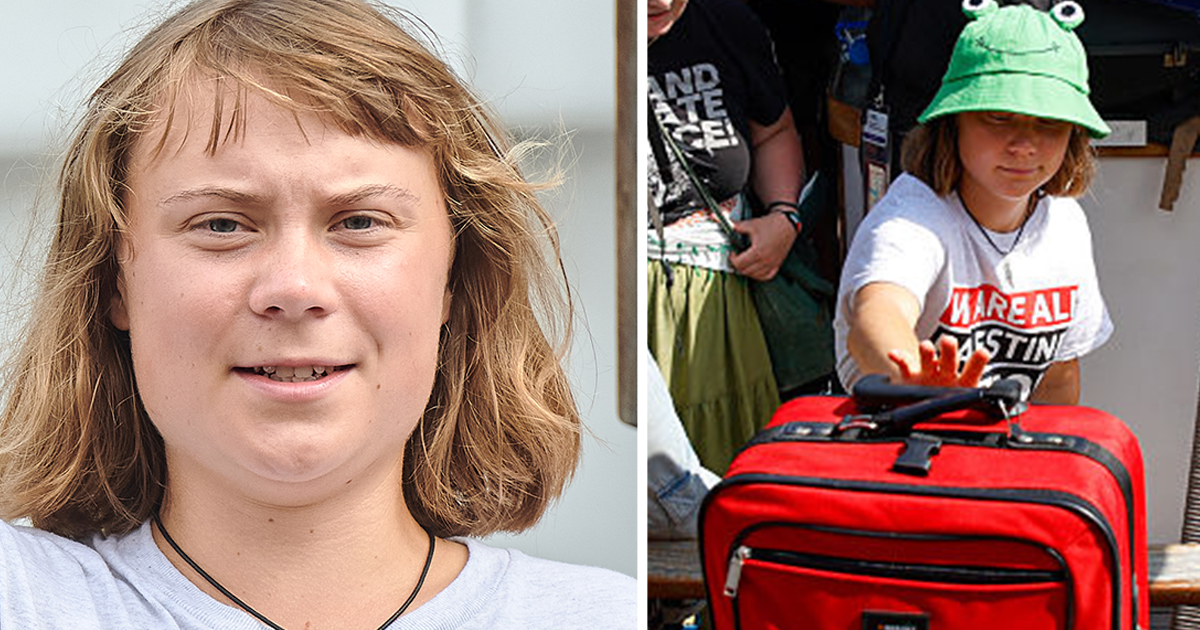
Greta Thunberg has returned to Sweden after being detained in Israel, and she now says her time in custody left her shaken. In a new interview, she describes harsh treatment, sleepless nights, and a vulgar message written on her suitcase. Israeli officials strongly reject her account and say she was treated according to the law before being deported.
Her story has quickly become a flashpoint in an already tense debate. Supporters see a young activist risking her safety for humanitarian aid, while critics question her version of events and accuse her of spreading misinformation. For many people watching from afar, especially those who have followed decades of conflict and diplomacy in the region, the details matter and so does the human toll behind the headlines.
Gretas return to Sweden
According to Greta Thunberg, the events began when she joined a large flotilla carrying humanitarian supplies toward Gaza. She says she knew the journey could end with Israeli interception, but she believed the mission was important enough to take that risk. She was detained in early October after Israeli forces stopped the vessels, and she was later deported.
Back in Sweden, she told the Swedish newspaper Aftonbladet that the experience has left her unsettled. She described the relief of her first night home, when she slept through, followed by a jarring second night in which she managed only about half an hour of sleep after a vivid nightmare jolted her awake. In her words to the paper, her mind still does not feel like it is working the way it usually does.
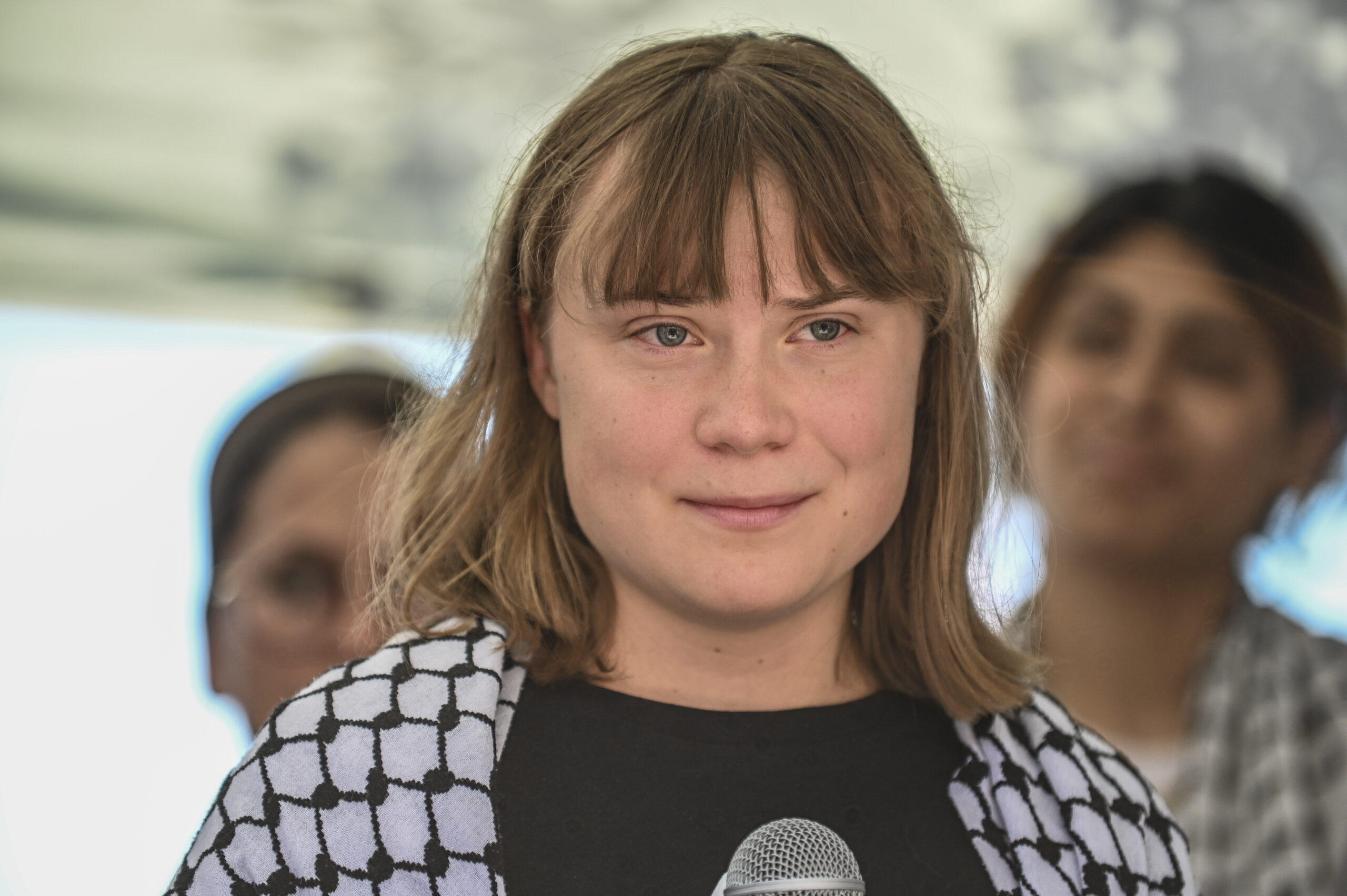
Thunberg explained that she is living in a shared house and trying to restore some normal routine, yet the echoes of what she says she experienced keep intruding. The nightmare she described involved images of damaged boats and confusion at sea, scenes that mirror how her journey ended. While many people might expect a sense of calm after returning home, she suggests the body and mind do not always reset so quickly after a stressful event.
In a simple reflection that will resonate with anyone who has ever been through a deeply upsetting experience, she said that her brain feels foggy and overtaxed. That is not unusual after prolonged stress. Sleep can be shallow or hard to find, and memories can come in fragments. Her description is not a political statement so much as a straightforward human one: the disorientation that often follows fear and uncertainty.
What Greta says happened in custody
In the interview, Thunberg recounts difficult conditions and moments that she describes as frightening. She says that after the Israeli Navy intercepted the flotilla, she was taken into custody along with others, including well-known figures and European politicians. She claims that some detainees were made to stand in metal enclosures overnight, and that the heat was intense and draining. She says guards rattled the bars and shone bright lights to keep people from sleeping.
Thunberg also alleges that some guards kicked detainees, and that she herself was roughly pushed into a corner and told, A special place for a special lady. She claims that guards used Swedish insults they had picked up and called her a degrading name multiple times. The language was, by her account, meant to demean and provoke. She describes it as surreal and disorienting, like being thrust into a scene that did not make sense but was happening too fast to process.
She portrays the environment as both chaotic and deliberately uncomfortable. The combination of heat, lack of rest, bright lights, and shouting can overwhelm anyone. According to her, the setting made it hard to think clearly. She says that while she remembers flashes and details, much of it remains hazy because so many things were happening at once and her mind was trying to keep up.
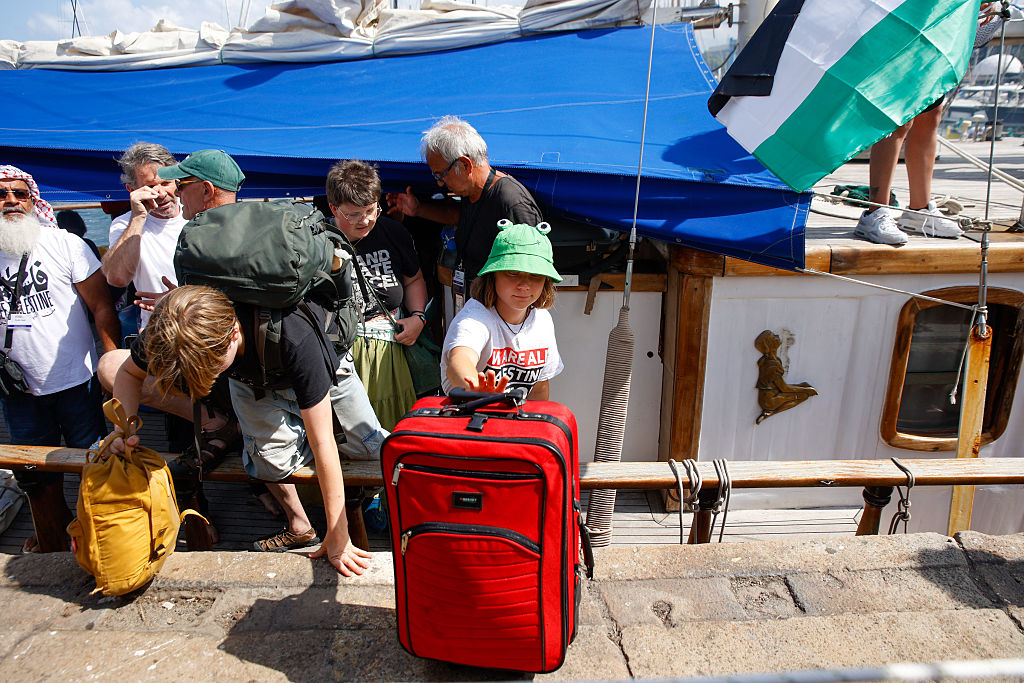
Thunberg says guards at times took selfies with her as if she were a spectacle, even as she pleaded for water. She describes the temperature as around 40 b0C and claims that guards drank water in front of her as she begged for relief. She further alleges that when she later retrieved her belongings, her suitcase had been defaced with large black lettering that read Whore Greta, and that crude drawings appeared alongside it, including an Israeli flag and an explicit sexual image. To her, the message added humiliation to an already distressing experience.
She frames the entire period of detention as a time when a person had to focus simply on getting through the next minute. That kind of description is familiar to anyone who has endured an intimidating situation: you narrow your attention, breathe, and try not to react to things you cannot control. She says she aimed to stay calm, even when she felt pain and fear, because panic would not help. It is an approach many older readers may recognize from their own challenging moments, whether in workplaces, hospitals, or family crises.
Israels official response
The Israeli government flatly rejects Thunbergs version of events. In a statement summarized in British media, Israels Foreign Ministry said all of her legal rights were respected throughout her custody. The ministry asserted that she did not file any formal complaint with Israeli authorities about mistreatment and that, in their account, she personally declined to expedite her own deportation, a choice they say prolonged her time in custody.
The statement went on to characterize the allegations as baseless and untrue. Officials emphasized that she was handled in accordance with international law and that she was safely deported on October 6. From their perspective, the procedures followed were standard for individuals intercepted at sea who are attempting to breach a naval blockade, and any claims of abuse or harassment do not reflect what actually occurred.
These diametrically opposed accounts leave the public with a familiar challenge: two sides describing the same period of time in very different ways. On one hand is a personal narrative of fear and indignity; on the other, an official statement that stresses due process and denies wrongdoing. It is not the first time that competing claims have emerged from a tense encounter, and it will not be the last.
The flotilla, the blockade, and why they matter
The humanitarian flotilla that Thunberg joined set sail in August 2025 with the stated aim of bringing aid to Gaza. Organizers said more than 500 participants were involved, and over 40 vessels took part at different stages. Israel has enforced a naval blockade of Gaza for years, saying it is a necessary measure to prevent weapons from entering the territory and being used against Israeli civilians. Critics argue that the blockade restricts vital supplies and movement, worsening conditions for people living in Gaza.
Flotillas have long been a symbol. Supporters see them as peaceful efforts to deliver help and draw attention to humanitarian needs. Opponents view them as provocative and potentially dangerous, especially during times of conflict, because the sea is also a route for smuggling and escalation. That is why, before vessels approach, Israeli authorities often issue warnings that the ships are entering a restricted or active warzone area and may be intercepted if they refuse to turn back or divert to an approved port.
Thunberg was one of a dozen people aboard a vessel called the Madleen. According to reports, when the ships chose to continue despite warnings, Israeli naval units boarded and took those on board into custody. Detainees were later deported. The moment of boarding is typically the most tense, as crews and passengers are ordered to comply quickly, and security teams move fast to secure the vessel. It is a scenario where confusion, raised voices, and a rush of adrenaline are common on both sides.
Warnings at sea and the moment of interception
Organizers of such flotillas are usually aware of potential interception. Israel often delivers radio messages as vessels approach, stating that the area is under restriction and advising ships to change course. In this case, participants were reportedly told they were entering an active conflict zone and were urged to turn back. When they did not, the boarding followed, leading to detentions and, eventually, deportations.
For people on those boats, the choice to proceed can carry both moral weight and personal risk. Supporters believe that if they stop, their message will never reach the public. Critics counter that pressing forward increases the chance of a confrontation that can quickly get out of hand. The outcome here reflects that difficult calculus: a show of determination met by assertive enforcement, with clashing narratives afterward about what happened in the holding areas and cells.
Reactions from supporters and critics
Public response has been swift and polarized. Admirers praise Thunbergs willingness to put herself directly in the path of trouble in order to highlight humanitarian needs. They say that at 22, she has already spent years trying to use her voice to focus attention on global crises, and the flotilla is another extension of that approach. They point to her calm retelling of events as evidence that she is not seeking drama, but rather trying to explain what she went through.
Critics take a very different view. They argue that the flotilla was reckless and that she is advancing a narrative that leaves out essential context. They highlight Israels claim that all rights were upheld and that no formal complaints were lodged at the time. In their view, the story as told by Thunberg is not just incomplete, but actively misleading. They would prefer that humanitarian shipments follow approved channels rather than attempt to break a declared blockade at sea.
For readers who have watched decades of headlines from the region, this pattern is familiar. A single incident becomes the stage for two powerful storylines, each convincing to those who already agree with it. In the middle of that are the basic human experiences that anyone can understand: fear, discomfort, uncertainty, and the longing for dignity.
The human impact of fear and heat
Several details in Thunbergs account speak to the bodys natural response to stress. She describes sweltering heat, with temperatures she puts around 40 b0C, bright lights breaking up the night, and repeated interruptions that shattered any chance of sleep. These are well-known triggers for disorientation. In hot conditions, dehydration and fatigue set in quickly, especially if someone is anxious or has limited access to water.
Her comment about struggling to think clearly is a common reaction. In intense settings, the brain can narrow its focus to immediate survival concerns, leaving other memories or sensations feeling fuzzy. That haziness is not surprising. People often recall such periods as a series of snapshots or short scenes rather than a continuous, clear movie. If you have ever worked a long night shift, sat anxiously in a hospital waiting room, or faced a stressful family emergency, you might recognize that sensation of time compressing and details blurring until the ordeal passes.
Feeling insulted or mocked, as she alleges, can compound distress. Offensive words are not just noise; they land on a person already under pressure. In her telling, the message scrawled on her suitcase with her name and an obscene slur was especially upsetting. Whether one believes every detail as she describes it or not, most people can understand why that would feel like a deep personal violation.
How the denial shapes the conversation
The Israeli governments response is emphatic and leaves little room for overlap with Thunbergs account. By emphasizing that her rights were upheld, that procedures were followed, and that no formal complaint was made, officials aim to reassure the public that this was a routine matter handled properly. From their standpoint, the allegations of abuse and harassment are simply untrue.
When two narratives diverge this sharply, many observers wait for independent verification. That could include statements from other detainees, accounts from lawyers or medical staff, or reports by third-party organizations. Sometimes, those additional voices emerge quickly; other times, they never come, and the public is left with competing versions that cannot be fully reconciled. Until more information appears, readers are left to weigh credibility, consistency, and context.
What could come next
In situations like this, further steps can include formal complaints, medical assessments, or requests for independent reviews. Consular officials sometimes collect statements from their citizens after a detention abroad. Human rights groups may also seek to interview people involved, document any injuries, and compare stories for patterns. None of that guarantees clarity, but it can add helpful detail and perspective.
For Thunberg herself, the immediate focus appears to be rest and recovery. Her remarks about sleep and mental stamina point to the need to slow down and let the nervous system settle. People often find that simple routines, supportive friends, and time in a familiar place help restore balance after a jarring episode. Whether one agrees with her activism or not, it is not hard to relate to the basic human need to feel safe again after something frightening.
A careful approach to a complex story
It is tempting to treat every new headline as proof of a larger truth we already hold. Yet most of us also know that complicated events often contain pieces that are hard to fit together. In this story, we have a young activists detailed, emotionally charged account alongside a firm official denial. Both cannot be fully right at the same time. The facts may never be established to everyones satisfaction.
That uncertainty does not mean we should look away. Instead, it invites a steady, open-minded attitude. It is reasonable to ask for more information, to listen for corroboration, and to keep in mind that memory under stress can be both vivid and incomplete. It is equally reasonable to expect that official processes should be transparent enough to be trusted, or at least examined when serious allegations arise.
Why many readers care
For those in their midlife or retirement years, stories like this one may call back decades of news from the Middle East, each chapter promising clarity and often delivering more questions. Perhaps you have learned to listen carefully and wait a little before drawing conclusions. Perhaps you also feel a tug of compassion for anyone who says they were frightened, or a concern for orderly procedures and safety at sea, or both.
This is the space where mature judgment is valuable. You can care about the welfare of people in Gaza and also care about preventing weapons from flowing into a conflict zone. You can admire courage and still worry about risky tactics. You can believe that insults and humiliation, if they occurred, are unacceptable, while also recognizing that official statements are part of the record and deserve consideration. Holding more than one thought at once is not ambivalence; it is wisdom.
The bottom line
Greta Thunberg says she endured fear, heat, insults, and humiliation during a detention in Israel, and that a degrading message was scrawled on her suitcase. Israeli authorities strongly deny all of that and say she was treated properly and deported safely. The larger mission that brought her there a flotilla seeking to deliver aid during a blockade is itself part of a long-running dispute over security and humanitarian need. It is a story of ideals and enforcement, courage and caution, and, above all, human beings navigating pressure and pain.
As more voices possibly emerge, the picture may sharpen. Until then, the most we can do is absorb the accounts with care, honor the seriousness of the claims and the force of the denials, and remember that behind every argument are people who will go home and stare at the ceiling at night, trying to sleep. In the end, we hope for two things that are not at odds with each other: that suffering is reduced, and that truth, however complicated, is respected.