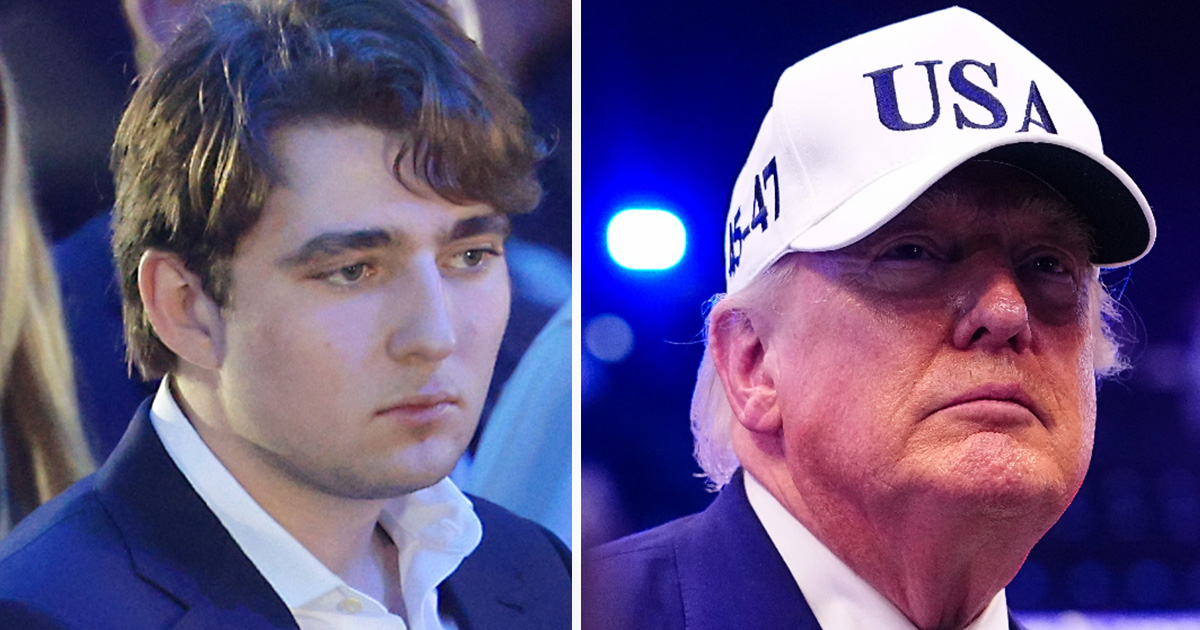
Barron Trump has reached a new chapter of young adulthood, now 20 and studying in Washington. Even as he grows older, much of his life remains private by design. That privacy is part of why a small detail shared recently has drawn so much interest: a gentle nickname his father, Donald Trump, reportedly uses for him in everyday conversation.
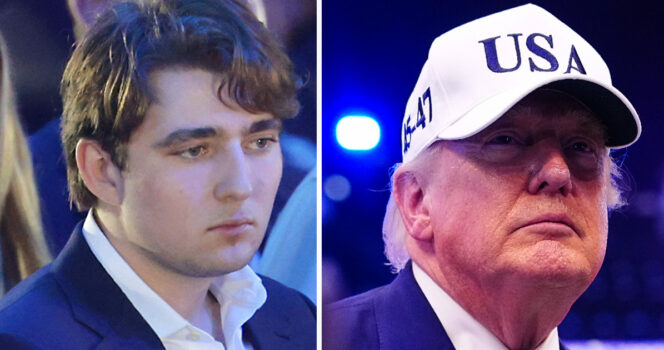
People have long been curious about Barron because, unlike many public figures’ children, he has generally stayed out of the limelight. His childhood was largely protected from the cameras, and he has kept a low profile through his teen years and into college. For a family that has spent years at the center of national attention, his quieter path has stood out.
A private childhood in a very public family
From the earliest days of his father’s political rise, Barron was rarely pushed into the spotlight. While he appeared alongside his parents at key moments, he was not a regular fixture at events or on television. Those who follow the family’s story will remember that during Donald Trump’s time in the White House, only occasional glimpses of Barron surfaced. Most of what was shared publicly focused on the typical interests of a growing boy, like his remarkable height and his enthusiasm for soccer.
Behind the scenes, it was always clear that his parents were intent on giving him as normal a childhood as possible given the unusual circumstances. Years ago, Donald Trump openly said he was not the one handling diapers when Barron was small, emphasizing that Melania took the lead in day-to-day care. Over time, both parents have consistently suggested that they wanted to raise a grounded, good-hearted son despite the constant attention surrounding their family.
What Melania has said about her son
Melania Trump has occasionally offered small windows into Barron’s personality. She once explained that he is independent, strong-minded, and knows what he wants. She even used to call him “Little Donald,” a playful nod to the similarities she saw between father and son. To parents and grandparents alike, that kind of nickname can feel familiar—a fond label that captures family traits and a child’s growing confidence.
Her portrait of Barron aligns with what many people have observed from afar: a young man who seems to be charting his own course, quietly and deliberately, without seeking the flashes of attention that often follow high-profile families.
A glimpse from the campaign trail
During the last election cycle, Donald Trump occasionally spoke about Barron’s insights into younger audiences and digital culture. He suggested that his son nudged him toward interviews and appearances that would reach younger voters, including long-form, conversation-driven platforms. In public remarks, he praised Barron’s sense of what the next generation pays attention to online and the personalities who shape those discussions.
Older readers may recognize a familiar scene in this: a parent leaning on a grown child to understand new technology, new shows, and new voices. The roles begin to reverse a little as children enter adulthood, and it’s not unusual for families to bridge gaps between generations this way—especially when podcasts, social media, and streaming have become such central parts of how people get information.
The new nickname that caught attention
Now, a forthcoming book about the Trump years has introduced a fresh detail that people are talking about. According to Regime Change: Inside the Imperial Presidency of Donald Trump by Maggie Haberman and Jonathan Swan, Donald Trump has a tender nickname for his youngest son: “Honey.”
For many readers, the surprise isn’t the word itself—plenty of parents across the country use the same term. Rather, it’s the contrast between the public image of a political figure known for big rallies, sharp rhetoric, and combative press moments, and the private, everyday language of a father speaking to his son. That contrast is what people have found striking. It reminds us that even the most public figures have private lives colored by the same small expressions of affection that many families share.
An anxious phone call and a calm reply
The book describes a moment when Barron phoned his father after hearing alarming news about conservative activist Charlie Kirk. Media summaries of the book’s account report that Donald Trump sought to soothe Barron on the call, saying, “Calm down, honey, calm down.” It is exactly the kind of response many parents will recognize—steadying a worried voice on the other end of the line.
It is important to note, for accuracy’s sake, that Charlie Kirk was not assassinated. The anecdote reflects how Barron reportedly reacted to news he believed was serious at that moment, and how his father responded. That clarification matters because in fast-moving news cycles, uncertainty and rumor can travel quickly. Still, the core of the story is less about the news item and more about the father-son exchange and the simple term of endearment that stood out to readers.
Why this small detail resonates
For many in their 40s, 50s, and 60s, the idea of a parent calling a grown child “honey” feels warm and familiar. Families develop their own languages—small phrases and pet names that linger long after children are tall enough to look their parents in the eye. Those words are not just habits; they are shorthand for love, reassurance, and continuity.
In this case, the nickname sparked reactions because it reveals a side of Donald Trump that people do not often see in public settings. The stage, the microphones, and the headlines usually leave little room for the softer parts of family life. In contrast, a quiet word over the phone between a father and son tells another story, one that older readers might recognize from their own memories of raising children and watching them become adults.
Growing up under a spotlight
It is difficult for most of us to imagine what it is like to grow up with a camera lens always nearby or to have strangers discussing your life. The children of presidents and other high-profile leaders face a special kind of pressure. They must find their identities while the public watches, often commenting on things that would go unnoticed in any other family. That is one reason Barron’s relative privacy has seemed both wise and necessary.
As he steps forward into adulthood, studying in Washington and carving out his own interests, that protected space remains crucial. College years are a time for trial and error, for exploring ideas and forming one’s own views. When a young person is surrounded by headlines, even a small detail—like a nickname—can become a national talking point. For Barron, the recent attention serves as a reminder of how closely people still follow the Trump family and how eager they are for any small glimpse of their private dynamics.
From “Little Donald” to “Honey”
Nicknames tell stories. When Melania Trump once called her son “Little Donald,” it highlighted a mother’s observation that father and son share traits—confidence, decisiveness, and a clear sense of what they want. The reported nickname “Honey” adds a second layer to that story. It suggests comfort and closeness, the way a parent might soften the edges of a stressful moment with a familiar word.
Parents and grandparents can likely think of the words they used when calming a child after a tough day at school, a disappointing game, or a frightening bit of news. These small acts of tenderness do not erase the disagreements or the challenges families face, but they often set the tone that carries everyone through them.
Public image versus private life
For decades, the public has seen Donald Trump in boardrooms, on television, on debate stages, and at rallies. That big, larger-than-life presence can make it hard to imagine quiet, personal exchanges. Yet anyone who has raised children knows that the most meaningful moments rarely happen under bright lights. They unfold in kitchens, car rides, and everyday phone calls.
The reported nickname bridges that gap between image and reality. It does not transform someone’s public actions or policies, and it does not settle political debates. It simply reminds us that behind every public figure is a set of private relationships, and those relationships are made of the same simple building blocks that hold other families together.
How younger voices shape older ears
Another thread running through the recent attention on Barron is the idea that he has helped his father understand what younger audiences are watching and listening to. Long-form conversations, independent broadcasters, and high-traffic digital personalities now play a crucial role in shaping public opinion. Many parents turn to their adult children to figure out which voices matter on these platforms, how to communicate there, and what feels authentic to a new generation.
In that sense, Barron’s reported guidance mirrors a broader shift taking place in families everywhere. Knowledge no longer flows just from older to younger. It travels both ways. Parents share experience and judgment; children share new tools and landscapes. The result is a bridge that helps both sides stay connected, especially in fast-changing times.
A careful word about accuracy
When details from books, speeches, or secondhand accounts reach the public, they can pick up speed faster than they can be verified. That is why it is important to treat fast-moving claims with patience and care. In this instance, what endures beyond the confusion of a news rumor is the snapshot of a family moment: a father hearing worry in his son’s voice and answering with a calming word.
Setting aside the headline noise, the heart of the anecdote is familiar to many of us. It is the everyday language of reassurance. No matter what your views are about politics or public life, that sort of moment is easy to understand.
The enduring pull of small stories
There is a reason small, human stories seize our attention. They cut through the big, complicated debates and bring us back to the basics. We pay attention because we see ourselves in them: a parent trying to do right by a child, a young person navigating change, a family adjusting as roles evolve. Whether you are a parent, a grandparent, an aunt, or an uncle, you have likely used a gentle nickname yourself. You know the way a single word can put someone at ease, even when the world outside feels loud and uncertain.
In that light, Donald Trump reportedly calling Barron “Honey” is less a headline and more a familiar thread. It is the kind of moment that happens in homes everywhere, every day, even if most of those moments never make the news.
Looking ahead as Barron builds his own path
As Barron continues his studies and steps further into independence, he does so with the unique experience of having grown up in a historic spotlight. Yet the details that have captured attention lately are small and personal. They suggest a family trying to maintain a sense of normalcy, no matter how public their lives may be.
For those watching from a distance, the most respectful approach is to allow room for that privacy while recognizing the interest such stories naturally draw. Curiosity is normal. So is the wish to see famous families in ordinary, human moments. The balance comes from remembering that a nickname is not a political statement; it is a sign of affection.
A final thought
Families are built on rituals and words that only they fully understand. What others see from the outside will always be partial and imperfect. The reported nickname at the center of recent conversations does not settle any larger arguments, and it does not rewrite public history. What it does do is offer a brief view of a bond between a father and son, at a time when both are navigating big responsibilities and big changes.
For many readers, especially those who have raised children into adulthood, that is the part of the story that feels most true. It is not the noise of the news cycle, but the calm word spoken in the middle of it—one small reminder that, beneath the surface, families everywhere have more in common than we might think.