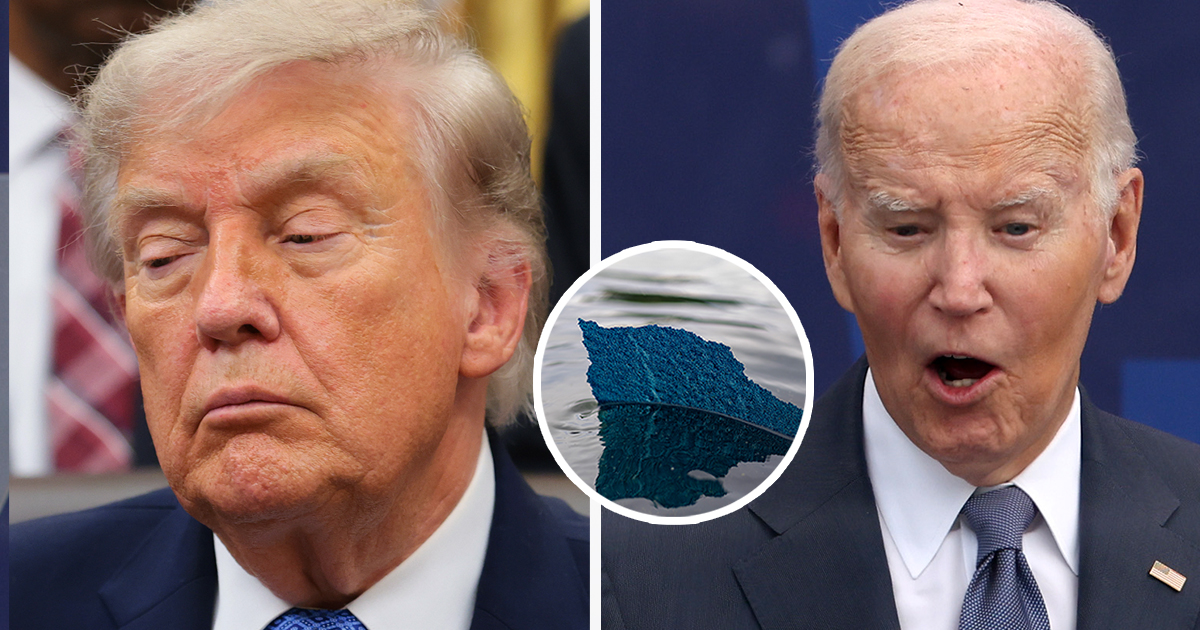
Former President Joe Biden has mostly kept a low profile since leaving the White House in 2025. Over the weekend, however, he stepped back into the political conversation with sharp words for President Donald Trump, criticizing the recent overhaul of the Lincoln Memorial Reflecting Pool and calling Trump a “loser” while speaking at a Democratic Party event.
Biden’s remarks centered on Trump’s role in high-profile changes around Washington, D.C., with the Reflecting Pool becoming a symbol of the broader dispute. The two leaders have long traded barbs—Trump has repeatedly mocked Biden with nicknames in public statements—yet Biden’s latest comments marked one of his most direct and pointed rebukes since leaving office.
A pointed remark in a short speech
During a roughly ten-minute keynote speech at a Democratic gala, Biden accused Trump of what he described as corruption “on a scale never seen before in American history.” He then zeroed in on the Reflecting Pool, suggesting that Trump had arranged for personal associates to be involved in the work, saying the president had even “hired his own pool guy to fix the reflecting pool,” before adding, “What a loser,” according to multiple reports, including coverage that cited those remarks from the event.
The audience responded energetically, and Biden moved on without delving further into details. His comments revived questions around the recent renovation of one of the nation’s most recognizable landmarks and Trump’s forceful reaction after the project encountered problems.
What happened at the Reflecting Pool
The Reflecting Pool, which sits between the Lincoln Memorial and the Washington Monument, is among the most photographed sites in the United States. It is a place of quiet reflection for visitors, a backdrop for historic speeches, and a familiar symbol of the nation’s capital.
Recently, the National Mall landmark underwent a major renovation, reported to have cost more than $14 million. The project involved draining the pool, resurfacing it, and repainting the bottom in a color described as “American flag blue.” The idea, according to reports at the time, was to refresh the look and improve the overall visitor experience while addressing ongoing maintenance needs.
But the refresh soon faced trouble. Within weeks of the work being completed, paint reportedly began to peel, and the water took on a green cast as algae bloomed. Those developments drew widespread attention, led to criticism online and in the press, and set off a round of finger-pointing about what had gone wrong and who was responsible for fixing it.
Trump’s allegation of vandalism
In response to the issues at the Reflecting Pool, President Trump later claimed that the site had been intentionally damaged. He said chemicals had been poured into the water to cause the discoloration and accelerate problems, though he did not provide evidence to substantiate that assertion. The allegation added a new and heated dimension to a story that had already attracted significant scrutiny.
Trump also warned that anyone caught vandalizing the pool—or any federal monument or landmark—could face severe legal consequences. He said that penalties of up to ten years in prison would be fully enforced. The stern warning was in keeping with earlier statements he has made about protecting public monuments and historic spaces, but it also raised questions about what exactly happened at the Reflecting Pool and whether there was a confirmed culprit.
The “350-foot slit” claim
Adding to the controversy, Trump told reporters last week that someone had cut a “350-foot slit” in the pool’s lining, describing the tool as “a box cutter or some kind of knife.” Earlier statements had put the figure at 250 feet. He paired the claim with renewed calls for long prison terms for anyone found responsible.
As of now, those details have not been publicly presented with corroborating evidence, and the exact cause of the pool’s problems remains a matter of dispute in the public conversation. What is not in doubt is that the Reflecting Pool—an icon of Washington—has become a flashpoint in the ongoing political back-and-forth.
Why the Reflecting Pool matters to everyday visitors
For many Americans, especially those who have visited the National Mall over the decades, the Reflecting Pool is more than just a body of water. It is a place where people remember history, honor service and sacrifice, and share quiet moments with family. Any time it is drained or undergoing work, visitors feel the effect, and when it returns looking different—brighter or darker, bluer or greener—it prompts strong feelings.
Maintenance at the pool is complex. Long, shallow bodies of water are prone to algae growth, especially in warm weather or when sunlight penetrates to the bottom. Even small shifts in water treatment or surface material can influence how quickly algae appears. These are predictable challenges that custodians of such landmarks account for, and they can be managed but not always eliminated entirely—something longtime visitors may have noticed over the years during different maintenance cycles.
Biden’s criticism and the bigger picture
Biden’s swipe at Trump was about more than just one pool. His remark about alleged corruption framed the Reflecting Pool project as part of a larger pattern, in his view, of mismanagement and self-dealing under Trump’s leadership. While he did not present documentation during his short speech, the accusation underlined the depth of his disagreement with his successor’s approach to governing and stewardship of national treasures.
Trump’s supporters see the matter differently. They argue that the president is taking strong steps to protect landmarks, deter vandalism, and ensure that federal property is maintained to a high standard. From that perspective, the warning of long prison terms is not an overreaction but a reasonable measure to discourage willful damage.
As with many debates in Washington, the truth that will matter most to the public lies in the details: who approved specific changes, how contractors were selected, what oversight was in place, and what independent reviews conclude about the causes of the pool’s problems. Those are the sorts of questions that, when answered clearly, can restore confidence and turn down the political temperature.
How such projects usually work
Large public works on national landmarks typically involve multiple layers of planning and approval. Agencies consult with preservation experts, engineers, and environmental specialists. Procurement rules are meant to ensure fairness in awarding contracts. When things go right, most visitors never notice the effort; they simply enjoy a refreshed space. When things go wrong—whether because of materials that do not perform as expected, maintenance challenges, or, as alleged here, outside interference—the results can be highly visible and very costly to fix.
The reported peeling paint and algae issues point to a few possibilities that specialists often consider. Paint or coatings can fail if surface preparation was not ideal, if the material did not bond as intended, or if environmental factors such as temperature and water chemistry were not accounted for during application. Algae growth, on the other hand, is a constant factor that requires ongoing management—through water circulation, filtration, and carefully balanced treatments.
The politics of preservation
Preserving national landmarks carries political weight. These spaces reflect the country’s values and history, so changes—especially visible ones—invite opinions. A bolder color choice may strike some as patriotic and fresh while others see it as out of step with tradition. In that sense, the Reflecting Pool’s new look was always going to draw attention. The subsequent problems only made the scrutiny more intense.
For older Americans who have seen the Reflecting Pool through decades of visits, television broadcasts, and historic moments, the stakes feel personal. Many remember family trips, marches, or simply the hush of the Lincoln Memorial at sunset with the pool shimmering out front. Any disruption is felt not just as a maintenance hiccup but as an interruption of a cherished national scene.
What Biden and Trump’s exchange signals
Biden’s decision to address the Reflecting Pool and to use such a pointed insult shows that, even after leaving office, he sees value in drawing contrasts with Trump on matters of public trust and stewardship. For his part, Trump’s emphasis on law and order—especially with threats of long prison sentences—fits with his broader message about cracking down on vandalism and disorder around federal property.
These different approaches set the tone for how each man talks about governing. One focuses on alleged ethical lapses and questions of influence; the other emphasizes enforcement and punishment for wrongdoing. The Reflecting Pool has become a stage for that debate, which is likely to continue as more information about the renovation and its aftermath comes to light.
Legal consequences and deterrence
Federal law provides serious penalties for damaging government property. The idea is straightforward: national monuments belong to everyone, and harming them undermines the country’s shared heritage. Even so, investigators typically need clear evidence—surveillance footage, eyewitness accounts, or forensic testing—to prove willful damage in court. Without that, theories remain just that: theories.
Trump’s warning of up to ten years in prison reflects the maximum penalties that can apply under certain statutes when damage is significant. In practice, actual sentences depend on the facts of a case, including the nature and extent of damage and the individual’s history. Public declarations of harsh penalties can be a strong deterrent, but they do not replace the need for careful investigation and due process.
On the ground at the National Mall
Visitors to the Mall tend to be resilient. When sections are under construction, people adjust their plans—visiting the memorials that are open, taking photos from different angles, and returning when work is finished. If the Reflecting Pool requires additional repairs or adjustments to its treatment system, it would not be the first time. Over the decades, the pool has been drained for a variety of reasons, including upgrades to control leaks, improvements to water circulation, and general upkeep.
In the near term, the main concern for visitors is likely to be aesthetics—how the water looks, whether the surface is even, and whether there is a visible film or algae. Those are the kinds of details that, for many, shape the experience more than any political controversy.
What to watch for next
Several questions remain. Independent assessments can help clarify whether the paint failure and algae were primarily due to materials and maintenance, or if there is credible evidence that someone interfered with the pool. If there was outside tampering, authorities may release findings as investigations progress. If not, attention will likely shift back to the planning and execution of the renovation.
There may also be updates about how the pool will be managed going forward—whether the color choice remains, whether additional coatings or resurfacing are needed, and how maintenance schedules will adapt to reduce algae growth and preserve the pool’s appearance through the seasons.
A calmer note amid sharp words
While Biden’s “loser” comment grabbed headlines, he kept his remarks brief and did not dwell on personal details. He did not address his own health during the event, choosing instead to focus his limited time on the Reflecting Pool and broader criticism of Trump’s leadership. The restraint in length, if not in tone, suggests he wanted to make a pointed statement and then move on.
For those watching from home or reading afterward, the takeaway is straightforward. An iconic American landmark ran into trouble after a high-profile makeover. The sitting president blamed vandals and promised stiff penalties. The former president blasted both the results and the decision-making behind them, using unusually blunt language. The facts are still being sorted out, and the Reflecting Pool—true to its name—has become a mirror for deeper disagreements about how the country cares for its most visible symbols.
The bottom line
America’s monuments matter because they belong to all of us. When something goes wrong with one of them, it is right to ask hard questions, expect honest answers, and demand high standards for repairs. It is also important to separate confirmed facts from speculation. As investigations and assessments proceed, visitors and citizens alike deserve clarity about what happened, what it will take to make things right, and how similar problems can be avoided in the future.
Until then, the Reflecting Pool will continue to draw people who come to remember, to take in the view, and to feel connected to the nation’s story. Whatever the ultimate explanation for the recent trouble—be it materials, maintenance, or malice—the goal is the same: restore the calm surface that reflects the Lincoln Memorial, the Washington Monument, and, in a small way, the values they represent.