A lighthearted moment turns tense as a child’s dreams meet a blunt remark
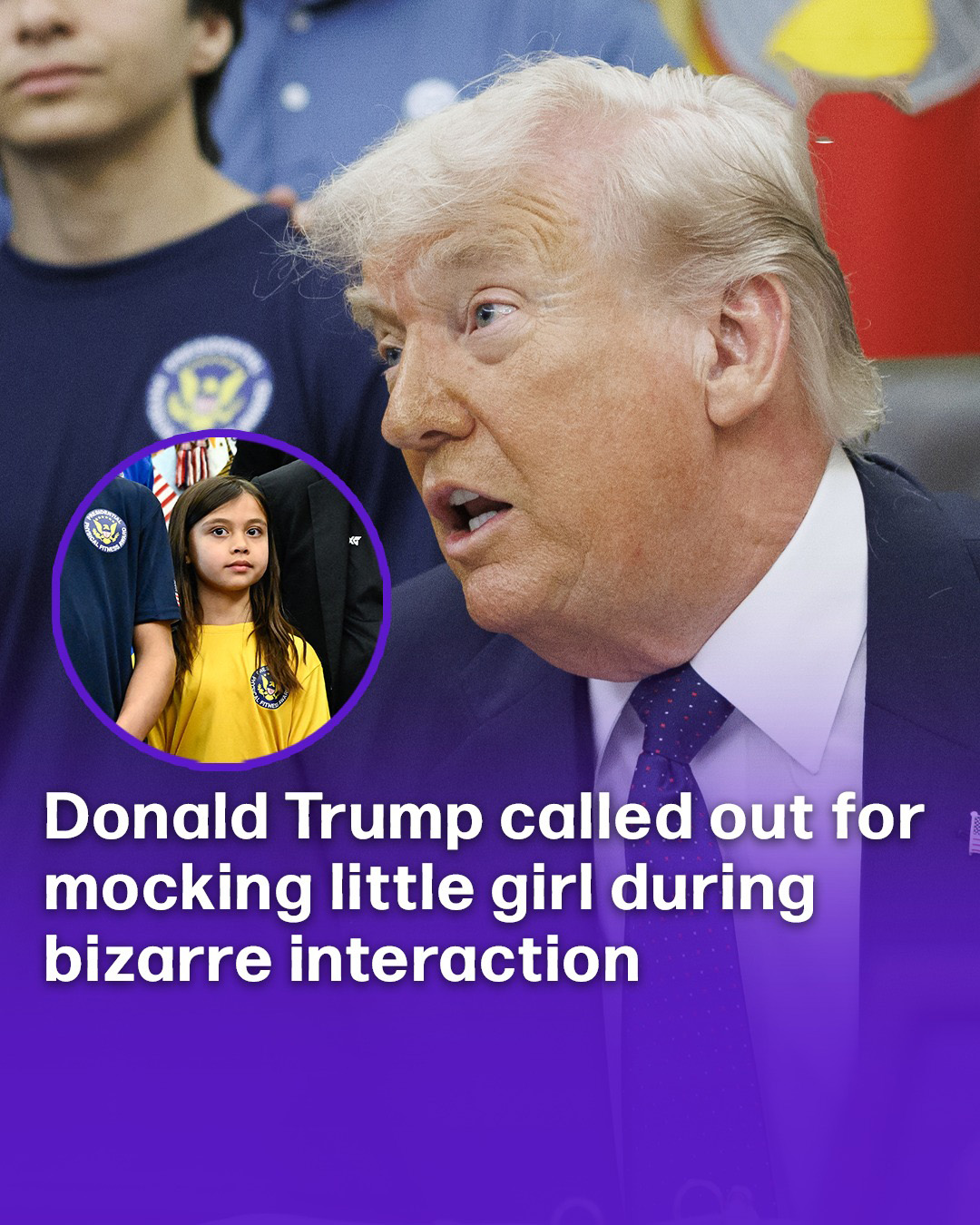
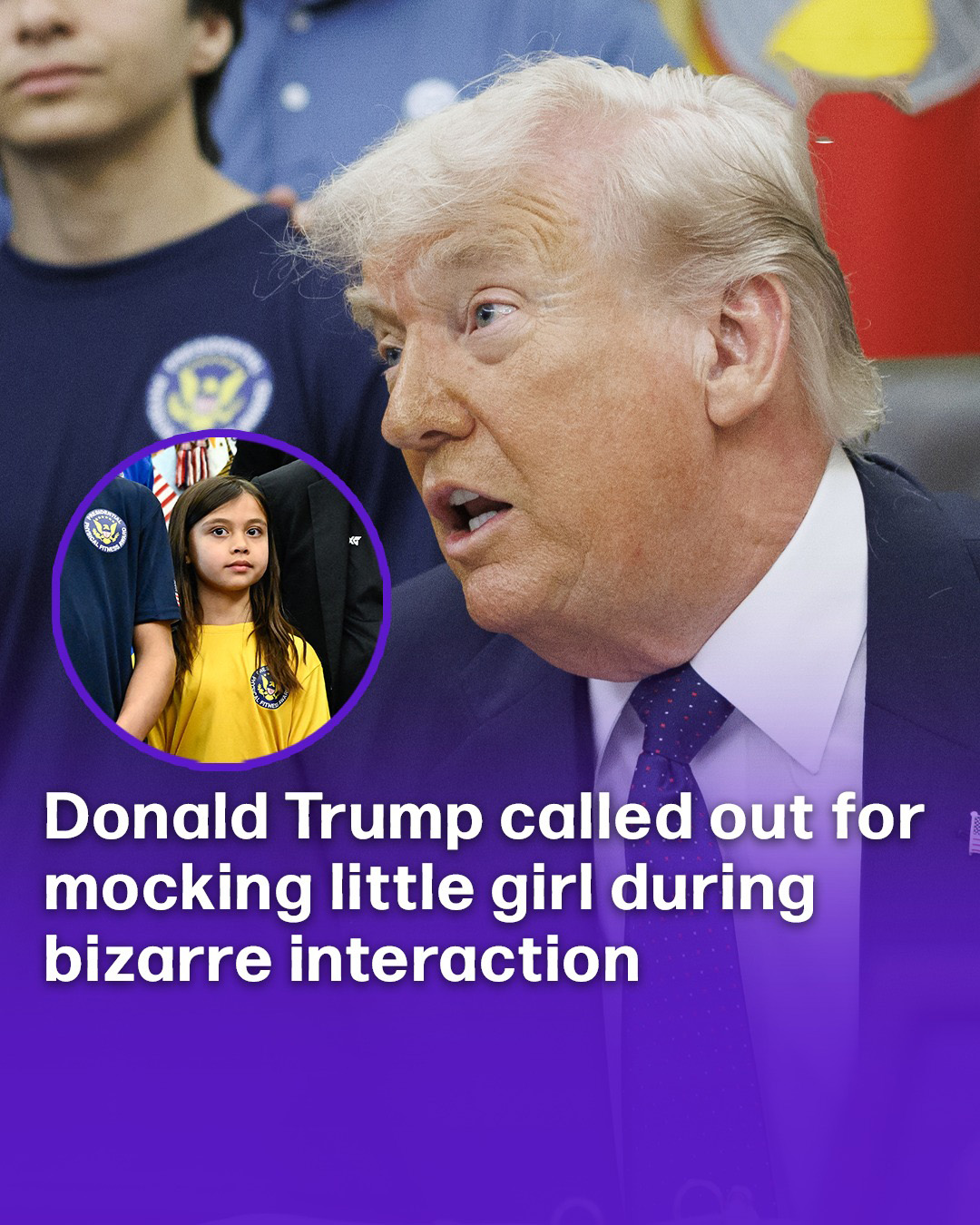
A brief exchange in the Oval Office has sparked a wave of criticism and debate after President Donald Trump appeared to poke fun at a young girl’s height while asking about her favorite sports. What seemed to begin as a friendly chat during a celebratory event quickly became a viral talking point, with many people feeling the comment undercut the child’s enthusiasm instead of encouraging it.
The gathering took place on 5 May, when the 79-year-old president welcomed a group of young athletes to the White House to mark the revival of the Presidential Physical Fitness Award. That award, familiar to many Americans from their own school days, was brought back as part of a wider push to encourage youth fitness and reintroduce a school fitness test. Alongside the students, several well-known athletes joined the event, including golfing legend Gary Player, major champion Bryson DeChambeau, former NFL cornerback Amani Oruwariye, and MLB pitcher Noah Syndergaard.
In a room designed to celebrate effort, perseverance, and the joy of sports, the president singled out one young girl and asked her which sports she enjoys. The child spoke softly but clearly, sharing that she plays volleyball and hopes to try soccer in the summer. It was a simple, earnest answer—exactly the kind of enthusiasm these ceremonies are meant to honor.
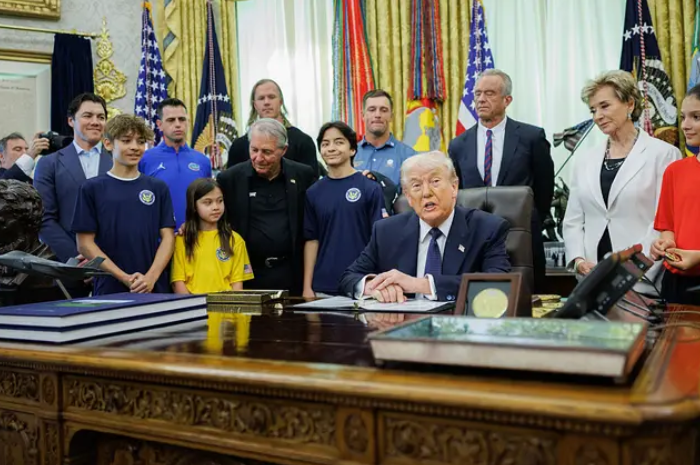
Instead of applauding her interest and moving on, the president pressed on the topic of her height, asking whether she could jump high and whether she could really get up over the net to spike the volleyball. When the girl admitted, a bit shyly, that she could not jump very high, he responded that soccer might be a better fit for her. The line drew laughter from some of the adults in the room. He followed by saying he thought she would be a great soccer player and then offered a quick good-luck wish.
For many observers, that combination—first a playful jab at her stature, then a suggestion to switch sports—landed poorly. Video of the exchange was soon circulating online, and reactions poured in. Many felt the moment undermined the spirit of the occasion and the message that all children can strive for their goals, regardless of their starting point.
One viewer summed up the frustration by arguing that the comment seemed to stomp on the girl’s ambitions instead of lifting her up. Another voice chimed in to say that nudging kids toward a sport where they might thrive can be reasonable, but that timing and tone matter, especially when a child is speaking in front of a crowd. A third observer imagined how the president might have reacted if someone told one of his own children they were too short for something they loved, calling the exchange less about helpful guidance and more about performing for the room.
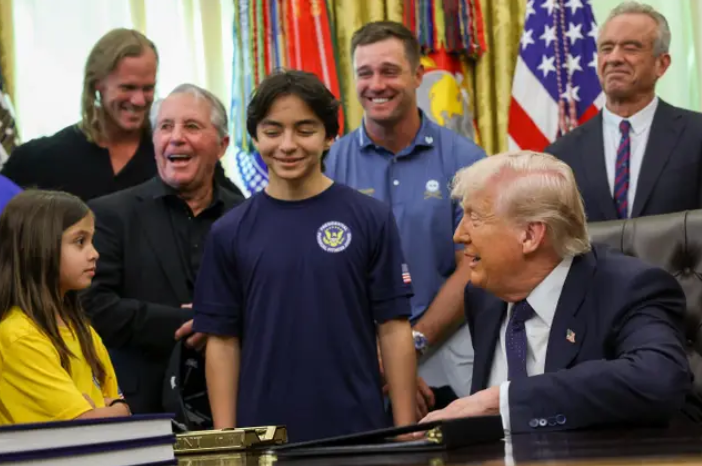
Others described the remark as unnecessary and disheartening, especially for a child who had bravely shared her interests in a high-profile setting. Many older viewers, parents, grandparents, and teachers recognized the difference a few kind words can make. When a young person opens up about what they enjoy, a simple ‘That’s wonderful—keep going’ can be a powerful gift. Conversely, a quip that highlights a limitation can dampen the very spark these fitness initiatives are designed to kindle.
To be fair, some people defended the president’s comment as a practical suggestion. They argued that sports do demand different physical attributes and that steering a child toward a game where she might excel is not inherently mean-spirited. But even some of those supporters acknowledged that a gentler approach—perhaps noting that volleyball has many positions and roles, or that hard work can improve jumping ability—would have struck a more encouraging tone. Offering options without closing doors often inspires kids to try new things while still feeling proud of the goals they already have.
At the heart of the controversy is a simple truth many of us learn later in life: moments with children are opportunities. They remember how adults react when they share a dream. They remember the look on our faces and the words we choose. A playful tease can feel very different when you are the smallest person in a room full of adults and cameras. For those watching the clip, the laughter from the crowd likely amplified that feeling for the child, even if the remark was not intended to wound.
This exchange also touches a broader cultural nerve. In recent years, public conversations around youth sports, body confidence, and mental well-being have grown more thoughtful. Many coaches now strive to balance honest feedback with encouragement. They might say, for example, that height can help at the net in volleyball, but that quick reflexes, accurate passing, and strong serves are equally important. They remind kids that practice builds skill, that everyone grows at a different pace, and that passion often outlasts any early physical disadvantage.
It is also worth remembering the legacy of the Presidential Physical Fitness Award itself. Generations of Americans recall sprinting, stretching, and counting sit-ups in school gyms, sometimes feeling proud, sometimes self-conscious. Today’s youth fitness programs often focus not only on measurement, but also on helping each child find activities they can enjoy for life. That spirit makes encouraging language especially important, whether the speaker is a gym teacher, a parent, a coach, or the president of the United States.
As the clip spread online, a common thread emerged: the best message we can send to children is that effort matters, improvement is possible, and that the joy of moving your body is worth celebrating, no matter your size. For many who watched, the moment felt like a missed chance to reinforce that message. For others, it was a reminder to be more thoughtful about how we guide kids toward success without dimming their excitement.
In the end, people will differ on whether the president’s words were playful, practical, careless, or something else. But the fact that so many reacted so strongly tells us something valuable. We want our public moments with children to model the kind of support we hope they receive at home and at school. A kind word at the right time can echo for years. And so can a careless one.
Unusual moments that have marked Trump’s second term
The Oval Office exchange is the latest in a string of head-turning moments that have shaped public impressions of the current presidency. Whether one views them as jokes, blunt talk, or unnecessary provocations, they have become a recurring part of the national conversation. For readers who may have missed some of these episodes, here is a clear recap and context to help make sense of why each incident drew attention.
One such moment came early in 2025 when the president was asked in an interview whether he intended to remove Prince Harry from the United States amid questions surrounding the royal’s immigration status. The president said he did not plan to do so and added a barbed aside about Harry’s marriage, saying he would leave him alone because he had enough problems with his wife, whom he criticized sharply. Supporters called it characteristic frankness; critics saw it as needlessly personal and undiplomatic, especially given the sensitivity that often surrounds discussions of family life.
Another episode unfolded around a meeting with Ukrainian President Volodymyr Zelenskyy, who has been known to wear a simple dark polo bearing the Ukrainian trident in solidarity with his country during wartime. On greeting him, President Trump joked that Zelenskyy was ‘all dressed up.’ To some ears it was a light quip; to others, it sounded dismissive of a deliberate, somber choice in attire meant to reflect his nation’s struggle and resolve.
There were also remarks about Greenland during a period when American interest in the island drew headlines. At one point, the president asserted that Denmark did not have the ‘right’ to Greenland. In reality, Greenland is a self-governing territory within the Kingdom of Denmark, a relationship that dates back centuries. People who follow international affairs closely found the comment jarring, arguing that an accurate understanding of such arrangements is essential when discussing geopolitics and national sovereignty.
On a different front, the topic of plastic versus paper straws returned to center stage. The president criticized paper straws as unreliable and unpleasant to use and expressed a desire to bring back plastic straws more broadly. Those who agreed with him pointed to personal inconvenience and durability, while environmental advocates emphasized the long-term impact of plastic waste on oceans and wildlife. This is one of those debates where everyday experience bumps up against environmental responsibility, and it often sparks strong feelings on both sides.
A particularly controversial claim surfaced during a 2025 address to Congress, when the president accused the previous administration of spending $8 million on experiments that he characterized as creating transgender mice. Subsequent reporting by public broadcasters explained that the studies in question examined the effects of hormone treatments on conditions such as asthma and breast cancer risk. Experts clarified that the description of ‘making mice transgender’ was a misleading shorthand rather than an accurate summary of the science involved. For many viewers, this became a reminder that scientific research can be easily misunderstood when reduced to a few punchy words.
In January 2025, on his first day back in office, President Trump signed an executive order instructing that the Gulf of Mexico be referred to in federal communications as the Gulf of America, framing the move as a tribute to national pride. While the action did not change international naming conventions or maps produced outside the United States, it triggered a flurry of reactions ranging from amusement to confusion to patriotic approval. It also raised questions about how naming choices influence our understanding of geography and history.
During the 2024 campaign, the president’s rhetoric on crime drew especially intense attention. He spoke about the idea that a brief period of extremely tough enforcement could bring crime to heel quickly, language that reminded many people of a popular thriller film in which normal rules are suspended for a day. Supporters heard his remarks as an emphatic stand for public safety. Critics worried that even suggesting such an approach sent the wrong message about the rule of law and civil liberties. As is often the case with arguments over crime policy, deep concerns about safety and justice collided in the public square.
The campaign trail also saw sharp words aimed at then-opponent Kamala Harris. The president labeled her in coarse terms, calling her an exceptionally poor vice president. In politics, hard-edged rhetoric is not new, but moments like these reignite a broader question about the tone we expect from national leaders. For some, blunt talk feels refreshing and honest. For others, it erodes the civility that helps people disagree without demeaning one another.
Taken together, these incidents help explain why a single remark to a child could ignite such a reaction. Each new moment is not judged in isolation, but rather in the context of a pattern people think they see. If you feel the president often reaches for barbs and put-downs, then the volleyball comment may fit that pattern in your mind. If you feel his directness is part of his appeal, then you may see it as a harmless quip or practical guidance. Our prior impressions, shaped by many such episodes, color how we interpret every new one.
Why this small moment matters to many families
For grandparents, parents, and mentors who have spent years encouraging children, the lesson from the Oval Office exchange is simple. When a child shares a hope, even a modest one, it is an invitation to lift them a little higher. We can be honest without being discouraging. We can offer ideas without closing doors. We can talk about how different sports reward different strengths while also affirming that effort and training can take you farther than you might think.
If we were advising that young volleyball player, we might say something like this: ‘It is wonderful that you love volleyball. Keep practicing your serve, your passing, and your timing at the net. Many great players were not the tallest, but they learned to read the game and move quickly. And if you enjoy soccer too, give it a try this summer. You might discover you have a talent for it. Either way, your love of sport is what matters most.’ A message like that keeps possibilities open and lets the child decide where her excitement leads.
These are gentle habits we can all cultivate, no matter our politics. In a world where cameras are always rolling and every comment can be shared in seconds, it is easy to forget that our words land on real hearts. The applause and laughter of a room may fade, but a child’s memory of feeling seen and supported can last for decades.
That is why this short, awkward moment resonated so strongly. It reminded many people of times when they, too, were told they were too small, too slow, or not quite right for something they loved. Some of us were lucky enough to keep going anyway. Others changed course and found new joys. Either way, the voices we remember most are the ones that believed in us. And that belief, offered at just the right time, can be the spark that turns a small dream into a lifelong passion.
So as the conversation continues, perhaps the best takeaway is this: when a young person trusts us enough to share a dream, let us answer with patience, optimism, and respect. We will never regret telling a child that her hopes are worth pursuing and that the next try, the next practice, and the next season could surprise her. Whether in a school gym or the Oval Office, that is the kind of encouragement that helps a generation stand a little taller.