A lighthearted return to a moment that once made headlines
Former U.S. President Barack Obama has revisited one of the most unexpected flashpoints of his time in office, the now-famous tan suit. True to form, he handled it with humor and ease, reminding many people that what once seemed like a big deal can, with time, become a lighthearted memory.
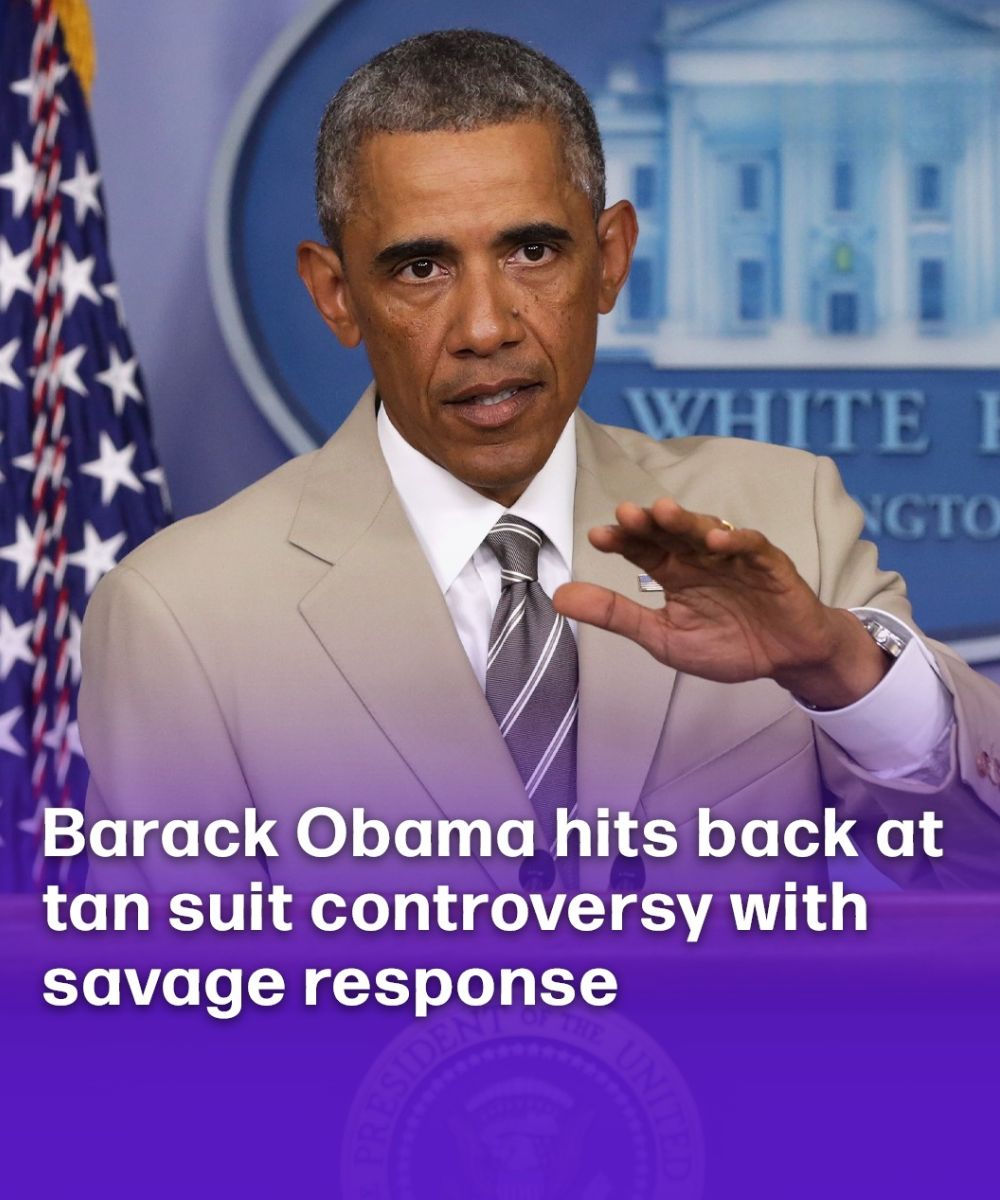
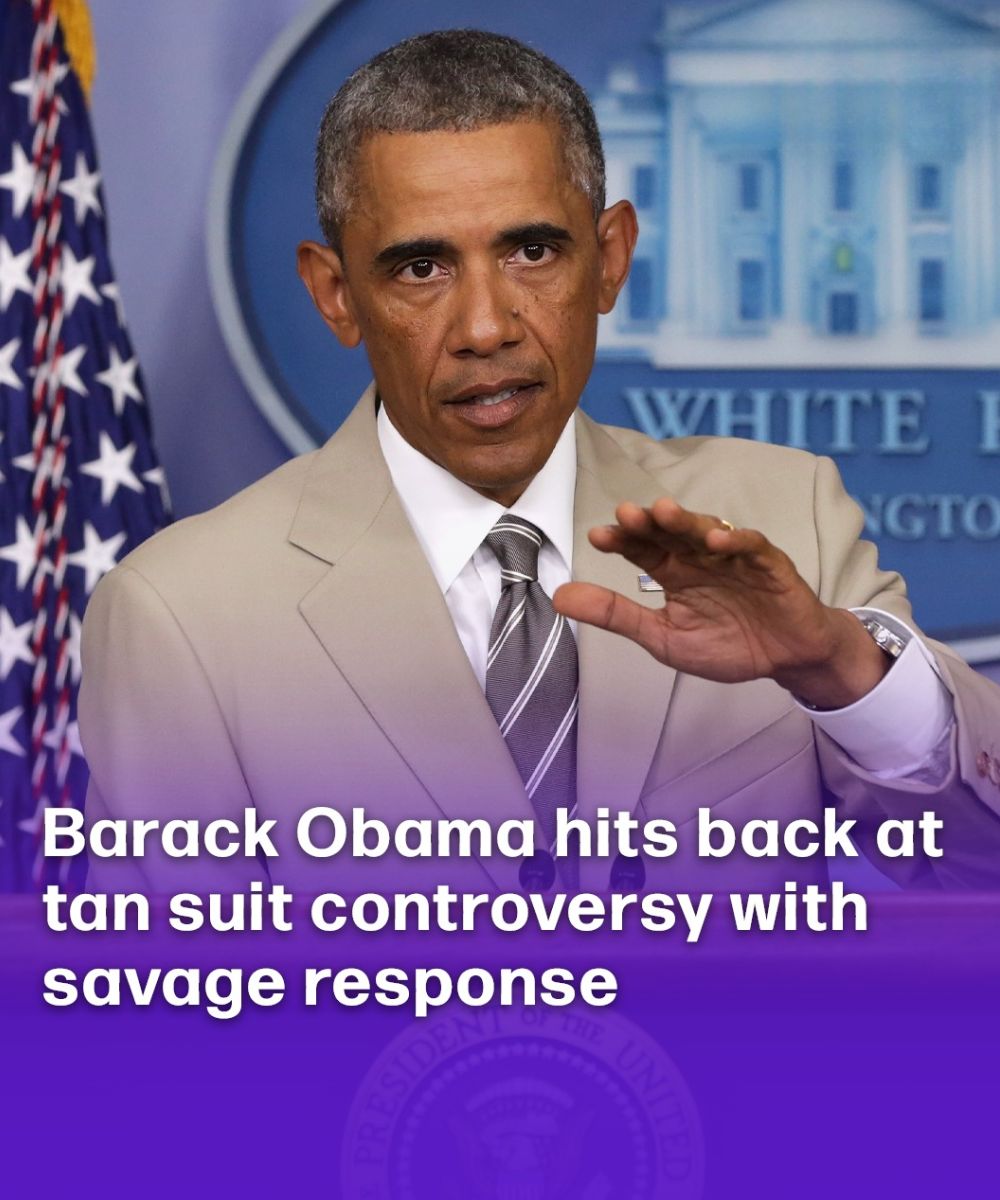
The original moment dates to August 28, 2014. As president, Obama held a press conference focused on a serious, evolving question: whether the United States would intensify military action against ISIS in Syria. It was a high-stakes topic, and the briefing drew intense attention. Yet what captured countless headlines afterward was not the policy discussion, but the tan-colored suit he wore that day.
Within hours, reactions poured in. Some critics argued that the lighter shade looked too casual for the Oval Office, or that it lacked the gravitas people expect from a commander in chief during a tense international briefing. Others immediately pushed back, pointing out that presidents and public officials have long worn lighter suits in warmer months, and that the focus on the outfit seemed to miss the bigger picture of the day’s urgent policy matters.
For several days, conversation about the tan suit crossed from serious commentary to satire. Cable news panels debated it. Late-night monologues joked about it. Social media spun out countless reactions, turning one wardrobe choice into a national conversation about image, decorum, and what we expect from our leaders. Even then, many observers found the uproar outsized, especially given the weighty subject matter that had brought the president before reporters in the first place.
Looking back now, it is easier to see how a single photograph could overshadow substance in a media environment that moves quickly and thrives on memorable images. But it is also worth noting that light-colored suits are hardly rare in Washington’s humid summers. Many public figures, from business leaders to elected officials, reach for tan or lighter shades in the hottest months. In that sense, the outfit itself was not unusual; it was the timing and the attention it attracted that made it stand out.
As the months and years rolled on, the tan suit became cultural shorthand for a different kind of political era, one where a comparatively small moment could dominate the conversation. With distance, many people have come to view it as a gentle reminder of how easily the national spotlight can drift from issues to imagery.

More than a decade later, that memory still has a way of popping back into public view. On social media, people reminisce with a mixture of humor and disbelief. One person wrote, remembering the swirl of commentary, that they would gladly take that as the biggest national debate again. Another wondered aloud whether it was really the most pressing concern at the time. Others have shrugged with a smile, suggesting that the reactions said more about our appetite for spectacle than about the suit or the man wearing it.
Obama seems to share this easygoing perspective. In a recent visit to The Late Show with Stephen Colbert, the conversation turned to his upcoming presidential library. The host, ever the playful curator of political moments, brought out an assortment of tongue-in-cheek souvenirs from Obama’s career and asked whether the displays would spotlight the former president’s greatest accomplishments.
A museum of milestones, and a wink to the lighter moments
Obama answered that it was a fair approach, acknowledging the importance of highlighting the work of his administration. Then came a familiar comic twist. Colbert asked whether there would also be a section dedicated to missteps, smiling as he raised the question that millions remember: would the tan suit make an appearance on the wall of presidential mistakes?

Obama did not flinch. He smiled and delivered a line that landed with the relaxed confidence of someone who has gained perspective over time. I stand by that tan suit. I think I looked pretty good.
Colbert noted how dramatic the reaction had seemed at the time and asked how Obama thinks about the moment now, all these years later. The former president’s answer was a single, stylish word. Fly.
Viewers quickly chimed in online. Some praised the response, saying he looked fantastic in the suit then and looks even better for shrugging off the fuss today. Others admitted that they had tuned out the noise at the time because the uproar felt inflated, and they see it now as an amusing footnote to a serious period in global affairs. Many simply repeated a question that lingered back in 2014 and still lingers now. Why did a tan suit cause such an uproar in the first place?
Why clothes can become symbols in public life
For better or worse, a leader’s wardrobe can carry meaning in a way few other things do. Clothing is immediate, visual, and easy to talk about. A single image can travel farther and faster than a detailed policy paper, especially in a world where half the country may catch only a headline or a photograph. Over time, these images stack up and become symbolic. A tie color, a rolled-up sleeve, or a tan suit starts to stand in for broader impressions, fair or not, about seriousness, relatability, or judgment.
That is why the tan suit became a kind of cultural Rorschach test. Some saw a lack of gravity at a time of crisis. Others saw a reasonable summer outfit and wondered why it mattered. The entire episode highlighted how our shared attention can be pulled toward the visual, even when the substance of a moment is elsewhere. With the benefit of hindsight, many now view that week as a lesson in how tone and imagery can overshadow the message, even when the stakes are high.
It is also a reminder that norms shift. Expectations for how leaders should look and act have always evolved with the times. A suit that might have raised eyebrows in one decade can feel unremarkable in the next. Today, a tan suit can simply look like what it is, a seasonal choice, rather than a signal. And after years filled with profound national and global events, the idea that this wardrobe decision once dominated the airwaves feels, to many, like a lighter chapter from a different era.
Humor, perspective, and the value of time
What makes Obama’s new response resonate is not only the punch line but the perspective behind it. Humor can be a powerful way to acknowledge the past without getting stuck in it. By saying he stands by the suit and that he thought it looked good, he recast the conversation from defensiveness to self-assuredness. Calling it fly condensed a week of noise into a single, good-natured shrug.
For people who lived through the moment, the exchange with Colbert offers a small but welcome bit of relief. It suggests that it is possible to look back on contentious cultural dustups and smile, not because they did not matter at the time, but because time has a way of sorting the important from the merely memorable. That distinction can be comforting, especially now, when many feel the headlines move too fast and stay too loud.
There is also something familiar in this rhythm of public life. Anyone who has worked in a high-visibility role knows that small choices can take on lives of their own. The challenge is to keep perspective, to remember the work at hand, and, when appropriate, to embrace a little levity. In this sense, the tan suit has aged into a story about grace under scrutiny.
From controversy to cultural shorthand
The staying power of the tan suit is striking. It became a reference point in comedy sketches, political commentary, and everyday conversation. People created a kind of shared vocabulary around it. Say tan suit and most listeners immediately picture that press conference and the media whirlwind that followed. It is rare for a wardrobe choice to become that recognizable, and rarer still for it to do so in a way that inspires more amusement than frustration years later.
That shift—from frustration to amusement—is telling. It suggests that not every loud debate leaves a lasting scar. Some settle into the background as anecdotes we share to capture the feeling of a time and place. The tan suit now feels like one of those anecdotes, a snapshot of how quickly the news cycle can spin and how, with distance, we can view the spin itself with a kinder eye.
If anything, the renewed attention underscores how our understanding evolves. Many people look back and say the uproar felt out of proportion. They see the moment now as a case study in distraction, where the frame overtook the picture. And so the new punch line lands, not just as a fashion remark, but as a gentle reminder to keep our eyes on what matters most.
The presidential library and what it represents
Colbert’s playful tour through would-be souvenirs also pointed to something more substantial, the work of preserving a presidency for future generations. A presidential library gathers documents, stories, and artifacts from years of public service and makes them accessible. It offers students, families, and curious visitors a way to see how decisions were made, what challenges were faced, and how the country changed during a particular time.
In that setting, the tan suit is unlikely to be anything more than a footnote, if it appears at all. The core of any library or museum about a presidency will always be the major undertakings, the turning points at home and abroad, and the thousands of less visible choices that make up governing. Still, the fact that a single suit can resurface with a laugh emphasizes an enduring truth. People remember the big things, and they also remember the little things that gave those years their texture.
For visitors, that mix can be meaningful. It helps connect the sweep of national events to the everyday humanity of the people at the center of them. A big policy speech sits alongside a family photograph. A serious briefing sits alongside a moment of levity. Together, those pieces paint a fuller picture of leadership, one that includes both the pressure of responsibility and the lighter notes that make the story relatable.
What the reaction says about us now
Part of the fascination with revisiting the tan suit is that it invites us to reflect on our own habits as news consumers. Many of us can recall times when an arresting image crowded out the more complex realities behind it. We are drawn to what we can see and understand immediately. That is not a failing so much as a feature of how human attention works. But it is helpful to notice it, so that when the next splashy moment arrives, we can pause and ask what might be happening beyond the frame.
For an older audience that has watched public life ebb and flow over decades, the lesson may feel familiar. We have seen styles change, standards shift, and technologies reshape communication. In each era, something new captures attention and becomes a symbol of the times. The tan suit, viewed now, is a small, charming symbol of an earlier media moment, and a sign that perspective softens sharp edges.
That perspective is a gift. It invites patience. It asks us to extend a little grace, both to public figures and to ourselves, when the conversation veers toward spectacle. And it lets us enjoy the moments that are, at heart, lighthearted, without losing sight of the serious work that continues every day.
A simple takeaway, delivered with a smile
In the end, Obama’s recent remarks offered a neat summation. He is not running from the memory or apologizing for it. He is embracing it, with the kind of good humor that puts an exclamation point on the past instead of a period. I stand by that tan suit. I think I looked pretty good, he said, and then, with a single word, reframed the whole episode. Fly.
It is a reminder that a little confidence and a sense of humor can go a long way. What once looked like a brewing storm can, with time, become a story we tell with a grin. And if the story helps us keep our focus on what truly matters, all the better. In a world that still moves fast and fixates on the visual, choosing to laugh and move forward may be as timeless as any dark suit hanging in a closet.
So the tan suit returns to the spotlight, not as a controversy, but as a conversation starter. It sparks memories of where we were, what we were talking about, and how far we have come. It adds a dash of warmth to the larger story of a presidency and a period in American life. And for a few moments, at least, it brings us together in a shared smile, an acknowledgment that sometimes the small things become the stories we remember most.
Looking ahead with a lighter touch
As the work of building and curating a presidential library continues, the renewed attention on the tan suit offers a helpful tone for the years ahead. It suggests that public memory can be generous. It reminds us that even the most closely watched figures are people, making choices each day, some momentous and some ordinary. And it shows how a bit of well-placed humor can help us navigate the space between the weight of responsibility and the human desire to see ourselves in our leaders.
That balance, after all, is part of what keeps us engaged. We want to understand the difficult decisions and the reasons behind them. We also want the occasional, reassuring wink that says, yes, we can take the work seriously without taking ourselves too seriously. When a single color of fabric can carry that message across a decade, it is fair to say the moment has earned its footnote in history—and its laugh line in the present.