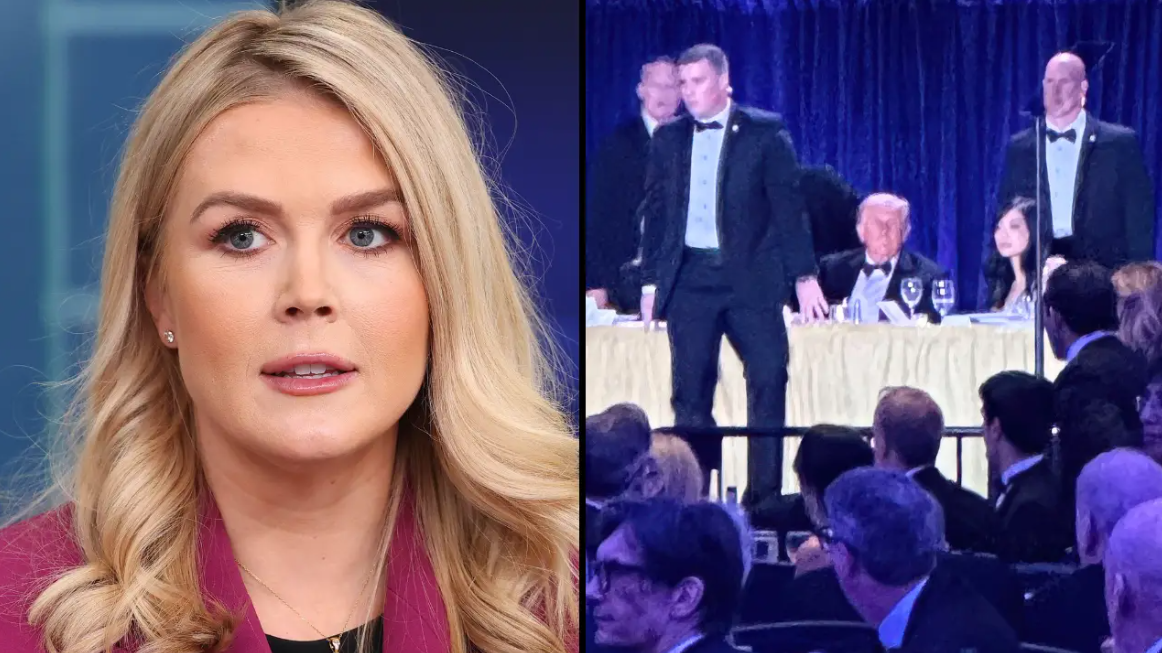
Confusion After a High-Profile Scare and a So-Called Interview ‘Slip-Up’
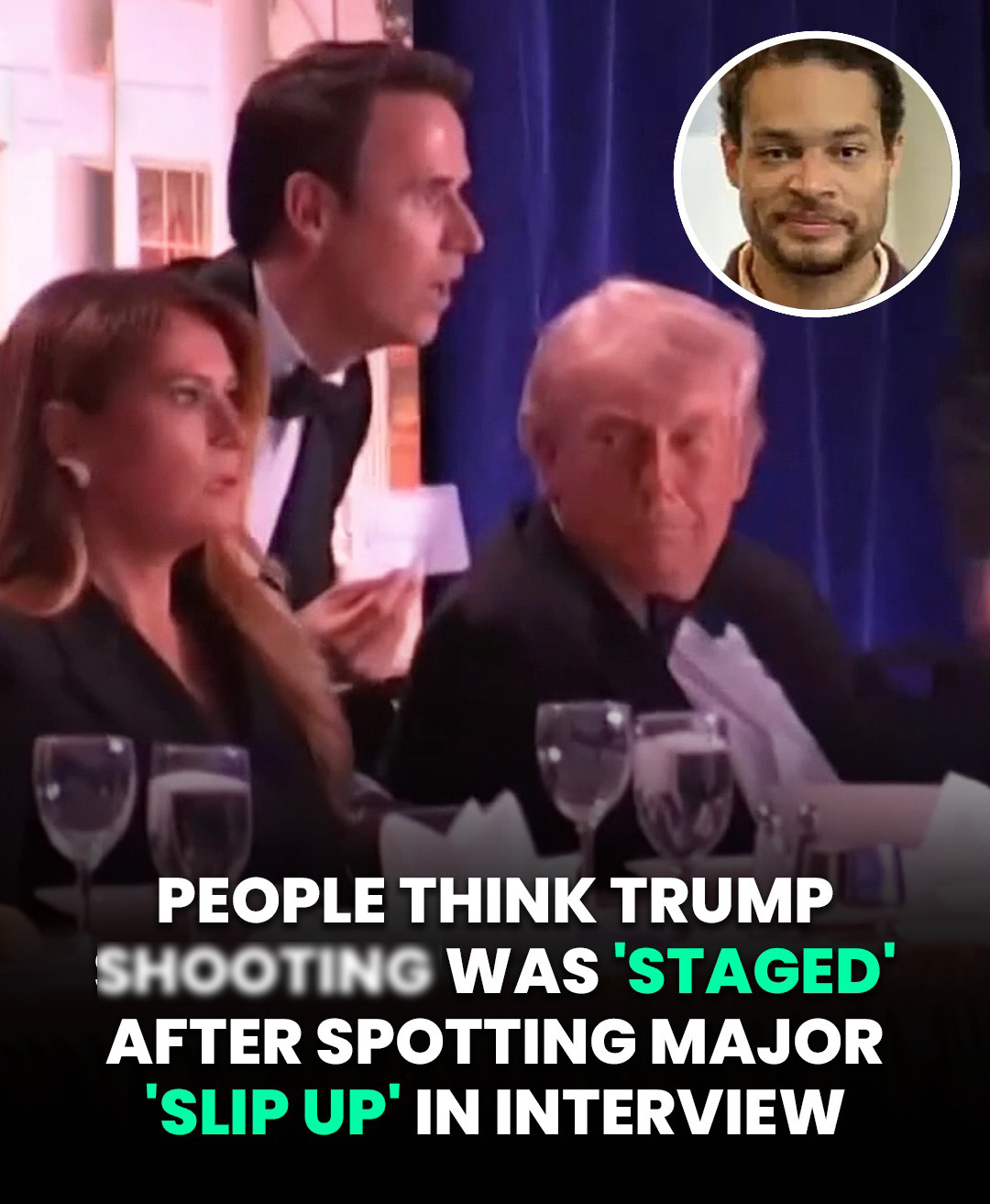
In the hours after shots were fired during the White House Correspondents’ Association dinner on April 25, 2026, two very different conversations took hold across social media. One focused on what authorities have confirmed about a serious security incident. The other quickly spun off into claims that the entire episode was staged, fueled in large part by a brief interview clip that some viewers said showed a telling “slip-up.”
Understanding what is known and what is only guessed at is essential. The verified details point to a real, alarming breach of security that ended without mass casualties. The more dramatic online theories, while attention-grabbing, are not supported by credible evidence. Sorting the two is the key to making sense of a confusing and upsetting evening.
What We Know About the Incident
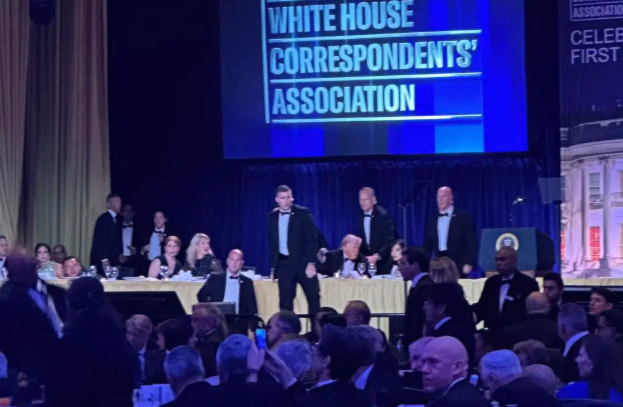
According to law enforcement and federal officials, at around 8:35 p.m. Eastern Time on Saturday, a man identified as 31-year-old Cole Tomas Allen of Torrance, California, rushed a security checkpoint inside the Washington Hilton Hotel, where the annual dinner was taking place. The president, the First Lady, the Vice President, and many senior officials were in the building at the time.
Officials say Allen was armed with a shotgun, a handgun, and multiple knives. He exchanged gunfire with law enforcement, and a Secret Service agent was hit. The agent’s protective vest stopped the round, and he is expected to fully recover. The suspect was tackled, taken to a hospital for evaluation, and, as of reporting, has not cooperated with investigators.
Investigators found a written document in Allen’s hotel room that outlined intended targets by priority. Federal officials have verified the document’s authenticity. In it, Allen used the nickname “Friendly Federal Assassin,” and expressed anger at what he described as actions taken by the administration. Acting Attorney General Todd Blanche told multiple broadcasters that President Trump appeared to be a likely target, and that Allen could face very serious charges, including the possible attempted assassination of the president.
Those are the core facts that law enforcement and federal authorities have put on the record. What followed online, however, was a wave of posts insisting the crisis was a performance rather than a crime.
The Interview Clip That Sparked Suspicion
A widely shared Reddit post gathered thousands of upvotes and laid out a series of reasons why users claimed the shooting was staged. At the heart of many of these posts was a brief pre-dinner red-carpet interview with White House press secretary Karoline Leavitt and comedian-host Jimmy Failla on a cable news channel. In the clip, Leavitt said, “This speech tonight will be classic Donald J. Trump. It will be funny. It will be entertaining. There will be some shots fired tonight in the room. So everyone should tune in.”
The phrase “shots fired” was presented by conspiracy-minded accounts as a kind of tell, implying prior knowledge that gunshots would occur. But that reading ignores a very common figure of speech. In modern slang, “shots fired” typically means sharp jokes or pointed jabs—exactly the sort of playful sparring one expects during a presidential roast at a correspondents’ dinner. The host himself had just framed the conversation in those terms by saying the president was “ready to rumble,” pointing to the comedic tradition of the event.
Independent fact checkers reviewed the clip and concluded that Leavitt’s phrase was used in its routine, idiomatic sense about humor and barbs. After the incident, President Trump explained that he had prepared a tough comedy set for the evening but put those jokes aside in light of what had happened. Leavitt later posted that the event had been “hijacked by a depraved crazy person,” underscoring that she, like everyone in the room, was reacting to an unexpected crisis, not promoting a planned stunt.
When placed back in its full context, the interview does not support the notion of foreknowledge. It reads as what it appears to be: a light-hearted setup for a roast-style speech, not a hint about real gunfire.
Other Viral Claims and What the Evidence Shows
Beyond the interview clip, social media users floated a range of other suspicions. Some argued that the cameraman who captured the moment the president was hustled from the stage had a vantage point that felt “too perfect,” as if the angle were part of a script. But this event is one of the most heavily covered evenings in Washington, with seasoned crews assigned to cover every entry, exit, and stage beat. A clear shot in a room filled with cameras is normal, not a smoking gun.
Another claim said the suspect had been seen in a now-deleted social media photo wearing an IDF sweatshirt, which users then tried to weave into broader geopolitical conspiracies. As of now, no credible source has verified that photograph or its supposed implications. A separate suggestion pointed to an old post by someone named “Henry Martinez” who allegedly mentioned the suspect’s name in 2023, hinting at a long-brewing plot. Nothing about that claim has been substantiated.
By contrast, the practical question of how a person could get that close to the event with multiple weapons is both fair and important. Journalists who attended reported that identification was not checked at the hotel’s street-level entrance, invitations were not systematically verified there, metal detectors were located on an upper floor rather than at the door, and hotel guests had broad access to common areas. Congressman Mike Lawler, who was present, bluntly called it a “security failure.” That description is uncomfortable, but it’s a description of lapses, not evidence of a staged incident.
Another bit of online chatter centered on Fox News correspondent Aishah Hasnie, whose phone call with the network dropped mid-sentence as she was describing a chat she’d had with Karoline Leavitt’s husband. Some viewers claimed the network cut her off. Hasnie addressed it right away, explaining that the ballroom’s signal was poor and her call had simply dropped. She later completed the anecdote on social media, noting that Leavitt’s husband had made a general comment about safety—much like a caring parent might—and that there was nothing secretive about it.
There was also confusion about a man briefly holding up a card onstage near President Trump just before the shots were heard, which some cast as a “signal.” That man was Oz Pearlman, a well-known mentalist scheduled to perform. He later explained, in detail, that he had been in the middle of a trick, trying to guess the name of Karoline Leavitt’s unborn baby. The astonished looks that some viewers noted on Melania Trump’s and journalist Weijia Jiang’s faces were reactions to the magic trick’s reveal, not a tipoff about violence.
Why Conspiracy Theories Grow So Quickly
It takes very little for a dramatic moment to become a magnet for speculation. The more public and politically sensitive the setting, the faster theories can spread. In this case, one widely shared Reddit post included a claim with a grain of truth that was then pushed in a darker direction. It noted that a judge had recently halted construction of a $400 million White House ballroom project proposed by the administration. After the incident, President Trump argued that the security scare would never have happened if the ballroom had already been built, and Republican senators moved to advance legislation to fast-track it.
That kind of connection can easily be spun into a master plot, but it does not amount to proof. Politicians often use current events to support previously stated goals; whether one sees that as opportunistic or reasonable depends on perspective. It is a political debate, not evidence of staging.
Another ingredient that powerfully fuels speculation is the sense of a “clean” outcome in a frightening situation. Here, the suspect survived, the president was unharmed, and the most seriously affected person—a Secret Service agent—was protected by body armor and is expected to recover. When relief meets high stakes, some people find it hard to believe the luck was real. Add in the fact that this is not the first time in recent years that the president has faced attempts on his life, and the public’s low trust in institutions, and you have a recipe for unfounded but emotionally satisfying narratives.
Emotion, however, is not evidence. The documented facts on Saturday night do not match the choreography of a staged performance. They match the all-too-familiar pattern of a security breach by a determined individual who had both a plan and the means to try to carry it out.
Fact checkers who examined the claims about Karoline Leavitt’s interview judged the attribution accurate but highlighted important context: the phrase “shots fired” referred to jokes and jabs at a roast-style event. Most of the other claims circling online did not clear even that modest bar and remain unsupported.
What Investigators Have Established So Far
Within the bounds of what has been publicly shared, a consistent picture has emerged. The suspect, a 31-year-old engineer and teacher from California, traveled across the country by train. He possessed weapons that, according to officials, had been purchased legally. He entered the hotel, encountered security at an internal checkpoint, and there was an exchange of fire. A Secret Service agent’s vest prevented a more serious injury. The suspect was subdued alive. A written document in his room—authenticated by federal authorities—outlined targets and expressed motivation in blunt terms.
Investigators caution that the inquiry is ongoing, that they are still assembling a complete timeline, and that the suspect has not been cooperative. Even so, the findings to date indicate a real criminal act that will likely result in major charges. Nothing in the verified record suggests actors reading from a script or a production staged for political gain.
Patience is essential in moments like this. Early reporting always leaves gaps. Those gaps can feel like invitations to imagine what might fill them in. But with time, more pieces typically fall into place, and the story we end up with is not a thriller—it is the more ordinary, more sobering account of a person who made a terrible choice and a system that, while robust in many ways, still has vulnerabilities.
Making Sense of Fast-Moving Claims
It is perfectly reasonable to seek clarity after a scare, and it is human to try to connect dots. For those of us watching from home, especially those who have lived through decades of major events and shifting media, it helps to step back and apply a few steadying principles. Snippets of video and short quotes almost never tell the whole story. Common phrases can be mistaken for signals. Coincidences are not proof. And the most plausible explanation is usually the one that aligns with verified facts, not the one that demands the most secret actors and the most perfect timing.
In this case, the context that surrounds the interview clip changes its apparent meaning from suspicious to ordinary. The presence of professional camera crews at a television-covered gala explains why a dramatic shot exists. Poor cell service in a crowded ballroom explains a dropped call. A professional mentalist explains a sudden gesture onstage. These explanations are not especially cinematic, but they are consistent with what people in the room and officials afterward have said.
By the same token, visible security lapses do not make an event staged. They mean security planners and hotel coordinators will be reexamining procedures, and they suggest that the next such event will likely look and feel different. That is how institutions learn—often imperfectly and sometimes too slowly, but learn they do.
The Bigger Picture and the Takeaway
From start to finish, Saturday night’s scare fits the contours of a real breach. A person with weapons tried to circumvent security at a high-profile gathering. A law enforcement officer was struck but saved by protective gear. The president and senior leaders were evacuated. A suspect was taken into custody alive. Investigators found a document that spelled out intent. None of that requires a grand design to make sense. It requires only the unfortunate truth that in an open society, risk is never zero.
It is understandable that, in our current media environment, suspicion travels faster than facts. But the longer you look at what has been verified, the more the conspiracy claims fade. They do not line up with the evidence. They rest on misread phrases, coincidences, and gaps that have straightforward explanations once the fuller context is known.
For many Americans, especially those who remember earlier eras of political violence and high drama, the echoes here can feel unsettling. That is why it matters to approach each new claim with a calm eye and a patient mind. Let investigators do their work. Give reporters time to assemble full accounts. And resist the urge to fill in the blanks with the most sensational story available.
What happened at the Washington Hilton was frightening, but not fabricated. The agent who was hit will recover. The president was not physically harmed. The suspect faces serious charges. Security protocols will be reviewed and, one hopes, improved. And as for the interview line that lit the fuse online, its everyday meaning inside a comedy context is a reminder that not every pointed phrase is a code, and not every dramatic moment hides a script.
In the days ahead, more details will likely emerge. Some may complicate the picture; some may confirm what is already known. Through it all, the soundest path is still the simplest one: follow what can be shown, set aside what cannot, and be patient while the facts do the work that speculation cannot.