A late-night barrage of posts targets Barack Obama and others
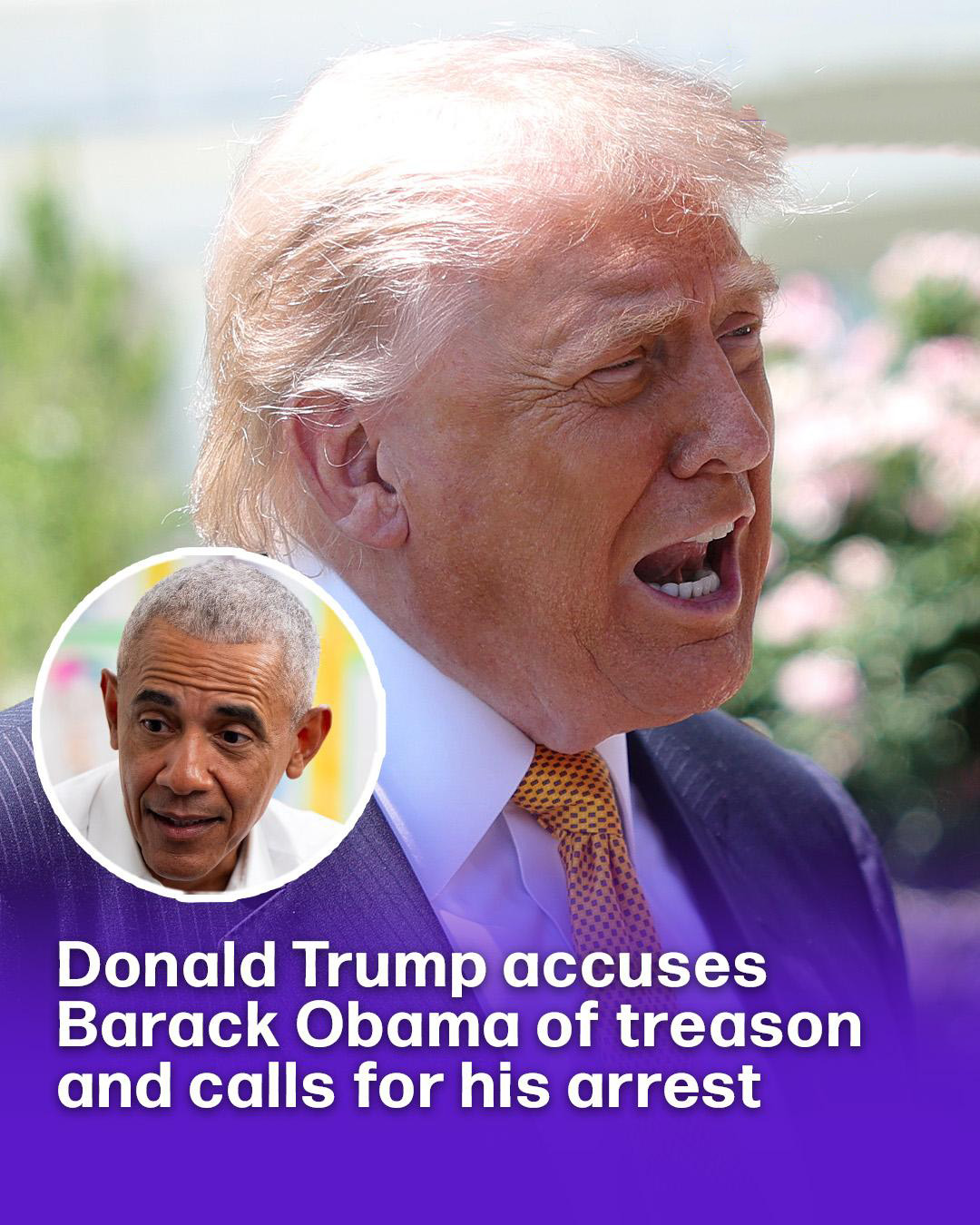
In a new round of late-night activity on Truth Social, Donald Trump directed sharp attacks at former President Barack Obama and re-shared calls for Obama’s arrest. The burst of posts arrived in a concentrated window on the evening of 11 May and the early hours of 12 May, with more than 50 messages appearing over roughly three hours. The timing drew extra attention because it unfolded just before Trump’s scheduled trip to China for talks with President Xi Jinping.
Trump’s messages touched on a wide range of targets and themes. Alongside Obama, he criticized the New York Times, Hillary Clinton, and even the Supreme Court. Some of the posts he amplified described Obama in extreme, inflammatory terms, while others repeated long-standing, widely debunked allegations about past U.S. elections.
For readers who may not follow every social media platform, Truth Social is the site Trump frequently uses to share his thoughts and reactions in real time. The pace and tone of his posts can swing rapidly and, at times, stir national conversation within minutes. This particular run of messages did just that, reigniting old disputes and raising new questions about the role of online rhetoric in American politics.
Calls for arrest and accusations of treason
Among the posts Trump re-shared were messages urging the arrest of Obama. One post, originally from another account, labeled Obama “the most DEMONIC FORCE in American politics in decades.” Another post made a sweeping demand to take action against a broad list of perceived political opponents, with a special focus on Obama. The language was dramatic and confrontational, intended to provoke a strong reaction and keep supporters engaged.
The serious charge of treason was also invoked in those posts. In everyday conversation, people sometimes use the word loosely to describe behavior they strongly oppose. In American law, however, treason has a very narrow definition and an especially high bar for proof. The Constitution defines it in specific terms, and actual treason prosecutions in the United States are rare and require clear, compelling evidence presented in a court of law. Public calls for arrest on social media do not themselves carry legal weight; only the justice system can bring formal charges after an investigation.
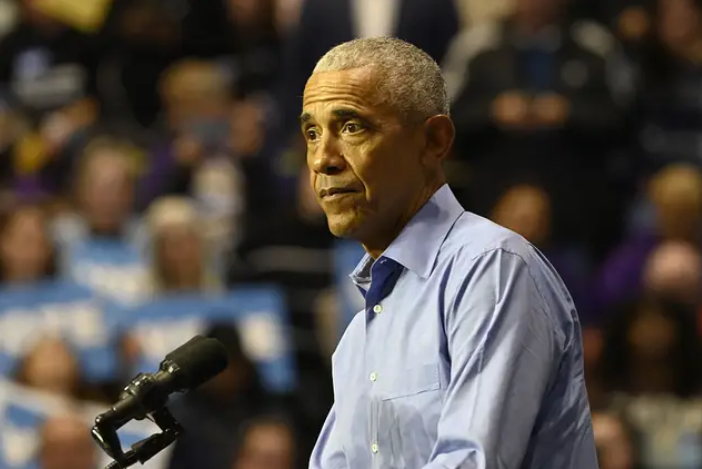
One of the posts Trump boosted featured an especially blunt statement: “Arrest them all. Prosecute them all. Incarcerate them all at once for treachery, treason, and seditious conspiracy to overthrow the United States Government. But first, Barack Obama.” Another separate message declared, “Arrest Obama the traitor.” These words underscore the intense polarization that continues to shape American public life. They also show how social media can elevate heated claims to a mass audience in an instant.
Some of the re-shared posts also revisited familiar allegations about the 2016 and 2020 elections. These allegations have been widely reviewed and rejected by courts and election officials across the country. Still, they continue to circulate online, often resurfacing during moments of heightened political tension. By boosting those claims again, Trump revived disputes that have repeatedly been found to lack evidence.
An AI-generated image adds fuel to the fire
Alongside the reposted calls for arrest, Trump also shared an AI-generated image featuring Barack Obama, Joe Biden, and former Speaker Nancy Pelosi. The image depicted the three political figures appearing to bathe in dirty water in the Lincoln Memorial Reflecting Pool, with a caption reading, “Dumacrats Love Sewage.” The image’s intent was clearly satirical and provocative, but its use of artificial intelligence underscores a significant trend. Digital tools now make it easy to create lifelike images that can spread quickly, regardless of accuracy or fairness.
For context, the Lincoln Memorial Reflecting Pool is a large, shallow pool on the National Mall in Washington, D.C., situated between the Lincoln Memorial and the Washington Monument. It is an iconic site, often associated with historic moments such as civil rights demonstrations and presidential inaugurations. Using it as a backdrop for an insulting, fabricated scene was designed to grab attention and spark conversation.
AI-generated images and videos can be deeply misleading when they are presented as authentic. In this case, the image was clearly a commentary piece rather than a representation of reality. Even so, such content can blur lines for viewers, especially when it is shared quickly and repeatedly. For many people, a brief glance can be enough to cause confusion. Taking a moment to consider the source, intent, and context is always worthwhile when unfamiliar images appear in news feeds.
Not the first time: a previous AI video controversy
This episode is part of a longer pattern in which Trump has used social media to share provocative or offensive content. Earlier this year, he posted an AI-generated video that depicted Barack and Michelle Obama as apes, a portrayal that was widely condemned as racist and dehumanizing. The clip superimposed their faces onto the bodies of animals, and it was set to the classic song “The Lion Sleeps Tonight” by The Tokens.
Reaction to that video came quickly. Public figures and private citizens alike denounced it, arguing that it crossed clear lines of decency. California Governor Gavin Newsom, writing on X, urged Republicans to speak out against the clip. The incident triggered coast-to-coast discussion about the responsibilities of prominent leaders, especially when they command large audiences and are seen as standard-bearers for their parties.
When reporters later asked Trump about the AI video, he responded that he “didn’t see” the part involving the Obamas, and insisted he “didn’t make a mistake,” as reported by the BBC. That response did little to settle debate around the episode. Instead, it highlighted how disputing or softening responsibility after the fact can keep a controversy alive, particularly in the age of instant, shareable media.
High-profile posts just ahead of a high-stakes trip
Trump’s flurry of postings came just hours before his flight to China. He landed in Beijing on 13 May for meetings with Chinese President Xi Jinping. The agenda, as described publicly, included discussions about the war involving Iran, trade issues, and ongoing U.S. arms sales to Taiwan—topics that have major implications for global stability and America’s role in Asia.
The arrival ceremony was highly choreographed, befitting a head-of-state visit. A military honor guard and band were on hand, and about 300 Chinese youths waved Chinese and American flags, chanting, “Welcome, welcome! Warm welcome!” as Trump made his way to his limousine. The warm public reception contrasted sharply with the charged tone of his online posts, illustrating how the pomp of diplomacy can coexist with the turbulence of political messaging.
Key summit events were set for 14 May. Plans called for a visit to the Temple of Heaven—an ancient site where Chinese emperors offered prayers for abundant harvests—followed by bilateral talks and a formal banquet. The symbolism of the setting was clear: centuries-old tradition and formality providing the backdrop for modern negotiations on matters that affect economies and security arrangements far beyond the region.
On his way out of the White House, Trump summarized the scale of the moment. “We’re the two superpowers,” he said. “We’re the strongest nation on Earth in terms of military. China’s considered second.” Regardless of political viewpoint, few would dispute that relations between Washington and Beijing are of historic importance, and that outcomes from such meetings can ripple across markets, alliances, and daily life around the world.
Why the tone and timing matter
Political leaders use different styles to communicate. Some prefer prepared speeches and formal remarks. Others use direct, unscripted messages on social media to speak to supporters, bypass critics, and shape the conversation in real time. Trump’s approach has long been the latter. He uses vivid language, strong labels, and shareable images to seize attention—particularly during moments that would benefit from a shift in headlines.
There is a trade-off, however. Statements that call for arrest or use the charge of treason to describe opponents escalate tensions. They may energize like-minded followers, but they can also harden divisions and make compromise harder. For the many Americans who hope for calmer discourse, the effect can be discouraging. It is one thing to disagree on policy; it is another to describe political opponents as enemies of the state.
For older readers who have watched campaigns and presidencies come and go, this change in tone may feel especially sharp. In earlier eras, leaders worked hard to frame differences in civil terms, at least in public. Today, social media’s speed rewards the most striking, emotionally charged statements. That does not mean respectful discussion is impossible—it happens every day in communities, workplaces, and families—but it does mean it can be crowded out online by louder voices.
Understanding the legal context behind talk of treason
Because the word “treason” is so powerful, it is helpful to recall what it actually means in the United States. The Constitution is precise: treason consists only of waging war against the nation or giving aid and comfort to its enemies. This narrow definition was created to prevent the label from being used for everyday political disagreements. Courts require strong evidence—often two witnesses to the same overt act or a confession in open court—to support a treason conviction. It is not a charge to be made lightly, and it is rarely brought.
Arrests in the United States follow a clear process. Investigators gather facts. If they determine there is evidence of a crime, prosecutors can seek charges. A judge issues warrants as needed, and the accused are entitled to counsel and to a fair trial. Social media posts do not shorten or replace any of those steps. While citizens are free to express opinions, the justice system alone decides when charges are warranted.
That distinction matters when big claims are made in public. Everyone, regardless of political viewpoint, benefits from a system that requires careful evidence and respects due process. In times of heated rhetoric, it can be reassuring to remember that checks and balances are designed to slow things down and encourage sober judgment.
The role of AI-generated images in political fights
Artificial intelligence has made it simple to create convincing images and videos in minutes. Many are used for harmless entertainment. But some are designed to insult, provoke, or mislead. The AI-generated image depicting Obama, Biden, and Pelosi in filthy water was meant to be shocking and contemptuous. Even as satire, it contributes to a coarser environment in which personal attacks overshadow policy debate.
For everyday readers, one practical habit can make a big difference: pause and consider the source. Ask who made the image or video, what message they intend to send, and whether reputable outlets corroborate it. An extra moment of reflection can prevent confusion and help keep our conversations focused on what is true and important.
In the long run, societies adjust to new technologies. Just as we learned to compare headlines across newspapers and networks, we are learning to question digital images that look real but are not. That skill—healthy skepticism without cynicism—is becoming part of basic media literacy.
What to watch in the days ahead
As Trump’s visit to China unfolds, attention will be split between the substance of diplomacy and the spectacle of politics. On one hand, the meetings with President Xi may produce developments on trade, security in the Asia-Pacific, and other areas where U.S.-China relations are central. On the other hand, the echoes of the late-night posts will continue to ring in domestic debate, especially among those who follow Trump closely and among those who oppose him.
It is possible, even likely, that further online statements will arrive during or after the trip. If so, they may again test the boundaries between strong political expression and responsible leadership. For supporters, such messages can feel like a sign of strength and conviction. For critics, they can appear reckless or harmful. The rest of the country, including many who do not spend their days on social media, will keep balancing attention between what is said online and what is decided in official rooms.
Whatever one’s viewpoint, taking time to understand context helps. Keeping in mind the legal meaning of treason, the speed at which misinformation can spread, and the seriousness of U.S.-China relations can make these fast-moving stories easier to navigate. These issues are too important to reduce to a headline or a single viral post. They call for patience, perspective, and a steady eye on the facts.
A closing thought on civility and focus
American politics has always been spirited, sometimes rough. But the bedrock of the system is the idea that opponents are fellow citizens, not enemies. Strong debate and firm convictions are healthy; dehumanizing language and unproven accusations are not. The latest social media storm surrounding Trump, Obama, and other leaders is a reminder of how quickly conversation can turn harsh—and how valuable it is when we keep our attention on policy, evidence, and solutions.
In the weeks to come, the most meaningful developments may not be the loudest. They may be the careful discussions behind closed doors, the data that supports or challenges a claim, or the quiet choices leaders make about how they speak to the public. For those watching from home, especially readers who have seen many cycles of politics come and go, that perspective can be a source of calm. Step by step, the truth tends to emerge, and the country moves forward.