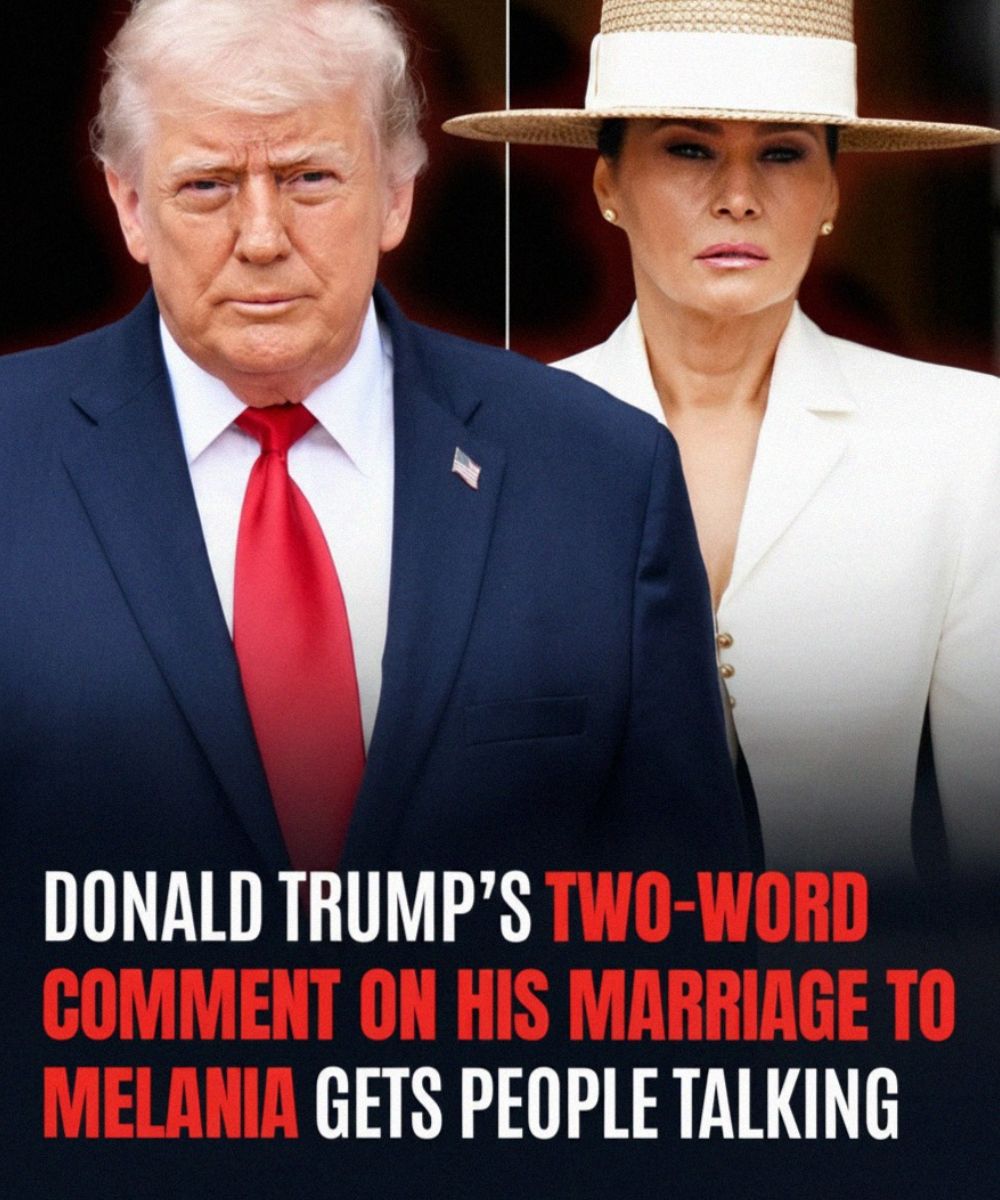
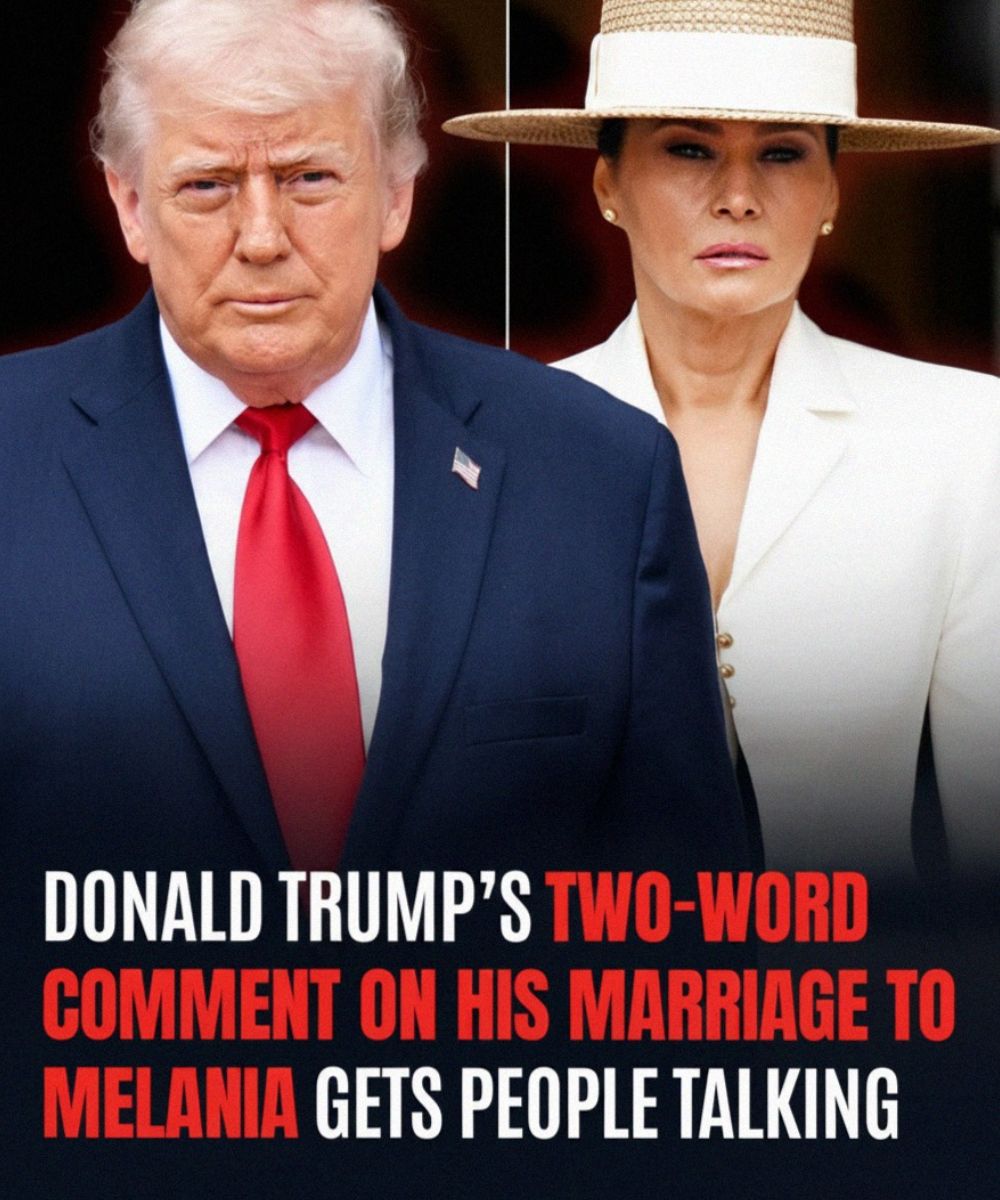
What began as a carefully arranged ceremonial moment took an unexpected turn when Donald Trump paused mid-speech and made a brief, joking remark about his marriage to Melania. The room responded with laughter, yet the short exchange quickly became the part everyone remembered. As clips traveled across social media, many viewers shifted their attention from his words to Melania’s expression, and that small shift set off a much larger conversation online.
A royal visit sets the stage
The comments came during a high-profile visit from Britain’s royal family. King Charles III and Queen Camilla arrived in the United States on April 27 to help mark the 250th anniversary of American independence, a milestone that naturally invited ceremony and symbolism. They were welcomed in Washington, D.C., by Donald and Melania Trump, and the visit extended to several cities, including New York and locations in Virginia.
The tone at first was formal and deliberate, the sort of occasion where every handshake, every word, and every photo is planned in advance. As is common with such visits, there were polite remarks, reminiscences, and tributes that aimed to honor tradition while keeping the mood warm and accessible.
A personal story becomes the pivot
During remarks on April 28, Donald Trump began with a nod to his family history. He shared a brief portrait of his parents, recalling how his mother, Mary Anne MacLeod, left Scotland as a young woman and eventually married his father, Fred Trump. He noted that their marriage endured for 63 years, a span that many families admire as a symbol of staying power and commitment.
Then he turned toward Melania and added a quip that caught the room by surprise. With a pause that set up the punchline, he said, “I’m sorry,” and then joked that their own marriage would not reach that same 63-year mark. The comment was light in tone and quick by design, the sort of aside that is meant to bring a little levity to a formal moment. The audience laughed, and the speech moved on. But as often happens now, the internet did not.
Why two short words made a big splash
Humor can change the temperature of a room in an instant, and those two words—“I’m sorry”—did exactly that. For many people watching in person, it was a simple, self-deprecating line built around the idea that a 63-year marriage is an extraordinary stretch of time. For people watching later on their phones or computers, however, the line landed differently. Without the full room, the pacing, and the flow of the event, one short moment took on a life of its own.
It is common today for a passing comment to become the main headline. A single phrase, cropped into a clip that runs just a few seconds, can be replayed thousands of times. That repetition invites interpretation—about intent, about what someone really meant—and body language becomes part of the story, too. In this case, the focus moved from the tribute to his parents to what the joke might say about his own marriage, and the conversation broadened from there.
Social media reactions begin to swirl
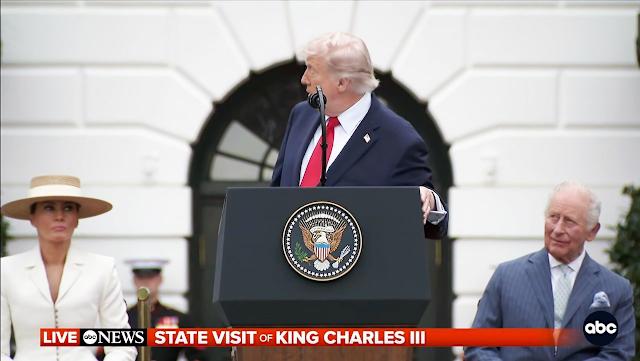
As short clips from the event spread, reactions poured in. Some viewers felt Melania looked uncomfortable, while others saw nothing unusual in her expression at all. For every person prepared to read into the moment, there was another who argued it was a common, gentle joke about the difficulty of matching a 63-year milestone.
There were also those who singled out the earlier part of the speech, praising the respectful nod to his parents’ long marriage and the story of his mother’s early life. Yet the debate did not center on those parts for long. The discussion kept returning to the quick aside directed toward Melania, and whether there was more to the line than met the eye. On platforms where quick judgments are the norm, the space for nuance is often the first thing that disappears.
Another brief moment caught on camera
Interest in the couple’s dynamic grew when a separate clip surfaced from the same visit. The video showed Donald and Melania briefly holding hands as cameras flashed. A moment later, as they adjusted their posture for photographs, she let go. Shortly afterward, he reached for her hand again.
What might have passed without notice a few years ago became another talking point. People began to compare the handholding clip to the earlier remark, and the two pieces of video were made to tell a single story. Some people found tension in the sequence, while others believed it was the sort of small, unremarkable movement that comes with posing for photos under bright lights and firm schedules.
Etiquette, optics, and the art of standing still
Public appearances, especially during a royal visit, require a kind of choreography. Couples often separate slightly for introductions or to allow each person to greet a guest in turn. Photographers encourage certain postures for balanced images. A hand may be held, released, and held again—less a sign of emotion than a matter of positioning. Anyone who has stood for a formal portrait knows that tiny adjustments can feel magnified when cameras are present.
In high-profile settings, those routine gestures can be misread. A shift of the hand or a change in expression, which in normal life would barely register, becomes a source of speculation. That is the challenge of public life: every small moment carries the weight of the larger story people expect to see.
What people saw versus what was intended
As the clips spread, two views emerged. One saw the comment as a benign joke made in the shadow of a nearly impossible marital benchmark, and the handholding as ordinary movement during a formal event. The other looked for deeper meaning, connecting the aside to the brief gestures on camera and building a narrative from very little information. Neither view can claim certainty about private feelings, but both tell us something about how people understand public figures today.
In truth, speeches often weave in light moments to keep the audience engaged. The remark about not reaching 63 years sounded like an attempt at humor that sits alongside a respectful tribute to long-lasting marriage. Whether one found it charming or awkward depends on personal taste and what one brings to the moment. Many families have their own stories and inside jokes around anniversaries and milestones, so it is not surprising that a line like this could strike people differently.
The longer thread: honoring a 63-year marriage
Stepping back from the reaction, it is worth returning to the core of the story Donald Trump shared. A 63-year marriage stands as a testament to two people choosing one another, day after day, through seasons of change. For many who have been married for decades, that time frame is both familiar and awe-inspiring. It invites memories of early years, the challenges that forged understanding, and the patient work that builds a home and a life.
By invoking his parents, he offered a window into how family history shapes public moments. Even if a joke followed, the image he chose was one of steadiness and duration. For some listeners, that part of the speech likely meant more than the line that drew headlines. It reminded them of their own parents or grandparents, or of the years they have invested in their relationships.
Why small gestures feel so big on screens
In the era of short videos and instant reactions, a few words or a brief glance can gather more attention than an entire speech. That is not because the rest lacks value, but because brief, dramatic moments fit neatly into the way we now watch and share. Snippets are easy to pass along. They are also easy to misread, since they float free of what came before and what came after.
For people who remember watching events on television in full, today’s style can feel jarring. The pace encourages quick takes, not measured conclusions. That is one reason why an audience in the room can burst into laughter while people online, removed from the setting, wonder if something is amiss. Context, tone, and timing all matter, and they are the first things lost when we compress a moment into a clip.
Looking closely at the handholding clip
The brief handholding exchange said less about emotion than about the rhythm of official appearances. Standing for photographs often means shifting how you hold your shoulders, where you place your feet, and whether your hands are free. In that setting, a release and a return to holding hands can be completely practical. It also reflects personal comfort: some people like to maintain a little space during formal moments, then reconnect when the pause ends. These habits do not always have deep meaning, even if viewers later search for clues.
The same is true for a spouse’s expression at a podium. Under bright lights, with cameras clicking and a crowd watching, a face at rest can look different than it does in conversation at home. A neutral expression might be read as displeasure, and a polite smile might be taken as too rigid. None of these readings can replace the fuller picture that only the people involved live and understand.
Beyond the viral moment
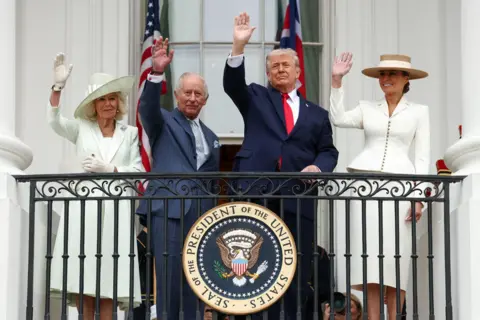
Set against the noise online, the visit itself proceeded smoothly. There were formal meetings and quiet conversations, as you would expect during a royal trip of this sort. Alongside humor, Donald Trump shared fond memories, including his mother’s appreciation for the British royal family. That thread of personal history helped bridge the occasion’s pageantry with the people at its center.
Royal visits thrive on a balance of tradition and personality. The ceremonial parts give shape to the event, while the human details—a family story here, a shared smile there—help the audience connect. In that sense, the moment that drew laughter fit within a longstanding pattern: speakers weave a little lightness into the script so that the formal never becomes stiff.
What many took away
For some viewers, the headline was the joke. For others, it was the memory of a 63-year marriage and what that measure of time says about endurance. And for many, the enduring image was simply a public couple navigating a complex, highly visible day with cameras in every corner. Depending on one’s perspective, any of these could be the main story, and each lens offers a different kind of truth.
None of this settles the question of what any individual moment means for a marriage. It is a reminder, instead, of how easily narratives form from fragments. The internet excels at turning small pieces into larger tales. Those tales can be sympathetic or critical, affectionate or skeptical, but they are always built on pieces, not the whole.
A gentle reminder about perspective
People who have lived through many decades of family milestones know that one awkward photograph or one clumsy joke does not define a relationship. Years are made up of countless little moments, most of which never reach a camera. It is natural for a single line in a speech to attract attention, especially when the line is clever or unexpected. Still, a single line is just that—a line—set within a longer story that the couple themselves continue to write.
If anything, the scene underscored the simple fact that humor helps many people navigate formality. A joke can soften edges, even if not everyone receives it the same way. And when the subject is a nearly unreachable milestone like 63 years, that humor often rests on the gap between what is possible and what is probable. It acknowledges the weight of the number while tipping the hat to the passage of time.
Final thoughts
In the end, a moment designed to honor family and history took an unexpected turn and became far larger than planned. Two words—“I’m sorry”—shifted the tone, delivered a laugh, and opened the door to a wave of interpretations. The handholding clip added more fuel, not because it revealed a secret, but because brief, silent gestures are easy to project onto.
As the visit moved forward, the focus returned to the event itself: the meetings, the conversations, and the symbolism of the royal trip. Yet the small flash of humor remained the part many people remembered most. That is how public life often works now. Short moments stand in for longer stories, and we are left to choose whether to read them as complete or to see them for what they are—quick flashes inside a much bigger picture.
For anyone watching from home, especially those who have seen many public figures come and go and many ceremonies unfold, there is comfort in keeping perspective. Speeches mix sincerity and style. Marriages are lived in private, not on stages. And a joke at a podium—even one that earns a headline—rarely tells the whole tale.