
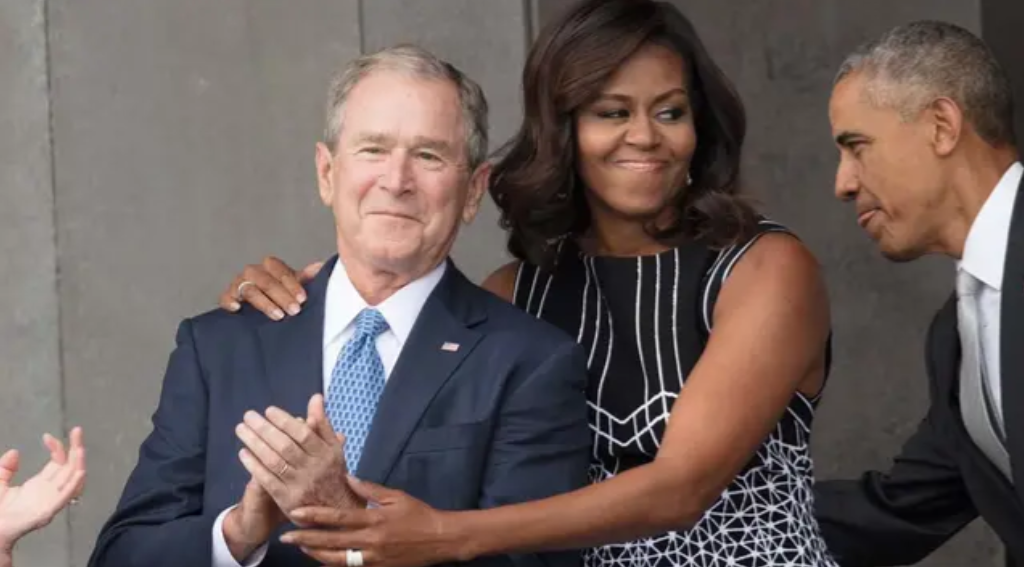
A small exchange at a solemn service that sparked big curiosity
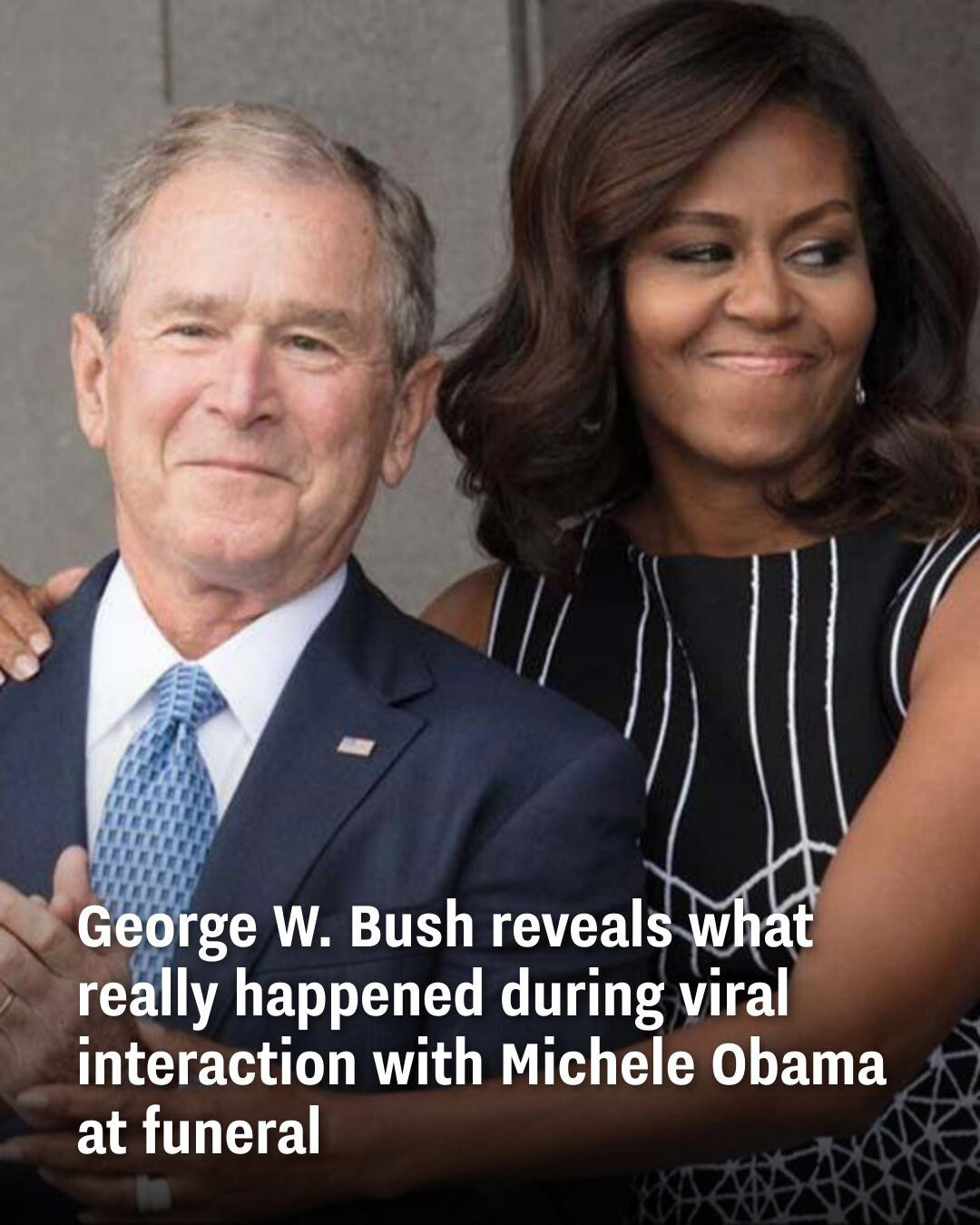
For years, a brief moment between George W. Bush and former First Lady Michelle Obama at a high-profile funeral has fueled countless questions online. In a new conversation, Bush offered a simple, human explanation for what he quietly slipped into her hand that day, clearing up the mystery that had so many people wondering about their easy rapport.
The clip of that interaction spread quickly because it showed something many people do not expect to see in public life: a warm, familiar gesture between two figures from different political parties. In an era when political disagreements often feel personal and loud, the sight of a former Republican president and a former Democratic first lady sharing an understated, friendly exchange felt both surprising and reassuring to many viewers.
That moment happened in 2018 at Senator John McCain’s funeral, a service watched around the country. The ceremony brought together leaders and former leaders who had served the nation in different ways and at different times. As cameras glanced across the pews, one short video of Bush leaning toward Michelle Obama and placing something in her hand caught the audience’s attention, leading to widespread guesses about what it was and why he did it.
What came next was a wave of online chatter. People paused, rewound, and watched again, not only to figure out the mystery item but also to make sense of the two of them smiling gently in the somber setting. The interest did not fade quickly. For many, it stood out as a symbol of common courtesy and shared respect in a setting where dignity matters most.
Setting the scene and the simple truth behind the gesture
In a recent sit-down with his daughter, journalist Jenna Bush Hager, for a special program tied to the nation’s approaching 250th anniversary, Bush finally described what really happened from his own point of view. He explained that there was nothing complicated about the exchange, and nothing meant to make a statement. It was just a thoughtful little pass of something he happened to have on hand.
Part of why this interaction happens so often is the time-honored seating protocol at major state events. Former presidents and former first ladies are typically seated together in ways that reflect precedence and respect. Over years of attending these occasions, the same people often find themselves side by side, sharing quiet moments before and after a service begins. That is how friendships, or at least warm acquaintanceships, can form in public life.
When Bush and Obama are placed next to each other at a ceremony, it is not unusual. In fact, many viewers have noticed that they often sit near one another, exchange a few words, and then settle into the reverent mood of the occasion. The viral clip from 2018 was one of those unplanned, very human instances.
After the funeral, there was an outpouring of curiosity and jokes online, and the moment continued to be discussed in the years that followed. Eventually, as part of reflecting on national milestones and what Americans have in common, Bush and his daughter talked through the story in a relaxed and open way, making the whole thing feel even more down-to-earth.
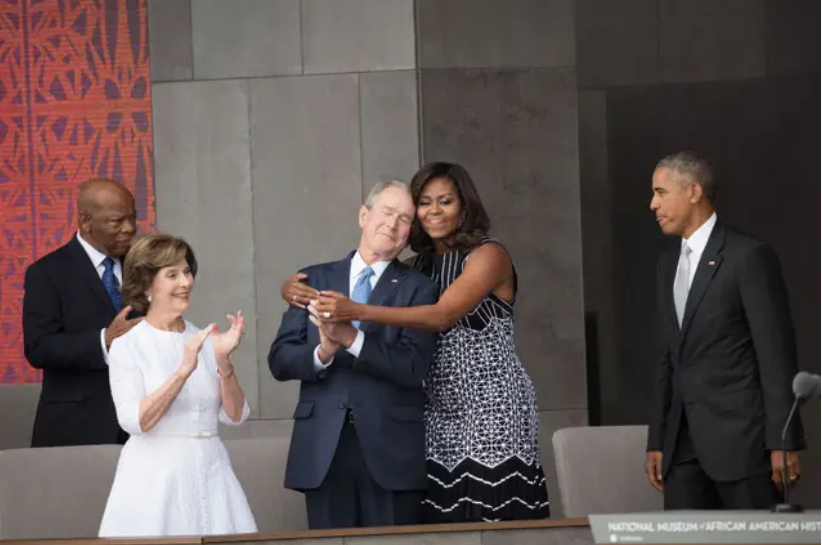
Describing the scene with a grin, Bush admitted that he sometimes gets restless while sitting through long ceremonies. He said that, as so often happens at these events, he was seated next to Michelle Obama. He lightened the moment with a bit of friendly teasing and then reached for a small item in his pocket to share.
“I get a little antsy, as I’m sure you know. And I was sitting next to Michelle, that’s who I sit next to at funerals,” he joked, referring to the familiar protocol that often places a former president beside a former first lady at official gatherings.
Then he explained the gesture plainly. “I was kinda teasing her and stuff, and I slipped her an Altoid. Not as a joke, but I thought she might want one.” With that, he confirmed what many had suspected but could not see clearly in the video: it was simply a mint, offered in the spirit of everyday courtesy.
People online found the explanation both funny and heartwarming. Some said the exchange looked like a soft, tactful hint that a mint might be appreciated, while others saw it as an easy, familiar kindness between two people who have come to know each other through years of public service on the same stages. One person summed up the mood with a wry line that spread quickly: “Bush just wanted mints and peace.”
From a bewildering clip to a lesson in how viral moments work
Even as the jokes flew, Bush revealed that he was surprised by how far the moment traveled online. After the service, when he stepped into the car, his daughter told him that he was “trending.” He said he did not know what that meant at first. To people who do not spend their days on social media, “trending” simply means that a topic, clip, or name is being talked about by a lot of people in a short period of time. In this case, a few seconds of friendly common sense led to millions of views and comments.
Reflecting on why the clip struck such a nerve, Bush offered a thoughtful explanation. He said it may be because the country is eager to see genuine warmth across differences, without the usual clash of politics. He suggested that the sight of people from different traditions and parties enjoying a small, human moment as neighbors, not as rivals, is something many Americans quietly miss.
As he put it, the country is “starved to see” a white, center-right Republican and an African American, center-left Democrat engaging as friends, talking as citizens, and remembering that the bonds of everyday decency are larger than party labels. For many viewers, that idea felt bigger than a mint. It was a reminder that respect and friendliness can exist even when people do not agree on every issue.
The seating tradition that helps create unexpected friendships
For those who watch these national ceremonies, it can be helpful to understand a little bit about how the seating works. Protocol places current leaders, former presidents, and former first ladies in specific arrangements that honor office, service, and seniority. Because the same small group of people often attends these events over many years, they naturally end up sitting near one another again and again.
In that setting, moments of shared humanity stand out. A whispered aside about the program, a traded smile when a hymn begins, or the simple offer of a cough drop or a mint becomes part of a courteous rhythm. These gestures are not political statements; they are signs of familiarity built over time among people who, for all their differences, understand the weight of public life and the solemnity of national occasions.
Photographs from other milestones have shown Bush and Obama chatting easily, and one well-known image from 2016 at the opening of the National Museum of African American History and Culture captured their warm connection. The details change from moment to moment, but the overall impression is steady: a respectful friendship forged in the routine of civic duty.
Michelle Obama’s perspective on being “seatmates”
Michelle Obama has spoken openly about this comfortable dynamic. Not long after the 2018 funeral, she said on television that she and President Bush are frequently placed side by side because of protocol. Over time, that repeated seating arrangement turned them into what she jokingly called “seatmates,” and she affectionately referred to him as her partner-in-crime at the major events where all the former leaders gather.
She spoke warmly about him, saying that she had come to admire his humor and his kindness. That kind of sentiment helped many viewers see the 2018 exchange for what it was: the normal, neighborly courtesy of two people who have stood beside each other through many public moments, sharing both the gravity and the occasional levity of national ceremonies.
Why this small gesture resonated with so many
There is a reason this brief pass of an Altoid became more than just a footnote. It ran counter to what people often assume about public life in the age of sharp debates and fast news cycles. The handoff lasted a second or two, but it held a reminder that not everything is a fight and not every interaction needs to be reduced to a headline. Sometimes a mint is simply a mint, offered with a smile during a long, solemn service.
For those in midlife and beyond, who have lived through many chapters of American public life, the moment might feel comfortably familiar. Many of us remember times when neighbors voted differently but still shared cookouts, school events, and kind words on the sidewalk. We remember when political differences did not rule out friendliness, cooperation, or gentle humor. In that sense, the viral clip earned attention because it reintroduced something we already knew: small graces matter.
Another reason it spread so widely is that the setting was so dignified. Funerals for national figures are occasions for unity. People from every background gather, in person and in spirit, to honor a life of service. Against that backdrop, a soft-spoken bit of kindness stands out as a right-sized gesture for a serious day. It does not distract; it quietly acknowledges that we still belong to one another, even when our opinions vary.
Understanding the humor without losing the heart
Of course, online commentary brought the jokes. Many viewers chuckled at what they saw as a courteous, wordless offer of a breath mint. The humor came from a relatable place. Nearly everyone has found themselves at a long event, wishing for a mint, a water sip, or a moment to stretch. That shared experience made it easy to smile at the clip without turning it into anything more dramatic than it was.
At the same time, the better part of the story has nothing to do with teasing. It has to do with a friendship built on the habits of respect. In the years since that day, the mint exchange has often been remembered as a symbol of good faith across differences. In a crowded room filled with past and present officials, the two of them reminded everyone watching that kindness does not weaken your principles. It simply shows that your principles leave room for grace.
A word about “trending” and why moments like this spread
For those who do not spend much time on social media, it can be hard to understand how a few seconds of video turn into days of conversation. Modern platforms count mentions, views, and shares, and when enough people focus on the same item, it rises onto “trending” lists, where even more eyes find it. Add in the fact that this clip featured two instantly recognizable figures, and it is no surprise that the conversation grew quickly.
But there is also an emotional reason certain moments take off. In a hectic, complicated news environment, people often pause for something that restores a bit of faith in how we treat one another. A small, civil kindness can be a quiet relief. That was true here. The video gave people a reason to nod, smile, and remember how simple decency looks in real time.
What we can take away from a mint passed between friends
No one would claim that a single exchange fixes our disagreements or settles our debates. Yet scenes like this one make space for a different tone. They remind us that posture matters as much as position. We can sit together respectfully, even when we do not see every issue the same way. We can add a touch of humanity to serious days without taking away from the seriousness.
As the country approaches a major anniversary, it is fitting to reflect on what holds us together. Shared institutions. Shared rituals. And, yes, shared courtesies. The small acts we practice at home, in church, at school events, and at community gatherings are the same acts that help public life feel livable. If a former president can quietly offer a mint to a former first lady at a national service, then the rest of us can find ways to be gentle with one another in line at the grocery store or across the table at the next family dinner.
The enduring image
In the end, what matters about the 2018 moment is not the mint itself, but the ease with which it was given and received. It showed two people with different careers and viewpoints behaving like neighbors in the same pew. It showed that even at the highest levels of public life, the old basics still count: patience, good humor, and the willingness to offer a small kindness without making a production of it.
That is why the clip keeps getting mentioned. Whenever public life feels noisy, people reach back for proof that grace still lives in the room. A quiet pass of an Altoid during a long service is a small thing. But it is exactly the kind of small thing that reminds us of who we are at our best.
Closing thoughts on a moment that felt bigger than it looked
George W. Bush’s straightforward explanation—the friendly handoff of a mint to a familiar seatmate—brings the story down to earth. There was no plot, no grand plan, and no hidden message. Just courtesy. The surprise, perhaps, is how much that still moves people. Maybe that is the real lesson. Kindness is not complicated, and it is never out of place. Even at a funeral. Especially at a funeral.
So the next time a short clip flies across your screen and sets off a thousand theories, it may help to remember this story. Behind the angles and the captions, there are often real people, doing what real people do—looking out for each other in small, considerate ways. That has always been part of the American character. And it is something worth noticing, worth sharing, and worth carrying into our own daily lives.



