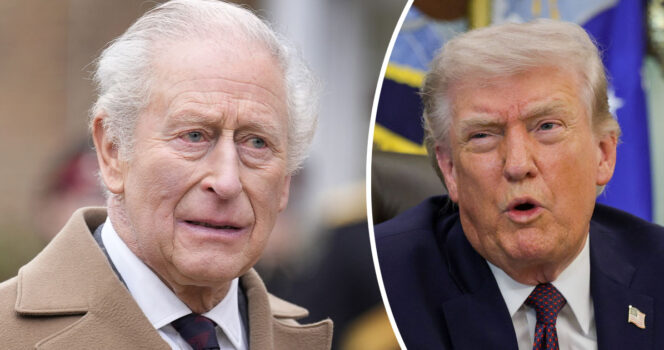
On the day that would have marked Queen Elizabeth II’s 100th birthday, King Charles delivered a heartfelt message honoring his late mother. The words were moving and deeply personal, yet one line has sparked lively debate. A royal commentator suggested that the King’s remarks may have included a subtle swipe at Donald Trump, just weeks before Charles and Queen Camilla are due to visit the White House for a full state visit.
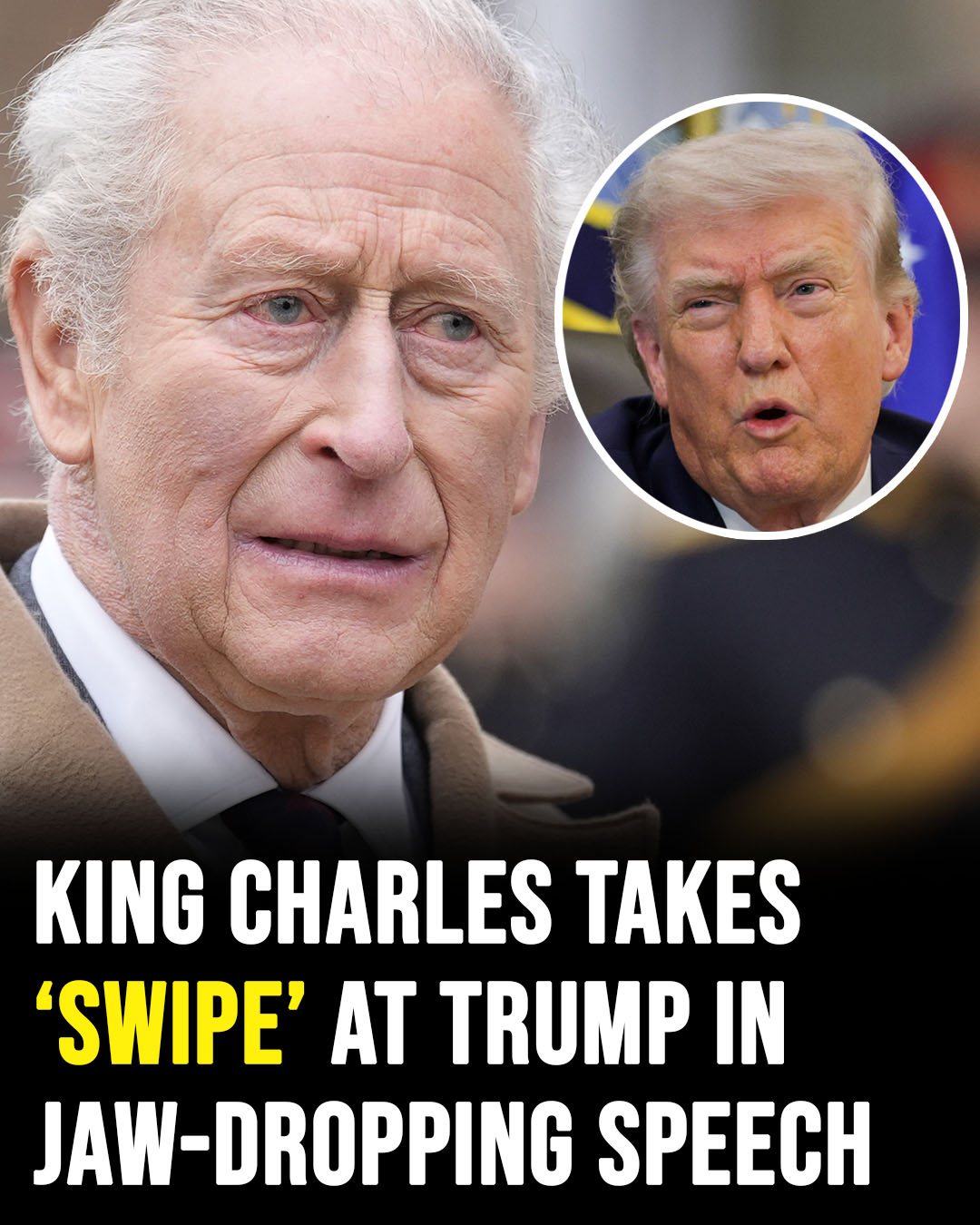
The tribute, broadcast to the nation, reflected on the Queen’s life, her enduring influence, and her optimism in the face of difficult times. But it was the King’s reference to today’s “troubled” world that drew attention from some observers. One royal expert argued that the phrase might have been a carefully worded nod to current tensions involving the United States, framing it as a quiet but pointed message ahead of the royal couple’s high-profile American trip.
A tender remembrance set against a high-profile diplomatic moment
The setting for the speech was solemn and affectionate. Queen Elizabeth II reigned for 70 years and died in September 2022 at the age of 96, after a lifetime of public service that spanned war, peace, and dramatic social change. On what would have been her centenary, the King emphasized her steadfastness and her unshakable belief in the power of kindness and duty. His words were intended to comfort and to remind people of the values she embodied throughout her long life.
At nearly the same time, anticipation is building for King Charles and Queen Camilla’s state visit to the United States. The visit has reportedly been in planning for quite a while, with the timing shaped by diplomatic considerations and the desire to ensure the trip lands at a moment suitable for both countries. State visits are organized on behalf of the UK government and follow strict ceremonial and diplomatic protocols. They are designed to strengthen the bonds between nations, celebrate shared history, and set the stage for deeper cooperation.
As part of the upcoming schedule, the monarch is expected to address Congress. This is a rare honor and a moment of significance: the visit will be the first UK state visit to the United States since 2007, a year that underscored the depth of the transatlantic partnership and the value placed on tradition and continuity.
What the White House visit may look like
Donald Trump has shared on social media that the visit is slated for April 27 through April 30, highlighting a formal state banquet planned for the evening of April 28. He expressed warm anticipation for the occasion, noting that he and First Lady Melania Trump look forward to spending time with the King and describing the event in characteristically enthusiastic terms.
While detailed schedules are often kept flexible until close to the day, the outlines are familiar to those who have followed past state visits. There is typically an official welcome, formal meetings, cultural engagements, and, of course, the state banquet. For many viewers, the pageantry offers a reassuring sense of tradition: carefully set tables, thoughtful toasts, and the merging of national symbols that signal mutual respect and shared history.
With the royal couple preparing for a busy itinerary in Washington, and potentially other cities, attention is focused not only on the symbolism, but also on what messages—spoken and unspoken—might be conveyed throughout. In this context, the King’s centenary tribute to his mother has taken on additional resonance.
The line that sparked debate
In his message, King Charles offered a gentle, reflective portrait of Queen Elizabeth II’s legacy. He said, “Today, as we mark what would have been my beloved mother’s 100th birthday, my family and I pause to reflect on the life and loss of a sovereign who meant so much to us all, and to celebrate anew the many blessings of her memory.” He went on to say, “Millions will remember her for moments of national significance; many others for a fleeting personal encounter, a smile, a kind word that lifted spirits, or for that marvelous twinkle of the eye when sharing a marmalade sandwich with Paddington Bear in the final months of her life.”
Then came the sentence that has drawn so much attention. The King continued, “Much about the times we now live in, I suspect, may have troubled her deeply, but I take heart from her belief that goodness will always prevail and that a brighter dawn is never far from the horizon. God bless you, darling mama. You remain forever in our hearts and prayers.”
It was that mention of “troubled” times that prompted a lively response from royal watchers. On a Sky News segment, commentator Kinsey Schofield suggested the line could be interpreted as a “swipe” at Donald Trump, especially in light of tensions involving Iran and the heightened attention on global security issues. She framed it as a subtle but pointed remark that might resonate more strongly given the timing of the royal couple’s upcoming visit.
Schofield said, “I’m going to be honest, maybe I’m just sensitive … but I felt like that was a swipe at what’s going on in the United States between Donald Trump and Iran.” She added that when the King spoke about global issues, she did not think it was aimed at any domestic royal concern, but rather at broader international matters. Her analysis rested on the belief that, with the US visit just around the corner, the King’s words could easily be read as a gentle signal of concern.
The careful balance of royal language
It is worth remembering that royal speeches are crafted with great care. Their language is measured, designed to unify rather than divide, and to offer reassurance more than critique. Phrases like “troubled times” are purposefully broad. They can refer to many issues at once, from international conflicts and economic uncertainty to environmental concerns and the lingering aftershocks of global crises. In that sense, the line fits a long-standing royal tradition: acknowledging difficulties without taking an openly political stance.
Still, observers often look for layers in royal remarks, especially when a statement coincides with a major diplomatic milestone like a state visit. For some, the timing and the gravity of the moment suggest a subtext. For others, the words are exactly what they appear to be: a son honoring his mother’s optimism and encouraging people to hold onto hope despite the headlines. These dual readings are a normal part of how public speeches—especially royal ones—are received.
Why this moment matters to many readers
For those who grew up with Queen Elizabeth II as a constant presence, her centenary carries real emotional weight. Many people remember gathering around televisions for her addresses or catching glimpses of her on walkabouts, always patient, always poised, always with that unmistakable smile. The King’s tribute deliberately touched on these familiar memories, even referencing the charming television moment with Paddington Bear that endeared her to a new generation and reminded longtime admirers of her good humor.
King Charles’s words invited reflection but also pointed forward. By evoking the Queen’s belief that goodness will prevail and that a brighter dawn is near, he nodded both to her enduring faith in people and to the role that leaders—monarchs included—can play in fostering stability during uncertain times. For many, especially those who appreciated the Queen’s steady presence over decades, that message is comforting and timely.
Looking ahead to the United States visit
As the White House prepares for the royal visit, interest spans beyond ceremony. There is curiosity about the King’s expected address to Congress, which will likely highlight shared values, common history, and areas of cooperation. These speeches are typically meant to be above politics and to focus on long-term ties—cultural, economic, and security-related. The mood is one of goodwill and continuity, echoing the long arc of British-American relations.
Donald Trump’s public note about a “beautiful Banquet Dinner” offers a glimpse of the tone he hopes to set: hospitable, grand, and celebratory. State banquets are among the most photographed and watched elements of any visit. From the place settings and floral arrangements to the music selections and toasts, they serve as symbols of friendship and mutual respect. People tuning in often enjoy the sense of occasion and the chance to see classic etiquette on display.
The rest of the itinerary, though not fully public, will likely combine tradition with personal touches—meetings, cultural highlights, and moments designed to showcase the best of both nations. These visits are an opportunity to reflect on shared history while also looking ahead to what both countries hope to accomplish together in the years to come.
Context, nuance, and what the King likely intended
Even as debate continues about whether the King’s words were aimed at any specific figure, the broader context suggests a familiar royal approach. The monarchy, by design, does not wade into partisan politics. Instead, the Royal Family tends to emphasize common ground and a sense of national and international community. The King’s tribute fits squarely within that tradition. It was personal. It was dignified. And it carried a touch of hope.
To many listeners, the mention of “troubled” times did not sound like a criticism of any one leader. Rather, it reflected a reality that most people feel—concern for global stability and a desire for leaders everywhere to lower the temperature and work together on shared challenges. In that reading, the King’s message can be heard as a reminder of the values Queen Elizabeth II upheld and of the tone he hopes to strike in his own reign.
What this means for the weeks ahead
Speculation aside, the upcoming state visit is set to be a significant moment for both the UK and the US. It arrives at a time when symbolism can matter as much as policy details. A warm welcome, thoughtful toasts, and carefully chosen words can go a long way toward setting a constructive mood. And for many onlookers, especially those who followed the Queen’s reign closely, seeing her son carry forward the pageantry and purpose of statecraft will be both poignant and reassuring.
As always with royal events, the finer points of the program may evolve as the date approaches. But the central themes are clear. The King will honor tradition while engaging with today’s realities. The White House will showcase hospitality and highlight the strength of the transatlantic relationship. And the public will look on, weighing every cue and every phrase for meaning, as people have done with royal occasions for generations.
A tribute that reaches beyond the moment
Ultimately, the heart of the story is still the Queen’s centenary. For countless people, her memory is inseparable from some of the most significant moments in modern history. She offered stability, even in the most difficult times. By saluting her belief that “goodness will always prevail,” King Charles did more than nod to the past. He offered a gentle compass for the future.
Perhaps that is why his words have lingered. Whether one hears in them a subtle message to world leaders or a simple, universal plea for hope and decency, the effect is similar. The speech suggested that dignity and restraint still have a place in public life—and that, despite the challenges of our age, it is still possible to move forward with grace and goodwill.
The takeaway for viewers at home
For those planning to follow the royal visit as it unfolds, the King’s tribute provides a helpful lens. Expect a focus on shared values and respectful dialogue. Expect ceremony that recalls long-standing friendship. And expect the language to be careful, choosing unity over division. In that spirit, the debate over whether the King took a “swipe” at Donald Trump may continue, but it need not overshadow the larger message—one of remembrance, gratitude, and measured optimism.
As the United States prepares to receive King Charles and Queen Camilla, many will be thinking of the Queen’s familiar steadiness and of the gentle wisdom she brought to public life. The state visit, like the King’s centenary message, is a reminder that even during unsettled times, there remains a place for patience, respect, and the kind of quiet confidence that can carry nations—and people—through to a brighter dawn.