“THEY LEFT THE “WEAKEST” MEDIC UNDER THE AVALANCHE – THEN HER RADIO CRACKLED
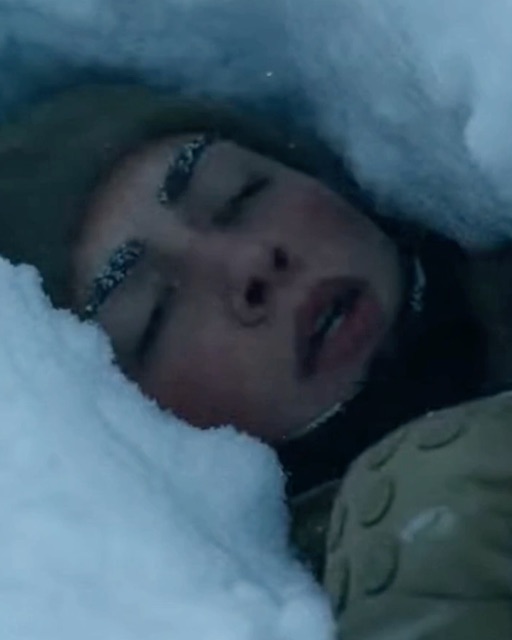
Snow filled my mouth. Someone’s boot thudded above me, muffled through ten feet of ice.
“She’s gone!” a voice shouted.
Then Mason: “Leave her. Move.”
My blood went cold – then hot. I wasn’t gone.
I dug.
Nails split. Tongue bit through. When my fingers punched air, I sobbed steam and clawed out like an animal.
Tracks. Fresh. Already softening.
I could’ve turned downhill. Saved myself.
Instead, I followed.
Because I’m the medic. Because they were mine – even the one who left me.
The first pop of gunfire snapped the sky. Then another. Then a scream I knew.
I dropped to my belly and crawled, heart hammering so hard I could taste metal.
Through the white, I saw dark shapes huddled behind a black tooth of rock. Our rucks. Our guys. Pinned.
Mason’s voice fizzed over an open channel, too loud in the quiet. “No medevac till we secure the package,” he snapped. “And if Bennett shows up—”
I froze. The next words made my hands shake.
And when I finally saw what he was holding in his left hand, I realized who the “package” really was.
I used the rock and drift for cover and slid my goggles up to clear the fog.
My name is Nora Bennett, and when I say I’m the medic, I mean I carry the bag and the trust.
I also mean I hear the lies fastest.
Mason had his rifle braced and his jaw set, but his left hand clenched a satellite phone on a tether.
On the screen was a text with a photo of a girl in a yellow beanie and braces, cheeks pink, eyes scared.
DELIVERY CONFIRM? blinked at the bottom.
June Delaney, sixteen, from the poster tacked at the gas station in Silverton, smiled through a missing tooth.
I’d stared at that poster while paying for coffee, thinking she could be anyone’s kid.
I didn’t know she would be ours, or theirs, or a word that made my mouth taste like pennies.
Package.
Another shot cracked and whiffed flakes off the rock in a glittering halo.
Greeley, our long gun, swore and dug his shoulders in deeper behind his pack.
Mack was on his back, blood pulling pink through the snow under his right thigh.
Harper, the youngest, had done the screaming because he was hit in the arm and still trying to act like he hadn’t.
They all looked up when I slid in behind them, wet, shaking, and alive.
Greeley blinked and said one word. “Bennett?”
Mason didn’t look surprised.
He looked annoyed, like a coffee had spilled in his truck.
“You were supposed to stay dead,” he said in that mild, almost bored voice of his.
“Hi to you too,” I said, and popped open my bag.
My hands went on their own, fast and calm even while my head spun.
Tourniquet for Mack. Pressure, wrap, tuck.
Harper’s arm was furrowed but not torn, bright blood, clean.
“Harps, hold this,” I said, and fit his shaking fingers on the gauze like I was teaching him to dance.
He tried to look anywhere but my eyes, which I loved him for.
Mason shifted to the edge of the rock and peered downslope.
Three figures in darker gear moved between wind-scoured shrubs, somewhere between us and the cornice that carved the next bowl.
They weren’t shooting to hit, not always.
They were shooting to keep us where we were.
“Local boys,” Greeley muttered. “They know this ridge.”
“Not boys,” I said, pointing.
One was small and moved like a woman who’d carried pails all her life.
The other two had the steady patience of men who fix wire in a gale for a living.
“Ranchers,” Mack grunted through gritted teeth. “Or rescue.”
“Or family,” I said.
Mason’s gaze cut to the sat phone again.
He tapped it once with his thumb, then tucked it back into the crook of his glove like it would fly off.
“No medevac till we secure the package,” he repeated, like saying it made it a rule of the mountain.
“We need to call SAR,” I said, which is what you say when you still think this can go right.
“No,” Mason said.
He didn’t bother to dress it up now.
“Who is she?” I asked, though my stomach already knew.
Mason smiled in that way that looks like he’s checking your molars.
“You know,” he said.
He lifted the sat phone enough for me to see the photo again.
DELIVERY CONFIRM? blinked like a dare.
“She ran from her dad,” Mason said. “Dad wants her back. We get paid.”
“Kidnapping on a ridge in a storm,” I said. “That’s cute.”
“It’s a private recovery,” he said, like the word change made it soft.
Harper flinched at the word private, which told me his mother had raised him right.
“We’re a medical support team,” I said, and then stopped because that was too thin to hang a life on right now.
Mason laughed and jerked his chin to where our radio hung.
“That’s not what our contract says,” he said.
Another shot kissed the rock, and a snow snake slid down between Greeley’s boots.
We all went still and quiet at the hiss.
You learn, early here, that the mountain is always the fourth player in any fight.
Mack’s breath came in short pants as the pain caught up with him.
“Doc,” he said in a voice that had nothing brave left in it. “Am I gonna keep the leg?”
“You like your leg?” I asked, smiling because he needed it.
“I’m fond,” he said, and har-har’d weakly.
“Hold still, keep pressure, and think happy thoughts,” I said. “We’ll argue about your limp later.”
Harper swallowed so hard I heard it.
He looked downslope again, where the shooting had gone quiet.
Silence that heavy always means someone is moving.
“June,” I said, tasting it.
“Delaney,” Mason said back, deliberate and flat like he was reading part numbers.
“She’s a person,” I said sharper than I meant.
“She’s a job,” he said, and that was when I finally knew what I’d only guessed before.
The avalanche wasn’t an accident.
You get avalanches up here without help, plenty.
But the way it came—the sudden settle, the low crack like a gunshot from inside the earth, the slab peeling—felt nudged.
We’d been moving along a loaded face while I argued about dropping off the cornice.
Mason had told me to hustle up, had cut left without a slope cut, and then the world went.
He’d been wanting a problem to solve that didn’t talk back.
“If Bennett shows up—” he’d said on the radio, and trailed it off as if the snow could finish it.
Now I was here, and he had to say it out loud.
“Keep out of this, Nora,” he said, which is almost a love letter from a man like Mason.
I reached down into my bag and found the IV kit with my thumb and first finger because the other three were too numb.
“Someone’s going to bleed out,” I said, not loudly and not for him.
“I know,” he said, and his eyes were already counting the money and the hours.
The wind fell flat in our ears like someone put a hand over the mountain’s mouth.
We all looked up without meaning to.
Clouds slid like dark muslin over the high line.
Harper broke the spell by doing something brave and stupid at the same time.
He crawled to the edge, found an angle, and called out.
“Stop firing,” he yelled, voice breaking. “We have wounded.”
One of the figures rose up enough that I could see the brim of a hat and the shape of a scarf.
“Quit trying to take the girl!” she shouted back.
Her voice was tight and high like a string under too much pull.
Mason ticked his sight over to her as if she’d just said open season.
“Don’t,” I said, and put my hand on his barrel.
He looked down at my glove like it was dirt.
“Move your hand,” he said.
“No,” I said, and felt my heart kick.
Mason didn’t pull the trigger.
He let out a breath and dipped the barrel.
It wasn’t mercy.
He was saving the last easy shot for later.
“Where is she?” I asked, and to my own surprise I was already ready to stand.
Under the rock, through the snow, between men with rifles and family with old anger, I was ready to walk.
Harper lowered his head as if he could brace it against a gust.
He met my eyes.
“Below the shelf,” he whispered. “I saw her hair once. Yellow beanie. She was curled under a deadfall.”
“How far?” I asked.
“Sixty yards,” he said. “Maybe less. Past that blue spruce with the windbite.”
I knew the tree.
I’d tagged it when we came up, because you save little markers when your gut tells you you’ll need a breadcrumb later.
Mason read my face like a road sign.
“Don’t even think about it,” he said.
“I’m not thinking,” I said, and un-clipped my tether to the pack.
“If you go down there,” he said, “you don’t come back.”
“You left me,” I said, and stood up into the wind.
Greeley grabbed my sleeve and then let go because he’d always been better at math than morals.
Mack tried to lift his head and then let it drop when his leg buzzed from the effort.
Harper said my name softly, two syllables.
I moved along the shaded side of the rock, keeping low, breath slow, counting my steps the way my old EMT instructor taught me to when adrenaline turned smell to metal.
The first three yards were easy and I thought maybe God had decided to look my way after all.
The next five were a slippery riddle.
Half-buried brush, wind crust soft in one step and hard in the next, my boot finding no bottom then scouring a line of ice like a spark on glass.
A bullet thudded in the snow to my left, and bits of ice dusted my cheek.
“White jacket!” someone shouted, and I saw the flick of a glove from below.
“Hold your fire!” another voice echoed, farther off.
They weren’t dialing for head shots now.
They were writing warnings in the snow just in front of my boots.
I slid behind the blue spruce and held onto a branch until the bark bit through my glove.
My lungs burned under my ribs and my legs shook, not from fear but from the long dig.
“June?” I called, low enough for only a rabbit to hear.
Snow fell from a branch with the softest shush when I said her name, and for a second I thought the tree said it back.
“June,” I tried again, and this time my voice broke.
A whimper came from behind a log shoved up like a shoulder under a drift.
I dropped and crawled into the cave the snow had made.
She was smaller than the photo had promised.
Cheeks raw with wind, nose running, beanie sideways over one ear, she watched me like I was a bear on its hind legs.
“My name is Nora,” I said, which is the same as saying I’m not going to eat you to a kid.
“I know you,” she whispered back, which nearly made me laugh and cry at the same time.
“From the poster?” I said.
“From the store,” she said. “You told Mrs. Barclay her dog’s paw was fine.”
“That’s right,” I said, and all at once I loved the small town for making me visible.
“Are you hurt?” I asked, reaching out slow.
She shook her head, then winced and pulled her coat tighter over her ribs.
“Bruised,” she said through clenched teeth like a Delaney.
“Can you crawl?” I asked.
“I can try,” she said.
“We’re going to belly crawl to that rock and not stand up,” I said. “We’ll move like worms and pretend our knees don’t exist.”
“Gross,” she said, but she nodded.
I made her tuck her scarf into her coat because a flash of any color is a bull’s-eye for a scared trigger.
“Who are the shooters?” I asked as we moved.
“Aunt Inez and Mr. Coleman,” she said. “And Reed.”
“Reed is?” I asked.
“My brother,” she said. “He told Dad I wasn’t going back.”
“Inez is a good shot,” I said, and June smiled for the first time, a little twitch.
“She hunts elk like she’s reading their minds,” she said, which would be funny if it wasn’t right now.
A round cracked and hit a log behind us with a spit and thunk that said it was low velocity.
Warning fire again.
“Do they know it’s you?” I asked.
“I think so,” she said. “They saw my hat before I hid.”
“Good,” I said. “We’re going to make them mad and proud at the same time.”
We slid to the lee of the rock where I’d left the boys and found it empty in one place and very full in another.
Mason had moved.
He was ten yards downslope now, using the shadow of a boulder and a stand of stunted fir as a shrine to his plan.
The sat phone was back in his left hand like a holy object.
He was watching for a yellow beanie like a hawk watches for a field mouse.
I eased June back into the nest of brush and put my finger on my lips.
She nodded, wide-eyed but locked in.
I crawled back up and popped my head over the rock like a gopher.
Greeley’s eyes cut to June and then hardened.
Mack moaned but froze it in his throat.
Harper’s jaw set.
Mason didn’t yet see us.
He was busy doing inventory on the future.
“Got eyes on her?” he called to Greeley without looking.
“No,” Greeley said, lying for me in a voice like gravel.
“She’s moving,” Mason said, because he thought the mountain only had one brain and it was his.
Harper nudged my boot.
He shook his head once.
Don’t.
I nodded once.
Watch.
There’s a kind of quiet you only hear on a ridge when your next mistake is the one that takes your name out of your mother’s mouth.
We all stood in it for a breath that tasted like iron.
Then the air changed.
It wasn’t the wind.
It was the mountain reminding us she was real and not just a place we chose to be brave.
A long, low groan traveled under the snow like a whale song turned mean.
We all looked up again like idiots who’d forget the stove if the kettle screamed.
“The cornice,” Greeley whispered. “She’s going.”
Mason snapped his head up and swore.
We had thirty seconds, maybe less, before the lip above us took flight.
“Back to the wall,” I hissed to June.
She curled and hugged her ribs and looked at me like I was asking her to climb the moon.
“Harps,” I said. “Drag Mack.”
Harper didn’t argue.
He grabbed Mack’s shoulders and heaved with his heels sliding.
Greeley took the rifles and threw them into the angle where the rock met the slope because you can’t shoot your way out of a mountain’s throat clearing.
Mason didn’t move.
He stared at the line where ice met sky and did the math and found a way to make it pay.
“We can cut left and go under,” he said.
He was pointing to a thin ribbon of slope under the lip.
If you’re reading this on a warm couch, that might sound like a path.
It wasn’t.
It was a letter to your widow.
“No,” I said.
“Trust me,” he said, and that was the first joke he’d told all day.
He took a step left.
I took a step right.
He realized where I was going half a beat after I did.
“Don’t you touch that girl,” he said, and now there was fear in it.
“She’s the package,” I said, and I didn’t say the rest out loud because he didn’t deserve it.
She’s the kid you sell and un-sell depending on who shows up with more money and a better excuse.
The cornice split with a sound like someone ripping a wedding dress.
It didn’t fall like a wall.
It fell like a pile of bodies, sliding and tumbling and gathering steam.
“Down!” I yelled, and threw myself over June.
Snow hit us like a truck full of feathers.
It’s soft and it’s not.
It’s light and it can crush you.
We were lucky.
The big load went wide left and took Mason’s path to the undercut with it.
The edge of it slapped our rock and poured its guts over us like a wave you could breathe if you remembered to try.
I felt June go stiff and then limp, and for a second I thought I’d lost her.
She wasn’t gone.
She was fainting and maybe smarter than all of us.
When it settled, I lifted my head and saw white where Mason had been.
The world was quiet except for the tick of settling crystals and Mack’s rough breathing.
“Count,” I said.
“One,” Harper said.
“Two,” Greeley said.
“Three,” Mack gasped. “And a half.”
“Four,” I said, and patted June’s cheek until her eyes fluttered.
“What happened?” she whispered.
“Gravity got mad,” I said, and she almost laughed.
Mason didn’t answer when I said his name.
The lip of the new debris looked like driftwood on a beach.
Bits of fir, scraps of fabric, a glove, the bright flash of the sat phone, miraculously unburied and beeping its emergency alarm.
“Reed!” a voice screamed from below, high and thin.
“Aunt Inez!” June called back, and the answering sob made my throat close.
“We need to dig,” I said.
Greeley didn’t ask who.
He just pulled his shovel like a magician and started.
Harper found his probe and we both went to our knees.
“Beacon?” I asked because it’s always the first question when you’re trying not to count the minutes.
“They’re not wearing,” Greeley said about the folks below.
“Mason?” I asked.
“Transceiver was on,” Harper said. “I saw the light earlier.”
“Good,” I said, lying again.
We moved like three parts of a machine.
Probe, push, pull, clear.
Listen.
Probe, push, pull.
We found him faster than I wanted to.
His leg was twisted under him and his face was grey and he looked small for the first time since I’d met him.
His eyes were open and furious.
“Don’t just stand there,” he hissed when he could draw breath.
“Welcome back,” I said, and slipped my glove off to feel his pulse.
It was fast but there.
“Can you wiggle your toes?” I asked.
“Wiggle your—” he started, and then he gasped.
“Pain’s good,” I said. “It tells me what’s not dead.”
“We have to move,” he said. “We have to get the girl now.”
He tried to sit up and failed.
Greeley stared at him like he was looking at a man who had finally told the truth.
“We’re done,” Greeley said. “This is over.”
“You don’t tell me—” Mason started, but his voice faltered.
I leaned down so he could see my eyes.
“You left me,” I said softly so only he could hear.
“I did what I had to,” he said.
“You did what was easy for you,” I said, and the words felt like something I’d been waiting to carry like a baby.
He met my stare and looked away first.
“Reed,” June yelled again, voice gaining strength, and Inez’s answering one came back, closer now.
“Up here!” I shouted, and heard the scuff and grunt of people who don’t move on snow for fun but find a way when they have to.
Two figures appeared like ghosts through a curtain.
A tall boy with a freckled face and a woman with a scarf tight as a problem.
The boy saw June and made a noise like you make when you find your lost dog in the dark.
“June-bug,” he said, and then he saw the rifles and the men and the wrong.
“Stay back!” Mason coughed, trying to sit, which would have been funny if he hadn’t still been deadly.
“Shut up,” Inez said kindly, like you do to a drunk at a wedding, and leveled her shotgun not at us but at the ground beside Mason’s hand.
“Inez,” I said. “I’m Nora. I’m a medic.”
“I know who you are,” she said. “You come to church sometimes and don’t sing.”
“I don’t know the words,” I said, which made Reed’s mouth twitch because he recognized a truther when he heard one.
“We need to get off this face,” Greeley said, because the mountain wasn’t done talking.
“Agreed,” Inez said. “Wind’s wrong, sky’s wrong, everything’s wrong.”
“Harper,” I said, “splint Mason’s leg.”
Harper looked at me like I’d asked him to baptize a snake.
“Do it,” I said, and Inez nodded because even when you want someone to pay, you don’t leave them to the mountain.
Mason hissed and swore and called me names as Harper worked.
I tuned him out like the buzz of a fly in a warm room.
“Route?” Reed asked, eyes cutting to the ridgeline and the trees and the blue between.
“Down through the birch belt,” Greeley said. “Cut right before the big drop. There’s a gully with enough cover we can sled Mack.”
“I have a tarp,” I said, because I always did.
“And a sled,” Reed said, because the Delaneys weren’t dumb.
We moved.
Inez took point because she knew the stiff spots by heart.
Reed had June’s hand like he’d never let go again.
Greeley and I rigged a haul for Mack with poles and straps and the tarp, and Harper dragged Mason on a folded bivvy like a hunter with a wounded wolf.
We slid, stopped, listened.
The storm decided to hold its breath and let us go.
Halfway down, we heard the whump of a small slide somewhere out of sight and froze as you do when the animal in the brush might be a bear or just your own worry.
We made the gully.
It was like walking into a whispered promise.
Trees on both sides, snow like sugar instead of concrete.
Reed started laughing, high and shaky, and Inez told him to save it for home.
Mack told me he couldn’t feel his toes and I lied again and told him that was normal.
At the bend near the creek, we saw lights through the trees.
Headlights, low and patient, and the shape of a county truck with a plow still crusted with ice.
I heard Frank’s voice before I saw him.
“Who in the seven hells called this in?” he boomed, but his eyes were soft when he saw June.
Frank was sheriff not because he liked laws but because he liked people.
He’d been a miner and then a dad and then a man who could stand in a storm and make it feel like a porch.
“I did,” Inez said.
“And me,” I said, which wasn’t perfectly true but now wasn’t the time to thread needles.
Frank took it all in with one sweep.
The girl with torn coat.
The medic with blood on her glove.
Two men too pale, one too proud, one too quiet.
And Reed, whose fists said he had a lot of words he’d been saving.
“Alright,” Frank said. “Alright.”
He didn’t yell or bark or do any of the things TV sheriffs do.
He divided us with his eyes and put people where they belonged.
“June, get in the warm,” he said.
“Inez, with me in a second.”
“Greeley, help me with the stretcher.”
“Harper, put that boy’s leg down before you make it madder.”
He looked at Mason last like he was deciding what kind of animal he was.
“Mason,” he said.
Mason tried to roll his shoulders like a man unbothered.
“Frank,” he said.
“You’re under arrest,” Frank said.
“For what,” Mason said, half-smiling.
“For being exactly who you are at the wrong time in front of the wrong people,” Frank said.
Then, because he had to, he listed it out.
Kidnapping.
Negligent homicide attempt if Mack’s leg went bad.
Tampering with rescue operations.
Endangerment.
And whatever else the lawyer in Durango could think up before lunch.
Mason laughed, but it sounded like he’d swallowed something sharp.
“You think your DA will take that?” he said, and then caught himself because he’d said the quiet part.
“Our DA,” Frank said. “She takes what’s true.”
“She takes what plays,” Mason said.
“Then we give her a good tune,” Frank said.
He had Reed cuff him, which I liked because I’ve always thought there’s a small justice in who ties the bow on a mess.
Mason didn’t fight him.
He fought me with his eyes when I checked the pulse in his foot again.
“You could’ve died up there,” he said.
“I did,” I said, and he looked away.
We loaded Mack, who tried humor until it ran out and then we let him be quiet.
We tucked June into Frank’s truck and wrapped her hands in my extra gloves because you always have extra gloves if you’ve been cold enough once.
I climbed into the passenger seat and let my bones remember how to sit.
Frank watched me like a man watching a house he’s worried won’t hold through the night.
“You alright, Nora?” he asked.
“I’m tired,” I said.
“You look like a snow angel someone drove a truck over,” he said, and I laughed and then cried because that’s how it happens sometimes.
June fell asleep with her head on Reed’s shoulder halfway to town.
He stared out the window like the dark would tell him how to keep her now that he’d got her back.
Inez hummed under her breath, some old song without words.
Harper rode with Mason, which was fair, and I saw him from the mirror looking at me like he wanted to ask forgiveness for things he hadn’t done.
In town, lights felt too bright and warm felt too wrong for a minute.
We wheeled Mack into the clinic where Lisa met us with her hair still wet from a shower and eyes still full from a nap she’d never admit to taking.
“We’ve got you,” she told Mack and meant it.
Frank stood with me in the hallway after we’d set three splints and started two IVs and called one mom.
“You filing a statement?” he asked, and his voice was soft and the kind you use to ask about something you know will hurt.
“I will,” I said.
“You sure?” he asked.
“I’m more sure than I’ve been about anything this week,” I said.
He nodded like I’d shown him where to dig a post.
By morning, the mountain was dream-smooth again like it had never split us open.
Word moved through town like fire through dry grass that smells like cinnamon.
Some folks called June brave.
Some called her foolish.
Most called her safe, which is all that matters.
Mack kept his leg and a scar that made him a better listener.
Harper came to my door two days later with a pie he said his aunt had baked and which was probably from the store, and told me he was sorry in a way that didn’t ask me to fix it.
Greeley called his mother and then signed up to teach avalanche awareness on Tuesdays at the school.
Mason’s lawyer tried to make a story where he was the hero and we were confused.
Frank and I told a better story because it was the truth and because we weren’t alone.
At the hearing, I said the words no medic likes to say out loud about people they work with.
I said he left me.
I said he chose money over breath.
I said he forgot that the only package you get to take off a mountain is a beating heart.
Mason looked at me while I said it and I looked back.
I thought about telling him I forgave him because that sounds nice and cleans up a mess.
I didn’t say it then because forgiveness is a lot like snow—it falls when it wants, not when you ask.
June came to see me at the clinic one morning in a coat that fit and a smile that didn’t tremble.
She put a shell bracelet on my wrist that she’d made from river stones and fishing line.
“Why shells in a mountain town?” I asked, smiling.
“Because you can hear the ocean if you listen hard,” she said, and pressed one to her ear and handed me the other.
I listened and I swear I heard it.
Wind and water and a long road to a place where everything is flat and kind for a while.
“You going back?” I asked.
“Someday,” she said. “Not to him. Just to the sea.”
“Bring a friend,” I said, and she rolled her eyes because she was sixteen and alive.
Spring came slow and late like it does at altitude.
The snow ran like a secret down the gullies and turned everything the color of olive oil and hope.
I walked the same face one afternoon with Lisa and the SAR kids, strings of orange tape in our hands, and marked the weak spots the winter had carved.
We stopped by the blue spruce where the wind had bit it wrong and where I’d heard a girl cough a second chance back into the world.
I touched the rough bark and thanked it for being where it was.
Lisa asked me what I was saying thanks for.
“For the stubborn,” I said.
“For the ones who hold,” I said, and she nodded.
We gave a talk to the kids about cornices and crowns and how a mountain isn’t a playground or a god but something in between that asks you to be humble.
At the end, a boy raised his hand and asked how you know when to go back for someone.
I didn’t look at Lisa because I didn’t want to be polite.
“You don’t,” I said.
“You just go,” I said.
“Even if they left you,” I said.
“Especially then,” I said.
He wrote it down on his palm with a pen like something his grandmother told him once, and I felt something in my chest un-knot that I hadn’t known I’d tied.
We had a fundraiser for SAR at the fire hall and Inez brought elk stew that made me want to move into her pocket and never leave.
Reed and June ran the raffle and Harper sold tickets and Greeley taught old men how to work an avalanche beacon with the patience of a saint and the wit of a sinner.
Frank stood at the back and watched the door like sheriffs do even in heaven.
Mason sat in a cell an hour away and told lies to men who didn’t need to hear them, which is its own kind of snow.
On the way home that night, the stars were so many that I stopped my truck in the middle of the road and turned my lights off and let the cold come in.
I thought about the day I tasted snow and dirt and fear in my mouth and about the way hands feel when they pull you out or push you under.
I thought about the word weak and the way it’s often just a synonym for kind used by people who are afraid.
I smiled hard enough that my face hurt.
When I got back to my place, I put the sat phone screen that Frank had printed out—DELIVERY CONFIRM?—in a box with old badges and a crooked Polaroid of my brother when we were small.
Not to forget.
To remember what to say no to.
Some mornings, when the sky is big enough and my coffee is strong enough, I think about Mason.
I think about how quickly a man can become the worst thing he’s done if he’s not careful.
I think about how close I came to letting someone tell me what my worth was.
And then I lace my boots and check my bag and call Harper and ask how his aunt is and remind Greeley about Tuesday, and Inez texts me a photo of a ridge with a sheep on it that looks like a cloud in the wrong place.
June sends me a video once from the reservoir where the wind made little waves and she said she could almost taste salt.
I send her back a clip of the creek over stones with the sound turned up loud enough to feel like a heartbeat.
We tell each other the names of small things and make them matter.
If there’s a lesson in all this, maybe it’s only that strength isn’t the loud thing or the hard thing or the thing that leaves someone behind.
Maybe it’s the hand that digs back to light even when cold tells it to lie still.
Maybe it’s saying no when someone calls a person a package and remembering the job is never bigger than the life.
And maybe it’s that you don’t get to pick your storms, but you do get to pick who you become in them.
If this story made you feel something, pass it on so someone else remembers not to leave anyone behind, and tap that little heart so I know you’re out there too.