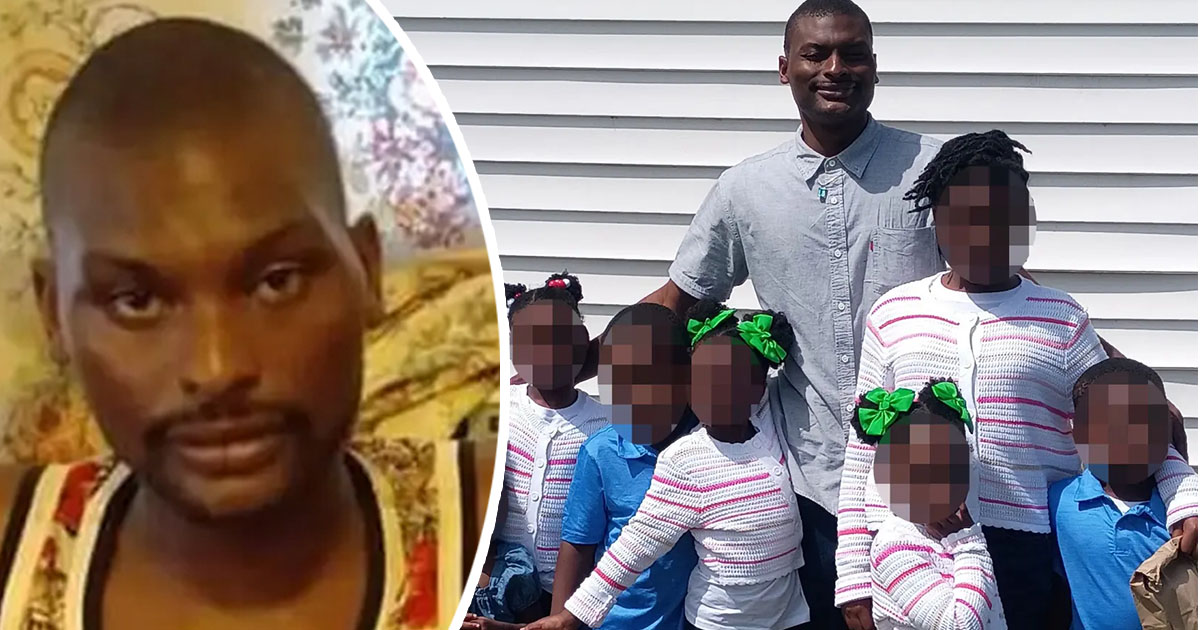
A devastating tragedy in Shreveport, Louisiana, has left a community heartbroken and searching for answers. Authorities say that on Sunday, April 19, a domestic disturbance call drew police to a home where eight children were found dead, seven of them the children of the suspected shooter, Shamar Elkins, and the eighth a cousin. Two adult women, including Elkins’ wife and a woman believed to be his girlfriend, were also shot and seriously injured. The suspect, identified by police as Elkins, died later that day after a confrontation with officers during a pursuit.
These are the kinds of events that leave us struggling to understand the unthinkable. Families are grieving, neighbors are shaken, and first responders are grappling with what they witnessed. Officials have shared early details as the investigation continues, and loved ones are remembering the children for the joy they brought to everyone around them.
What police found after the early morning call
According to police spokesperson Christopher Bordelon, officers were dispatched just after 6 a.m. Sunday in response to a report of a domestic disturbance at a home in Shreveport. When officers entered the residence, they discovered eight children who had been unalived. Seven of the children were the suspect’s own, and one was a cousin. Most of the victims, officials said, were attacked while they were sleeping.
Police said two women were also shot and seriously injured. One is Elkins’ wife; the other is a woman authorities believe to have been his girlfriend. Amid the chaos, at least one child tried to flee, and an eight-year-old reportedly attempted to escape onto the roof. Despite those desperate efforts, the violence was swift and overwhelming before help could arrive.
Shreveport Police Chief Wayne Smith expressed the shock and sorrow that many felt. Speaking to reporters, as reported by NBC News, he said that his heart was “taken aback” and that he could not imagine how such an event could occur. His words reflect the deep grief shared across the city and far beyond.
The children whose lives were cut short
The Caddo Parish Coroner’s Office said the children ranged in age from 3 to 11. Earlier, police had provided a broader age range while the coroner worked to confirm identities. Their mothers identified the young lives lost as Jayla Elkins, 3; Shayla Elkins, 5; Kayla Pugh, 6; Layla Pugh, 7; Markaydon Pugh, 10; Sariahh Snow, 11; Khedarrion Snow, 6; and Braylon Snow, 5.
Friends and relatives described the children as happy, friendly, and sweet. Crystal Brown, a cousin of one of the wounded women, told the Associated Press that the kids were full of life. She also shared that Elkins and his wife had been separating and were due in court on Monday, adding painful context to a tragedy with no easy answers.
Putting names and ages to this loss serves as a reminder that these are not just numbers in a report. They are children whose laughter, routines, and small everyday joys were treasured by their families. For loved ones now facing unimaginable grief, the path forward will be long and difficult. The hope remains that the community can offer comfort and strength as they remember the lives that were so dear.
The pursuit and the suspect’s death
After the incident, authorities pursued the suspect. Police say Elkins was unalived by officers during an attempted carjacking following a chase. While full details are still being pieced together, the confrontation ended his flight and brought a close to a day of terror for Shreveport residents.
The Associated Press, which maintains a database with Northeastern University, reported that the Shreveport case appears to be the deadliest mass shooting in the United States since eight people were unalived in a Chicago suburb in January 2024. That somber comparison underlines the scale of the loss and the far-reaching impact this event will have on families and the community.
What officials and leaders are saying
In addition to Chief Smith’s remarks, State Rep. Tammy Phelps told the Associated Press that some children tried to escape through the back door, a haunting detail that highlights the suddenness of the violence and the courage shown by the young victims as they sought safety.
Crystal Brown’s comments to the AP framed the tragedy in deeply personal terms. She emphasized the innocence of the children and shared her belief that the separation between Elkins and his wife had created tensions that had grown in recent days. While investigators will sort out the full timeline and motives, those who knew the family are left with memories and lingering questions. For many, this is not just a news story—it is a piercing loss one cannot easily put into words.
Weeks earlier, troubling remarks about “demons”
New details reported by The New York Times shed light on warning signs that preceded the unalivings. According to their report, Elkins had called his mother, Mahelia Elkins, and his stepfather, Marcus Jackson, on Easter Sunday. During that conversation, he said he wanted a divorce and expressed that he wanted to end his life. Jackson recalled encouraging him, telling him that he could get through his struggles. In response, Jackson said, Elkins made a chilling comment: “Some people don’t come back from their demons.”
Jackson told the Times he urged Elkins not to give up, reminding him that no matter how heavy life can feel, support and help are possible. Those nearby say Elkins had been wrestling with what he called “dark thoughts,” hints of a mental crisis that, in hindsight, appear heartbreakingly clear. While only a full investigation can determine the complete set of factors at play, those who loved the family are now contending with the painful knowledge that signs of distress were present.
It is important to note that investigators have not finalized a public account of every motive or circumstance. Relationship strain, mental health concerns, access to a firearm, and a potential feeling of isolation can tragically intersect. Often, such crises are complicated, involving layers of pain and confusion. Nothing about these explanations diminishes the responsibility for the violence, but they can help families and communities learn where early intervention might save lives.
A community grappling with grief and questions
When a tragedy reaches this scale, the shock reverberates far beyond the street where it occurred. Neighbors worry about children who heard sirens and saw police vehicles that morning. Teachers and school staff brace themselves to comfort classmates. Faith leaders open their doors for prayer and quiet reflection. While we may not yet know every formal step the community has taken, it is clear that Shreveport will be leaning on every source of comfort it can find.
In times like these, many people turn to rituals of remembrance: lighting a candle at home, pausing for a moment of silence, sharing a favorite photo, or telling a story that captures a child’s personality. These small acts honor the lives lost and remind families they are not alone. If you live in or near the community, simple gestures—sending a card, preparing a meal, or offering to drive someone to an appointment—can matter more than you might think.
Understanding warning signs and seeking help
For many readers, especially parents and grandparents, this tragedy stirs a question that can be hard to speak aloud: could anything have been done? There is no perfect answer. People suffer in silence, and sometimes even those closest to them do not see the full picture. Yet certain signs can still prompt us to take caring, practical steps.
Expressions of hopelessness or talk of wanting to end one’s life are serious red flags that call for immediate attention. Sudden talk of “demons,” feeling haunted, or being overwhelmed by dark thoughts can be a plea for help. Threats of violence, escalating anger, fixation on weapons, or statements that life has no point are also strong indicators that a crisis could be forming. When possible, encourage a person in distress to speak with a trained counselor, a trusted faith leader, or a medical professional. Offer to sit with them while they make a call. Follow up the next day. Remind them they are not a burden.
If you or someone you know is in immediate danger, call emergency services. If someone is considering self-harm or experiencing a mental health crisis, you can call or text 988 in the United States to reach the Suicide & Crisis Lifeline. For concerns about partner or family violence, the National Domestic Violence Hotline is available at 1-800-799-7233. If words feel hard to find, begin with something simple: “I’m here. We can figure this out together.”
Talking with family in the aftermath
For older readers who may be caring for grandchildren or supporting adult children, these conversations can feel daunting. Start by acknowledging that this news is upsetting and confusing. Reassure children that most families are safe and that many people—police, doctors, teachers, neighbors—work hard to keep communities protected. Keep explanations simple and age-appropriate. If questions arise about why someone would do such a thing, it is honest and acceptable to say that sometimes people can become very unwell or very angry, and they make harmful choices, and that adults are working to understand what happened.
For adults and seniors, it can help to limit repetitive exposure to distressing coverage. Checking for updates once or twice a day is often enough. Spend time on routines that bring calm—taking a walk, sharing a meal, or calling a friend. Grief moves in waves; there is no timetable and no “right” way to feel. If sleep, appetite, or concentration are disrupted for more than a couple of weeks, consider talking with a healthcare provider or counselor.
What is known and what remains unclear
Here is what authorities and news outlets have reported so far. On Sunday morning, April 19, Shreveport police responded to a domestic disturbance call. Inside the home, officers found eight children dead. Two women—Elkins’ wife and a woman believed to be his girlfriend—were shot and seriously injured. Police believe at least one child tried to flee, and an eight-year-old attempted to escape via the roof. The suspect was identified as Shamar Elkins, who later died during a confrontation with police after a chase and an attempted carjacking.
Officials have shared that the children were young, between ages 3 and 11, and their families have provided their names. A police chief, a state representative, and relatives have all spoken publicly about the shock, grief, and circumstances surrounding the case. Reporting also indicates that in the weeks leading up to the tragedy, Elkins told his stepfather that some people do not come back from their demons, and he spoke of wanting a divorce and ending his life. All of this is part of a developing picture, one that investigators will continue to clarify in the days and weeks ahead.
What remains unclear are certain specifics about timing, the sequence of events inside the home, and what precisely may have pushed the suspect from despair into deadly action. Those details will likely emerge through investigative reports, forensic analysis, and interviews. As authorities work, families are focused on caring for the injured, preparing memorials, and consoling one another.
Holding space for sorrow—and for one another
In moments like this, it is normal to feel a mix of sadness, anger, fear, and numbness. Community members often ask how to honor those lost. Some choose prayer or meditation. Others cook, visit, or write notes. Any sincere expression of care is meaningful. Grief softens when it is shared, and resilience grows when neighbors help one another with everyday needs.
As we reflect on the names and ages of the children, the voices of officials and family members, and the alarming signs that preceded the tragedy, one message stands out. Reach out early. If someone you love hints at dark thoughts, talks about demons they cannot shake, or speaks of harming themselves or others, it is not overreacting to say, “Let’s get help right now.” If you are the one hurting, telling someone is a brave and generous act. You deserve care. There is support available today and tomorrow, for as long as it takes.
For the families torn by this terrible event, words will never be enough. Yet the hope remains that kindness, steady support, and the careful work of healing professionals can help carry them through the long journey ahead. May the memories of these children be a blessing, and may those recovering from injuries feel the full strength of the community behind them.
A final word of condolence
Our hearts go out to the loved ones mourning these eight young lives and to the women fighting to recover from their injuries. To the first responders and medical teams who faced a scene no one should ever have to see, we recognize your courage and the toll such work can take. To the neighbors, teachers, and friends who will help shoulder the grief in the months to come, your compassion matters more than you may ever know.
If you are looking for a first step today, consider a quiet moment of remembrance or a gentle check-in with someone who might be struggling. In the midst of sorrow, every act of care is a light. And in honoring these children, we honor the best in ourselves: the promise to protect, to listen, and to love.