“MAJOR MOCKED THE “LOST TOURIST” – THEN SAW MY RANK
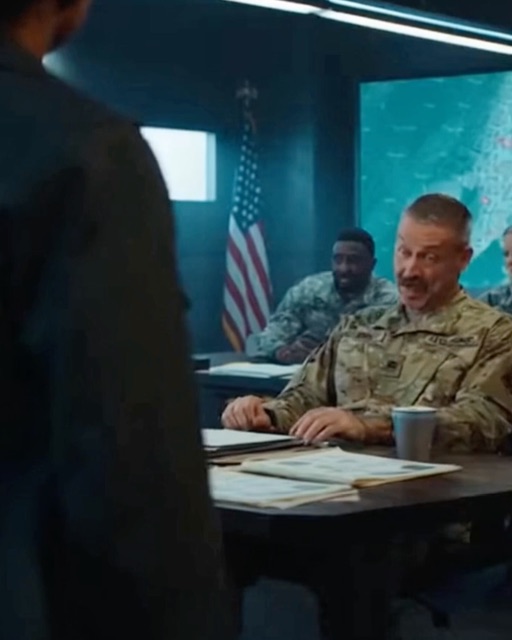
“Ma’am, the visitor center is that way. This room is for real soldiers.”
He smirked when he said it. The room laughed. Thirty-five officers in starched cammies. I let them.
I slid my badge from my blazer pocket and watched the color drain from his face. “Colonel Florence Bradley. JSOC. Everyone put your phones face down. Doors stay closed.”
Silence. You could hear the AC.
Five months. Eleven flag-draped coffins. “Accidents,” they called them. Equipment that never showed. Missions blown by “bad intel” that never existed. I didn’t fly down for a tour.
“Major Dixon,” I said, “who authorized the last-minute gear substitution on Operation Kestrel?”
He opened his mouth. I raised a hand. “Don’t guess. We pull manifests.”
I signaled the logistics NCO I’d quietly brought with me. Sergeant Dana Ruiz wheeled in a cart with sealed binders. I cracked one open. Serial numbers. Shipping photos. Scans of signatures. I tossed a printed invoice on the table.
Carolina Shield Logistics. Overnight. Paid double for “urgent risk mitigation.”
Captain Brent Holloway, seated near the back, went rigid. “Ma’am, those NVGs never made it to Recon. We logged a backorder.”
I held up the photo of a crate stamped RECEIVED at Dixon’s own supply cage. The timestamp was midnight.
My pulse hammered. “Sgt. Ruiz, page thirteen.”
Her finger slid down a ledger. “Payment routed to Red Cedar Consulting. Shell LLC. Wilmington.”
“Open the vendor file,” I said. The projector flickered. An email thread popped up.
Subject: DEMO WINDOW – NEED CLEAN INCIDENT.
My blood ran cold.
A burner number. A calendar invite. A single initial signed every approval. D.
Dixon’s jaw clenched. “This is outrageous. I want my JAG.”
“Sure,” I said, steady. “After you open the safe behind that whiteboard.”
He froze. I pointed at the tiny dings in the paint. He moved, hands shaking, entered a code. Inside: a phone in a Mylar bag, three passports, and a stack of glossy business cards.
Trevor Lang. Carolina Shield Logistics.
I put the phone on speaker and hit play on the last saved voicemail. A man’s voice, smooth, bored. “Keep it tidy, Marshall. The hearing’s next quarter. We need one more proof point.”
The room went dead.
“Who’s ‘we’?” Captain Holloway whispered.
I didn’t answer. I clicked into the phone’s banking app. Offshore transfers. Weekly. Same amount. Same memo line: RETAINER – CONSULT.
But then the app asked for Face ID. I turned to the projector and pulled up the audit file I’d saved before wheels up. A PDF. Contracts. Authorizations. Wet signatures scanned at 600 DPI.
My heart pounded so hard I could hear it in my ears as I zoomed in.
Because the signature authorizing every “urgent substitution”? It wasn’t Dixon’s, or Lang’s – it was someone everyone in that room saluted every single morning, and when the name resolved on the screen, I felt the floor tilt beneath me.
Brigadier General Damon Keene.
The room inhaled like a single lung.
You could see men and women who’d spent their careers taking his orders try to rearrange what loyalty meant in the space of ten seconds.
My voice stayed even, because it had to. “Anyone who thinks this is a misunderstanding can step up now and help clear it.”
No one moved. Even Dixon’s smirk was gone, replaced by a new thing I recognized better than I wanted to admit.
Fear.
I nodded to the door. Two CID agents I’d kept waiting in the hall entered without a word. They didn’t come in loud. They didn’t have to. This was Fort Liberty, not a movie set.
“Phones on the table,” I said. “If you have a second device, now is the time to remember it.”
One captain looked at his boots for a second too long. Ruiz slid over to him and held out a clear bag. He placed a slim gray phone into it without eye contact.
Dixon’s hands quivered on the table like they belonged to someone else. He looked at the safe, then at me, then at the projector where Keene’s signature kept staring back from a dozen pages. “You don’t get it,” he said, voice scraping. “It’s not what you think.”
“Then tell me what it is,” I said.
He stared at the floor. “Close the door.”
“It’s closed,” I said. “Start at the part where a private company paid you to move death around a calendar.”
He flinched, like the word hit skin. “I never took money direct,” he said. “Never.”
I tilted my head. “The voicemail said your first name.”
His eyes flicked to the CID agents. He swallowed. “General Keene arranged… favors,” he said, each syllable sticky with shame. “He said he had influence with the TRICARE network. My wife’s on a list at Duke for a cardiology specialist. He said if I helped with ‘pilot data’ on logistics failures, it would… move things.”
I knew the weight of sick family far too well. It didn’t excuse a thing. It did explain a lot of dumb choices that felt like lifelines when you made them at two in the morning.
“Operation Kestrel,” I said, chopping through my sympathies because dead names balanced on my tongue like stones. “Who approved the goggles swap, and why did Recon walk onto a dark target with nothing that worked?”
Dixon pressed his fingers so hard into the table his nails went white. “It was supposed to be a demonstration,” he said, dead tired. “Keene said Carolina Shield would supply ‘superior replacements’ last-minute to prove the ‘agility’ of their process over standard channels. But their courier didn’t make it until after wheels-up.”
“So the team flew blind,” I said. “And a door charge that should’ve been blocked by IR lasers set off next to a fuel drum.”
Dixon’s face twisted. “I thought we could wave it off, ma’am. I did. I tried to push the flight by an hour. They said the window would close.”
“They,” I said, echoing his word.
He nodded. “Lang. And a contact he called ‘Neville.’”
“Last name?” I asked.
He shook his head. “Only heard him on the phone twice. Sounds educated, northern. He kept talking about ‘narrative’ and ‘optics.’”
Captain Holloway’s chair scraped back, the noise too loud in the frozen room. “Sir,” he said to Dixon, voice shaking with rage he was trying to rein in, “I wrote two letters to SSG Geach’s wife explaining how the ladder slipped and it was nobody’s fault.”
Dixon looked like he wanted to crawl under the table and keep falling.
I nodded once at Holloway. “You’re going to get a chance to write a third.”
He sat down like his knees gave out.
I turned to Ruiz. “Get me a name on ‘Neville’ from Lang’s contacts. Then get me Keene’s calendar for the last three quarters.”
She already had the phone cracked through the voicemail interface and the contacts page on a mirrored screen. She plugged in keywords the way some people fold origami. “Lang called ‘Neville Rourke’ nine times this month,” she said. “Pulling subscriber.”
I didn’t need it to come back before I guessed where it would lead. If you’ve spent years chasing contractors who flew too close to the sun, you start to smell the wax.
“Make the calls we discussed,” I told the senior CID agent. “DoD IG, US Attorney’s office, and an FBI liaison we trust more than we like.”
He nodded and stepped out.
Dixon’s eyes begged without words. “Colonel, I can – ”
“You can start by breathing through your nose,” I snapped, too tired of men who wanted absolution before they offered truth. “Then you can help me stop one more ‘proof point’ from happening.”
He swallowed. “There’s a window tonight.”
Ruiz’s head came up. “He’s not lying. Lang’s draft email is timestamped one hour before you walked in. Range 17C, midnight. Words ‘mitigated environment,’ which is their code for ‘no civilians on the periphery.’”
I felt the room lean toward the broom closet of choices that mattered. If I went straight to Keene, he’d bury it and me by dinner. If I played along, I might end up writing my own condolence letters.
“We set the bait,” I said finally. “But our rats find different cheese.”
Holloway stared, then nodded slowly. “What do you need from me, ma’am?”
“Names of NCOs you’d trust with your life, not your career,” I said. “Five, no more, no less.”
He had them in under a minute. You could tell him thirty-five officers were in the room, but he only kept five names worth the ink.
By dusk, Range 17C had more eyes on it than a Vegas floor. CID snipers had glass on every approach. An EOD team worked the perimeter like patient beetles. We seeded three dead zones with dummy crates that looked enough like palletized ammo to make an unethical man itch to tamper, and every crate had a baby camera glued in its guts.
I took a seat in a cold truck with a headset and coffee that tasted like rainwater. Ruiz sat beside me, tapping time on a notepad, the way she did when she wanted to burst open three different doors in her mind at once.
Dixon sat in the back corner of the truck like a fossil dug out too soon. He wore a wire. It clung to his skin like wet thread. His hands kept going to his ring, turning it, stopping, starting again.
“You can still walk away,” I said without looking at him.
He let out a breath so small you almost couldn’t see it leave his chest. “I’ve been walking away a long time, ma’am,” he said, voice raw. “Doesn’t go anywhere good.”
“Copy,” I said. “Then stay on script.”
At 23:38, a dark SUV rolled slow down the range road, lights dimmed just enough to be legal if you were squinting at regulations with a defense attorney beside you.
Lang climbed out first, wearing jeans and a blazer he thought made him look like he belonged more than he ever would. A second man got out on the passenger side, tall and angular, a shock of gray at the temple made perfect by a stylist.
Ruiz’s screen lit. “Neville Rourke,” she whispered. “Resides in Arlington, partner at Rourke Strategic Policy Consulting. Registered lobbyist, two clients in the defense logistics space, one of them—”
“Carolina Shield,” I finished.
They walked onto the range like it was a mall. Dixon stepped out of the truck like his feet were fifty pounds each.
“Marshall,” Lang called, smiling like a billboard. “You came through.”
Dixon nodded, the movement jerky. “General wanted it clean,” he said into the open air.
Rourke looked around like he was bored at a backyard party. “Our friends on the Hill need something undeniable,” he said. “A stuck valve. A misrouted kit. The story is broken legacy systems, not bad faith.”
“Language matters,” Lang added, almost cheerful. “Net impact’s the same.”
Dixon’s voice cracked. “Net impact is dead Rangers, Trevor.”
Lang’s smile didn’t even chip. “Let’s not be theatrical.”
“Ask your wife about theaters,” Dixon shot back before he remembered he wasn’t supposed to have that much truth in him. “Hey, what’s first?”
Lang pointed at a crate we’d staged under a canopy. “This one gets tagged to a climate-control error,” he said. “We move the recorder status indicator to amber, stage a minor LTI, then call it a day.”
Rourke checked his watch. “I need to be in Raleigh by two,” he said. “Make the notes clean.”
I flipped my mic. “On my count,” I told the arrest teams.
Then a shadow moved in the treeline, and the night shifted under our boots for a second.
“Hold,” Ruiz whispered, squeezing my forearm.
From the east, another set of lights slid in quiet. A dark sedan, tinted deep. My stomach went cold, the way it does when you realize the last guest at your little party is the one who owns the house.
The sedan door opened.
When Brigadier General Damon Keene stepped into the wash of the range lighting, even the insects seemed to pause.
He wore soft clothes, no name tape, only a posture his body forgot how not to own.
Rourke straightened like a schoolboy. Lang went pale, a sliver of color gone from an already shallow palette.
Keene didn’t look at Dixon. He looked at the crate like it owed him something. Then he looked at the sky and the time and back at the men who had been taking his calls.
“Do it and don’t make me manage you,” he said. “I want the incident report on my desk by eight so I can call it ‘unacceptable’ at nine in front of the CG.”
Rourke chuckled softly. “You do righteous very well, Damon,” he said.
Keene didn’t smile back. “That’s because I actually am, most days,” he said. “Get this done.”
I felt my finger go to the switch that would end this slice of theater. But I waited a half second longer, because life gives you windows and sometimes they’re only a breath wide.
Lang pulled a slender tool from his pocket, a tiny hex driver that in the wrong place could make right go sideways.
“Now,” I said into the mic.
Lights hit them hard. Red and blue popped alive against pine needles and dust. CID flooded the range like a tide.
“Hands where we can see them!” a voice thundered.
Lang froze with the tool inches from the panel. Rourke’s eyes went flat like a shark’s. Keene didn’t move at all. If anything, he looked bored.
He raised his hands at the last possible second before anybody had to make a decision they’d regret.
“General Damon Keene,” I said, stepping out of the truck, my badge riding the line between my breastbone and the bulletproof plate. “You’re coming with me.”
He turned his head slow, and when he saw my face he made the tiniest nod. “Colonel Bradley,” he said. “I’ve heard of you.”
“Not from the visitor center,” I said.
For the first time that night, something like amusement flicked across his face. “Cute,” he said.
“Cuffs,” I told the agent nearest him.
Keene extended his wrists like he was letting a valet take his car keys. “You’re making a mistake,” he said. “A political one.”
I leaned in close enough to smell his expensive cologne try to cover something sour. “You made a moral one,” I said. “The rest is just mop-up.”
Rourke started talking fast, the way only men who think they can talk their way through concrete do. “We were conducting a safety audit,” he said. “This was a stress test. You’re interfering with a DoD-sanctioned—”
“Neville,” I said, and he blinked because I’d used his first name like we’d grown up on the same street. “Shut up.”
He did.
Back in the truck, Ruiz got the recorder to sync to a cloud as if rain meant nothing to her. We had video. We had audio. We had a general caught on a range he had no reason to visit with two men he had every reason to deny knowing.
By dawn, I had Keene in an interview room that smelled like lemon and lost fights. He sat straight-backed, hands folded, face open like a church door.
His lawyer sat beside him, a sleek man with a tie that cost more than my month of per diem. He put a pen on the table like it was a weapon he knew how to wield.
“You have nothing,” the lawyer said, confident, bored. “My client was overseeing a spot check and was in the wrong place when your jurisdiction got ahead of itself.”
Ruiz slid a tablet toward the lawyer and hit play.
Lang’s voice floated into the room, bright and stupid. “Net impact’s the same.”
Rourke’s, nasal and smug. “Our friends on the Hill need something undeniable.”
And then Keene’s, cool as snow. “I want the incident report on my desk by eight so I can call it ‘unacceptable’ at nine.”
The lawyer’s fingers tightened around his pen for just a second. If you weren’t looking, you wouldn’t have seen it.
Keene didn’t look at the screen. He watched me instead, like he was looking for a seam.
“What do you want, Colonel?” he asked softly. “You think this is about me trying to get a seat on some board?”
“You’ve already got it,” I said.
He made a face like I’d made a bad guess. “I have a reputation,” he said. “I want the force to work. That’s all.”
“By killing your own?” I asked.
He tilted his head. “Eleven deaths in five months is a scandal,” he said, voice still soft. “A scandal gets attention. Attention brings reform. Reform saves more lives than we lost.”
For a heartbeat, the room spun with how insane and clean he made that sound.
“You don’t get to do calculus with blood,” I said finally. “You don’t get to light fires to buy new extinguishers.”
He looked bored again. “Watch me,” he said.
He was not wrong about attention. He was wrong about everything else.
Some men break when you hold up what they did like a mirror. Keene was not one of those men. He would grind on until steel hit bone.
So we didn’t try to break him in that room.
We just boxed him in and left him no exits.
The US Attorney’s office moved like a glacier with a jet strapped to it for a change. An AUSA named Marianne Cole burned through nights and coffee drafting warrants with footnotes that would make a judge nod rather than frown. DoD IG issued an emergency order freezing all fast-track procurement on the base. FBI white-collar stepped in on the LLCs and peeled Red Cedar like an onion until we found four layers of shell beyond Wilmington with a mailing address in Macon and a house with no furniture behind that.
Lang rolled first.
Men like him fold at the thought of wearing orange instead of linen.
He gave us dates, amounts, and the one name we didn’t have yet.
The name tied the whole ugly bundle up with a bow.
Rourke’s “we” wasn’t just him and Keene and a handful of contractors who cash checks without looking up at who pays at the top.
It was a caucus.
A small policy group inside a subcommittee, two staffers who never wore their hair out of place, a retired general with a podcast, and a think tank with a beige website and a mission statement about “nimble public-private solutions.”
They called it the Initiative for Agile Readiness.
It sounded like something you’d fund with bake sales and smiles. It was a machine that needed feed.
And they were counting on a tired public and a dizzy Congress to give it what it wanted.
We put their emails on screens in rooms that didn’t leak. We laid out bank routes like maps on a table. We pulled invoice numbers and serials until they sang one song.
Rourke tried to get on a plane.
He didn’t make it past TSA.
Keene tried to call in favors.
Phones went to voicemail.
He tried to walk across the post like he owned it.
Two MPs walked behind him like his shadow had finally grown legs that didn’t answer to him anymore.
News broke before noon, because you can only keep a lid on righteous fire for so long before it boils.
Families called.
Some were quiet.
Some screamed.
Some just breathed into their phones and let the idea of a voice on the other end that knew the difference between accident and choice hold them up for one second more than they thought they could stand.
I went to see the ones close.
I owed them.
In a brick house off Raeford Road, a woman named Lacey Geach sat me at her kitchen table and poured coffee with hands that shook once and then steadied.
“I knew ladder didn’t slip,” she said without preamble. “He’d fixed that ladder himself. He said it was the readouts. He said they were weird.”
I nodded.
“I wrote to three people,” she said. “Got two form letters and one ‘we’re looking into it.’”
“I’m sorry,” I said, because there are only so many honest words that are big enough for some rooms.
She looked at me for a long time. Then she reached across and took my hand like I was the one drowning.
“Get them,” she said.
“I will,” I said.
It wasn’t a promise to make lightly. It was the only one I had the right to make.
Dixon gave a full statement.
He didn’t ask for a deal at first. He just talked until there was nothing left in him but quiet.
He named no one who didn’t deserve it.
He didn’t spare himself.
The sentencing guidelines would chew on him like any other man with a rank and a mortgage.
But I wrote a letter to the judge all the same, and I did not write many of those.
I did not write it to excuse.
I wrote it because sometimes the road back starts with telling it all.
He took off his uniform the day before arraignment.
He did not put it on again.
By the time the hearing that had birthed all this ugliness rolled around, no one was asking for proof points.
They were asking why oversight had a hole big enough to drive a whole new budget line through.
Keene sat at a table in a suit that made him look smaller than his uniform had, and he said words about systemic failure he’d written months before for a better day.
A Congresswoman from Missouri asked him one question that knocked the air out of him like a punch.
“General,” she said, leaning forward, voice low and even, “do you remember Staff Sergeant Helena Brooks’s daughter’s name?”
He blinked.
He did not.
“She’s six,” the Congresswoman said. “She likes dinosaurs, specifically the stegosaurus, which she calls ‘Spike,’ and she believes her mother slipped on a ladder that no one was supposed to be using that day because that’s what your office told her father while he held his girl’s hand. Does your calculus account for her?”
Keene swallowed.
For the first time on record, he looked like a man who didn’t have a sentence ready.
He said, “No, ma’am.”
The room went quiet like a church.
On base, change moved. Not slow. Not this time.
A new commander came in before anyone finished painting over Keene’s name on the sign. He kept briefings dull and supply honest. He let NCOs talk without looking at their collars first. He pulled back vendor access until every badge swipe bled a log.
Ruiz got promoted.
No one in the formation was surprised.
She did not make a speech.
She just went back to her desk and kept doing the job with a stripe and a little more sway over where to point the flashlight.
Holloway got an apology he didn’t ask for from three levels above him and a quiet commendation he didn’t hang on his wall. He put it in a drawer and went to visit two families he’d written to and told them what he had sat in a room and watched.
He didn’t ask for forgiveness.
He got a cup of coffee and a hug that broke something and mended something else at the same time.
Lang took a plea that had him naming men farther up a food chain he had only ever seen the crumbs from. He will be older when he walks out. He will not be the kind of older that can ever be young again.
Rourke will not be on television for a while.
He tried to write a piece about “overreach” and “chilling effects.” It landed with a thud on a blog no one reads outside of four zip codes.
The Initiative for Agile Readiness took down its website.
But the page lives in archives that anyone who cares to look can still find, because the internet never forgets and sometimes that’s a gift.
I took a day and drove alone down to a small graveyard off a two-lane strip of asphalt lined with pine and the sort of billboards that promise too much.
I didn’t go in uniform.
I didn’t bring a flag.
I brought a notebook with names.
I read them out loud, one by one.
I didn’t whisper.
I said them like introductions at a table I was late to.
When I got to Lieutenant Norah Tisdale’s name, my voice tilted.
She had taught my daughter how to braid.
No one tells you that the world gets that small at the worst times.
I sat on the low wall and let the sun beat into my shoulders and didn’t move for a while.
Then I went back to work.
Because work is sometimes the only thing that stands between what you love and what wants to eat it.
Three months later, a bill went up with too many names to sound pretty.
It put teeth in oversight and firewalls in contracts and eyes on strings that used to be invisible.
They called it Helena’s Law.
Keene will serve time.
It won’t be enough for some.
It will be too much for a few who never met a system they didn’t trust over a person.
He will get out and live with a story he can’t tell on a stage without people throwing their memories at him like rocks.
He will not sit on a board named for what he tried to sell.
Dixon’s wife got into that program at Duke.
No one from our office made a call.
Somebody saw her name and moved it because the world is not all monsters.
Dixon sends a check every month to a fund in SSG Geach’s name that pays for helmets and harnesses and the kind of training that teaches young soldiers how to say “no” when a captain wants to play hero in the wrong weather.
I don’t know if that pays anything back.
I do know it’s better than letting the debt sit and grow mold.
One night, in a bar near post where the beer is cheap and the music never drowns out the voices completely, Holloway came and found me.
He didn’t make a speech either.
He bought me a seltzer because he remembered I don’t drink on Thursdays anymore and said, “Ma’am, I’m sorry I laughed.”
I shrugged. “You looked like you needed to,” I said.
He shook his head. “I looked like a man who forgot who he answers to.”
“We all remember at different speeds,” I said. “What matters is we do.”
He nodded at that, and then we talked about nothing in particular for twenty minutes because sometimes friendship grows in the cracks after the big storm.
When I think back on that first room, on Dixon’s smirk and the laughter and the way silence can change shape in a second, I don’t hear the AC anymore.
I hear the binding snap on a binder when it gives up its pages.
I hear a woman on a phone drag in a breath and let it out.
I hear the word “we” and all the ways it can be bent for good and for evil.
If there’s a lesson in this, it’s not fancy.
It’s not dressed up.
It’s this: you can mock what you don’t understand and you can hide behind titles and contracts and words that don’t look like blood, but the truth ties its boots every morning the same as the rest of us and it will walk into your room whether you laugh or not.
It will ask you to put your phone down and look up.
And when it points at the safe behind your whiteboard, you will decide if you live the rest of your life trying to keep it closed or if you help open it and clean up what’s inside.
That choice doesn’t start in briefing rooms or on ranges at midnight.
It starts at kitchen tables and desks and in the space between your chest and your throat when someone asks, “Who authorized this?” and you know the answer even if it hurts.
Pick the harder right.
Pick it early if you can.
Pick it late if you must.
And if anyone ever tells you the visitor center is that way, remember what you came for and don’t let their laughter make you forget.