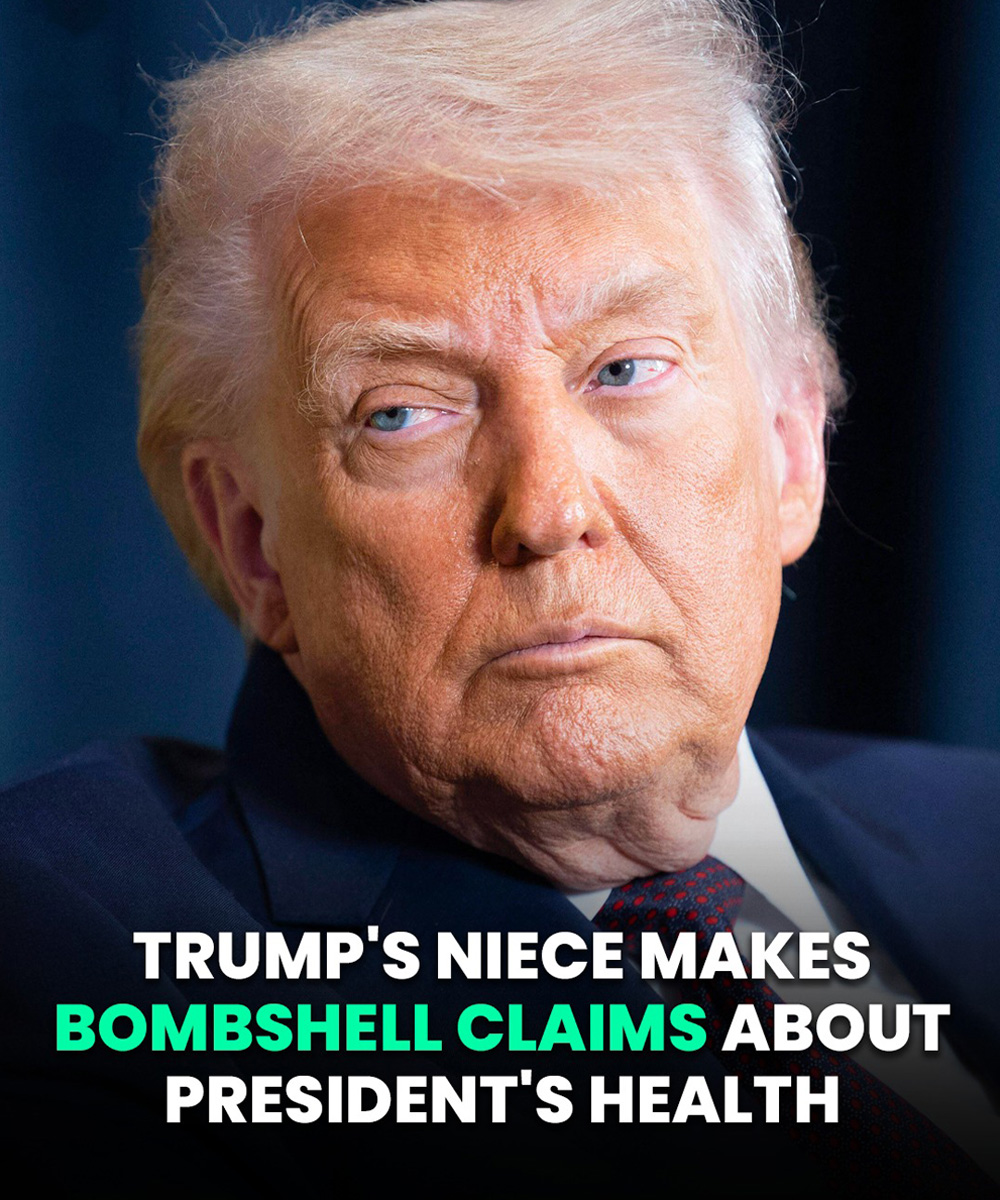
Fresh concerns surface as the president’s health becomes a talking point again
Questions about President Donald Trump’s health have reemerged, this time pushed into the spotlight by his niece, Mary Trump, and amplified by a flurry of holiday-weekend rumors. While many of these claims remain unverified, they have rekindled a long-running national conversation about how much the public should know about a president’s medical condition and how to separate real information from speculation.
For many Americans, especially those who remember earlier moments of presidential health scrutiny over the decades, the current debate can feel familiar. There have been public discussions in past eras about the well-being of leaders from both parties. What is new today is the speed at which rumors spread and the constant swirl of commentary online, sometimes leaping ahead of any confirmed facts.
Easter weekend speculation and the challenge of fast-moving rumors
Over the Easter weekend, chatter about the president’s health gained momentum after he reportedly missed several public appearances at a time when presidents are usually very visible. Within hours, social media picked up steam with claims that ranged from worries about his well-being to extreme assertions that he was at Walter Reed National Military Medical Center or even that something dire had occurred. None of those dramatic claims were verified by officials.
Some online posts even pointed to alleged traffic disruptions and restricted airspace near Walter Reed, but no official source confirmed that these were tied to any presidential medical situation. In the absence of firm information, a vacuum formed—and rumors rushed in to fill it, as they so often do in today’s 24/7 media environment.
At the same time, there were signs the president remained engaged in his duties. Routine procedures at the White House appeared to continue, including the presence of a Marine outside the West Wing. While not a guarantee of the president’s exact location, that symbol is often seen as an indicator of activity. In addition, the president continued to post about policy topics such as foreign affairs and immigration, suggesting he was still involved in the work of the office.
The much-discussed “mysterious lump” and what it might mean
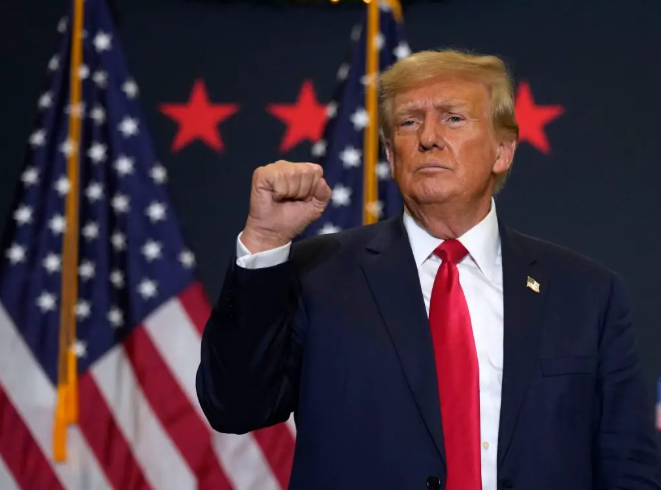
Another wave of attention followed images that seemed to show a subtle bulge under the president’s jacket. Online commentators quickly floated the idea that it might be a left ventricular assist device, a mechanical pump used to help the heart circulate blood. Medical professionals, however, generally consider that explanation unlikely. Such a device requires major surgery and a lengthy recovery, making a quiet, ongoing use without clear public signs improbable.
It is worth remembering that a suit jacket can conceal everyday items—from microphones and earpieces to folded materials. Camera angles, lighting, and movement can also create misleading impressions. While people are understandably watchful when it comes to a leader’s health, a single unusual image does not confirm a serious diagnosis.
Still, the discussion around the jacket photo underscored how closely Americans are watching the president’s physical condition and how easily a snapshot can draw big conclusions in the absence of medical details.
Bruised hands and a confirmed circulation issue
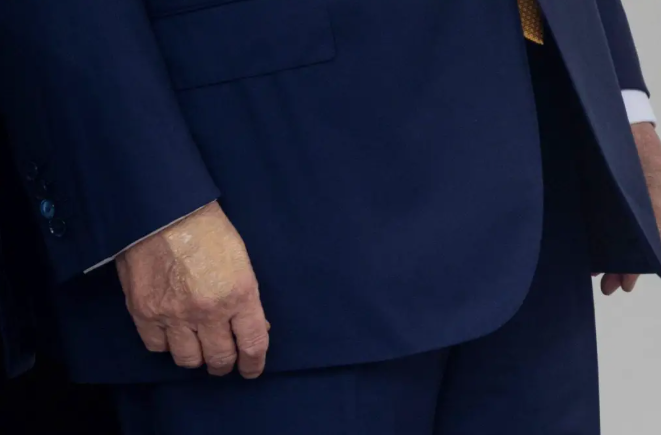
The president’s hands have also been a frequent subject of conversation after he appeared at several events with noticeable bruising. At first, the White House suggested the discoloration could be explained by his schedule and constant handshaking, especially if combined with a preventive aspirin regimen that can make bruising more likely. Aspirin’s blood-thinning effect, even at lower doses commonly used for heart health, can cause minor bumps to look more dramatic on the skin.
More recently, similar marks were seen again, but official explanations were less specific. That lack of detail allowed further questions to gain traction, as people wondered whether there might be a deeper issue at play.
On at least one point, the administration has provided a clear medical acknowledgment. Officials confirmed that the president has chronic venous insufficiency, a common circulatory condition in which the veins in the legs do not move blood back to the heart as efficiently as they should. This can cause mild swelling and discomfort, particularly after long periods of standing or sitting—familiar symptoms to many older adults. According to the White House, comprehensive testing showed no signs of deep vein thrombosis or arterial disease.
That disclosure offered a partial glimpse into the president’s health, while leaving other questions open. For the public, this mix of limited information and highly visible appearances is a recipe for ongoing speculation, especially when images or video clips highlight a bruise, a stumble, or an unusual expression.
Why presidential health talk matters beyond curiosity
Speculation about a president’s well-being is not just gossip; it carries constitutional weight. If a president dies in office, the vice president immediately becomes president. In this case, that would be Vice President JD Vance. The 25th Amendment also outlines procedures for transferring power temporarily or permanently if a president cannot fulfill the duties of the office. While such measures are rarely used, the very existence of these rules reflects how seriously the nation treats continuity of leadership.
These concerns intensify with age. The president is 79 and in his second year of a second term, a phase that often invites closer examination of energy levels, stamina, and cognitive clarity. That does not mean any particular rumor is true; rather, it explains why observers react so quickly to any incident that looks unusual. The stakes are simply very high.
What medical voices have said so far
Some of the loudest recent concerns have come from doctors who have commented on videos or public appearances. Dr. Jonathan Reiner, a cardiologist who served Vice President Dick Cheney and now contributes medical analysis to television, pointed to a clip in which the president appeared to keep his eyes closed for an extended moment at the Resolute Desk. In Dr. Reiner’s view, the behavior suggested “excessive daytime somnolence,” a clinical way of describing unusual sleepiness during the day.
He argued that repeatedly dozing off in a crowded, high-stakes setting would be out of the ordinary for anyone, let alone the commander in chief, and that it deserved a formal evaluation. He has also raised questions about the president’s reported aspirin use and has highlighted instances where the president looked unwell during remarks. To be clear, Dr. Reiner has not examined the president as a patient, and his observations are based on public footage. That context matters when weighing the certainty of any medical commentary offered from a distance.
Mary Trump’s sharper warning and the moments she cites
Mary Trump, the daughter of the president’s late brother, has long been an outspoken critic. In a recent video on her YouTube channel titled “Trump declines rapidly as behavior raises concerns,” she argued that the president’s cognitive awareness has slipped in ways that people may have overlooked. She said his stumbles, rambles, and memory lapses are often brushed off by supporters as quirks when, in her view, they should be taken as warning signs.
“We’ve all become used to the fact that every time Donald stumbles, rambles, forgets people’s names, wanders off the stage, or just pulls made-up facts out of thin air,” she said. “In other words, lies, people on the right pass it off as if these are just fun little quirks of their dear leader, and not the fact that every single day Donald Trump appears to be losing it.”
One example she mentioned involved a peculiar moment when the president was seen walking on the White House roof. Reporters asked, “Sir, why are you up on the roof?” to which he replied, “Taking a little walk.” Mary Trump pointed to the odd timing and unanswered questions surrounding that scene, arguing that it demonstrated behavior that did not square with a steady, focused leader.
She also reacted sharply to a separate development in which Transportation Secretary Sean Duffy reportedly planned to discuss an initiative as audacious as building a nuclear reactor on the moon. “Honestly, the only thing I can say at this point is what the actual f***,” she said, arguing that such proposals were out of step with practical governance and, in her view, reflective of a chaotic decision-making environment.
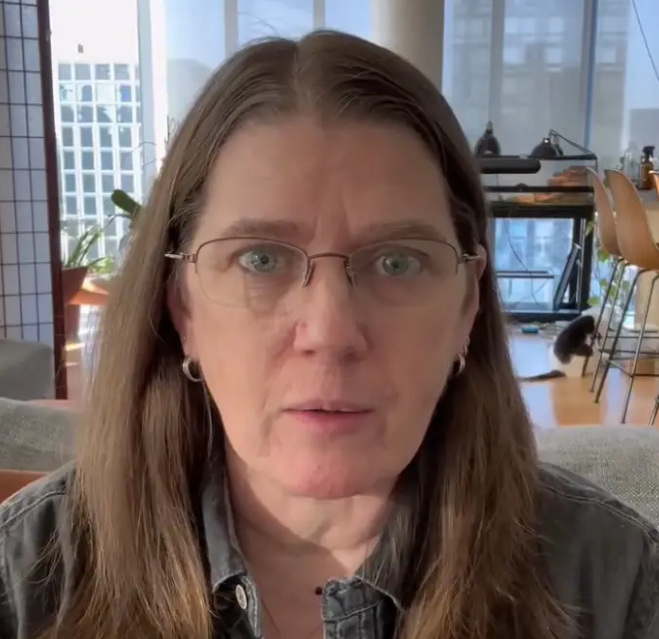
Mary Trump went further, suggesting that the president could be experiencing cognitive or psychological decline. “He is deteriorating cognitively. He is deteriorating psychologically,” she said. She floated possibilities such as frontotemporal dementia or age-related decline alongside poor physical health. She also highlighted an incident in which the president reportedly confused his Secretary of Homeland Security, Kristi Noem, with professional golfer Cristie Kerr. “Now, Donald obviously has golf on his brain constantly, but it is getting harder for him to keep things straight,” she said, adding that she sometimes wonders whether he is “even oriented to place and time.”
It is important to stress that Mary Trump is not the president’s physician and is offering her opinions, not a clinical diagnosis. Many doctors caution against diagnosing anyone from afar, whether the person is a public figure or not. Even so, her words carry weight for some audiences because of her family connection and her long-standing critique of the president’s conduct and fitness.
The White House pushes back and calls the rumors baseless
Administration officials have rejected the latest wave of claims. White House communications director Steven Cheung said the president spent the Easter weekend working continuously in the West Wing and the Oval Office. “There has never been a President who has worked harder for the American people than President Trump,” he said, adding that the holiday schedule reflected ongoing efforts on policy priorities.
More broadly, advisors dismissed the allegations as politically motivated conspiracy theories amplified by social media. They argue that brief changes in the president’s public schedule, or an unflattering camera angle, should not be turned into health scares without firm evidence.
Making sense of headlines: what the public can reasonably expect
For many readers, especially those accustomed to slower, more deliberate news cycles of the past, today’s environment can feel overwhelming. Clips fly across screens, and a single image can take on a life of its own. It helps to look for a few key markers when health questions arise.
First, official medical updates—such as summaries from the White House physician—carry more weight than rumor. While patients have a right to medical privacy, presidents have traditionally released at least high-level information about their health. In recent years, those updates have included basic exam results, medication lists, and any findings that could affect job performance. Even then, these summaries can be brief, leaving room for interpretation.
Second, common age-related issues can look dramatic on television but be quite manageable. Bruising, for example, is more noticeable on thinner skin and with medications like aspirin. Daytime fatigue can have many explanations, from sleep disorders to the simple effects of long workdays. By the same token, unusual or repeated lapses should not be ignored. That is why many Americans want regular, transparent reporting when the topic is the health of a sitting president.
Third, be cautious about extraordinary claims based on anonymous posts or single-source chatter. Historic examples show the danger of secrecy and rumor-mongering alike. The public interest is best served by accurate information, not whispers or wishful thinking.
Historical perspective and the constitutional backstop
Presidential health has always been a delicate subject. Past leaders have faced serious medical issues while in office, and the country has learned difficult lessons about what happens when information is delayed or incomplete. At the same time, the system has guardrails. The vice presidency exists in part to ensure continuity, and the 25th Amendment provides a structured process if a president must temporarily or permanently transfer power due to health. These procedures are rarely needed, but they stand ready just in case.
Knowing that such mechanisms are in place can provide reassurance during rumor cycles. Even if the stories are dramatic, the constitutional framework is designed to keep the government functioning smoothly.
Where things stand now and what to watch next
At this point, the public conversation is being driven by a mixture of official statements, visible but limited health disclosures, and louder claims from critics and commentators. The niece’s warnings, the cardiologist’s on-air analysis, the circulating photos, and the administration’s firm denials are all part of the same picture: a nation scrutinizing its leader’s well-being while trying to sort fact from speculation.
In the short term, further clarity would likely come from direct medical reports by the White House physician or from on-the-record briefings that address specific concerns. If new images or incidents arise, they will undoubtedly get attention, but lasting answers usually come from detailed, documented assessments rather than snapshots or brief video clips.
For now, the key takeaway is balance. It is reasonable to ask questions when a president appears less steady or when unexpected bruises or unusual moments surface on camera. It is equally reasonable to wait for corroborated information before drawing conclusions. Given the president’s age and the demands of the office, careful, transparent updates would go a long way toward calming the waters.
However this story develops, the fundamental reality remains the same. The public has a strong interest in the health of its leaders; the officeholder has a right to medical privacy within practical limits; and the Constitution ensures continuity if health issues become serious. Between those points lies the territory we are navigating now—anxious headlines, passionate opinions, and, one hopes, steady facts to guide the way.
Mary Trump has raised serious concerns about the president’s mental and physical state, citing moments that, in her view, show decline. A prominent cardiologist has flagged behavior on video he finds troubling and worthy of evaluation. The White House rejects these interpretations and says the president is working hard and carrying out his duties. A confirmed circulation issue in his legs has been acknowledged as common and manageable; other claims remain unverified. Until there is clear, detailed medical information, the country is left with an all-too-familiar task: paying attention, asking fair questions, and avoiding the trap of turning rumors into facts.