
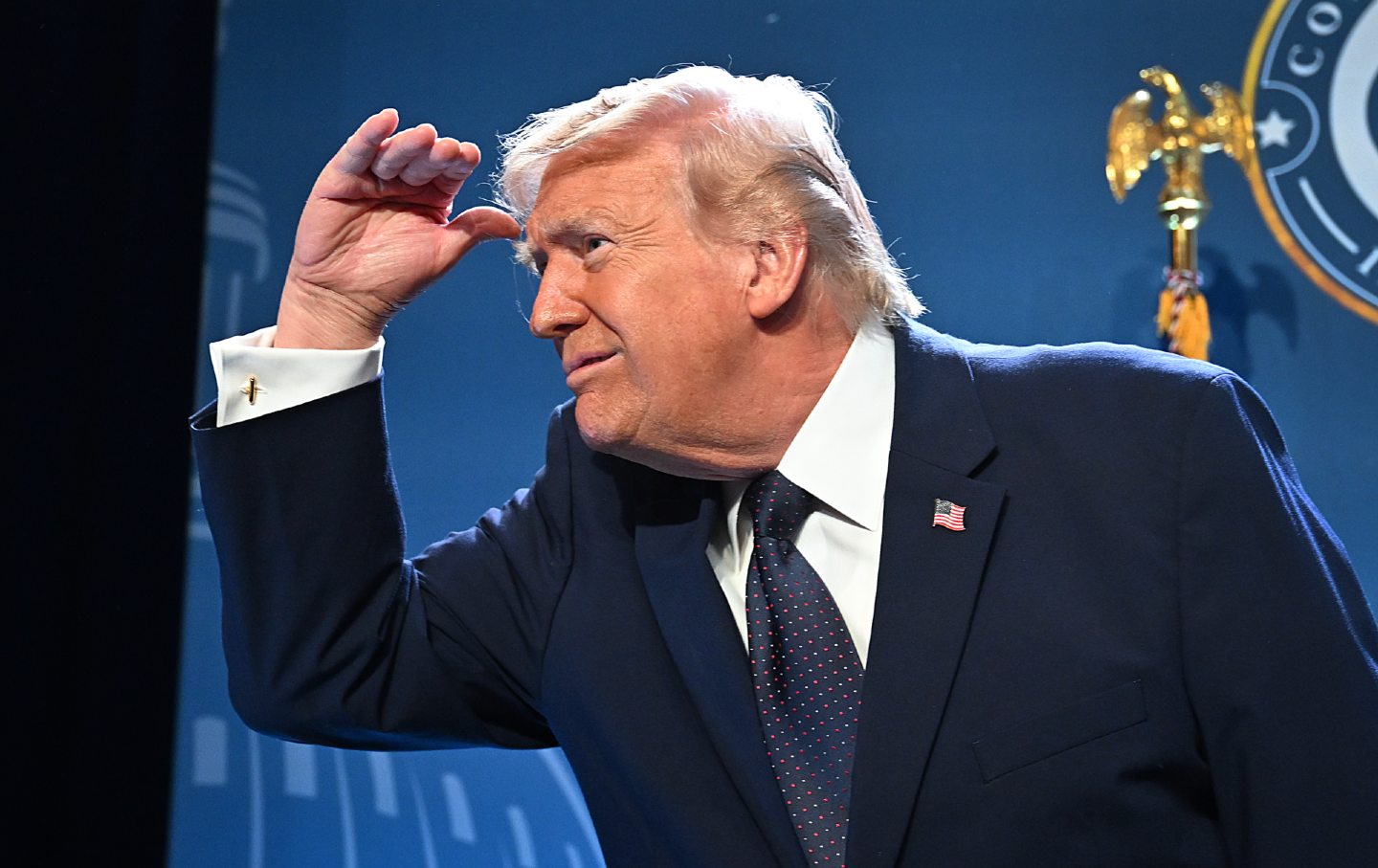
A brief, puzzling moment caught on camera has people talking
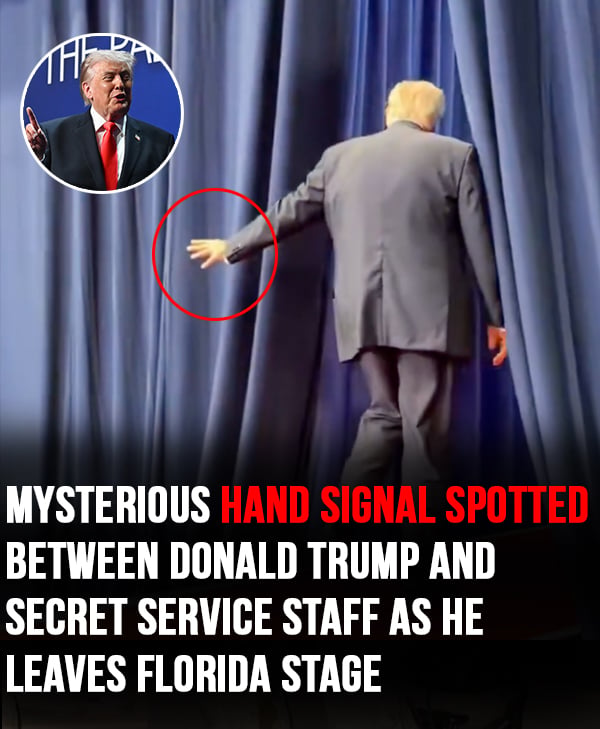
At a Florida event, a brief hand motion between Donald Trump and staff offstage sparked a wave of online curiosity. The moment was quick, but many viewers noticed it as he stepped away from the podium and prepared to leave. It looked like a small flick or tap of the fingers directed toward people waiting in the wings, and it prompted an almost immediate response from someone behind the curtain. In an age when so much is recorded and replayed in slow motion, this tiny gesture quickly became a point of conversation.
Some online observers connected the dots to the tight security that typically surrounds a high-profile appearance. The Secret Service is known to rely on discreet, nonverbal communication in crowded venues, especially when a principal is moving through a stage exit or into a secured corridor. With recent headlines mentioning a reported threat in the news cycle, it is understandable that any small signal might draw extra attention from viewers who are watching closely. The question many asked as the clip spread was simple: what exactly did that signal mean?
The event took place at The Villages, a well-known retirement community in Florida. The setting was friendly and familiar, with an audience that often turns out in large numbers. While many expected to hear about policy points such as a proposed bill and Social Security, the speech, as sometimes happens, took a detour. There was a section where Trump described taking a cognitive test and spoke in detail about the kinds of questions that are asked. He contrasted his own performance with what he believed others might do, returning to themes that long-time followers have heard before.
None of that was surprising to people who have watched his rallies and appearances over the years. What made this event stand out was not the speech itself, but the short exchange as he exited. That single moment is what ended up being shared and replayed across social media feeds, inviting both thoughtful explanations and more colorful theories.
As he stepped off the stage, the camera angle showed Trump turn slightly and make a quick motion toward staff in the wings. A person off to the side appeared to reply with a small gesture of their own, and then another hand briefly reached out from behind the curtain area. When viewers slowed the video down, they could make out the back-and-forth even more clearly. It was subtle, it was fast, and it left just enough room for people to wonder what they had seen.
Moments like this are tailor-made for the internet. A clipped ten-second video can spark hours of conversation because it feels like a glimpse behind the scenes. After all, not many of us will ever stand behind a curtain at a large event, much less walk off a stage with multiple security professionals and stage crew guiding every step. When we see something unfamiliar, it is only natural to lean in, rewind, and try to interpret it.
What we know, what we do not, and why that fuels speculation
To be clear, no official explanation has been offered for the hand motions seen in the clip. Without that, people tend to fill in the blanks. A popular social media account even posted a note asking whether anyone else had noticed the signal, which set off a chain of comments. Some viewers found the evidence intriguing. Others saw it as routine. A few comments took a more dramatic tone, with one person describing the hand that appeared briefly from behind the curtain as “creepy.” Another watcher said it looked “suspicious,” pointing to the serious expressions on the faces of people nearby. When a moment is taken out of context, it can look like almost anything.
It is helpful to remember that high-security events run on quiet coordination. When a principal is moving, there are usually multiple people involved, each with a specific role. One person might be tasked with watching the crowd. Another tracks timing. A third clears the path. A fourth may hold the curtain and signal that the route is open. These are not dramatic signals. Many are little more than a glance, a tilt of the chin, or a tap of the hand. The whole point is to communicate quickly without drawing attention or adding noise to the room.
Some viewers online offered down-to-earth explanations along these lines. They suggested the hand signals were likely standard backstage communication, the sort of thing you would see at any well-organized event with tight timing and clearly defined exits. One commenter described what might have been happening quite simply: a staff member or agent holding the curtain, indicating that the space was clear and that the principal could proceed. From that perspective, the moment appears unremarkable—easy to miss in person and notable only because the camera happened to catch it clearly.
Why security teams rely on quick, quiet signals
For those who are not used to seeing what happens behind the scenes, the movement of a security detail can look like a choreographed dance. In a way, it is. A good team avoids crowding the person they are protecting while still keeping ready to act. They do not shout unless it is necessary. They move with purpose. To keep things smooth and safe, they rely on brief signals that say, in effect, move now, hold here, route open, step left, step right, and clear. These messages can be carried by a nod, a fingertip motion, or the position of a hand on a railing or curtain.
These gestures are used for both safety and courtesy. Safety is obvious—moving a well-known figure through a crowded space brings risks, even in friendly rooms. Courtesy matters too. No one wants to turn a quiet exit into a noisy scene. By keeping communication understated, the team helps the event end gracefully. When the camera catches one of these flickers of communication, it may look mysterious. But for the people doing the job, it is simply the language of work.
Seasoned stage crews use a similar system. If you have ever volunteered at a community playhouse or helped with a school program, you may have seen some of this yourself. A stage manager may point two fingers to cue a curtain pull, tap a headset to confirm timing, or hold a hand low to signal quiet movement across a darkened stage. Much of this happens in shadows and corners, away from the audience. It is not designed to be watched; it is designed to be felt and understood by the people in the moment.
How viral clips can change what we think we saw
We live in a time when a ten-second video can take on a life of its own. A snippet is posted, shared, commented on, and sometimes slowed down and cropped so tightly that every frame looks more dramatic than it did in real time. This can make ordinary actions feel extraordinary. A raised eyebrow becomes a sign of secret plans. A hand on a curtain becomes a hidden message. The truth is often less exciting but more practical. If you have ever looked at a family photo and noticed something funny in the background, you know how easy it is to read into a frozen moment that, at the time, meant very little.
It is also true that the public rarely gets a full view of a secure exit. We might see the stage and a sliver of the wings, but we do not see the alternate routes, the waiting vehicles, or the extra eyes posted to watch the crowd. In that limited view, the smallest motion can feel loaded with meaning. Without context, our minds guess. Sometimes we guess high drama. Sometimes we guess simple order. That is human nature.
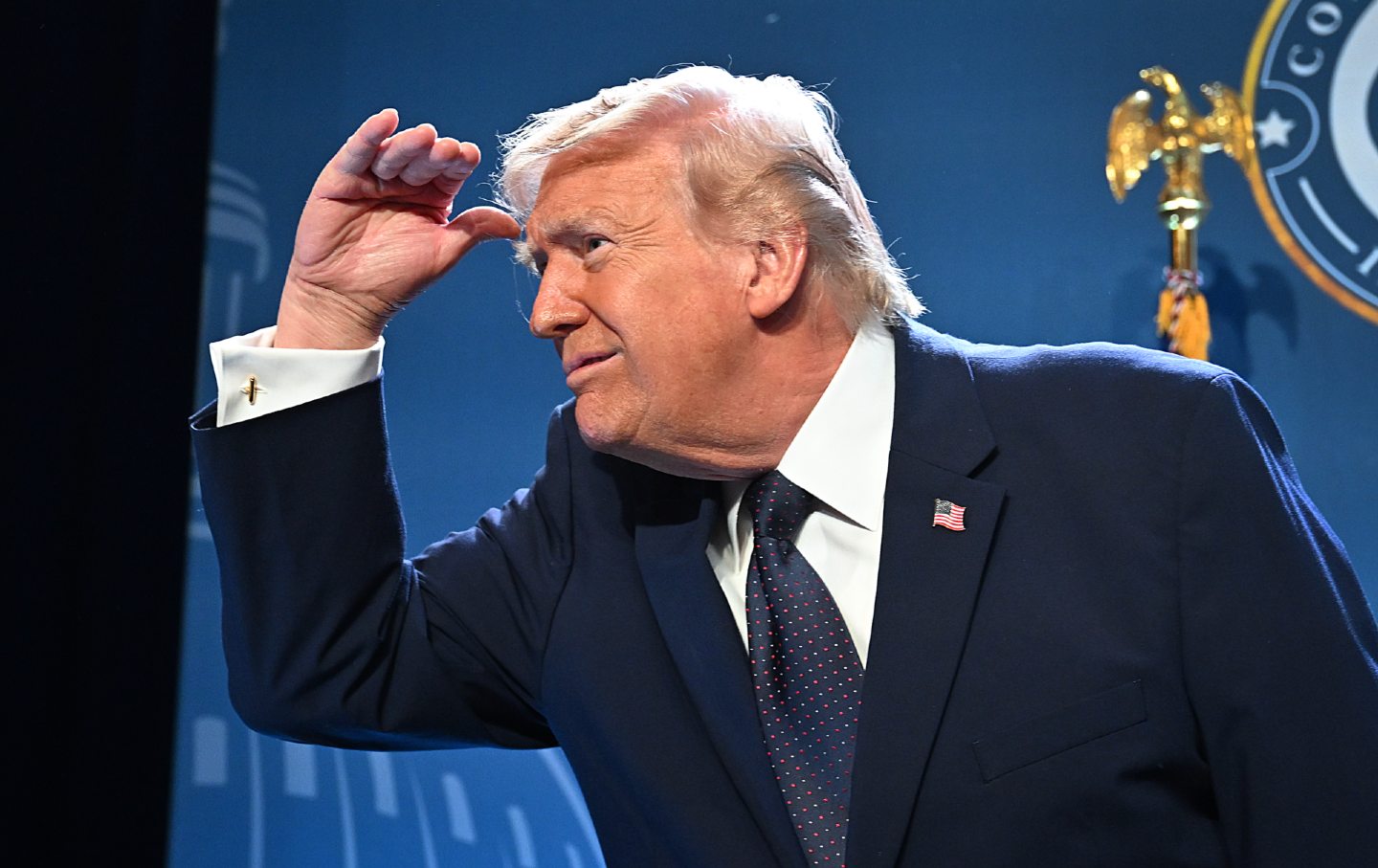
For this Florida appearance, the most down-to-earth reading fits the facts we do have. A principal finished speaking. He turned to leave. Staff and security guided him through the exit with quick, practiced signals. A camera angle happened to show more of that exchange than we usually see. The result was a wave of interest—some curious, some skeptical, some simply entertained by the minor mystery of it all.
At the same time, it is understandable that people are alert right now. When recent news includes reports of threats or attempts targeting public figures, viewers become more sensitive to anything that looks like a protective move. That heightened awareness can be a good thing when it leads to careful thinking. It can be less helpful when it pushes us toward conclusions that outpace the facts. In this case, we can say with confidence that there was signaling. We can say it happened as the stage exit was underway. Beyond that, without official details, we are left with educated guesses.
What audience members at The Villages likely experienced
For those in the room, the exit probably looked ordinary. People in the first rows might have noticed a bit of movement at the curtain, the way you might see at a concert when the singer steps back and the band walks off. Most likely, the focus was still on the words just spoken and the energy in the room. Exits are designed to be smooth and unremarkable. When you run hundreds of events, you want the beginning and the ending to feel easy, so that the audience walks away thinking about the message rather than the logistics.
Because the venue was The Villages, many attendees were experienced event-goers. They have seen book tours, concerts, town halls, and campaign stops. That kind of audience tends to recognize the rhythm of a stage program. There is the build-up, the speech, a few final waves, and then the exit. Behind the scenes, that exit is the busiest part of the program. Onstage, it looks like a gentle drift toward the wings. The difference between what the audience sees and what the crew does is the result of practice.
Online reactions ranged from playful to serious
Across the web, responses to the clip varied. Some users joked about the secret meaning, turning the gestures into light-hearted memes. Others took a more suspicious tone, reading the exchange as a sign that something unusual was happening out of sight. A handful simply pointed out what long-time event staff already know: hand signals come with the territory. One person summed it up neatly by noting that large events have layers of security and coordination, and that the signals viewers spotted were, to them, the kind you would expect whenever a high-profile figure moves from public view to a protected passageway.
There were also a few comments pointing out the practical elements visible in the slowed-down footage. The hand that reached from behind the curtain appeared to be steadying the fabric or clearing it so there would be no snag or stumble at the threshold. To someone who has worked a stage door, that is as ordinary as checking that a microphone cable is not underfoot. In a broadcast clip, however, the same action can take on an air of mystery, especially when faces are serious and the lighting is low.
Choosing the simplest explanation
When we are faced with a brief, unexplained moment like this, it is often wise to start with the straightforward answer. The simplest reading is that the quick motions were routine communication between security and staff, making sure the exit proceeded on time and without incident. That interpretation matches the setting, the timing, and what we can actually see in the footage. It also fits how these teams are trained to operate: quiet, efficient, and focused on safety.
That does not make the clip any less interesting to watch. We are naturally drawn to behind-the-scenes glimpses. They remind us that even very public events depend on countless small acts happening just out of view. A nod here, a signal there, a hand steadying a curtain—these are the signs of people doing their jobs well so that the main moment can stand in the spotlight.
What to keep in mind the next time a short clip goes viral
Short videos can be valuable, but they can also mislead. They are most useful when we pair them with context. Ask where the camera was, what came just before, and what might be happening just outside the frame. Consider the job each person in the clip is likely doing. If we bring those questions to moments like this one, we are more likely to land on reasonable conclusions. We may still not know the exact meaning of a gesture, but we can place it in the everyday flow of a live event rather than in a fog of suspicion.
It is also worth remembering that serious expressions do not always mean a serious problem. Security professionals tend to wear focused looks because they are concentrating. Stagehands do, too. When a program is live, every second counts. A neutral, businesslike face is part of keeping everything on track. In still frames and slow motion, those expressions can feel heavy. In real time, they are simply part of the job.
The bottom line on the Florida stage moment
What began as a routine exit turned into an internet talking point because cameras caught a few quick gestures between Donald Trump and staff near the curtain. The clip inspired questions and plenty of chatter, including comments from people who thought the hand appearing from behind the curtain looked eerie. Others offered measured, practical explanations, noting that such signals are a normal language among security and stage crews.
With no formal explanation offered, we are left with what we can observe. The gestures were brief. They happened right as the exit began. The responses were immediate, as you would expect when a team has rehearsed its moves. Taken together, that points toward ordinary coordination rather than anything extraordinary. It may not be as thrilling as a secret code, but it is likely much closer to the truth.
In the end, the mystery is part of the appeal. People enjoy peeking behind the curtain, literally and figuratively. A moment like this lets us glimpse the hidden machinery that helps big events look effortless. For most of us, that is enough. We can acknowledge the intrigue, appreciate the skill of the people whose hands keep the show moving, and carry on with a clearer sense of how much quiet work goes into the public moments we see.
And if another clip like this pops up tomorrow, the same gentle advice applies. Take a breath, watch it once at regular speed, and remember that backstage life has its own language. Sometimes a wave is just a wave, a nod is just a nod, and a hand on a curtain is simply there to make sure the next step is safe and smooth.



