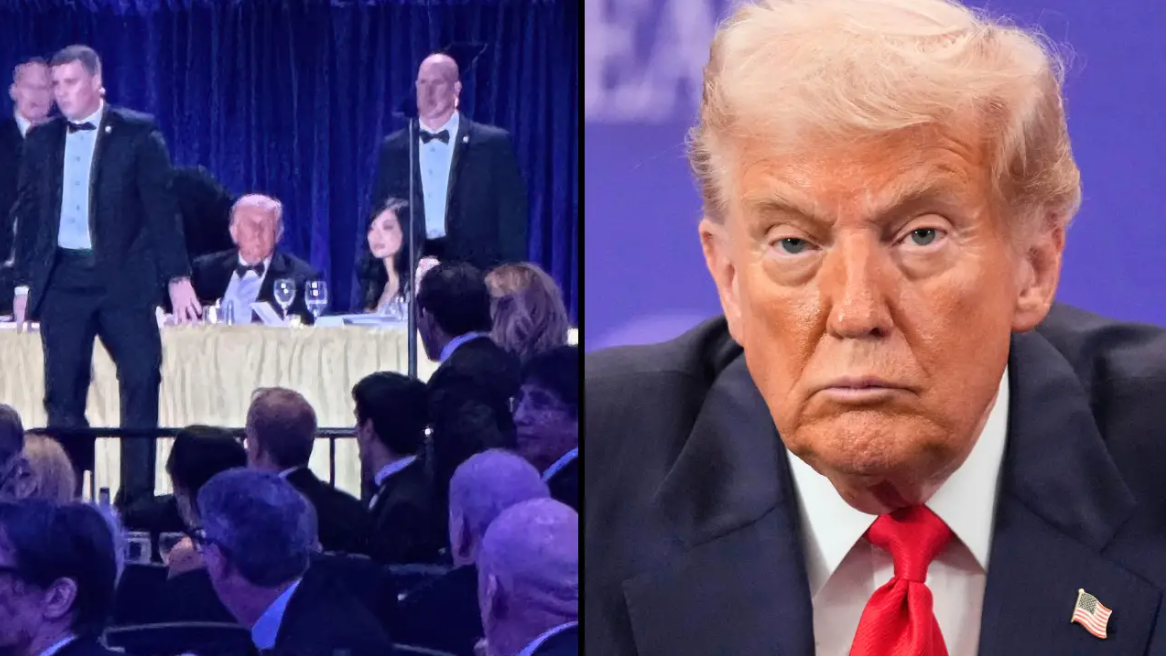
A calm evening turns chaotic at the White House Correspondents’ Dinner
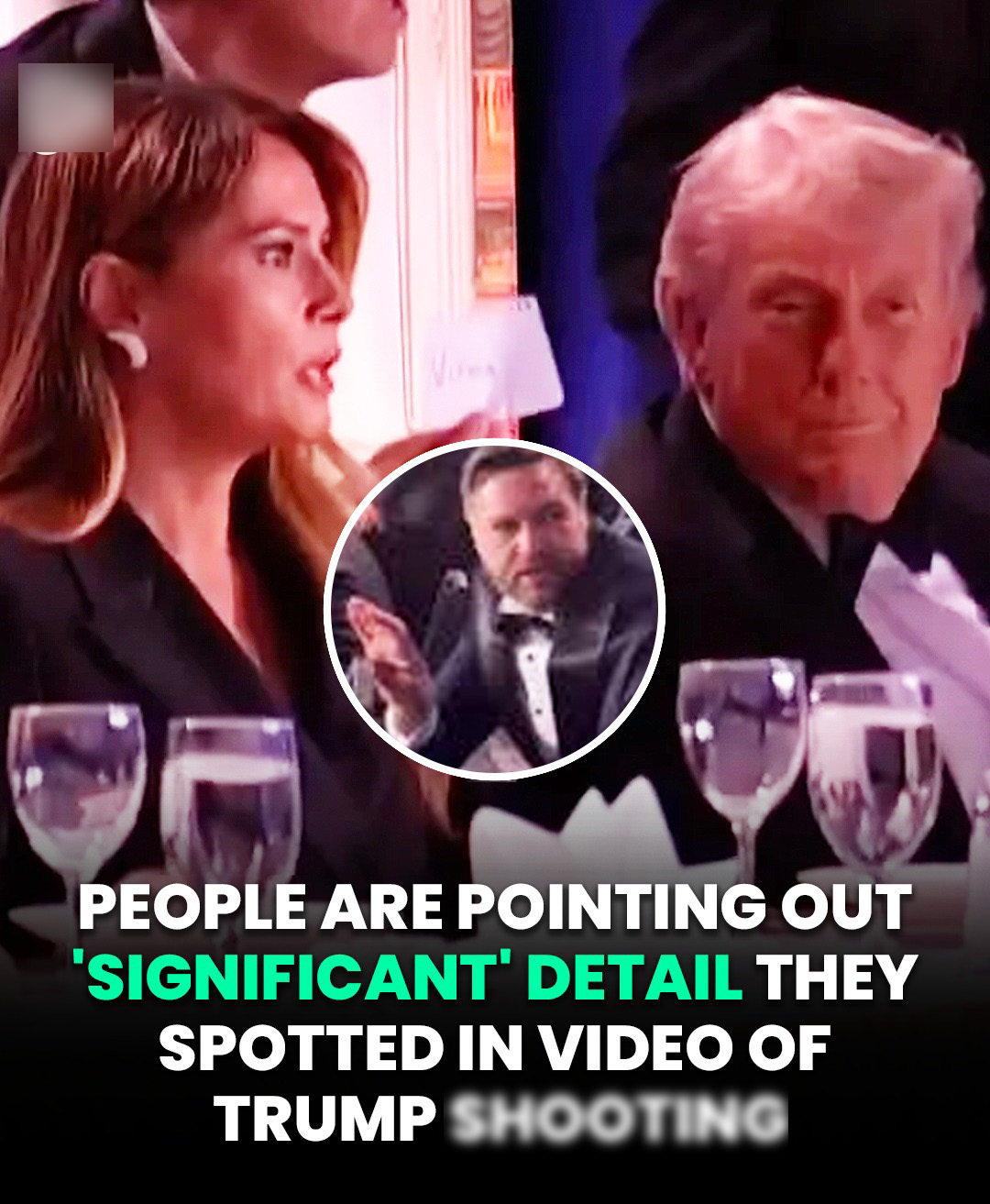
What began as a polished, black-tie evening in Washington quickly became tense and confusing. On April 25, 2026, the White House Correspondents’ Association dinner was underway at the Washington Hilton, a familiar venue for this annual event that brings together the sitting president, the vice president, cabinet officials, journalists, entertainers, and invited guests.
Inside the brightly lit ballroom, the tone was light. The dinner is known as an evening where politics and press meet with humor and ceremony. But in an instant, the routine of the night was broken by a sound that many first mistook for a dropped platter. Then the unmistakable echo of gunfire reached the room. Security shifted immediately from hospitality to protection.
On stage were President Donald Trump, Vice President JD Vance, and First Lady Melania Trump. Senior officials and notable guests filled the front tables. The sheer number of high-ranking leaders present in one place would later become a central reason why the response was scrutinized so closely.
At about 8:35 p.m. Eastern Time, authorities say a 31-year-old man, later identified as Cole Tomas Allen of Torrance, California, tried to rush through a security checkpoint in the hotel foyer. According to initial reports, he had a shotgun, a handgun, and several knives. Shots were exchanged with law enforcement. A Secret Service agent was hit in the chest, but the round was stopped by a protective vest. The agent is expected to recover.
Back inside the ballroom, uncertainty took over. Guests ducked under tables, glassware rattled and fell, and the space that moments earlier felt festive became disorienting. Agents moved quickly, forming protective barriers and scanning exits. Those near the stage saw a flurry of activity as the security details moved into practiced formations.
Performer Oz Pearlman, who had been entertaining on stage, later recounted locking eyes with the president for a brief, unforgettable moment as the situation unfolded, capturing the human side of a night that many will remember for a long time.
The suspect was subdued and taken into custody not long after the first reports of shots. But while the immediate threat ended, the images and short video clips recorded inside the room continued to spread online, where viewers replayed them frame by frame, looking for answers in the rush of movement.
What investigators say about the suspect and his motive
While the public focused on the dramatic snippets of video, investigators worked to understand what led to the attempted attack. The suspect was identified as Cole Tomas Allen, 31, with a background that surprised those who knew him. He had graduated from the California Institute of Technology in mechanical engineering and later earned a master’s degree in computer science. He had taught and tutored, and some former students described him as reserved, polite, and intelligent.
Family members and those close to him, however, reportedly told investigators that his views had grown more extreme in recent years. According to officials, they recovered a written document in his hotel room that laid out his thinking. In that text, he referred to himself as the “Friendly Federal Assassin,” named figures in the Trump administration, and expressed intense anger toward the administration. He framed his planned actions as a moral obligation, presenting them in stark, religious or ethical terms. Authorities have indicated that President Trump was likely a target and that federal charges, including attempted assassination, are expected.
For the public, details like schooling and employment can be difficult to reconcile with violence. Investigators caution that motive is rarely explained by a single factor. Instead, it is pieced together from writings, interviews, digital records, and timelines. In this case, officials have said they are looking closely at the suspect’s travel, what he brought with him, how he gained access to different parts of the hotel, and any communications he may have had leading up to the event.
Security questions that emerged after the incident
Beyond the viral clips, a larger conversation has taken shape around how such a breach could occur at a heavily attended, high-profile dinner. Reports suggest the suspect had checked into the Washington Hilton the day before the event. That simple step granted him general access as a guest, which differs from the controlled access routes used by attendees, staff, and the protectees’ teams on the evening of the dinner.
Guests and journalists later observed that identification checks and metal detector placements at some entry points did not always appear as tight as expected for a night featuring both the president and vice president. Another factor raised by security experts was that the dinner was not designated as a National Special Security Event, a status that unlocks the highest level of interagency coordination and additional federal protection.
When so many senior leaders share a single space—the president, the vice president, and, at times, other high-ranking officials—the risk profile changes. That reality prompted questions about whether protocols should have been adjusted in advance. Specialists in continuity of government planning noted that a more serious breach could have had wide implications. These discussions, while technical, are essential to improving practices for future events where the stakes are equally high.
The viral moment that drew intense attention
As short clips from inside the ballroom spread across social media, many viewers concentrated on a single sequence. In several angles, Vice President JD Vance appears to be pulled away first, while President Trump remains on or near the stage for a few additional seconds, surrounded by agents.
From one vantage point, security personnel grip the vice president’s shoulders and move him rapidly away. In contrast, the president stays put momentarily, shielded by agents who form a protective ring and deploy cover before ushering him out. The difference is only a matter of seconds, but in a crisis, seconds can feel like much more.
Replays in slow motion magnified the perception that the vice president was moved before the president. Without the full context of what was happening across the room, many filled in the gaps on their own. That is a natural reaction when watching tense moments unfold on a screen, especially when the footage is brief and the environment is chaotic.
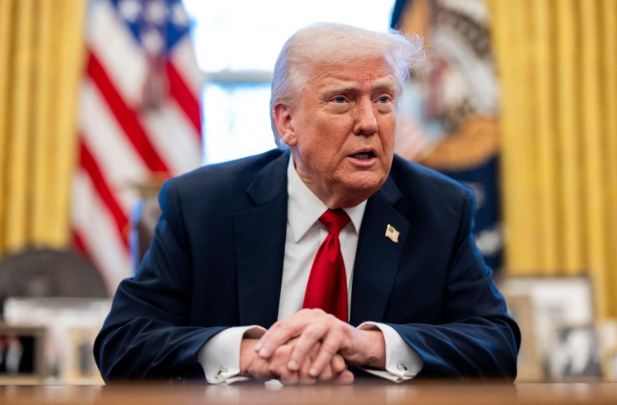
How social media reacted to the clips
Reactions poured in across platforms as people tried to make sense of that short sequence. Many viewers asked why the vice president appeared to move first. Some remarked that they expected the president to be the very first person escorted away in any emergency. Others expressed frustration or confusion, wondering whether the priorities of the security teams were out of order.
Part of the spike in attention came from the powerful contrast between what people imagine a protective operation to be and what it actually looks like under pressure. A plan can be exact on paper, but in a real event it becomes a series of instantaneous decisions influenced by the location of the threat, the exits available, and the protectees’ exact positions when the alarm sounds. For those watching online without the benefit of a full view, the most visible movement becomes the whole story, even if it is just one piece of a coordinated response.
What eyewitness accounts describe inside the room
People in the ballroom recall a confusing, fast-moving scene. Several said they heard someone shout that shots had been fired, and those closest to the exits began to move first. Others ducked behind chairs and tablecloths. Within that swirl of reactions, teams assigned to each protectee sprang into action.
Witnesses said the vice president was physically moved first as part of an immediate extraction. At nearly the same moment, agents formed a defensive ring around President Trump and the First Lady. Temporary shields and protective barriers were used on stage while the team quickly assessed the safest path. Observers noted that the president seemed to be stationary for a brief period while the agents evaluated the situation and readied the route.
The entire sequence, which can look drawn out when replayed online, happened very quickly for those in the room. A few seconds of delay can feel like a lifetime, yet that time can reflect critical protective steps, such as determining where the sound originated, confirming whether a doorway is secure, and deciding whether to move immediately or to hold in place briefly under cover.
Why the president remained on stage longer
Afterward, President Trump addressed the difference in timing himself. In an interview, he said that he hesitated because he wanted to understand what was happening. He described signaling to his security team to wait for a moment while he looked for more information. Only when it became clear that there was a real threat did he fully comply and move with the agents. According to accounts from the room, agents then instructed him and the First Lady to get down briefly before escorting them to a secure area behind the stage.
This explanation matches what several people inside observed: a short pause, followed by a precise and practiced exit. In protective operations, even a brief hesitation by a principal can change the tempo of a response. Agents are trained for that possibility and to keep focus on shielding first, moving second, if circumstances require it.
Understanding how protective details work in moments like this
For many who watched the clips, the question at the center was simple: who is moved first, and why? The answer is more nuanced than a single rule. Protective details are built around specific people and specific locations. Each protectee has a dedicated team, a planned route, and a set of contingencies. If a perceived threat erupts near one exit, the safest route for one person may be different from the safest route for another, even if they are only a few feet apart.
It is also important to remember that moving a protectee is not always the first step. If the exact location of the threat is unclear, the fastest way to reduce risk can be to surround the person with trained agents and protective equipment, wait for a split second while the situation is assessed, and then move decisively along a cleared path. That appears to be what happened on stage with the president, while the vice president’s team executed a rapid extraction based on his position and the route available to them.
These operations are designed with redundancy in mind. Multiple teams act simultaneously, and what you see from one angle may not show the full choreography. When viewers online slow down a single camera view, it can make one movement look like it was prioritized over another, even though several protective actions were happening at once.
The security debate going forward
In the days since the incident, discussions have focused on how future high-profile events should be structured, especially when the president and vice president appear together. Questions have been raised about whether some gatherings should receive the highest national security designation as a matter of course, what level of screening hotel guests should face at properties hosting major events, and how to balance public access with safety.
Security experts often caution against drawing firm conclusions before a full review is complete. After-action reports typically look at everything from how magnetometers were placed to how hotel hallways were staffed, and they consider ways to minimize risks without grinding large events to a halt. While those technical details rarely make headlines, they are the backbone of safer operations the next time around.
For attendees and viewers alike, the night was a stark reminder of how quickly circumstances can change and how much rests on training, planning, and calm decision-making under stress. It also showed the human side of these moments, from the split-second looks exchanged on stage to the quick-thinking guests who stayed low and followed instructions until it was safe to move.
What we know, and what will take time
Authorities say the suspect is in custody and facing serious federal charges. Investigators are still assembling the complete picture of his movements, his planning, and any warning signs that could inform future security practices. The agent injured during the confrontation is expected to recover thanks to body armor that did its job when it mattered most.
As for the question that fueled so much online discussion—why the vice president moved first and the president appeared to stay put—eyewitness accounts and later explanations point to a combination of location, procedure, and a brief moment of presidential hesitation. When taken together, they offer a straightforward answer that fits with how protective teams train for complex, fast-changing situations.
Events like the Correspondents’ Dinner are meant to celebrate the free press and the peaceful exchange of ideas in a setting where political rivals can share a laugh. That mission remains important. Ensuring that such nights can proceed safely is just as important, and it is clear that the lessons from this incident will be studied closely. For many, the lasting image will not be the confusion, but the steady professionalism of the agents and staff who moved quickly to shield lives when seconds mattered.
With time, more details will become public through official briefings and reports. Until then, the clearest picture comes from those who were there: a sudden shock, a wave of protective action, and a coordinated effort to restore safety in a room that had been, moments earlier, a symbol of Washington’s familiar ritual.