
Why some aides limited the president’s role during a high‑stakes rescue
According to multiple published reports, including detailed accounts attributed to senior administration officials, President Donald Trump was kept out of certain Situation Room discussions during a tense rescue mission in Iran. The concern, as described by those sources, was that his impatience might disrupt a delicate operation to recover a missing American service member.
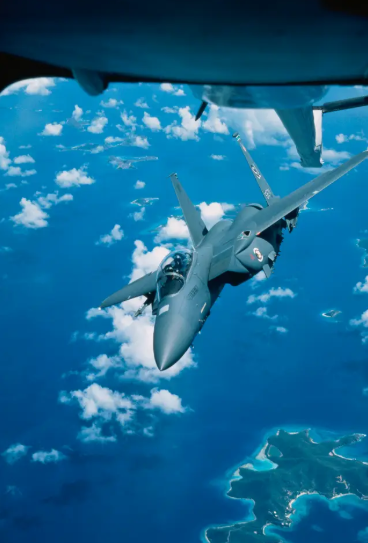
The mission unfolded after an American F-15E Strike Eagle went down on April 3 over rugged terrain in Iran’s Zagros Mountains. The two-person crew—made up of a pilot and a Weapon Systems Officer—ejected. Rescue forces quickly reached the pilot and brought him home within hours. The Weapon Systems Officer, however, was unaccounted for, and Iranian forces were believed to be moving into the area.
As the search intensified, reports say the president became deeply agitated. Citing anonymous senior officials, the Wall Street Journal reported that he raised his voice at aides for an extended period after learning that the second airman might be at risk of capture.
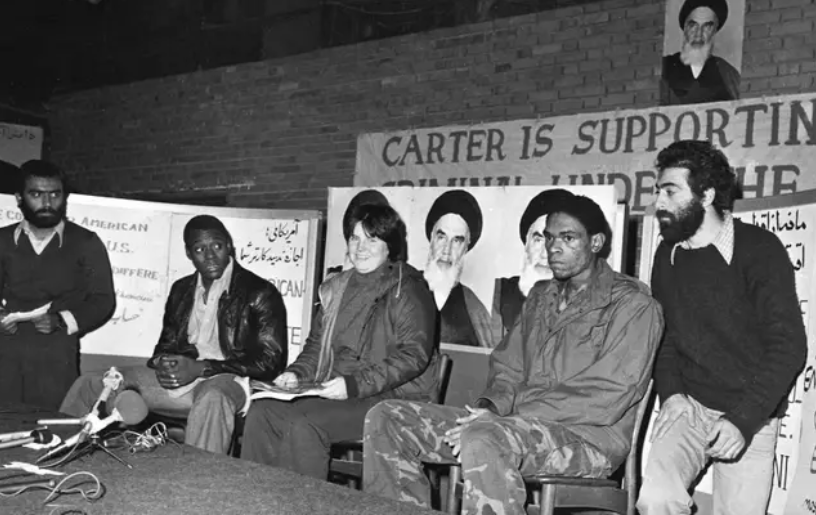
People familiar with the Situation Room deliberations told reporters that a painful history appeared to weigh heavily on the president’s mind. Many Americans remember the 1979 Iran hostage crisis, when U.S. diplomats were seized and held for 444 days. That ordeal reshaped U.S. politics and haunted the presidency of Jimmy Carter. Those memories, some aides believed, heightened fears about how a new hostage scenario could unfold.
In those same accounts, the president is quoted referencing that history, reportedly saying that what happened to President Carter—combined with the infamous helicopter mishap during the attempted rescue—contributed to an election loss. He was quoted as calling the situation “a mess.”
According to these reports, the president initially pressed for a forceful option, including a ground incursion to retrieve the missing airman. Such a move would have placed American troops on Iranian soil for the first time since the revolution and the subsequent seizure of the U.S. Embassy. Senior officials around the president, however, are said to have urged caution, warning that an aggressive response could complicate or even endanger the rescue in progress.
Over the next 24 hours, those officials—described in reports as including Chief of Staff Susie Wiles and Vice President JD Vance—took the lead in the Situation Room to manage the rapid flow of updates and decisions required for the rescue mission on April 4.
During that period, the president, while still the ultimate authority, was reportedly briefed at key points rather than looped into the minute-by-minute coordination. One person familiar with the process is quoted as saying aides believed the president’s impatience would not be helpful while operators and analysts worked through the most sensitive stages.
At the same time, accounts describe a leader who was intensely worried. Reports say President Trump stayed up late into the night, waiting for word that the missing Weapon Systems Officer had been located. Around 2 a.m., the CIA reportedly identified the airman’s position using an advanced, undisclosed tool. With that news, the president finally turned in for the night, those sources say.
By the following day, after what was described as a complex, large-scale operation involving more than 150 aircraft, the missing airman was successfully brought out from a remote mountain location. Even with the welcome news, the president’s anger at Iran’s leadership did not fade. In a public message the next day, he issued one of the more profane warnings ever delivered by a U.S. president, telling Iran’s leaders: “Open the F***in’ Strait, you crazy b*stards, or you’ll be living in Hell – JUST WATCH! Praise be to Allah.”
Understanding what was at stake during the rescue
For those who may not be familiar with the F-15E Strike Eagle, it is a two-seat fighter aircraft. The pilot flies the jet, while the Weapon Systems Officer—often called the WSO—manages navigation, sensors, radar, and weapons targeting. In a rapidly changing combat environment, the two work as a tight team. If a jet takes damage or is forced down, the crew might eject in rough terrain. Recovering them requires swift action, precise intelligence, and a lot of coordination.
The Zagros Mountains are notoriously challenging. The ridgelines are steep, the valleys are narrow, and the weather can shift quickly. In such places, radio and satellite signals can be tricky, and helicopters can face unpredictable winds and downdrafts. When potential adversaries are nearby, every movement must be timed to avoid exposure. That is part of why rescue operations, known in the military as combat search and rescue, demand patience and discipline. A single rash decision can turn a rescue into a firefight, risking not just the life of the person in need but also the lives of those coming to help.
Reports described the rescue of the missing WSO as a vast undertaking. More than 150 aircraft were said to be involved. That kind of effort often includes surveillance planes to find targets and threats, tankers to refuel aircraft in the air, electronic warfare support to confuse enemy sensors, and strike aircraft to deter or defeat any units that get too close. Helicopters or tilt-rotor aircraft might perform the actual pickup, while drones keep watch from above. Dozens of teams across multiple time zones track weather, coordinate airspace, and ensure that if something changes suddenly, the plan can adapt.
In the middle of all that, senior leaders must weigh options and decide how much risk to accept. The president is the commander in chief, but the people in the Situation Room manage the flow of information and tee up recommendations. A calm and steady environment is essential. The more intense the pressure, the greater the need for clarity. When reports say aides limited the president’s direct participation in the minute-by-minute calls, it reflects a belief—whether one agrees with it or not—that keeping the room steady would improve the odds of success.
How history can shape decisions in the moment
The shadow of 1979 looms large in any U.S.–Iran crisis. The hostage crisis left scars on both nations and indelibly marked American politics. The failed 1980 rescue attempt, known as Operation Eagle Claw, ended with a deadly helicopter accident at a remote desert staging area. For every president since, the prospect of Americans being captured in Iran has been a nightmare scenario, not only for humanitarian reasons but also because of the political and strategic consequences.
That context helps explain why emotions can run hot. The reports suggest President Trump feared that if Iran captured and paraded a U.S. airman, the consequences would be severe—for the individual, for their family, for public morale, and for America’s standing. Some supporters might say that the president’s instinct to take decisive action is what leadership looks like. Critics might counter that bold instincts must be channeled through careful planning in a high-risk environment. In practice, the national security system tries to harness both—the energy to act and the discipline to act wisely.
It is also worth remembering that presidents are not always looped into every tactical detail in real time, especially during fast-moving rescue missions. The Situation Room process is designed to get decisions made without letting second-to-second swings pull leaders into distractions. Briefing the president at “meaningful moments,” as described in the reports, can be a way to ensure that when they are brought in, the information is clear, the options are sharpened, and the risks are understood.
What we know, what is reported, and what remains private
Much of what has been shared about the internal dynamics of this rescue comes from unnamed officials speaking to the press. As is often the case in sensitive national security matters, there has been no comprehensive, on-the-record confirmation from either the White House or the Pentagon about these specific accounts. That does not make the reports untrue, but it is a reminder to treat the details with the care they deserve. The broad outline—a downed jet, an urgent search for a missing crew member, and a complex operation to bring them home—has been widely acknowledged. The finer points of who said what, when doors were open or closed, and how sharp the exchanges became are inevitably harder to verify.
What is beyond dispute is the human element. An airman was alone in hostile terrain, relying on training, survival gear, and the hope that colleagues would find a way to reach him in time. Families back home were waiting by the phone, hearts in their throats, hoping that each call would bring good news. And a great many Americans, whether following closely or catching headlines at the end of the day, were reminded that military service can turn on a moment—one instant of danger, and then a race against time.
Why patience can matter when minutes feel like hours
For anyone who has led a team through a crisis—whether in a business, a hospital, a school, or a home—the instinct to take control can be powerful. Yet the very intensity that drives us to act can also cloud judgment if not balanced by process. Military rescue operations live in that balance. Leaders set intent and boundaries, experts manage execution, and everyone protects the quiet space needed for operators to do their jobs.
That appears to be the spirit behind the decision, as reported, to shield the Situation Room from impatience during the most sensitive phases. It is not about sidelining a president. It is about creating the conditions under which professionals can think clearly, pass crisp updates, and adjust without noise. At key moments—when a choice must be made that only the president can make—he is brought into the loop, briefed, and asked to decide.
In this case, reports say the CIA’s breakthrough around 2 a.m. provided the crucial turning point. The details of the “advanced piece of agency technology” referenced by sources were not disclosed, and they likely will not be. What matters is that the intelligence was good enough to guide rescuers to the right place at the right time. From there, aviation crews, special operators, analysts, and support personnel executed a plan that, by all accounts, was both large in scale and precise in action.
After the rescue, a fiery public message
When the missing airman was safely out, tension did not vanish. The president’s public statement the next day captured just how high emotions still ran. His warning to Iran’s leaders, delivered with unmistakable profanity, made headlines in its own right. Some saw it as a show of strength after a near miss. Others worried it could inflame a dangerous situation. Either way, it underscored how closely he had followed the rescue and how strongly he felt about preventing any repeat.
The Strait referenced in his message is vital to global energy flows and a recurring flashpoint in U.S.–Iran tensions. Threats to close it or limit passage can send ripples far beyond the region. That helps explain the sharpness of the president’s tone and the urgency behind it. In moments when the stakes are that high, words are chosen to send signals—to allies, to adversaries, and to the American public.
Strip away the noise, and a simple truth remains: in dangerous places, Americans in uniform count on one another to come home. That means pilots tracking the weather and fuel down to the last drop. It means intelligence officers piecing together fragments into a map that points the way. It means leaders, from the Situation Room to the flight line, respecting the clock but never letting it rush them into a mistake.
According to the reports, tensions ran high at the top during this rescue. That is not unusual. Presidents are human, and fear for fellow Americans is a powerful thing. What matters is the outcome. The pilot was recovered quickly. The Weapon Systems Officer, isolated in the mountains, was located and extracted. The team—spread across continents and services—did its job. And for one family in particular, the longest night ended with the phone call they had prayed to hear.
While the behind-the-scenes accounts will be debated, the essential meaning of the episode is clear. Preparation, professionalism, and a measure of calm under pressure made the difference. History weighed on the room. Emotions ran hot. Yet in the end, the plan held. And an American came home.



