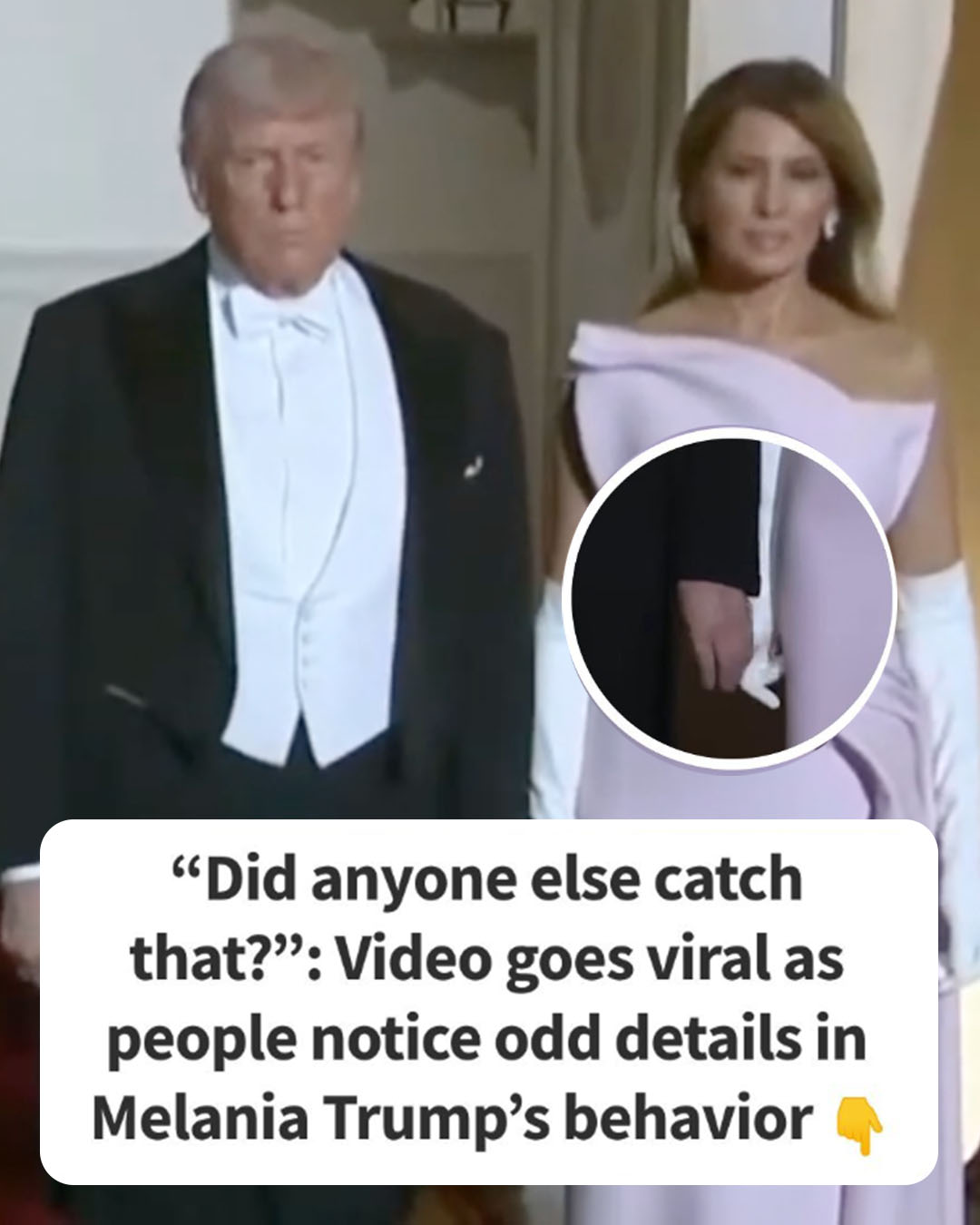
As Washington hosted a White House State Dinner for King Charles and Queen Camilla, a brief exchange between President Donald Trump and First Lady Melania Trump drew outsized attention online. In a short video recorded just before the dinner, some viewers believe Melania gently moved her hand away when Donald reached for it. That tiny moment, lasting only a heartbeat, quickly spread across social media and became the evening’s most-discussed clip for many people.
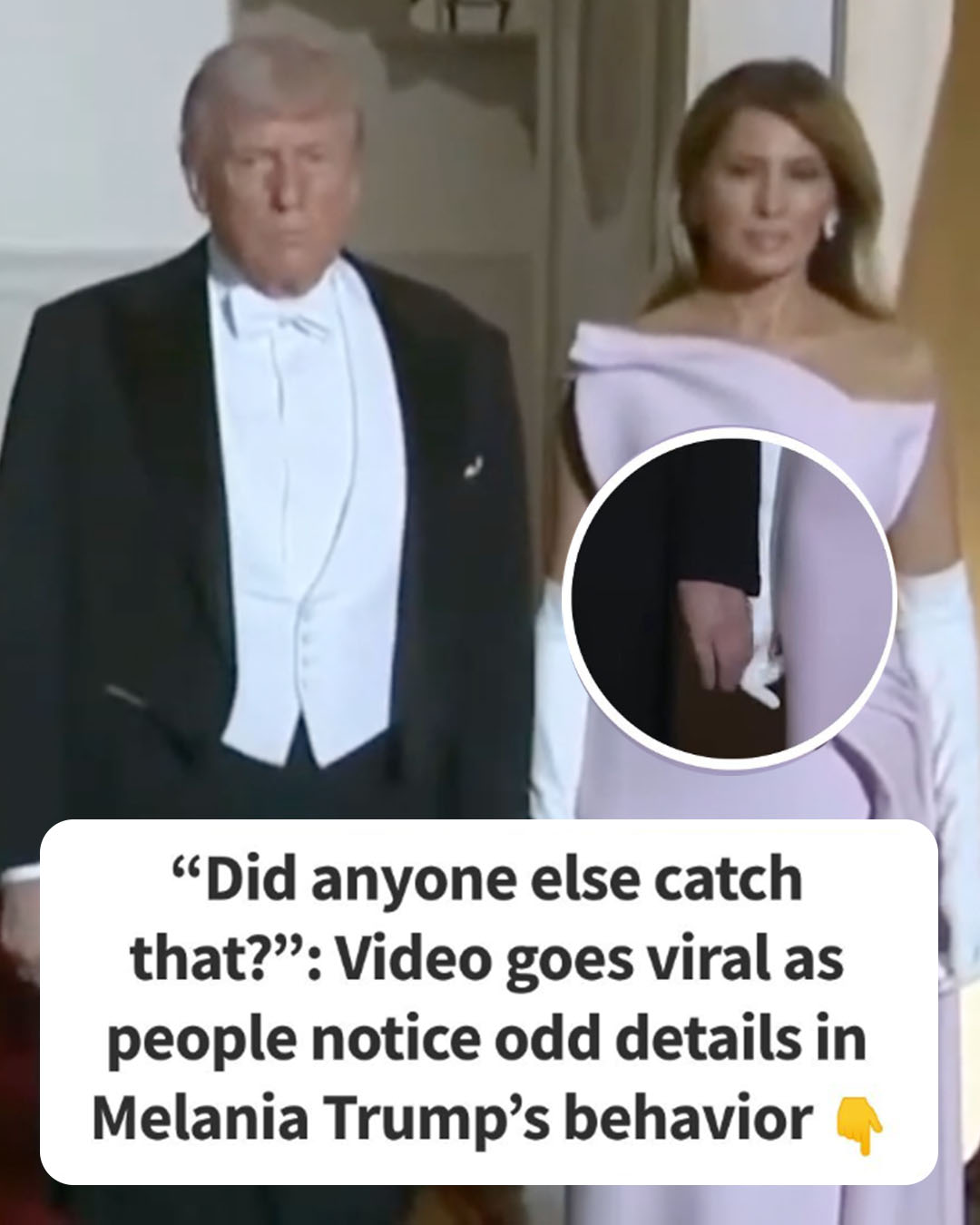
The Trumps had already appeared at several events during the royal visit, which culminated in the formal dinner. A State Dinner is the most ceremonial reception the United States offers to an allied nation’s head of state, blending pageantry with diplomacy. Guests from politics, culture, and business gather in carefully arranged rooms, cameras flash from every angle, and every gesture is recorded. It is precisely in this kind of setting that even an ordinary movement can look extraordinary once replayed in slow motion.
In the video, filmed just before the dinner, the couple stands side by side for photographs. President Trump briefly reaches toward Melania’s hand. Some viewers say she appears to ease her hand back toward her side rather than taking his. Others feel she simply adjusted her posture, as many people do when facing a wall of cameras and bright lights. The moment is tiny, but it has sparked strong opinions. You can watch the clip yourself near the bottom of this article.
What happened in that split second is open to interpretation, which is why it has attracted so much debate. Online commentators slowed the clip, paused it frame by frame, and drew very different conclusions. Some think it hints at private feelings made public. Others insist it is the sort of routine, inconsequential movement that’s magnified only because the setting is formal and the individuals are famous.
Melania Trump’s behavior towards Donald sparks heated debate
Responses to the video covered a wide range. A few people claimed they saw a quick flinch from the president. Others said they noticed Melania standing in a classic formal pose, hands placed neatly at her sides, and argued she was simply following etiquette. Some observers asked if anyone else noticed the exchange, while others dismissed the moment as normal and not worth scrutiny.
It is worth remembering that every major public event is a choreography of tiny decisions, most of which the audience never sees. Where to stand, where to look, when to pause for a photograph, how to move along a receiving line, and whether to keep hands ready for guests are all practical choices. Change any of those variables, and a gesture can look entirely different. That is one reason brief clips can lead to big misunderstandings.
Another factor is the environment itself. Under bright lights, people often shift their weight, straighten their posture, or adjust their clothing. At a formal gathering, a first lady may also be conscious of posture, poise, and the demands of professional photographers, who typically prefer open body lines rather than entwined hands that can look awkward in still photos. These ordinary considerations can read as meaningful signals when, in truth, they may be nothing more than routine movements.
What etiquette and protocol say about hand-holding at state events
Formal protocol at high-level events is guided by long-standing custom rather than strict rules. In receiving lines or photo calls, hosts often keep their hands free for greeting guests, acknowledging the press, and following cues from event staff. This poised stance also prevents confusion about whether a handshake is being offered to a particular guest and helps maintain a clean, balanced photograph when many cameras are snapping at once.
Fashion can play a part too. Melania Trump wore white gloves with a pale-pink haute couture ensemble for the State Dinner. Gloves, while elegant, change the feel of touch and the ease of gripping another hand. They can also prompt a more statuesque pose, especially in tightly choreographed settings where fabric, fit, and silhouette are intended to be showcased. In that context, resting hands at the sides can be both practical and stylistically intentional.
Couples at formal occasions, even those who are affectionate, often reduce personal gestures during official moments. This is not unusual. Many first couples through the decades have adopted a composed posture for ceremonial photos, then returned to a more relaxed style away from the cameras. A still photograph may not tell you when those shifts happen, which is why quick clips can be misleading.
The outfit that drew comparisons to Jackie Kennedy
Melania Trump’s soft pink Christian Dior look, paired with white gloves, immediately invited comparisons to a famous Jacqueline Kennedy ensemble worn during a 1962 White House occasion. The parallel caught the eye of viewers who appreciate classic American first lady style. The restrained color palette, clean lines, and polished accessories recall a period when fashion favored elegance, structure, and understatement in the nation’s most formal rooms.
For many people who remember Jackie Kennedy’s influence, the echo felt intentional, or at least fitting for a State Dinner. The look communicates formality without harshness and photographs beautifully under bright lights. Whether or not the resemblance was planned, the outfit suited the gravity of the evening and the historic nature of a visiting monarch’s formal dinner in Washington. It also served as a reminder that fashion, like ceremony, helps set the tone for diplomacy.
From a practical angle, gloves and couture often encourage controlled movements. Designers cut garments to lie smoothly, so wearers avoid tugging or shifting once cameras are rolling. If you notice a first lady holding a pose for longer than usual, it may be because her stylist and the official photographer both asked her to do so. Small choices like this, far from hinting at private tensions, usually come down to what looks best for the event and the images that will represent it for years to come.
Why short viral clips spark big reactions
We live in a world where tiny moments are magnified by technology. A two-second clip can be rewound, slowed down, cropped, and watched hundreds of times. When a video of a public figure goes viral, people often project their own hopes or frustrations onto it. This is natural. But it means that clips without full context can say more about the audience than about the people on camera.
Psychologists call this tendency confirmation bias: we often see what we expect to see. Supporters interpret a glance one way, critics another. Add the adrenaline of breaking news and the energy of social media, and a routine movement can become a public litmus test. The most helpful approach is the simplest one. Watch the video, note what you see, and remember that a half-second motion at a formal event rarely tells a complete story about a marriage or a person.
Another reason these moments swell is that they are emotionally easy to grasp. In a busy news cycle filled with policy discussions and diplomatic detail, a hand movement feels straightforward. It gives people something to talk about that does not require specialized knowledge. That accessibility can be good because it draws attention to civic life. It can also be misleading when a tiny moment is treated as proof of something larger than it is.
A closer look at the exact moment
Here is what the clip appears to show to many viewers. The couple stands in place for photos at a formal entrance. President Trump shifts and reaches slightly toward Melania’s hand. In the same instant, she aligns her posture, with her hands settling near her sides. Because the movement is so brief, it is easy to interpret it as either a subtle step back from hand-holding or a standard re-centering for the camera. Neither interpretation can be confirmed from the short video alone.
If you plan to watch the clip, it may help to look at the whole scene, not just the hands. Notice the lights, the distance to the doorway, and the presence of photographers who often call out to prompt tiny adjustments. Consider how many moving parts exist in an entrance like this: security, staff, press, and guests. With so many factors in play, what feels like an emotionally charged exchange may also be part of the rhythm of a very structured evening.
Ultimately, you do not need a frame-by-frame breakdown to form a reasonable view. Ask a simple question as you watch: does this look like a clear, deliberate refusal, or does it look like a routine posture at a high-profile event? Many viewers land in different places on that question. That is fine. What matters most is acknowledging that short clips have limits and that a considerate conversation beats a heated argument every time.
The royal visit and the purpose of a State Dinner
The dinner itself was the ceremonial capstone of King Charles and Queen Camilla’s Washington visit. State Dinners exist to honor visiting heads of state and reinforce important alliances. They are steeped in tradition, from the place cards to the music, yet they are also practical tools of diplomacy. Leaders meet guests, exchange brief remarks, and signal goodwill in a setting that balances national pride with international friendship.
These occasions are less about personal displays and more about representing institutions. That is why the visual language of the night matters so much. The room layout, the attire, the choreography, and yes, even hand placement, are part of communicating respect and order. Seen from this vantage point, Melania’s composed stance is completely consistent with the requirements of a high-ceremony evening.
Looking back across decades of State Dinners, you will notice a recurring theme. First ladies and presidents often adopt a polished, almost statuesque demeanor during arrivals and photos, then shift into a more relaxed style during private moments. Photographs capture the formal part; guests recall the friendly part. The short clip in question belongs to the formal portion, which helps explain why it may look more restrained than everyday interactions.
Fashion, body language, and the images that endure
Fashion and body language are both forms of communication, but neither is a perfect translation of intent. A dress can nod to history without making a political statement. A hand movement can be practical rather than emotional. When cameras capture a single instant, we often treat that instant as a symbol. The wiser view, especially for events as layered as a State Dinner, is to allow for multiple explanations and to be comfortable not knowing everything a motion might mean.
What we can say is simple. The moment was brief, it got people talking, and it reminded many viewers of classic first lady style. Whether you saw subtle distance or simple etiquette, the larger story of the evening was about ceremony and alliance. The music played, the toasts were made, and the pictures now join the long visual record of statecraft in Washington.
One small gesture, seen out of context, rarely defines a relationship or a presidency. This clip became popular because it is easy to share and easy to debate. If you find it interesting, watch it below and decide what you think. If you care more about the bigger picture, remember that a State Dinner is built to honor a visiting monarch and to showcase American hospitality. In that setting, composed posture and carefully chosen fashion are not just details; they are part of the message.
However you read the moment, a friendly conversation is far more useful than rushed judgment. And as with any viral video, the most helpful approach is patience, perspective, and a willingness to see more than one side. The evening offered elegance, tradition, and a glimpse into the rituals that support diplomacy. The brief exchange between the president and first lady is simply one small thread in a much larger tapestry.