
The White House addresses weekend rumors about President Donald Trump
Over the weekend, a wave of rumors about President Donald Trump swept across social media, growing from scattered posts into a full-blown online frenzy. The claims ranged from worries about his health to dramatic, unverified assertions that he had died or was being treated in secret at a military hospital. By Monday, the White House issued a clear update intended to settle the speculation and reassure the public that the president had been working throughout the holiday period.
In today’s fast-moving online world, stories can spread in minutes, especially when they involve a highly visible public figure. That dynamic was on full display as screenshots, secondhand accounts, and heated commentary began ricocheting across platforms. Some messages claimed insider medical knowledge, while others tried to connect dots using the president’s public schedule. A few posts went so far as to insist that something dire had occurred and that the truth was being hidden.
One especially shared message read, “Something is wrong with the president and the White House is keeping it from us.” Another breathless claim insisted, “Every doctor is messaging each other that Donald Trump is dead.” None of these assertions came with verifiable evidence, yet they traveled widely, illustrating how quickly a rumor can turn into a trending narrative when emotions are high and facts are scarce.
Long-running attention on the president’s health
The president’s health has been a topic of public conversation for years, and this is not the first time questions have flared. At 79, Donald Trump is the oldest elected president in United States history, and with that milestone comes ongoing scrutiny. Everything from how he walks to the tone of his voice in public remarks has been dissected by commentators, supporters, and critics alike.
Small visual details have occasionally fueled larger debates. In past months, photos showing discoloration on his hands or temporary redness on his skin drew outsized attention online. The White House addressed these observations directly, attributing hand discoloration to aspirin use and describing a noticeable neck irritation earlier in the year as a normal reaction to a prescribed topical treatment. These explanations were offered to calm concerns, though, as often happens, some observers remained unconvinced.
The president himself has repeatedly downplayed any worries. After a visit to Walter Reed National Military Medical Center in 2025, he told reporters, “I got an MRI. It was perfect.” His physician later clarified that the imaging was a precautionary CT scan meant to rule out any cardiovascular issues. Statements like these are designed to put health questions to rest, but in the age of instant commentary and speculation, rumors can linger even after official clarifications are made.
For those watching closely, this pattern may feel familiar: a brief absence or a stray image invites conjecture, questions become headlines, and even clear statements do not fully quiet the chatter. That cycle set the stage for what unfolded over the Easter weekend.
Easter weekend pause lights the fuse
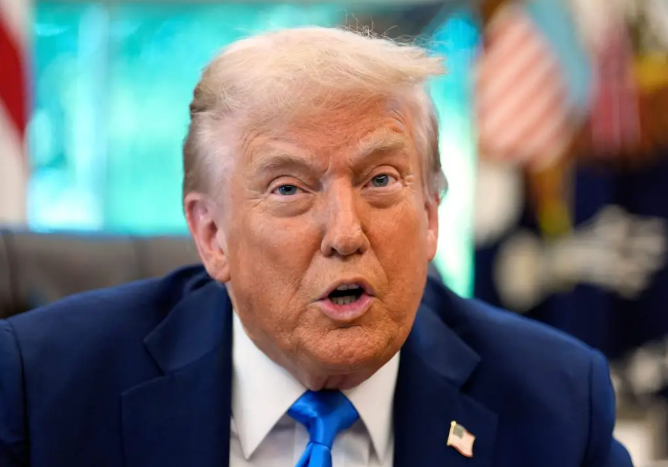
The latest storm of speculation began when the president’s Easter weekend schedule drew attention. It is common for presidents to make holiday appearances or offer remarks on national occasions, and so the announcement that Trump would not attend traditional Easter events or appear publicly on that day quickly raised eyebrows. Within hours, social media timelines filled with conjecture about what the lack of public events might mean.
Some unverified reports claimed there were road closures or flight restrictions near Walter Reed National Military Medical Center in Bethesda, Maryland. These claims were presented without confirmation, but they nevertheless fed a growing sense among some users that something unusual might be unfolding behind the scenes. At the same time, the absence of live footage or fresh on-camera remarks created a vacuum that rumors eagerly rushed to fill.
There were, however, signs that undercut the more sensational claims. Reporters monitoring the White House noted that standard protocols appeared unchanged. Observers pointed out the familiar sight of a Marine sentry stationed outside the West Wing—an indicator typically suggesting the president is inside and working. Meanwhile, the president’s social media accounts remained active, with posts about policy, foreign affairs, and immigration continuing as normal. These actions indicated ongoing engagement with official duties rather than a crisis being concealed.
Adding to the charged atmosphere, members of Congress and commentators weighed in with their own views. On X, Representative Marjorie Taylor Greene posted messages criticizing the administration’s handling of tensions with Iran and complained that key facts were being distorted. In one post she wrote, “I know all of you and him and he has gone insane, and all of you are complicit. I’m not defending Iran but let’s be honest about all of this.” She continued, “The Strait is closed because the US and Israel started the unprovoked war against Iran based on the same nuclear lies they’ve been telling for decades, that any moment Iran would develop a nuclear weapon.” She also added, “You know who has nuclear weapons? Israel. They are more than capable of defending themselves without the US having to fight their wars, kill innocent people and children, and pay for it. Trump threatening to bomb power plants and bridges hurts the Iranian people, the very people Trump claimed he was freeing.” Her comments were part of the broader noise online, though they did not provide verified information about the president’s health.
Why unverified health rumors spread so quickly
Rumors about a president’s health have always held a special weight in American life, precisely because they touch on the nation’s confidence and stability. Long before social media, presidential health was a sensitive subject. Franklin D. Roosevelt carefully managed public perceptions of his own condition, and the sudden loss of John F. Kennedy stunned the country, leaving a legacy of heightened awareness about presidential well-being.
What has changed dramatically is the speed and openness of the information environment. Today, anyone with a phone can publish a claim to a vast audience. Even when those claims are based on guesswork, they can gain traction if they line up with preexisting doubts or political frustrations. A quiet day on the president’s schedule, which may be entirely routine, can be taken as proof of a hidden crisis by people already inclined to be suspicious.
That is how a cycle often unfolds. First, there is a gap in visible activity. Then, speculation fills the gap. Increased attention elevates unverified posts, and if official statements do not arrive instantly, that silence is sometimes wrongly interpreted as validation. By the time facts emerge, the original rumor has often captured more attention than the clarification that follows. This is why patience and careful review of credible sources matter, especially when an issue as serious as a president’s health is involved.
What the Constitution says about continuity
Amid the weekend’s rumors, many people understandably asked what would happen if a president could not continue serving. The United States Constitution provides a detailed roadmap for such situations. If a president dies in office, the vice president immediately becomes president. In the current administration, that would mean Vice President JD Vance would assume the presidency without delay.
The 25th Amendment also outlines how power can be temporarily transferred if a president is alive but unable to perform the duties of the office. In that case, the vice president can serve as acting president until the president is able to resume responsibilities. These procedures exist to ensure that the government can function smoothly even during unexpected challenges. Although these safeguards are rarely used, their presence is a reminder of why public speculation about a president’s health carries more than mere curiosity; it touches on the steady operation of the nation’s highest office.
The administration’s direct response
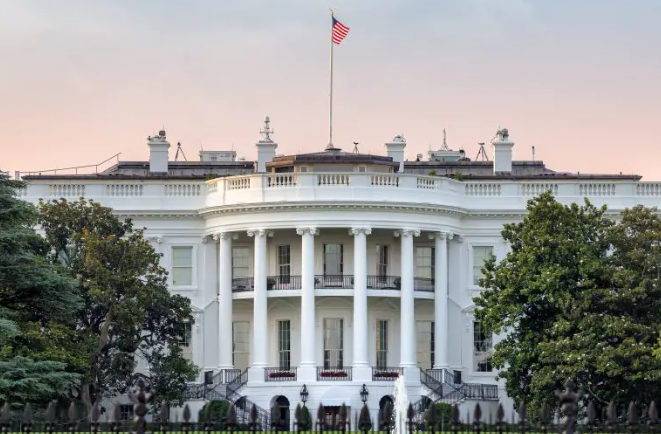
As the weekend rumors intensified, the White House stepped in to address them head-on. According to reports, communications director Steven Cheung issued a firm and unambiguous statement. He said, “There has never been a President who has worked harder for the American people than President Trump. On this Easter weekend, he has been working nonstop in the White House and Oval Office. God Bless him.” The statement aimed to counter any notion that the president was sidelined or that information was being concealed.
Other official voices adopted a tougher tone, dismissing the claims as baseless conspiracy theories driven by political opponents and online rumor mills. The clear message from the administration was that the president was on the job, even if some of that work was happening away from cameras during a holiday period.
Not long after, the president made a public appearance at the White House Easter Egg Roll, speaking to families and children gathered for the annual tradition. In his remarks, he pointed to a recent military rescue mission in Iran, praising the operation as an example of decisive action and teamwork. “What about the rescue that took place yesterday? That’s something that you rarely see,” he said, noting that such missions are often too dangerous to carry out because “you’ll go in with 200 people and lots of jet fighters and helicopters and you really don’t have a chance. They get shot down.” He went on to call the United States the “hottest country” in the world, highlighted the stock market’s performance and easing egg prices, and teased a later press conference to address the unfolding situation with Iran. These public comments were intended to reassure Americans that he remained engaged with both domestic matters and foreign affairs.
Understanding the weekend, in plain terms
For many Americans who simply want clear information without the noise of online rumor, the sequence of events can be summed up straightforwardly. The president’s Easter weekend schedule lacked the usual public events, which raised questions among observers. Social media quickly amplified those questions into dramatic stories, some of them claiming to have inside information about medical emergencies. At the same time, visible signs at the White House suggested business as usual, and the president’s online activity continued. Finally, the administration spoke plainly to reject the rumors, and the president appeared in public and on camera.
In other words, the ingredients that fed the rumors—a quiet day, a holiday weekend, and intense public interest—are familiar ones. While they can produce a lot of heat online, they do not necessarily indicate a crisis. The White House’s update, combined with the president’s appearance and remarks, was meant to settle nerves and refocus attention on verified facts rather than speculation.
How to think about similar moments in the future
For readers who prefer solid information over social media whispers, it helps to keep a few simple principles in mind when moments like this arise. First, routine schedule changes happen, including on holidays, and they often have ordinary explanations. Second, when an issue is important enough—like the health of a president—official statements and on-camera appearances typically follow, even if not right away. Third, extraordinary claims require clear, direct evidence; without that, it is best to wait for confirmation.
Another helpful perspective is to remember that when something truly serious happens in the highest office, the government has well-established procedures that take effect immediately. Those procedures are designed to protect the country and keep essential work moving. That knowledge can provide a measure of reassurance when online chatter becomes intense.
Bottom line after a noisy weekend
After a few whirlwind days of speculation, the White House’s position is unmistakable: President Trump continued working throughout the Easter weekend, rumors of a medical crisis were unfounded, and normal activity at the White House proceeded. The president’s subsequent appearance at the Easter Egg Roll, along with his remarks on national security and the economy, underscored the message that he remains engaged in the duties of his office.
Moments like these can be unsettling, especially for those who lived through earlier eras when official information was scarce and surprises were more common. But the modern landscape, for all its noise, also allows for quick clarifications and visible proof, from public statements to live, on-camera events. As the dust settles, the focus returns to the work of governing and to the practical realities that affect everyday life, from foreign policy and national security to prices at the grocery store.
In the end, the events of the weekend serve as a reminder to take a breath when sensational stories appear online, to look for reliable confirmation, and to trust that clear information will follow. The White House’s update, the visible signs of normal operations, and the president’s own public remarks together paint a straightforward picture after a weekend full of questions: the president is on the job, and the government is carrying on its work.



