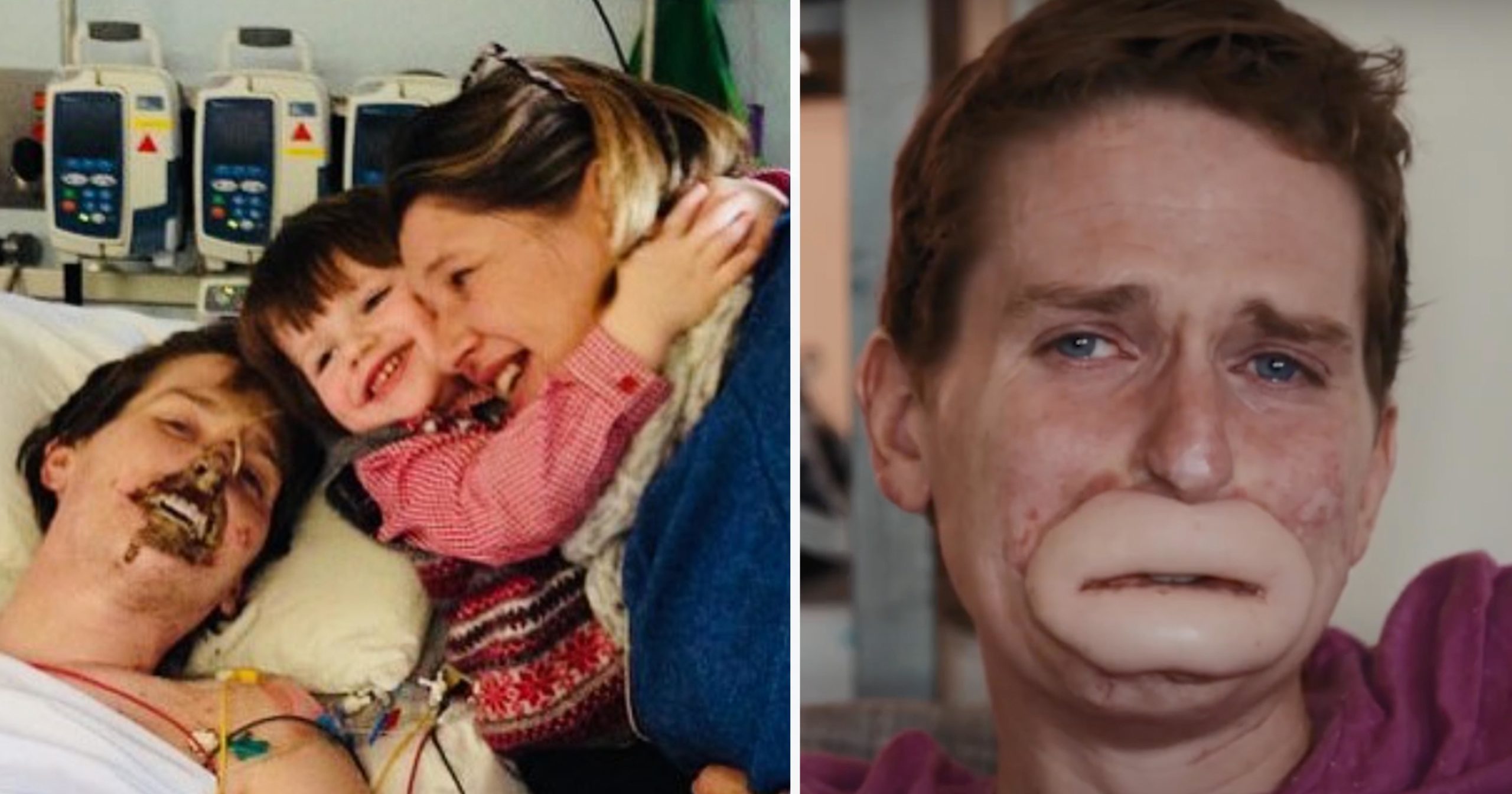
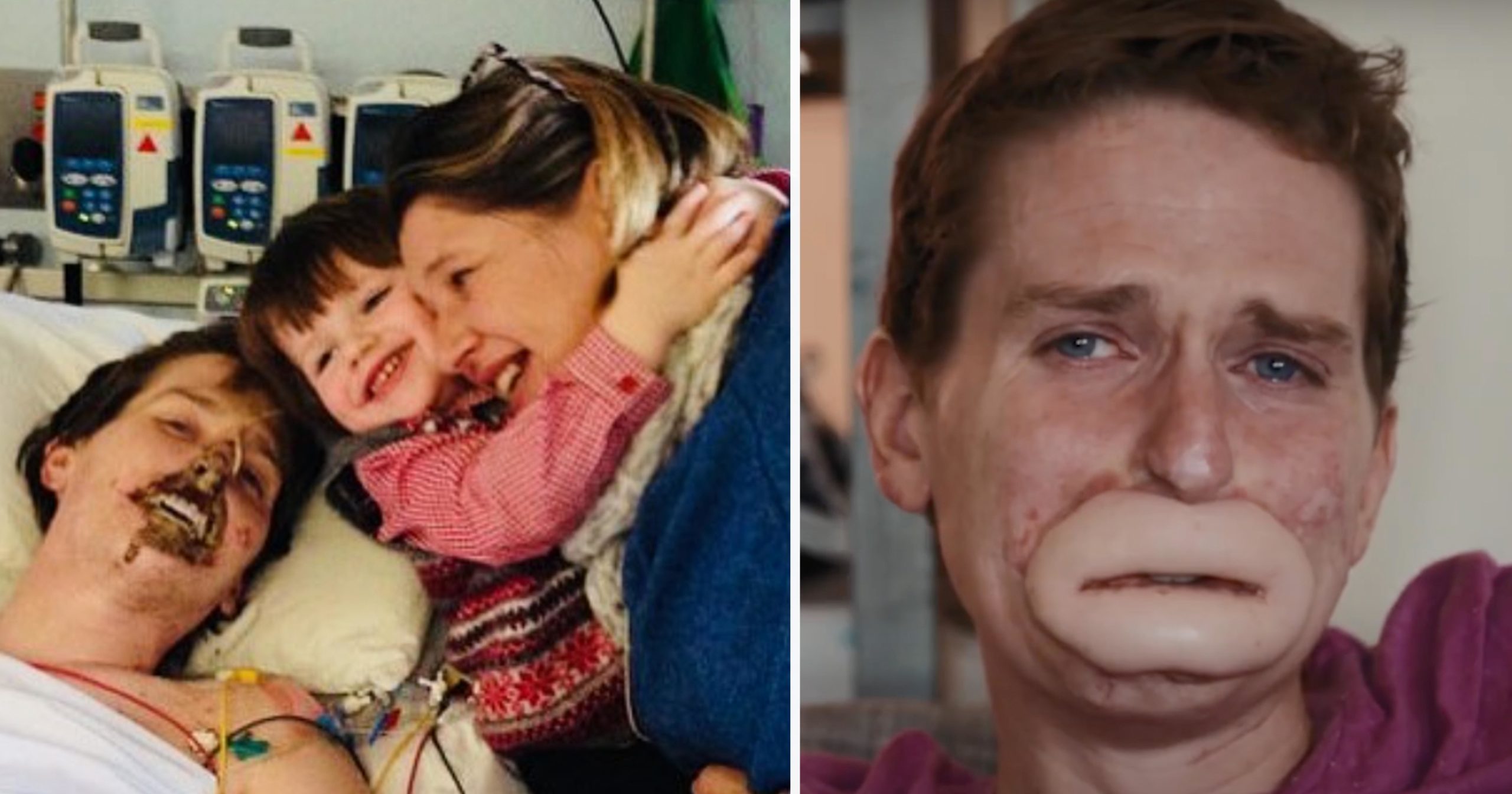
Alex Lewis is a powerful reminder that the human spirit can carry us through even the darkest moments. In November 2013, this devoted father believed he had nothing more than a stubborn seasonal bug. Within days, what started as a mild illness spiraled into toxic shock and a rare, fast-moving, flesh-eating infection. Doctors gave him a three-percent chance of survival. To save his life, they had to remove all four of his limbs and parts of his face, including his lips. It was a heartbreaking turn no family could be ready for.
Yet Alex chose to keep going. With grit, loving support, and an unwavering determination to be there for his wife, Lucy Townsend, and their young son, Sam, he fought back. Today, he is not only living a full life; he is using his experience to help others around the world.
What follows is Alex’s extraordinary journey—one that begins with sudden illness and fear, and grows into hope, purpose, and a new way to live.
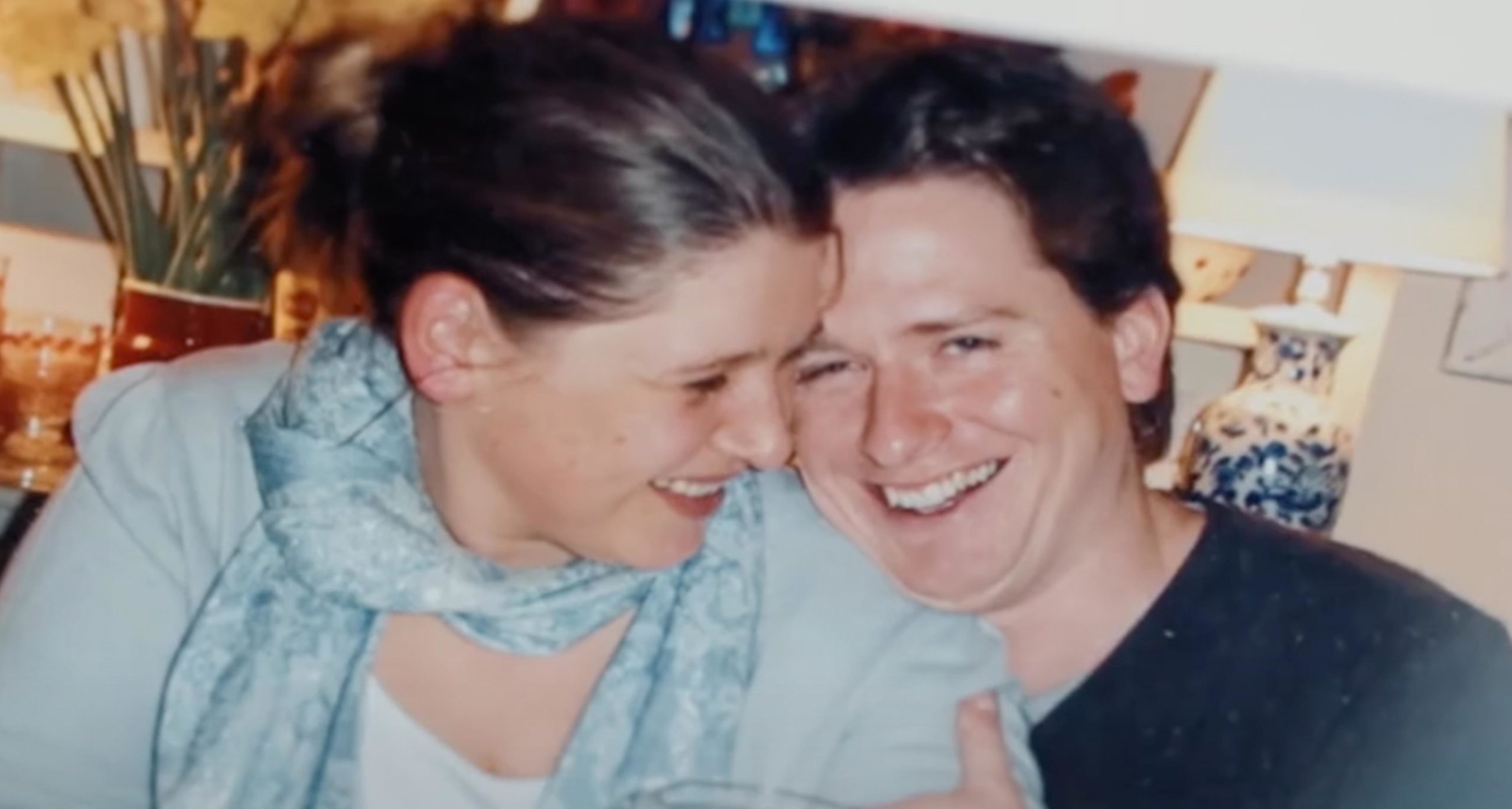
All of us have days when small frustrations feel big. The coffee is cold, the traffic is slow, or a favorite show disappoints. It’s natural to notice life’s little bumps. But stories like Alex’s invite us to pause, take a breath, and remember how precious everyday moments really are.
That perspective doesn’t dismiss our challenges; it simply reminds us that gratitude can sit beside them. And for many who hear Alex’s story, the small things suddenly feel a little smaller—and the big things, like family and health, feel even more important.
Meet Alex Lewis
Whenever you feel overwhelmed by a task or tempted to give in to frustration, Alex Lewis offers a lesson in quiet courage. A husband, a father, and a skilled designer and builder by trade, Alex lived in Stockbridge, Hampshire, England, with his wife, Lucy, and their little boy, Sam. They had built a warm life together, running beloved local pubs—the Greyhound and the King’s Arms—and cherishing evenings with friends. Golf, good conversation, a thriving family business—it all felt steady and bright.
In 2013, Alex was 32. He and Lucy were settling into parenthood, enjoying the rhythm of work and home. Nothing suggested what was coming. Then, in November of that year, everything changed in an instant.
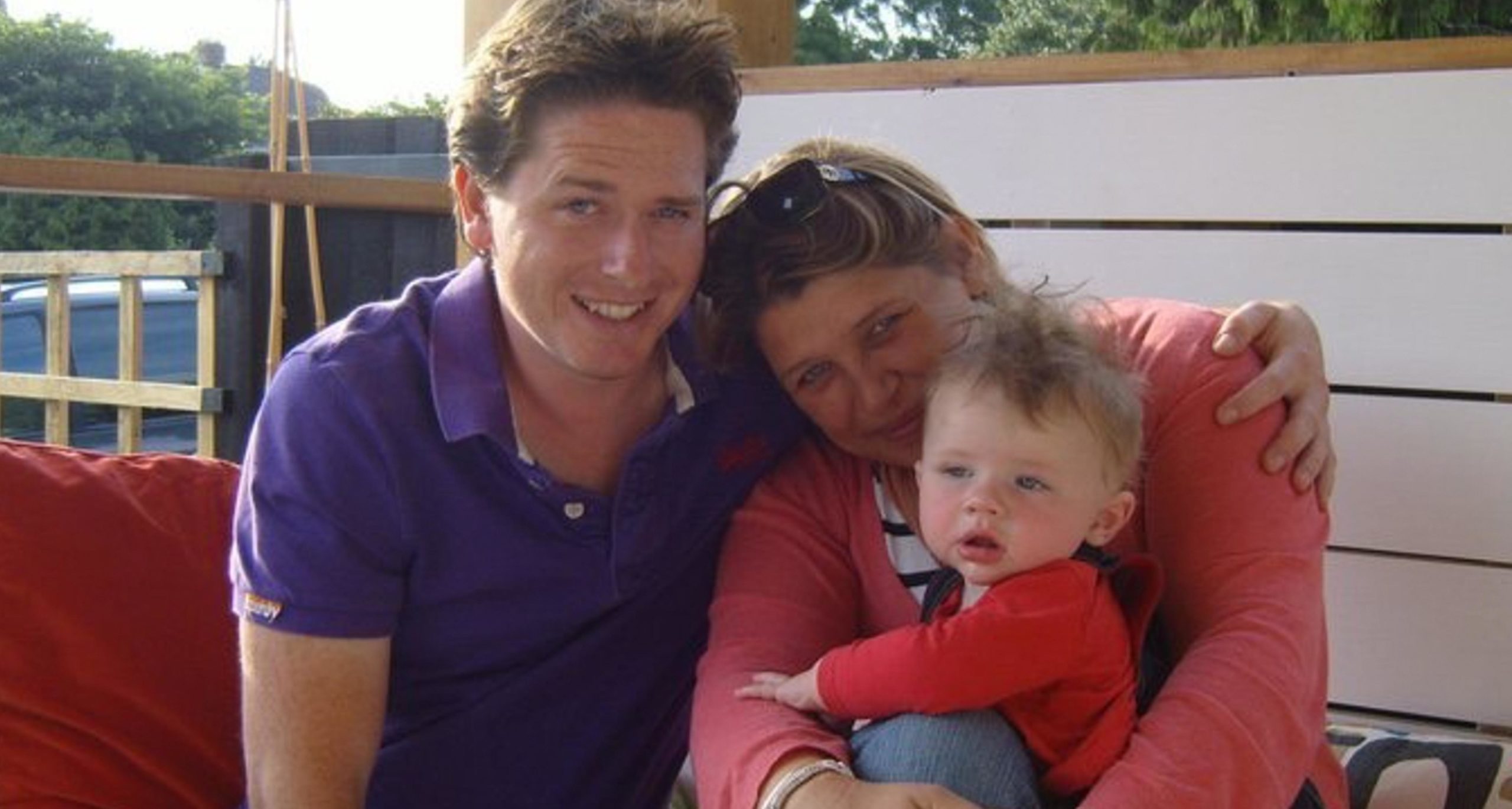
It began like a bad cold. Lucy jokingly called it “man flu,” that familiar, nagging sort of illness that usually yields to rest. Both Alex and little Sam caught it. There was no reason to panic—at least, not at first.
When a Simple Bug Becomes a Medical Emergency
Days passed, and Alex didn’t improve. He became feverish. He noticed blood in his urine. His skin tone shifted to a troubling purple hue. At that point, Lucy knew they were not dealing with an ordinary virus. An ambulance was called. Within minutes, Alex was on his way to the hospital in Winchester.
Doctors quickly discovered that Alex had a severe Group A streptococcal infection. The bacteria had penetrated deep into his tissues and organs and had triggered life-threatening sepsis and toxic shock. Complications spiraled: septicemia, organ failure risk, and a dangerous condition known as necrotizing fasciitis, the so-called flesh-eating disease that destroys soft tissue at alarming speed. In the space of hours, the ordinary had become unthinkable.
Lucy remembers being rushed straight into resuscitation and, to her horror, being told to prepare to say goodbye. Alex’s kidneys were shutting down. He would need life support. It was a scene no partner or parent ever expects to face.
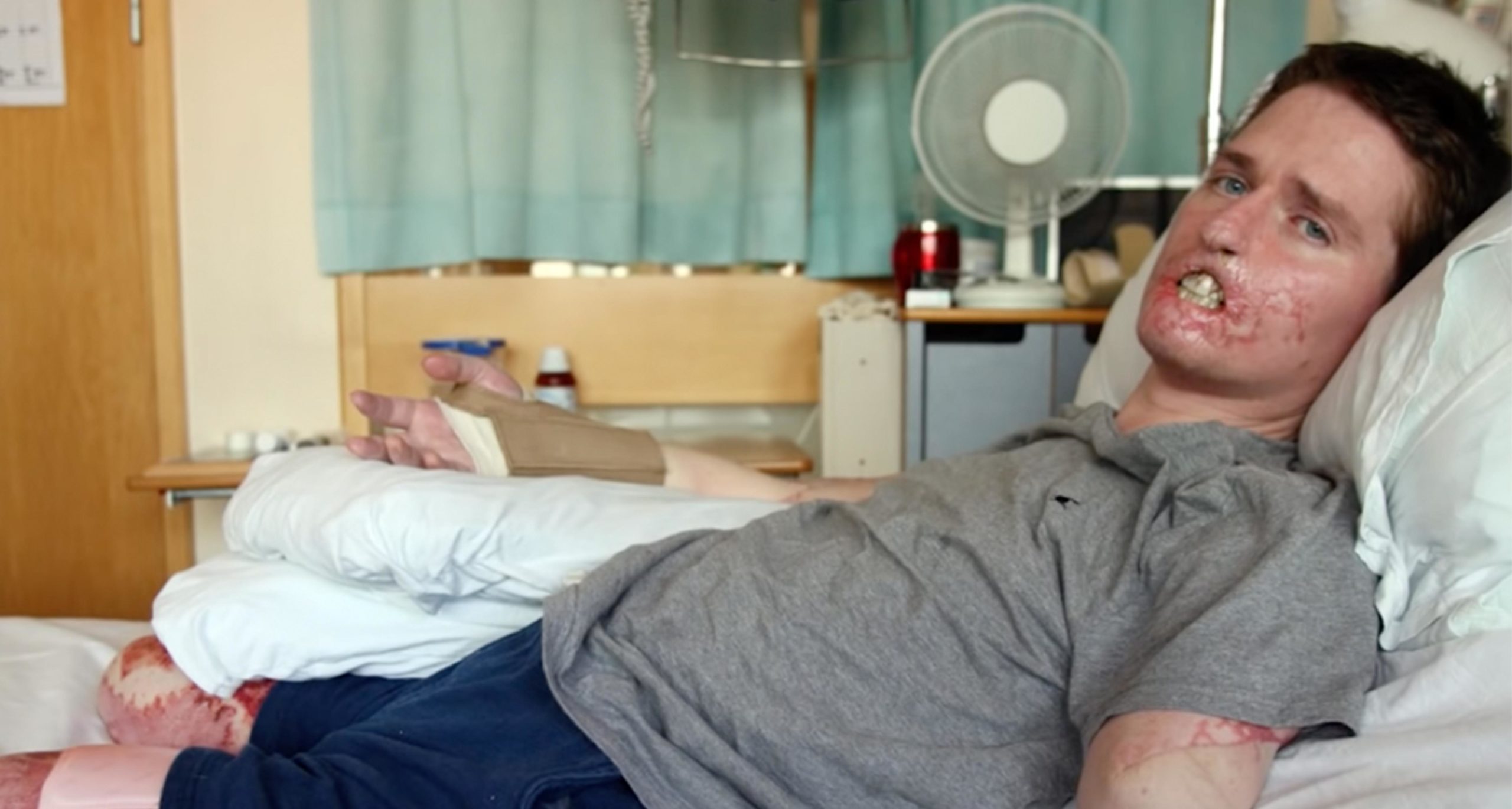
Alex recalls arriving at the hospital—and then, very little. The days that followed were a blur of machines, decisions, and prayers. The medical team gave him only a three-percent chance of pulling through. Blackened patches appeared on his arms, his legs, and part of his face as the infection and resulting complications ravaged his body.
A Flesh-Eating Infection Forces Impossible Choices
At one point, doctors considered turning off life support. They held on through the night to see whether Alex’s condition might improve and to give his family a precious chance to be with him. While Alex did not fully feel the agony of those hours, Lucy and his family witnessed it, bracing for the worst, holding hope where they could.
The infection had already taken hold in Alex’s limbs. The medical team explained a stark reality: to stop the poison from spreading and to save his life, they would need to remove infected limbs. As soon as he was strong enough to tolerate surgery, his left arm would have to be amputated above the elbow. It was the first of many heart-wrenching steps.
Alex later said he understood the choice in the simplest, clearest terms: the arm was killing him, and it needed to go. In the months that followed, further amputations became necessary. In the end, Alex lost all four limbs. Portions of his face, including his lips, had to be removed as well. They were choices no one ever imagines making, all in the name of survival.
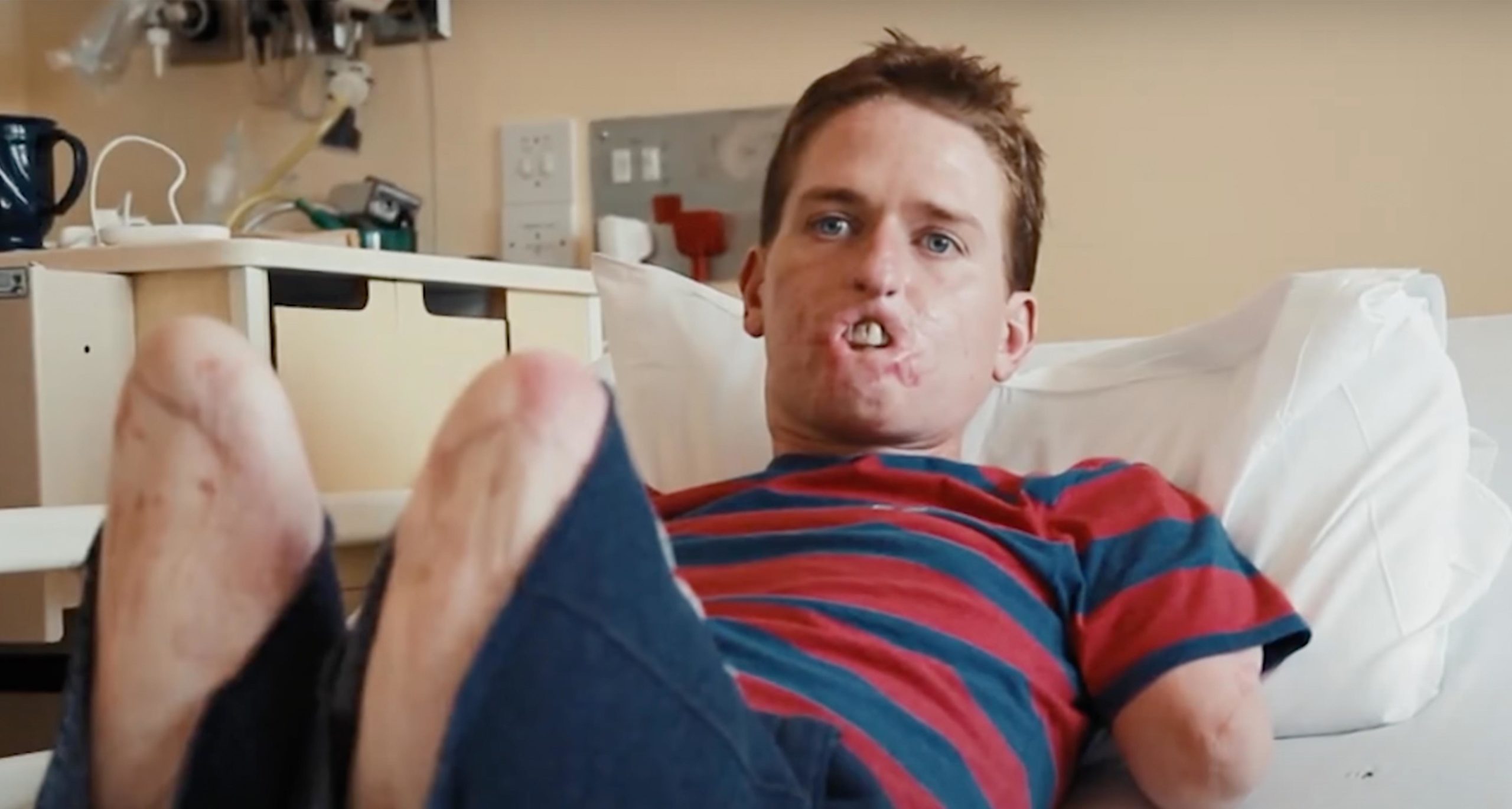
Alex remembers looking at his legs in the hospital, watching the dark color creep upward. It was both surreal and terrifying. But as hard as those images were, he held tight to the love around him. Even as so much was taken away, he would not let go of life.
Rebuilding a Face and Finding a Voice
The infection had severely damaged Alex’s lips. Eating and speaking—things most of us do without thinking—became enormous challenges. A skilled plastic surgeon, Alexandra Crick in Salisbury, led a complex reconstruction using skin from Alex’s shoulder to rebuild both his upper and lower lips at the same time. It was a bold, innovative approach and, for Alex, a world first.
The recovery was grueling. In the early days, eating a simple sandwich could take an hour and required a nurse’s help. The surgical team carefully shaped and refined the reconstruction over time. Alex described the early stages as “brutal,” not only physically but emotionally, too. Yet he endured each step, understanding that every small gain meant a return to normal life.
Reconstructing both lips with a single piece of skin was a remarkable feat. It used the last healthy area available for grafting. In Alex’s words, it felt a bit like placing a tailored piece of skin around the mouth and then carefully stitching it into place. This unique technique, followed by additional procedures spaced months apart, allowed Alex to regain crucial function.
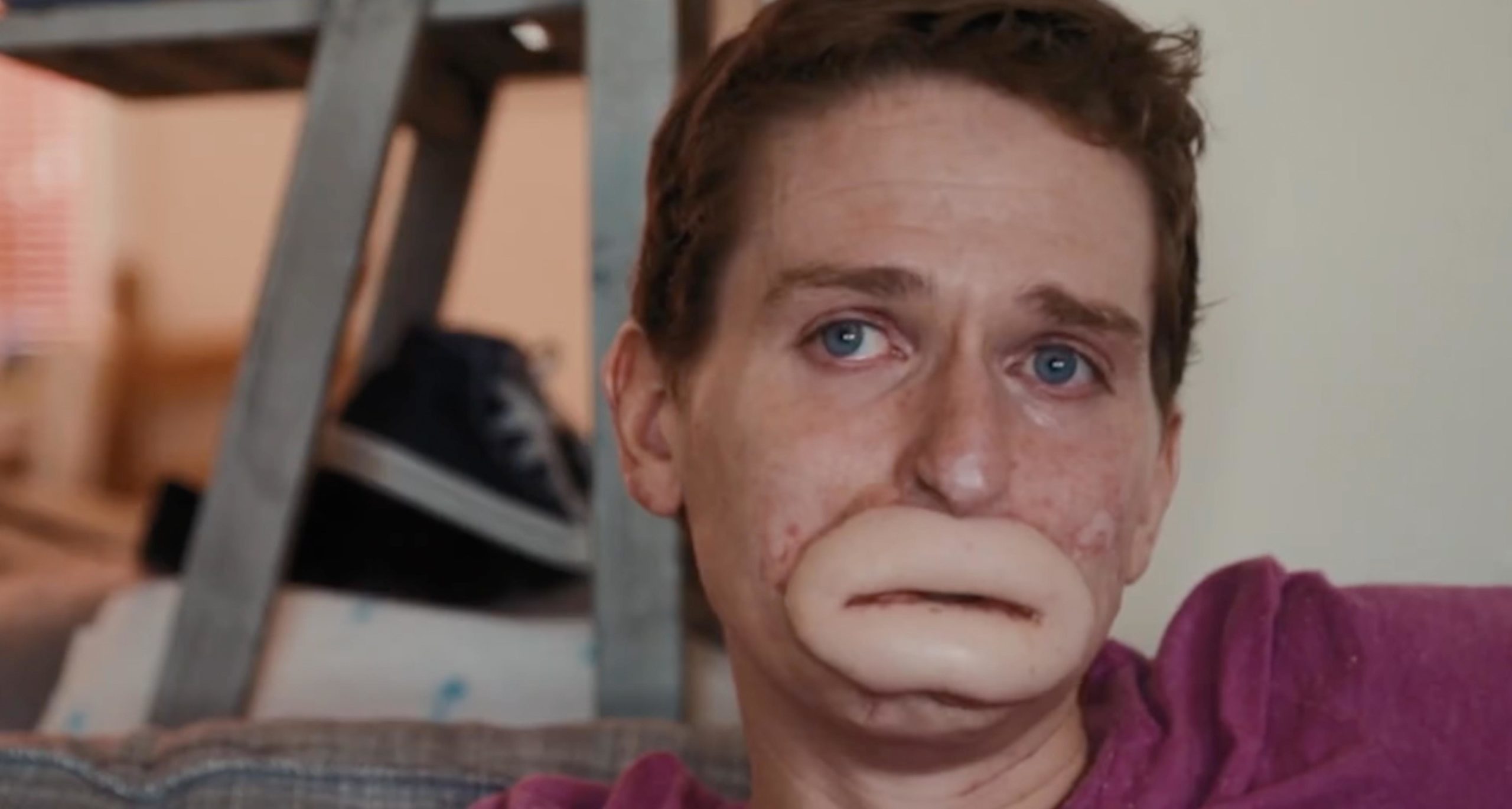
In the end, the results were life-changing. Today, Alex can speak with the clarity he once had. He can eat without the long, exhausting struggle that dominated those first post-surgery months. It was not only a medical victory; it was a gift of independence.
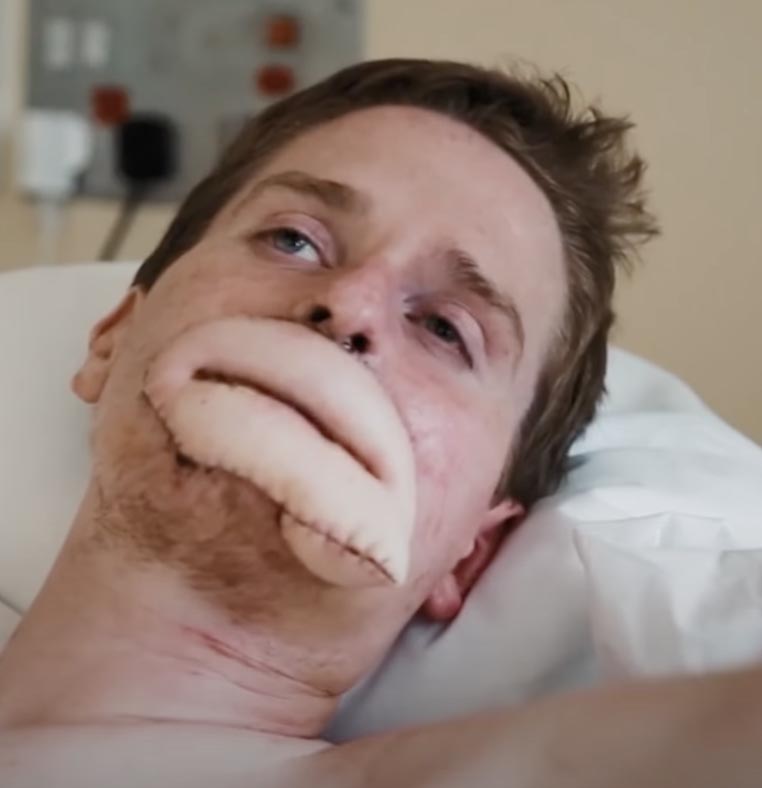
Of course, the person looking back at him in the mirror after surgery was not the face he remembered. For a time, even little Sam was frightened to approach his dad. It was a tender, painful reality for any parent. But Lucy found a loving way to explain things to their toddler. She spoke about heroes and transformations, comparing Alex to a brave character whose body was changing—different, yes, but still the same person inside.
Life After the ICU: relearning, adapting, and moving forward
After months of procedures and rehabilitation, Alex finally returned home. The life waiting for him was different in every imaginable way, and yet, its heart was unchanged. He was still a husband and a father. He still wanted to walk—or, in his case now, roll—through the world with purpose and love.
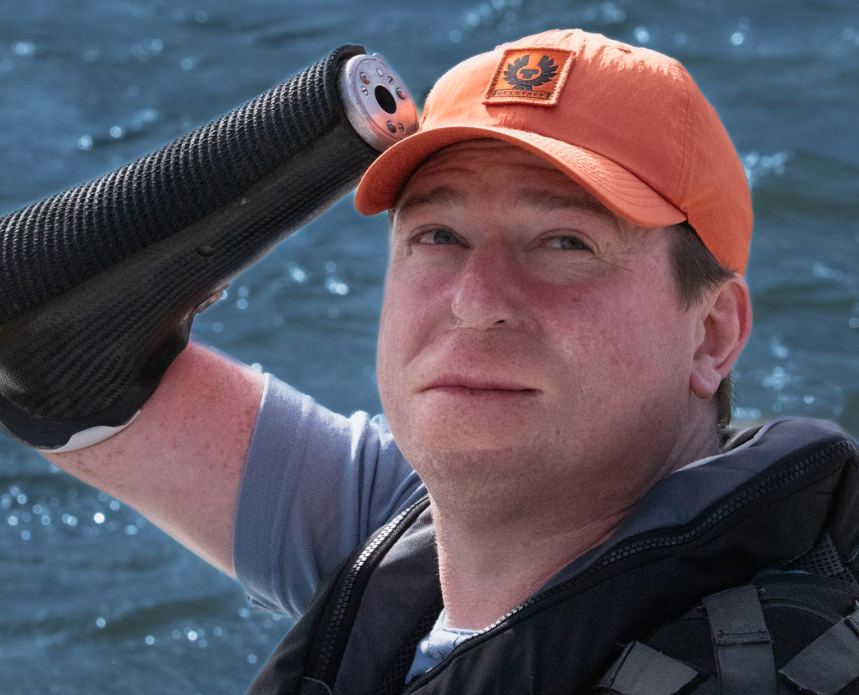
A crucial piece of his independence came from one place doctors were able to save function: his right arm at the elbow. That single joint became the bridge to daily tasks most of us take for granted. With the support of his community, Alex raised funds for advanced prosthetics with metal pincers, tools that allowed him to feed himself and take on small tasks. Piece by piece, he learned to eat, dress, drink, and maneuver a manual wheelchair. Every new skill was a victory.
The lip reconstruction proved transformative. Once he regained his voice, Alex discovered he could not only speak clearly again—he could speak for a cause. The same determination that got him through long hospital nights became the voice of his new mission.
Lucy has often said that the saved elbow represents Alex’s independence in a profound way. With it, and with time, he built a daily rhythm that worked for him. The private triumphs were many, even if they didn’t make headlines: a meal eaten unaided, a shirt pulled on, a doorway navigated with ease. These moments stitched together a new kind of normal.
There were hard days. There always are. But fatherhood gave Alex a north star. He wanted Sam to see strength, not struggle; solutions, not limits. As he returned to the wider world, Alex realized he had both a story and a responsibility. He could use his experience to open doors for others.
Turning Pain Into Purpose
Alex and Lucy created the Alex Lewis Trust to help provide what he needed to live a full, independent life and to fuel innovation that could help many more people. Beyond fundraising, Alex stepped enthusiastically into new roles: advocate, collaborator, tester, and speaker. His lived experience gave designers and researchers priceless insight.
He worked with teams developing prosthetic technologies, including inventive, battery-assisted equipment designed by bright young engineers at Southampton University. He tested ideas in the real world, showing what worked and what needed refinement. Adventure became both therapy and testimony. He learned to kayak and traveled through extraordinary places, from Greenland’s rugged southern coast to the Orange River in Namibia, pushing his fitness and his confidence in equal measure.
Along the way, Alex explored training methods that helped him rebuild strength. He visited facilities dedicated to rehabilitation and found that electrical muscle stimulation, or EMS, helped activate muscles he had not felt since his amputations. That renewed physical connection made daily tasks a little easier and helped him prepare for the ambitious challenges he loved to set for himself.
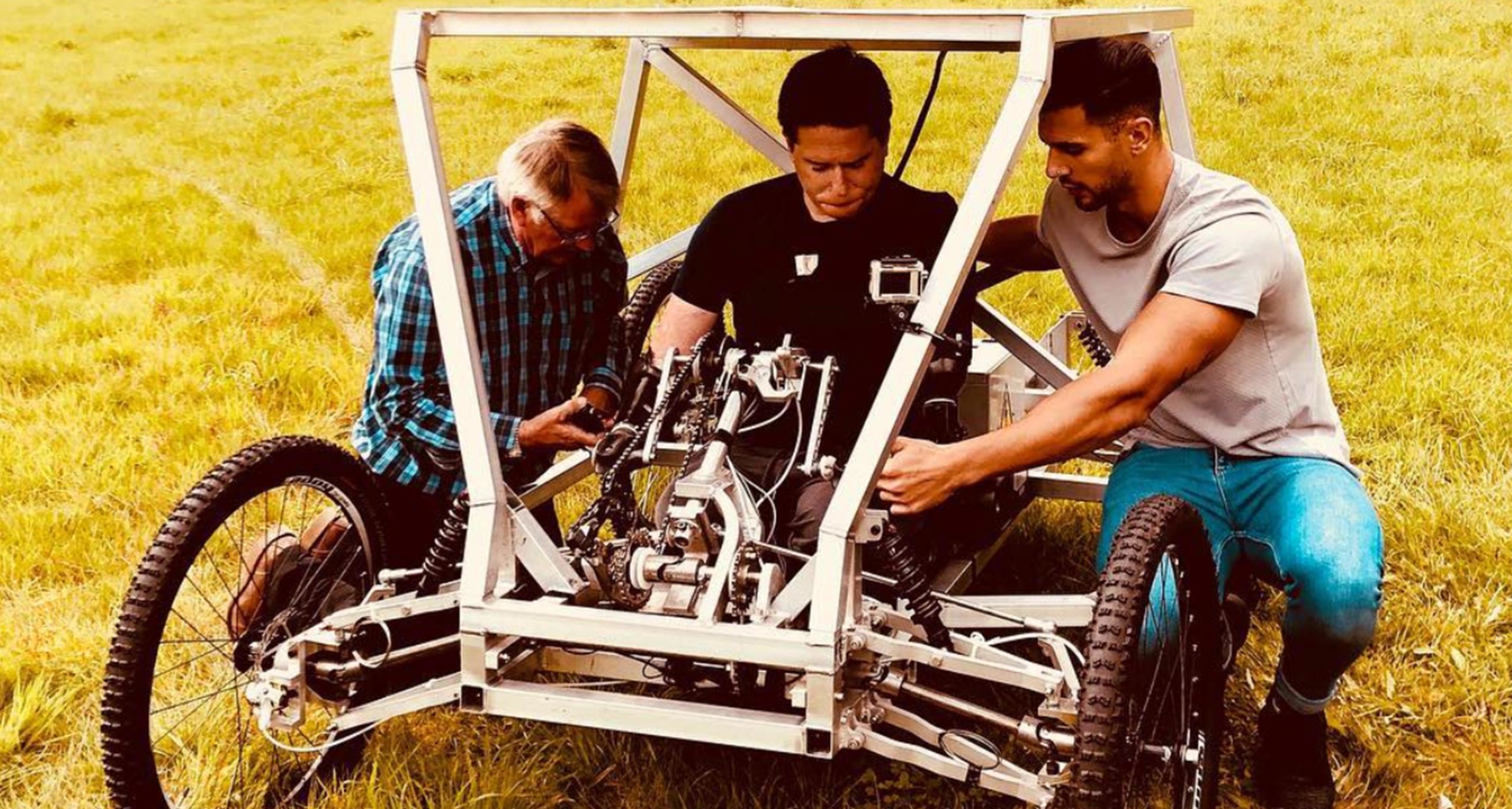
As his training continued, Alex found himself growing stronger. The practical payoffs were immediate: better posture, improved endurance, and more confidence moving through the day. That growing confidence fed directly into his next mission—making mobility solutions more available where they are needed most.
From the start, Alex believed that his recovery should mean more than his own comfort. If he could use his story to shine a light on the needs of others, he would. That belief would carry him far beyond the UK.
Building Mobility Where It’s Needed Most
Alex helped launch the Wild Wheelchairs Project with a bold, simple aim: improve the lives of people with limited mobility around the globe. One key focus has been supporting a wheelchair manufacturing facility in Ethiopia, a place where a well-built chair can mean the difference between isolation and participation. The project combines practical engineering with community partnership, creating solutions that fit local needs and conditions.
In 2019, Alex took on one of his most demanding goals yet. Using a specially adapted buggy and tremendous teamwork, he traveled through Ethiopia’s Simien Mountains, one of Africa’s most dramatic ranges, and pushed toward Ras Dashen, a towering peak. The team cycled rugged terrain and then, near the top, Alex disembarked and climbed the final stretch.
He reached the summit after ascending to roughly 4,200 meters and then tackling the last 300 meters on sheer determination. The climb was more than a personal milestone. It was a message, delivered from the roof of Ethiopia, about what people with disabilities can do when given the right support—and about those who are still waiting for that chance.
Through the Wild Wheelchairs Project and his public work, Alex has continued to highlight how often disabled people are left out of everyday life, especially in places where resources are scarce. He has used his platform to invite communities, funders, and leaders to imagine something better and to help build it.
Back at home, Lucy often says she does not see Alex as a patient. She is his partner, not his carer. Together with Sam, they have forged a family identity grounded in love, humor, and resilience. Their life is different than it once was, but it is full—of routines, shared jokes, and the same ordinary joys every family knows.
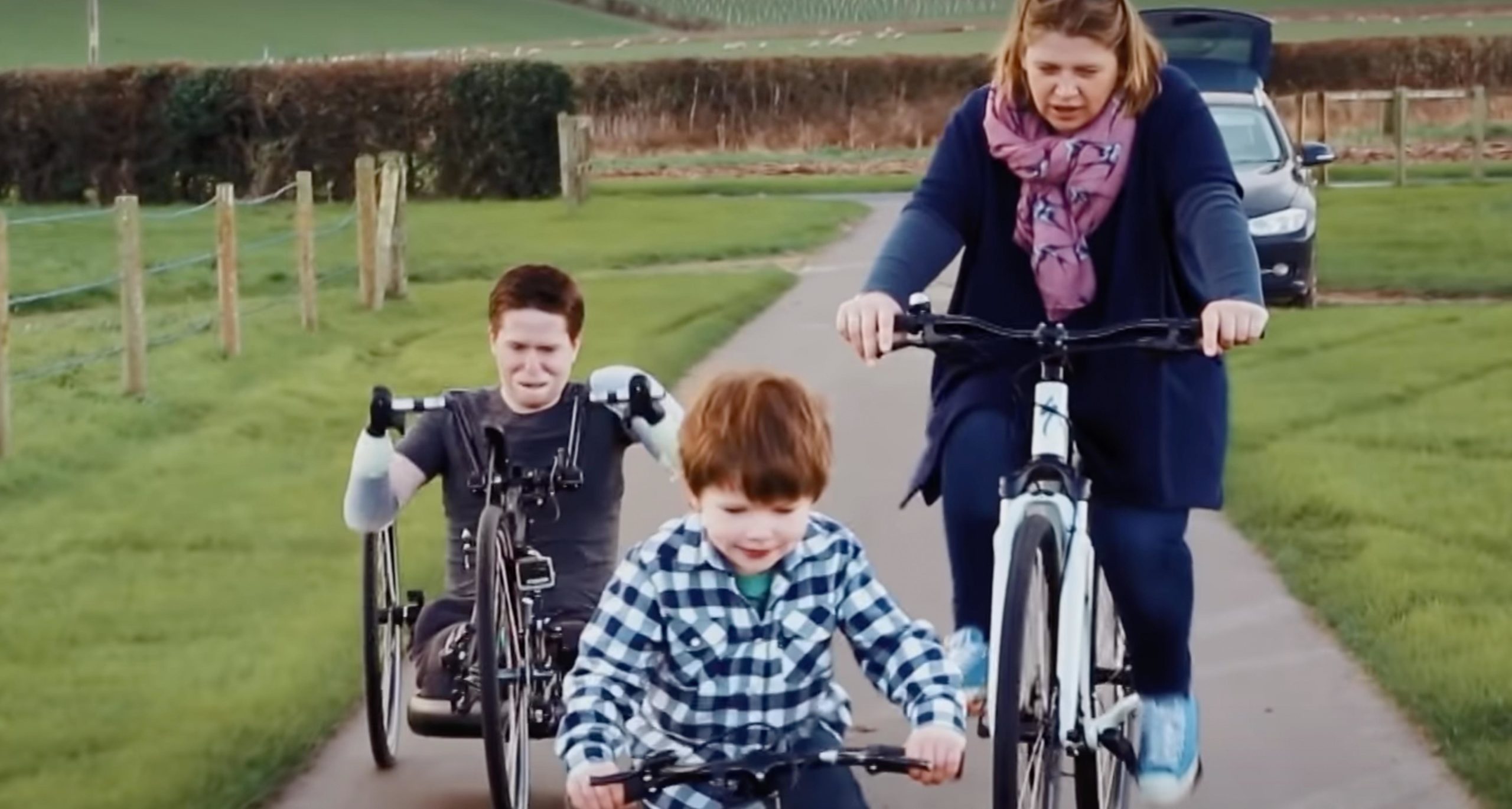
So how is Alex today? In spirit, he is the same man he always was—curious, kind, and determined. He does not pretend that losing all four limbs and parts of his face wasn’t devastating. But he refuses to let disability define or confine him. Instead, he has turned it into a catalyst for action.
What Alex Wants You to Know
Alex has said something that surprises many: the year he underwent his amputations became, in its own way, the best year of his life. It was the year he discovered how deeply he loved Lucy and Sam, how wide his community’s arms could open, and how much strength lived inside him waiting to be called upon. In the years since, he has tried to live without regret, saying yes to opportunities he might once have postponed.
Sam, who was so young when everything changed, has grown up understanding that his dad does things differently—but that he is still very much Dad. Alex has worked hard to show his son that obstacles can be met with creativity and courage. Rather than seeing a man who needs help, Sam sees a father who finds solutions. And now and then, the equipment that helps Alex navigate the world becomes a source of fascination and fun, a reminder that ingenuity can be exciting, too.
If you ask Alex what message he hopes to send, it’s straightforward. Disability does not mean the end of a meaningful life. It means a different route, new tools, and a commitment to moving forward. There will be tough days, but with persistence, support, and a focus on what you can do, new doors open.
For anyone facing illness, grief, or sudden change—especially those in midlife or beyond—Alex’s story speaks clearly. We cannot always choose what happens to us. We can choose how we respond, how we love, and how we keep showing up. The power of that choice can carry us farther than we ever imagined.
Alex Lewis’s life is not defined by what he lost in 2013. It is defined by what he has built since: a family life filled with devotion, a voice that advocates for others, a body strengthened by training and adventure, and a mission that reaches across borders. He is proof that purpose can grow from pain, and that hope—when shared—can lift many.
May his journey encourage you to check in with the people you love, to savor the simple moments, and to believe that even after the hardest chapters, there can be a new beginning.