His shirt was ripped.
Blood everywhere.
He stumbled toward the curb and crumpled.
I dropped to my knees.
“Stay with me,” I said, pressing my hand to the wound.
I could smell iron and asphalt.
My heart pounded so hard I tasted metal.
Then I saw them – two men moving fast, eyes locked on him, not me.
“Back off,” one hissed.
“He needs help,” I shot back, shifting so my body blocked theirs.
I could feel him shaking behind me.
“He doesn’t,” the other sneered.
“Walk away.”
The Marine’s breath rasped against my shoulder.
“They followed me,” he whispered.
Everything snapped into focus.
This wasn’t random.
The first guy’s hand flashed.
Something metal caught the streetlight.
I moved without thinking.
White-hot pain tore down my arm.
I screamed.
Another blow hammered my back.
A kick crushed my ribs.
I didn’t drop.
I wouldn’t.
“Help!” I yelled, voice cracking.
People filmed.
No one moved.
I pressed harder on the wound.
“I’ve got you,” I said, dizzy, “don’t you dare close your eyes – ”
Sirens.
Far away.
Too far.
Blackness swallowed the edges.
Then it swallowed everything.
I woke to footsteps – dozens—outside my house.
I pushed myself up, every bone lit with fire, and opened the door.
They filled my yard.
Rows of Marines in full dress, white covers gleaming, shoes like mirrors.
In front, a man with silver stars on his shoulders.
He stepped forward.
The entire line snapped to attention.
The sound cracked the air.
He looked me dead in the eyes and saluted.
My knees almost gave out.
“Ma’am,” he said, voice low, steady.
He reached into his jacket and placed something cold and heavy in my palm.
I glanced down—and when I read the name stamped into the dog tags, my blood ran cold.
It was my father’s name.
OWEN J. MERCER.
For a second I thought I was seeing things.
I hadn’t held anything of his in twenty-three years.
“How—” I started, but my throat closed up.
The man with the stars held my gaze.
“I’m Major General Branson Whitaker,” he said.
“We’re here to say thank you.”
He nodded toward the tags in my hand.
“And to return those to you.”
I glanced past him at the rows in blue coats and white gloves.
A couple of neighbors were on their porches in robes, hands over mouths.
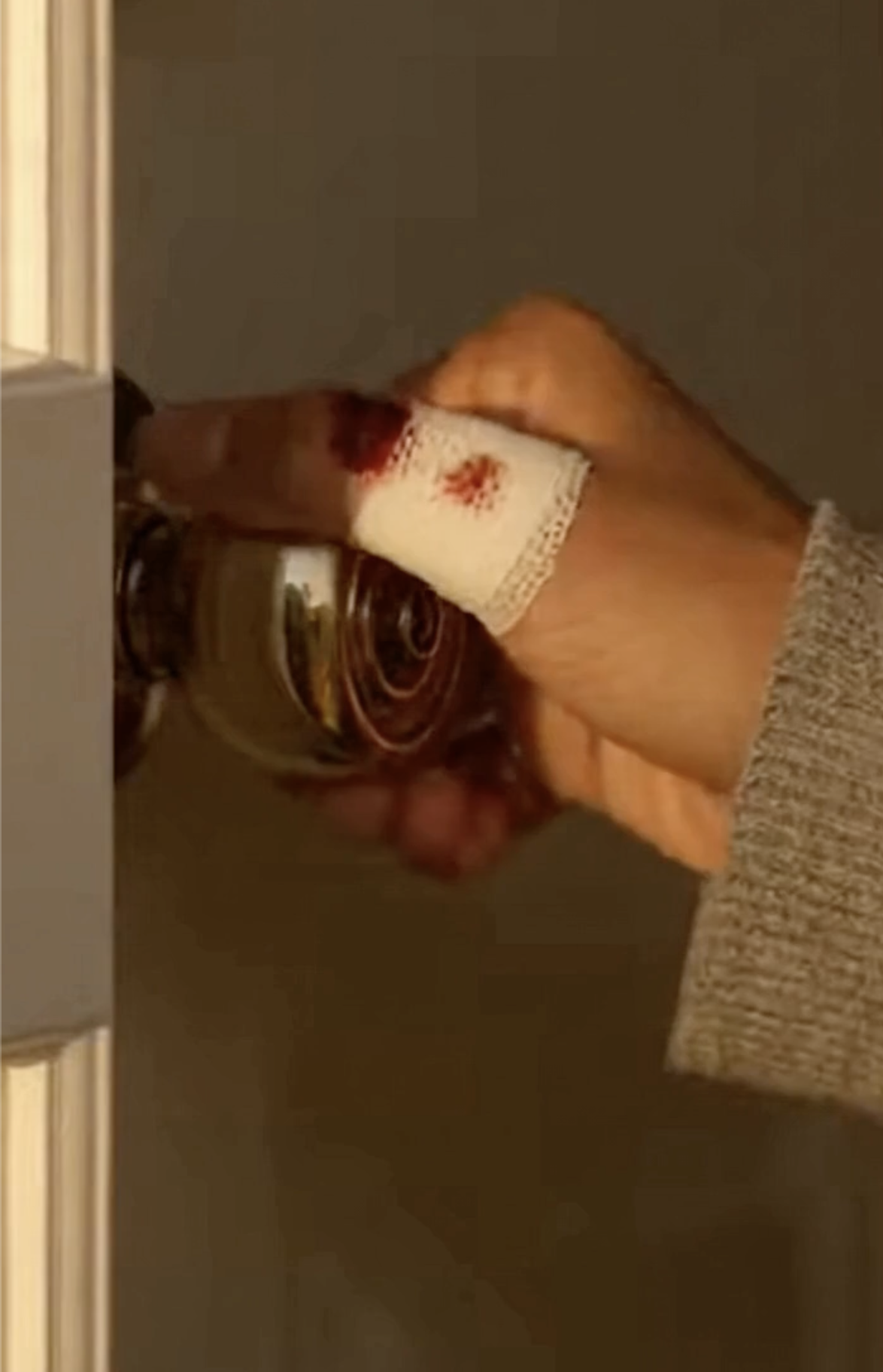
My arm throbbed under the bandage.
My ribs hurt every time I breathed.
I realized I was standing on my porch in pajama pants and a sling, hair matted and wild.
The last thing I remembered was the siren and the smell of tar.
“I don’t understand,” I said.
“Why do you have my dad’s tags?”
General Whitaker stepped closer, careful like I might spook.
“Because he saved my life,” he said.
The world tilted a little and snapped.
“My dad left,” I said.
“He walked out when I was nine and never came back.”
General Whitaker’s eyes softened.
“I’m sorry someone told you that,” he said.
“That isn’t what happened.”
A light breeze stirred the starched fabric on their sleeves.
Someone coughed down the line and stopped just as fast.
“Your father died on a training mission that wasn’t supposed to exist,” the General said.
“His records were sealed.”
My hand tightened around the tags until the edges bit my skin.
“Sealed?” I said.
“My mom said he just…decided we weren’t for him anymore.”
I heard how mean I sounded and felt my face heat.
The General looked down at my busted front step.
“We messed up,” he said.
“For years.”
I swallowed.
“Is this about the guy last night?”
He nodded once.
“You kept Corporal Cole Fletcher alive long enough for my folks to get there.”
“Those men following him weren’t street thugs,” he added.
“They were part of a ring we’ve been chasing for months.”
I leaned on the doorframe because the floor felt like a boat.
“I’m not special,” I said.
“I just…couldn’t watch someone die in front of me.”
“If you hadn’t blocked them, he would have,” the General said.
“And if he had, we might not have untangled the rest of it.”
I stared at the name on the metal again.
OWEN J. MERCER.
I remembered a jawful of stubble and hands that smelled like engine grease and oranges.
I remembered a promise to take me to see the Blue Angels and a Sunday he didn’t show.
“Can I sit?” I said.
My voice was suddenly thin.
“Of course,” the General said.
He gestured, and two Marines broke formation and came to my porch to steady me as I sank to the steps.
Their gloves were cool and careful on my elbow.
I felt like every tendon was made of glass.
“We have a lot of explaining to do,” the General said.
“I can do it now, or we can come back when you’ve slept.”
I looked at the tags.
“I want the truth,” I said.
“Today.”
He nodded.
“Your father volunteered for a joint exercise out of Camp Pendleton in ‘03.”
“Something happened that wasn’t weather and wasn’t training, but it had to look like both,” he said.
“An equipment failure that wasn’t an accident.”
My scalp prickled.
“I don’t understand,” I said.
He chose his words like he was walking a tightrope over a canyon.
“There were people selling weapons access and falsifying manifests,” he said.
“It reached into places it should never have been.”
“Your father found it out the hard way.”
“He tried to stop it and got killed for it.”
I looked at the badge glinting on his chest.
“You’re telling me he was murdered,” I said.
“We couldn’t prove it then,” the General said.
“And the people who could have told you weren’t allowed to speak.”
“We put your dad down as absent without leave because his body didn’t come home in time,” he said.
“That’s on me.”
“We did bring him home, Raina,” he added softly.
“We just gave him a headstone under a number.”
My name fit weird in his mouth, like he’d practiced saying it in case I threw him out.
It made me shiver.
“Why now?” I said.
“Why show up today?”
“Because last night put something in motion,” he said.
“And because someone owed you an apology.”
He looked down the line again.
“And your father was owed one, too.”
A woman I hadn’t noticed before stepped out from the second row.
She didn’t have dress blues, but a black suit and a badge from a lanyard.
“I’m Special Agent Serena Kwon, NCIS,” she said.
“We’re the reason the General dragged his entire house onto your lawn.”
“Ma’am,” I said, blinking.
“My neighbors are going to talk about this for the next decade.”
Agent Kwon cracked the smallest smile.
“I’m counting on it,” she said.
“Visibility is safety in this one.”
She held a file close to her chest and leaned a fraction closer.
“Corporal Fletcher was en route to a safe house when they intercepted him.”
“He had a flash drive with him,” she said.
“Names, dates, account numbers.”
I could feel my heartbeat in my wounds again.
“And I just got in the way,” I said.
“You got between my witness and two killers,” she said.
“You also gave us faces.”
“You were loud enough to send half the block outside, and their videos gave us what we needed,” the General added.
“It isn’t how I prefer to get evidence, but it saved a lot of paperwork and some lives.”
My stomach did a slow flip.
“Did he make it?” I said.
My voice wanted to break, but I held it together.
The General’s mouth went from hard to something like human.
“He’s stable.”
“He’s asking for you.”
I looked down at my pajama pants and the blood speckled on my socks.
“I can’t go like this,” I said.
“You look exactly how a person looks after doing what you did,” Agent Kwon said.
“That counts for a lot.”
I could hear my neighbor across the street quietly crying.
Someone farther down clicked their phone camera and then shoveled it back into a pocket like he realized what he’d done.
“Give me a minute,” I said.
I went inside and grabbed a hoodie with coffee stains on it and stuffed the tags in my pocket.
I stood in the kitchen and breathed through one long wave of pain.
The kettle still had water in it from last night.
I switched it off and came back out.
“Ready,” I said, and I surprised myself at how much I meant it.
They didn’t try to put me in the fancy black Suburban.
They put me in the back of my friend Tess’s dented Civic because someone had borrowed it to block the view.
It made me laugh until I coughed.
“Very undercover,” I croaked.
Agent Kwon slid in next to me with a blanket and a bottle of water.
She smelled like peppermint gum and copier paper.
“The men who did this,” I said, stalling because I was scared to ask about my mom and what I had to tell her.
“Do you have them?”
“One ran,” she said.
“One didn’t.”
I thought of the flash of metal and the angle of his jaw.
“Which one was the one who smiled like he’d done it before?” I asked.
Her eyes met mine.
“The one who ran,” she said.
“We’ll get him.”
We rolled down streets I knew at odd speeds, like we were both late and trying not to blow a light.
The radio chirped dispatch codes I didn’t understand.
At the hospital, security taped a paper to the glass that said NO MEDIA in thick marker.
It didn’t help much, but it made someone feel better.
They slid me past a row of people with bad coughs and inside a door with a keycode.
A nurse glanced at me, at my sling, and her lips pressed thin.
“You’re her,” she whispered, like she wasn’t sure if she should be impressed or irritated about something in the newspaper she hadn’t read yet.
“Follow me.”
We passed a whiteboard that said FLETCHER – STABLE in big block letters.
I let out a breath I didn’t know I’d held since the porch.
He was smaller without the streetlights.
Young, I thought, too young for the scars on his knuckles.
He blinked and his eyes landed on me like they’d been scanning the door every five minutes.
“Hey,” he said, voice scratchy.
“I remember you,” I said, and I felt my mouth shake.
He lifted his hand a few inches and winced like he’d met an invisible wall.
“Corporal Cole Fletcher,” he said, like he was at a roll call.
I laughed even though it made my ribs hurt.
“Raina,” I said.
“Thank you,” he said.
“I didn’t do it for a thank you,” I said, and then I realized how rude that sounded and flailed.
“I mean, you don’t owe me anything, I just—”
“You didn’t leave,” he said.
There it was, simple as a paper cup, and I had to look away.
“So many people stayed on their porches,” I said.
“They stayed,” he agreed softly.
“They just stayed over there.”
Agent Kwon hovered in the doorway with a body like a comma, curious but hands off.
“You don’t have to talk about anything heavy,” she said.
“He can rest.”
“I can talk,” he said.
“I want to.”
He told me he’d been stationed up at Twentynine Palms, that he’d passed through my town to get to a safe house by the river.
He told me he’d realized he was being followed right after he crossed under the train trestle.
“They weren’t panicking,” he said.
“They were calm, like this wasn’t their first time.”
I nodded slowly.
“I could tell.”
He told me about an older sergeant who took bets before payday and introduced guys to a poker game off-base.
He told me how he went one night, lost badly, and then found a notebook that wasn’t supposed to be there.
“I shouldn’t have touched it,” he said.
“But it was open.”
It had numbers and little arrows and initials that weren’t nicknames.
It smelled like tonic water and glue.
“I asked the wrong person the wrong question,” he said.
“And someone told me to keep my head down.”
He didn’t.
He went to the legal office and then to someone who talked to someone and then to Agent Kwon.
“After that,” he said, “my luck got real bad.”
“I saw them in the window when you fell,” I said.
“I thought I was going to die when the second kick hit.”
“I thought you did,” he said.
“I could feel you stop shaking and I thought, that’s it.”
“But then you breathed in again and told me not to close my eyes, and I didn’t,” he added.
“It was like orders but not mean.”
We both stared at the foot of the bed because there aren’t good jokes for conversations like that.
I fished the tags out of my pocket and turned them in my hand.
“My father,” I said, like I was practicing saying the words in a different shape.
“They brought his dog tags to my porch.”
He blinked at the letters.
“Mercer,” he read.
“He was in my dad’s unit.”
My head snapped up.
“What?” I said.
“My dad was Gunnery Sergeant Paul Fletcher,” he said.
“He used to tell a story about a guy named Mercer who could fix anything with duct tape and a threat.”
He smiled a little.
“Sorry, his words, not mine.”
I felt this weird heat go up my torso like a slow elevator.
“He knew my father,” I said.
“He saved his tail in a flood,” Cole said.
“Kept him from getting swept under a Humvee when the wash turned mean.”
“Tell me everything,” I said.
“Please.”
We traded pieces like baseball cards.
He told me about a man who whistled when he was mad and would drive an extra mile to return a kid’s lost hat.
“Your dad wouldn’t stop being a dad when he put on a uniform,” Cole said.
“He just did it for more people.”
I told him my mother had two jobs and a tired back and that she kept a shoebox of photos under the bed.
I told him I thought my father had left because of me.
We were quiet until my ribs told me they wanted a new arrangement of bones.
Agent Kwon cleared her throat.
“We should let him sleep,” she said.
“And I should get you home before your neighbor starts renting lawn chairs.”
Outside the room, the General was straightening a cheap plastic plant like it had done something wrong.
He met my eyes.
“We’ll make this right,” he said.
“As much as we can.”
“My mother,” I said.
“She should hear it from you, not the TV.”
“Agreed,” he said.
“Does five o’clock work?”
“She cleans houses until four,” I said.
“She takes the bus.”
“We’ll pick her up,” he said without the slightest hint of a joke.
I looked at him for a beat longer because people in high places making very specific promises can be a dangerous sport.
But I believed him anyway.
Agent Kwon drove me back to a quieter neighborhood.
Only three Marines stood by my porch and a stray dog had decided the hydrant was his.
Inside, my phone had learned thirty new ways to buzz.
A clip with my voice yelling help was already in a group chat titled Block Moms.
I scrolled and saw a name I didn’t recognize ask in a chain of comments, Was that on Waverly?
And then a kid I knew as the one who rode his scooter without looking at stop signs sent a long message with eight sorrys and a shaky video where you could see a wrist tattoo.
Agent Kwon leaned over.
“Can I forward that?” she asked.
“Take my whole phone if you need it,” I said.
“You’ll bring it back because nobody wants my grocery list.”
She smiled.
“Your kindness is duly noted.”
I didn’t sleep much, but I laid on my couch with the dog tags on my chest and my hand on them like a paperweight.
The house creaked the way old houses do when sunlight starts pressing on one side.
Right before five, a black car pulled up in front and my mother got out with her hair twisted up and her good shoes on.
General Whitaker got out of the other side and offered his arm and she batted it away and then took it anyway.
“Are you hurt?” she asked, and her mouth trembled finally, after hours and hours of being steady.
“Show me.”
I showed her the sling and the bruises.
She kissed my forehead like I was six.
“Mrs. Mercer,” the General said carefully.
“Or is it Ms.?”
“It’s June,” she said in the tone that meant she might be polite if you deserved it.
“Who are you to come in here and tell me my husband isn’t what the papers said he was?”
“Someone who owes you an apology,” he said quietly.
“And a lot more than that.”
We sat at the ragged little table that had a scorch mark on one edge from a time I got overconfident with a crème brûlée torch.
Agent Kwon put the file on top like a priest blessing a loaf.
He told her about sealed records and a cover that went wrong.
He told her about men selling things that belonged to all of us and about how Owen had tried to stop them.
“Why would they tell me he left?” she asked, voice small in a way I hated, that I hadn’t heard since the bank lost her mortgage payment and talked to her like she was lying.
“Why would no one tell me?”
“Sealed is sealed,” Agent Kwon said.
“I don’t like it any better than you do when it hurts people who did nothing wrong.”
My mother pressed both hands to the table so hard her knuckles went white.
“I threw his photo out,” she said.
“In 2004, I threw it in the trash because I was too tired to care and I told my daughter we didn’t need him.”
“We did need him,” I said softly, and she flinched like I’d struck her and then nodded.
“We did,” she said.
“We still do, in different ways.”
The General slid a small envelope across the table.
My mother looked at it like it was venom and then opened it.
It was a letter.
The paper had a coffee ring and a grease smudge and a slanted signature that I recognized from the one birthday card he sent me that I’d kept until the ink faded.
June, it started.
I’m sorry about the washing machine and the leak in the hall and that I didn’t take the Blue Angels tickets out from where I hid them behind the cereal.
I held my breath and watched my mother’s hand go to her mouth.
He’d written about me, about how I curled my letters tight and ate the middle out of sandwiches.
He’d written that he was proud of the way I noticed when people were alone.
He’d written that he hoped I had his stubborn because hers was meaner and would always win, and that made me laugh in a way that broke and fixed me at the same time.
“If this went wrong,” he’d written, “please tell Raina I didn’t leave her.”
“Tell her I left and tried to come back.”
My mother put the letter down like it was a thing that could break a table.
Then she stood up and let out a sound that wasn’t a word.
I stepped into her and she stepped into me and we stood there and let twenty-three years of something heavy get a little lighter.
I felt the General give us that rare gift of a man in charge not saying anything when the silence was more important.
“We’re going to clear his name,” he said finally.
“We’re going to put his name where it should have been.”
“We’ll do that in front of anyone who wants to watch,” he added.
“And we’ll invite everyone he saved and everyone he loved.”
My mother wiped her face with the side of her hand like she did when she didn’t have a tissue.
“Do you have any of his things?” she asked, voice rough with hope.
He nodded at the dog tags in my hand.
“And this,” he said, pulling out a small blue box.
Inside was a medal on a ribbon that made my stomach flip because I’d seen it on the internet enough times to know it meant courage and a lot of loss.
“We should have given this to you a long time ago,” he said.
“Now you can give it to him,” my mother said, chin up at a new angle.
“Proper.”
A week passed like a year and a day put together.
My ribs healed just enough to itch.
They arrested the second man in a motel three towns over.
A tattoo of a snake across his wrist and the way he chewed his gum on the left side in every clip made it easy.
The kid with the scooter and the shaky video, Tyrese, came by with his mother and a cake he’d helped frost.
He stood on my porch and didn’t look me in the eyes until he did.
“I should have helped,” he said.
“I freaked out and filmed because that’s what I do, but it was wrong and I’m sorry.”
“It was scary,” I said.
“You did help, later.”
“Doesn’t feel like enough,” he muttered, and his mother squeezed his shoulder, and I felt my throat do that hot thing again.
“It never does,” I said.
Cole’s stitches came out and he walked slow laps around the ward like an old man, which made the nurses shake their heads and boss him back to bed.
He kept asking when the hearing would be, when he could look those men in the eyes and tell the truth.
They set it for a Thursday.
People turned up who had no business arranging their schedules to fit mine, but there they were.
The judge asked questions like scalpels and the lawyers danced and glared.
Agent Kwon walked me in the side door with my sling down to my wrist now instead of across my chest.
I saw the two men at a table.
The one who smiled a lot before hit the floor with his eyes and the one who ran stared at me until his lawyer touched his elbow.
When it was my turn, I told them the truth.
I told them what fear feels like when it tastes like tin.
I told them that people stood on porches and held their phones like shields.
I told them I wasn’t special, I just didn’t move.
When it was Cole’s turn, he told them about the notebook and the names.
He told them about the first debt and the way the due date kept moving.
He didn’t shake.
He didn’t stutter.
He just said what happened like someone who had trained himself to remember facts more than feelings, and it worked.
When the verdict came, the room did that quiet roar like a wave hitting high on the rocks.
My chest loosened in a way that made me realize it had been tight for a month.
After the hearing, a reporter stuck a microphone in my face and asked if I felt like a hero.
I told him I felt like a person who got a lot of help from people who knew how to show up.
He didn’t love that answer, but I wasn’t saying it for him.
I was saying it because it was true.
The ceremony at the base was the way summer air is on the day school gets out, nervous and warm and a little too full of itself.
They let my mother and me through the gate after a man with a clipboard triple-checked our names.
She wore the blue dress she only wore to weddings.
I wore flats because my ribs still remembered stairs like an insult.
They had a flag and a lectern and a microphone that popped twice because some things are universal.
There were men and women with rows of ribbons and civilians with flatscreens on their faces instead of smiles until the speeches started.
General Whitaker stepped up and adjusted the mic like he’d done it a thousand times.
He talked about service and about the quiet parts of doing the right thing.
He said my father’s name the way you say a name you won’t forget even if you get a little old.
He pinned the medal to a board under a photograph where my father was younger than me and grinning with his mouth closed.
My mother took the dog tags out of her purse and looped them over a corner and held on for a second longer than you’re supposed to.
No one told her not to.
When it was my turn, I didn’t think I’d talk.
But I heard my shoes on the temporary stage and there I was.
“I spent most of my life thinking my dad left,” I said.
“I made a lot of stories up to try to make a shape out of a hole.”
“I did the same thing after last Thursday,” I added.
“I thought that because people watched and didn’t move, it meant people didn’t care.”
“That’s not always true.”
“I know that because of the Nurses who stayed late and the kid who filmed and then came to my porch to say sorry and the Agent who brought my phone back with a new charger because mine was frayed,” I said.
“I know it because of the Marines on my lawn who came to say thank you and mean it.”
“I know it because somewhere in the middle of all that, a stranger bled on my hands and I told him I had him, and he believed me enough to live.”
I looked at Cole in the front row.
He lifted two fingers off his knee like a hello only we saw.
“I didn’t save anyone by myself,” I said.
“I just didn’t walk away.”
People clapped and some cried and a seagull yelled at absolutely nothing like he had an opinion, and it was perfect.
After, Cole limped over and stood next to me and didn’t say anything, and I didn’t either.
We watched a couple kids chase each other under a big oak.
One of them had a tiny set of plastic dog tags he’d gotten off a souvenir table.
“My dad,” he said finally, in a voice small enough to hide in your pocket.
“He would have liked you.”
“I think he already did,” I said.
“We met in a street, remember.”
He chuckled and winced and swore quietly and then muttered sorry under his breath like the tree could hear.
“You okay?” I asked.
“Getting there,” he said.
“You?”
“Getting there,” I said.
“It takes time.”
Weeks later, the town looked the same and didn’t.
The donut shop still ran out of maple bars first, but now there was a photo of my bloody shoes taped to a jar for a community fund for first aid kits.
Tyrese and his mother started showing up to the neighborhood watch meetings and insisting on practice drills for shouting like you mean it.
Agent Kwon sent me a link to an internal memo I wasn’t supposed to see, and I didn’t read it because I like not going to jail.
What I did read was a letter with my father’s handwriting.
It wasn’t much, just a recipe for pancakes that made me cry because he put twice as much vanilla as I do.
My mother made them on a Sunday and we ate them at the table with the scorch mark.
We talked about the time we went to the beach in December because we thought it might be empty and it was and we watched pelicans do something that looked like synchronized dancing.
She looked less tired.
I did, too.
Sometimes I still wake up to the sound of feet on my porch and for a second I think the yard will be full of polished shoes and pressed coats.
Sometimes it’s just the mail.
But the memory doesn’t scare me now like it did at first because I think of what came with it.
Not just apology and phone calls and a folder of facts.
What came with it was proof that the stories we tell ourselves out of scraps can be wrong.
What came with it was a neat row of people in blue who didn’t owe me anything and showed up anyway.
A month after the ceremony, the General mailed me a coin with an eagle on one side and something Latin I pretended I remembered from high school on the other.
He’d written, For not walking away.
I put it in the same dish I keep my keys in.
When I get home, I touch it and the dog tags and it makes me stop and breathe for a second.
I see Cole sometimes when I’m at the market.
He buys too much cereal for someone who lives alone, and we pretend we’re not both counting the days since the last bad dream.
He told me he was thinking about staying in anyway, after all this, because for him service was like a stubborn plant you couldn’t pull up even when it was in the wrong flower bed.
I told him that stubborn runs in my family.
He laughed and said he knew.
I liked hearing that, more than I wanted to admit.
The men who hurt him and hit me got sentences that made the courtroom hum with that busted kind of satisfaction you get when the scales are heavy on both sides.
The ring unraveled more than anyone thought it would.
They took down a contractor with a house too big for his paycheck and a poker table in a storage unit with cameras on the ceiling.
They took down a guy who coached youth soccer on the weekends and counted duffel bags on weekdays.
It didn’t fix every bad thing ever.
It didn’t bring back anyone who’d gone because of a piece of this before we knew.
But it put a dent in a machine that runs best when no one looks too close.
And that mattered.
I think a lot now about the people on the porches who filmed.
I don’t hate them.
I think they saw something they didn’t know how to fit into their day, and their hands did the thing their brains knew how to do, which was grab rectangles and hide behind glass.
I think the yelling woke them up.
I think they helped, in a way, even if it starts late and feels clumsy.
I think they learned.
I learned, too.
I learned that truth can come late and be worth it anyway.
I learned that apology can be a man in a starched coat on your lawn holding a thing you thought was gone forever.
I learned that courage doesn’t always feel like a movie.
Sometimes it feels like shaking and yelling and staying put even when you want to run so bad your bones buzz.
Sometimes it feels like coming back to the same porch and opening the same door and answering questions you’ve avoided for half your life.
It turns out the past can change a little when you tell the right parts of it out loud.
It turns out people can, too.
When I touch the dog tags now, I don’t hear the sound of the door closing.
I hear my father whistling under his breath because the washing machine is going to break if someone doesn’t tighten the hose clamp, and it might as well be him.
I hear my mother laughing at something on the radio.
I hear my own voice telling someone to stay with me.
And I hear a line of shoes on grass and a crisp crack of air as a hundred spines straighten because gratitude decided to be loud for once.
That’s a story I can live with.
So if you’ve got a choice between watching and showing up, I hope you show up.
And if you’ve got a story that hurts because of what you didn’t know, I hope you get the piece you were missing and it frees you to forgive.
It doesn’t erase the hard parts.
But it makes them join hands with the better ones.
That’s enough for me.
And I hope it can be enough for you, too.
If this story moved you or made you think, please share it and leave a like so others can find it too.