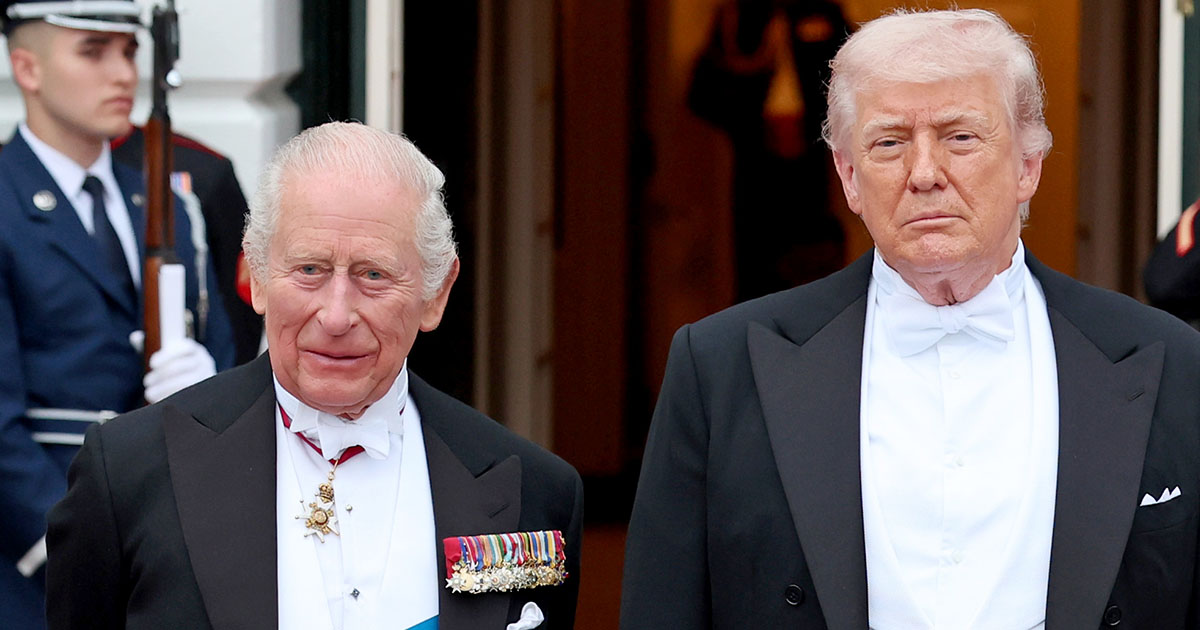
King Charles and Queen Camilla are in the United States for a high-profile state visit, a trip designed to celebrate the deep ties between the United Kingdom and the United States and to keep those bonds strong in uncertain times. While the schedule has included pageantry and warm formalities, it has also unfolded against a tense international backdrop, with ongoing friction involving Iran. It was in this setting, during a grand State Dinner at the White House, that former President Donald Trump made a striking claim about the King’s private views—one that quickly prompted a carefully worded response from Buckingham Palace.
The royal couple arrived in Washington, D.C., early in the week and were welcomed at the White House by President Trump and First Lady Melania Trump. The visit offered a chance to honor tradition, showcase friendship, and, perhaps most importantly, underscore the enduring nature of a partnership that stretches back centuries. At the same time, it came after months of pointed commentary from Mr. Trump about America’s allies and their roles surrounding the situation with Iran, a topic never far from the headlines.
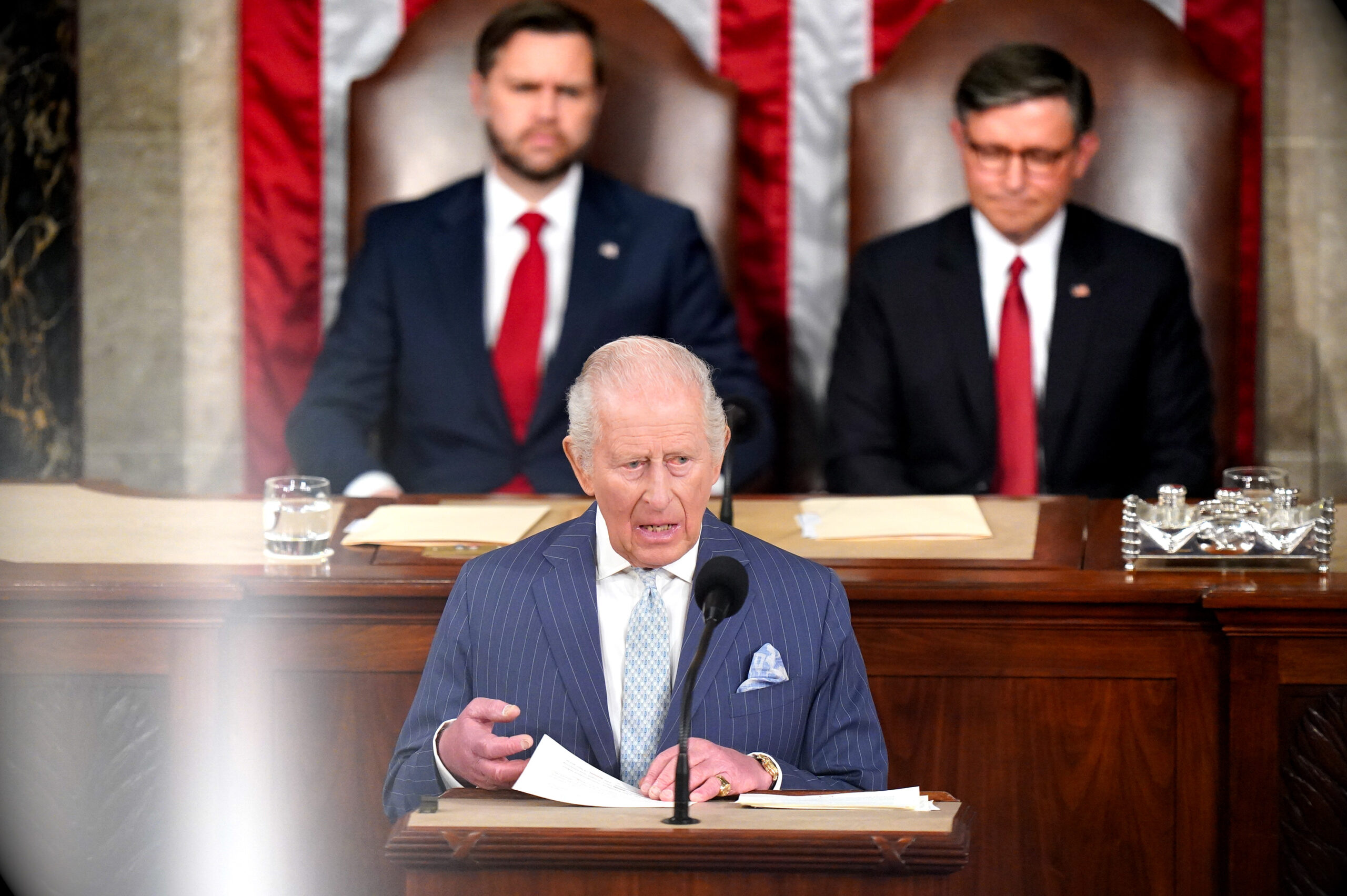
Because of that recent tension, observers have seen this tour as having a notably diplomatic character. King Charles and Queen Camilla set a tone of reassurance from the outset, emphasizing the shared values and mutual respect that link the two nations. On Tuesday, the King took the rare step of addressing Congress, an honor previously granted to his late mother, Queen Elizabeth II, during her 1991 state visit. In measured and reflective language, he spoke about the breadth of the transatlantic relationship and the responsibilities it carries.
“Standing here today, it is hard not to feel the weight of history on my shoulder – because the modern relationship between our two Nations and our own peoples spans not merely 250 years, but over four centuries. It is extraordinary to think that I am the nineteenth in our line of Sovereigns to study, with daily attention, the affairs of America,” King Charles said, reminding lawmakers and viewers alike that the British Crown has looked toward the United States with sustained interest across many generations.
He continued with a nod to the American system of government itself: “So, I come here today with the highest respect for the United States Congress; this citadel of democracy created to represent the voice of all American people to advance sacred rights and freedoms.” The overall message was one of kinship, steadiness, and gratitude, offered in a tone both dignified and warm.
King Charles addresses Congress with history and humility
Later in his remarks, the King recalled that his mother had addressed Congress more than three decades earlier. “Speaking in this renowned chamber of debate and deliberation, I cannot help but think of my late mother, Queen Elizabeth, who, in 1991, was also afforded this signal honour and similarly spoke under the watchful eye of the Statue of Freedom above us. Today, I am here on this great occasion in the life of our Nations to express the highest regard and friendship of the British people to the people of the United States.” It was an emotional moment for those who remember that 1991 address and who cherish the continuity that the monarchy represents.
Members of the Royal Family are expected to remain neutral in public political debates. The King can raise broad issues of concern—like the environment, community resilience, and the importance of dialogue—even as he avoids taking positions on day-to-day policy or party politics. That fine balance is a fundamental part of the constitutional role he has inherited.
In a separate televised tribute marking what would have been Queen Elizabeth II’s 100th birthday, King Charles reflected on his late mother’s legacy in a way that resonated far beyond the immediate occasion. “Today, as we mark what would have been my beloved mother’s 100th birthday, my family and I pause to reflect on the life and loss of a sovereign who meant so much to us all, and to celebrate anew the many blessings of her memory,” he said, evoking the affection with which she is still held on both sides of the Atlantic.
He used that reflection to speak gently about the broader state of the world, acknowledging the challenges that weigh on many people’s minds without singling out any leader or nation. It was a statesmanlike gesture—a reminder that, even in unsettled times, gratitude and hope still have their place.
“Millions will remember her for moments of national significance; many others for a fleeting personal encounter, a smile, a kind word that lifted spirits, or for that marvelous twinkle of the eye when sharing a marmalade sandwich with Paddington Bear in the final months of her life.” The words captured the late Queen’s gift for connecting across boundaries and ages, and they set a reflective tone that felt particularly fitting during this visit.
Commentator suggests a subtle swipe at Trump—interpretations vary
The King’s tribute continued in a similar spirit: “Much about the times we now live in, I suspect, may have troubled her deeply, but I take heart from her belief that goodness will always prevail and that a brighter dawn is never far from the horizon. God bless you, darling mama. You remain forever in our hearts and prayers.” The words were broad and humane, and they did not name any particular conflict or figure. Even so, commentary soon followed.
Appearing on Sky News, royal commentator Kinsey Schofield suggested that the King’s remarks might be read as a veiled criticism of Donald Trump in light of tensions involving Iran. As she put it, she felt it could have been “a swipe at what’s going on in the United States between Donald Trump and Iran.” Others listening had different interpretations, which is often the case when public figures speak in measured, general terms during sensitive moments.
Schofield went on to suggest that when the King spoke of global concerns, he might have been hinting more about current tensions than about any domestic royal matter. Her view, however, remains an interpretation from outside the Palace; the King’s words themselves were carefully non-specific and consistent with the Royal Family’s long-standing practice of avoiding direct commentary on live political controversies.
In matters like these, nuance is everything. Public figures sometimes hear their words reframed by commentators according to the headlines of the day. But unless and until there is an explicit, on-the-record position from a head of state or government, most seasoned observers treat such interpretations as just that—interpretations rather than settled fact.
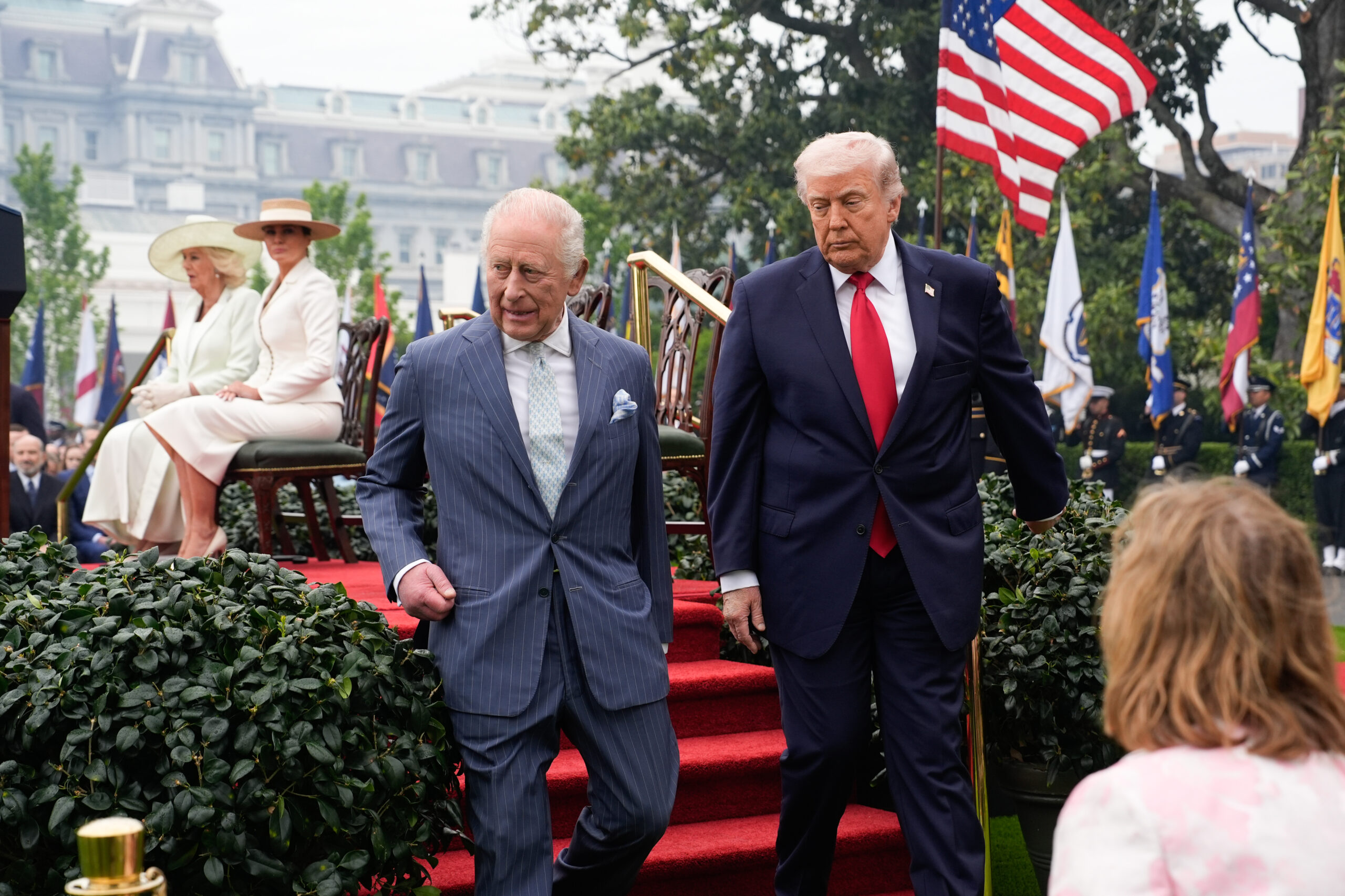
It was against this backdrop that the State Dinner unfolded on Tuesday evening. The occasion had all the hallmarks one expects: formal attire, a carefully curated menu, and the time-honored custom of toasts exchanged between hosts and guests. Yet amid the goodwill, a moment arrived that raised eyebrows. Mr. Trump, in his remarks, offered a startling assertion about the King’s private views on Iran—an assertion that the Palace would address the following day.
Trump says King Charles agrees with him on Iran’s nuclear ambitions
Although King Charles had spoken of the “conflict in the Middle East” earlier in the visit, he had not named Iran nor ventured into the specifics of policy. By contrast, Mr. Trump has been forthright about his approach and has previously criticized allies he believes have not done enough. During the dinner, he pointedly suggested that the King personally supports his position on Iran and, in particular, on preventing Tehran from acquiring nuclear weapons.
“We’re doing a little Middle East work right now… and we’re doing very well,” Mr. Trump said in his toast, underscoring his confidence in his approach. Listeners in the room, and those following the trip from afar, understood at once that this was a remark with diplomatic weight.
He then sharpened the point: “We have militarily defeated that particular opponent, and we’re never going to let that opponent ever, Charles agrees with me even more than I do. We’re never going to let that opponent have a nuclear weapon. They know that, and they’ve known it right now, very powerfully.” It was not just a policy claim; it was a characterization of the King’s private concurrence—something rare to hear about a monarch renowned for strict neutrality.
American presidents and former presidents often use State Dinner toasts to project strength and set a tone. Even so, suggesting that a foreign sovereign privately sides with a specific policy approach is unusual, especially when that sovereign is duty-bound to avoid political endorsements. That is precisely why the next development arrived so quickly.
The Palace responds in careful, constitutional language
A spokesperson for Buckingham Palace, responding to queries reported by The Sun, offered a succinct statement: “The King is naturally mindful of his Government’s long-standing and well-known position on the prevention of nuclear proliferation.” Those few words were doing a good deal of work. They reminded readers that the monarch speaks—and refrains from speaking—in accordance with the British government of the day, and that on matters as grave as nuclear weapons, the UK’s stance is to prevent their spread.
Importantly, the statement did not confirm or deny Mr. Trump’s account of any private conversation. Instead, it restated the constitutional reality that guides the King’s public posture. While he can champion consensus causes and foster dialogue, he does not freelance on foreign policy. That restraint is more than mere tradition; it is an essential part of the settlement that allows the Crown to serve every citizen, regardless of their political preferences.
Why royal neutrality matters
For those who have followed royal life over many years, the principle of neutrality is familiar. The monarch reigns but does not rule, and, in our time, that means avoiding commentary that could be interpreted as a nudge toward or against a particular leader or policy. When a crisis arises—whether diplomatic, environmental, or humanitarian—the monarch often highlights the human themes that bind people together and the hopes that can guide us through. That approach preserves the Crown’s ability to serve as a unifying presence, even when elected governments change course.
There is a delicate line to walk. Advocating for stewardship of the natural world, or encouraging compassion and service, can be done in ways that cross party lines. But weighing in on the specifics of live negotiations or military strategy would be another matter entirely. Observers therefore listen closely, and sometimes they hear different things, especially when global events are developing quickly.
What a State Dinner aims to accomplish
State Dinners are not policy summits; they are ceremonial, symbolic, and highly visible affirmations of friendship between nations. The toasts, music, and guest list all send signals about shared priorities, mutual respect, and cultural ties. Often, they bookend private meetings earlier in the day where the practical work of diplomacy takes place—work that can be every bit as delicate as it is vital. While headlines tend to focus on the most dramatic line of the evening, the broader purpose remains to build trust and keep communication open, especially when the world feels unsettled.
Even during periods of disagreement, these events remind both publics that the relationship is bigger than any single administration or news cycle. For many, the memory of state visits from earlier decades—complete with historic speeches and small gestures of goodwill—grounds today’s tensions in a longer story of partnership and perseverance.
Reading the moment without rushing to conclusions
It is natural to search for clues about where leaders stand, particularly when situations involving nuclear programs and regional security are at stake. Yet it is equally important to distinguish between a politician’s characterization of another figure’s views and an official position announced on the record. In this case, King Charles’s public language remained general, rooted in friendship, history, and shared values, while Mr. Trump’s comments reflected his own policy posture and his interpretation of any private exchanges.
On the core issue—preventing the spread of nuclear weapons—Western governments have long advocated non-proliferation. Where debates arise is over the means: diplomacy, sanctions, military pressure, or a combination thereof. The Palace’s brief statement steered clear of those tactical questions and simply anchored the King where the constitution expects him to be: mindful of the UK government’s established stance and above partisan or personal contention.
For those following along at home, especially readers who lived through earlier chapters of the special relationship, the best guide is patience. Formal communiqués and joint statements, rather than off-the-cuff toasts, are where any shared positions are spelled out. Until then, the wisest reading is the simplest one: the monarch speaks for unity and continuity; elected officials speak for their policies.
A scene that many will remember
The image of a glittering banquet room, a clink of crystal, and a provocative line dropped into a toast will linger long after this visit concludes. It is a snapshot that captures both the theatre of statecraft and the unpredictability that can attend any live moment. Yet alongside that scene are others: a solemn address to Congress recalling his mother’s historic speech; words of affection for a beloved Queen; and a reminder that, even now, ties of culture, language, and law knit the two nations closely together.
Those who remember Queen Elizabeth II’s 1991 appearance before Congress may have felt a pang of recognition watching her son at the podium this week. The message then, as now, was about friendship grounded in history and attentive to the future. If anything, that steady emphasis on continuity can be comforting in an age when the headlines can shift so quickly from one flashpoint to the next.
What to watch for next
The remainder of the visit is expected to include additional meetings and cultural engagements, many of them focused on long-term cooperation rather than short-term squabbles. Topics such as environmental stewardship, support for veterans, scientific partnerships, and community service are likely to feature. These are areas where the King’s decades-long interests align with persistent, bipartisan priorities in the United States.
Whether Mr. Trump’s remarks become a significant diplomatic footnote or simply a momentary stir will depend on what follows. If future statements clarify points of policy, this episode may recede. If not, it may stand as a reminder of the unusual pressures that attend modern state visits—where every microphone can instantly project a single sentence across the world.
For now, a few timeless points hold true. The US–UK relationship remains one of the most consequential in the world, anchored by shared democratic ideals and sustained by generations of cooperation. The monarchy, in its ceremonial and unifying role, continues to embody continuity through change. And the Palace, when necessary, will gently reaffirm the constitutional boundaries that safeguard that role, especially when public conversation grows heated.
For those who prefer to listen
If you enjoy taking in royal coverage by ear, the program below offers conversation and context about the visit, the State Dinner, and the many traditions that frame occasions like these. It is an easy listen designed to bring you up to speed without talking past you, weaving together the week’s main moments so they are simple to follow.