
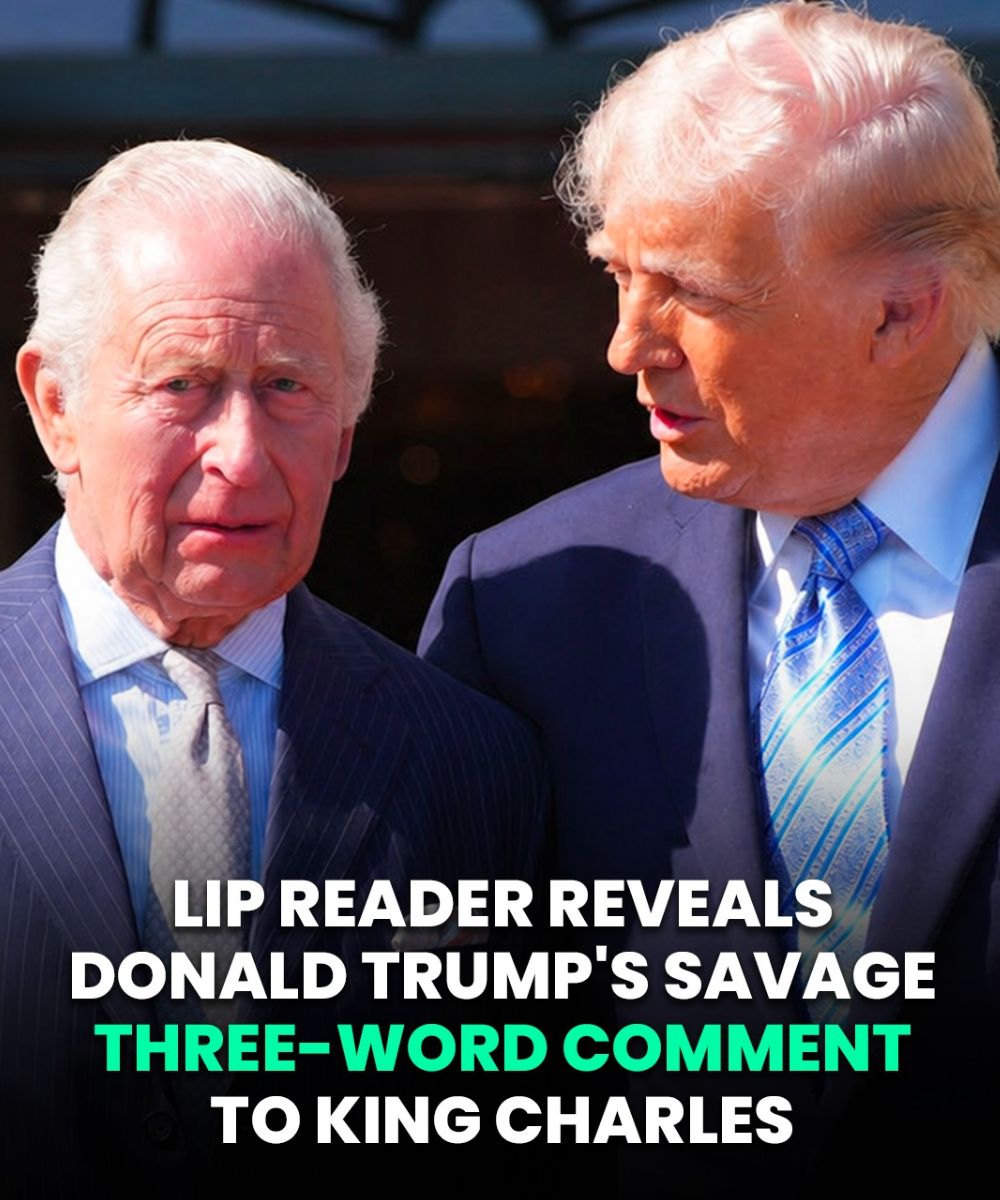
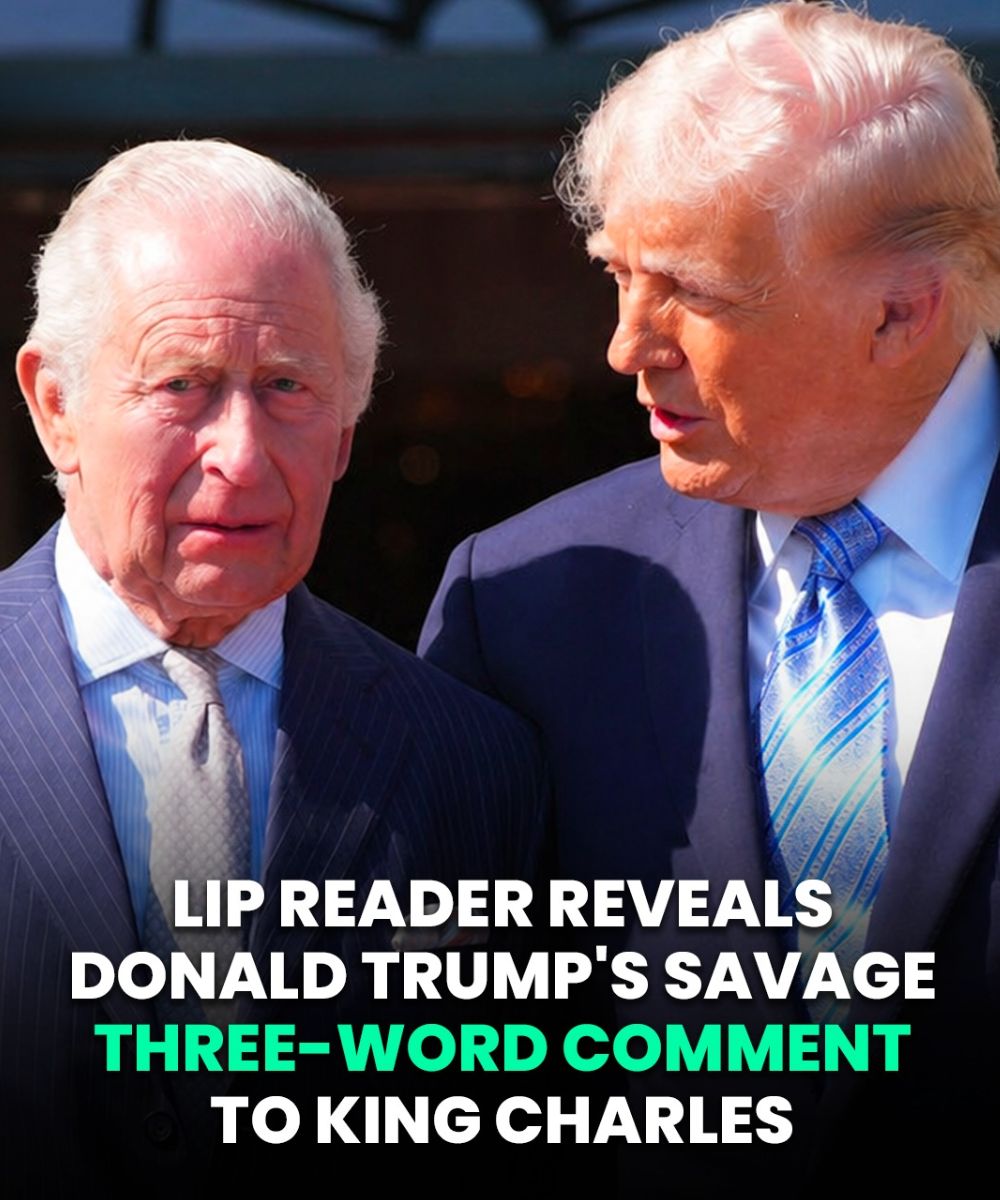
A seasoned lip reader says a brief, three-word response from King Charles shaped a tense moment during his meeting with Donald Trump at the White House, where Queen Camilla was also present.
The meeting came only days after a frightening incident disrupted the White House Correspondents’ Association dinner at the Washington Hilton. That annual event typically brings together journalists, public figures, and guests for an evening of speeches and light-hearted moments. This year, it was shaken by a security crisis that dominated headlines and set a serious tone for the days that followed.
According to reports from the evening of April 25, a gunman forced his way through a security checkpoint near the hotel’s ballroom. The situation escalated quickly, prompting an urgent response from security teams on the ground. Shots were fired, and law enforcement acted at once to protect those in attendance.
Donald Trump, who was at the event, was swiftly escorted away from the immediate area by security. First Lady Melania Trump took cover on the floor during the commotion, and a Secret Service agent was struck. Thankfully, the agent was wearing a protective vest and is expected to make a full recovery. The speed and coordination of the response, while frightening to witness, likely prevented a far worse outcome.
Authorities later identified the suspect as Cole Tomas Allen, a 31-year-old mechanical engineer from Torrance, California. In addition to his engineering work, he had served as an educator and had been publicly recognized as “teacher of the month” by a tutoring organization in late 2024. These details added complexity to a story that was already deeply unsettling for those who attended the dinner and for people following the news at home.
In the aftermath of the incident, investigators pieced together what they believe were the suspect’s intentions and state of mind leading up to the event.
In the hours after the chaos at the hotel, Allen’s siblings reached out to authorities in Connecticut, sharing messages they had reportedly received from him that raised serious concerns. Investigators say Allen had made extreme statements in the past and had hinted that he might take action. That troubling pattern, combined with what was later found in his hotel room, pointed to a plan that had been thought about in advance rather than formed in an instant.
Among the items recovered, officials discovered a document in which he described himself as the “Friendly Federal Assassin.” The paper reportedly laid out intended targets, placing members of the Trump administration at the top of the list. In a curious and chilling twist, the document also appeared to exempt certain people and groups whenever possible. As investigators continued their work, a picture emerged of a man attempting to rationalize violent intent through a personal moral framework.
Before the incident, Allen reportedly contacted family members with messages that expressed regret. He framed his actions as a response to political and social frustrations, citing anger at government actions. These alleged statements, however, do not make sense of the harm threatened or done. They only deepen the sadness of a situation in which many people were put in danger and a community of journalists, guests, and staff were left shaken.
In the days that followed, attention turned to ensuring that previously scheduled public events could proceed safely. For many, the resumption of normal routines signaled resilience and resolve. It also provided an opportunity to reaffirm the importance of calm leadership in the face of turmoil.
Despite the tense backdrop, King Charles and Queen Camilla moved forward with their planned visit to the United States, marking history and highlighting long-standing ties with America.
Their U.S. trip took place in honor of the 250th anniversary of American independence, a milestone that underscores more than two centuries of shared history between the United Kingdom and the United States. Beyond the ceremonies and photo opportunities, the visit was designed to showcase cooperation and friendship. Stops in New York and Virginia were chosen to spotlight the deep cultural and historical links between the two nations, as well as the practical collaborations that continue every day in areas like science, education, the arts, and defense.
For many people in both countries, such visits are about more than tradition. They are also about reassurance. In periods of uncertainty, moments of stability and courtesy—symbolized by the presence of the monarch and his consort—can be a welcome reminder that relationships endure, even when the news cycle turns turbulent.
Buckingham Palace affirmed that the visit would proceed as planned and expressed gratitude to those who ensured the safety and smooth running of each engagement.
That message was meant not only for the American officials and teams on the ground, but also for the broader public. It signaled that caution and care were being taken, and that the practical work of diplomacy would continue.
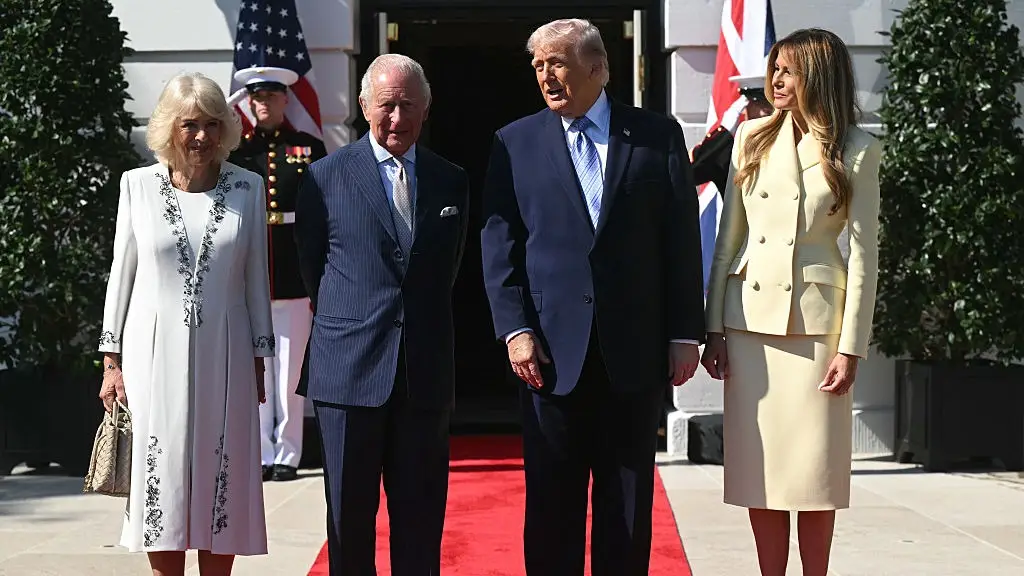
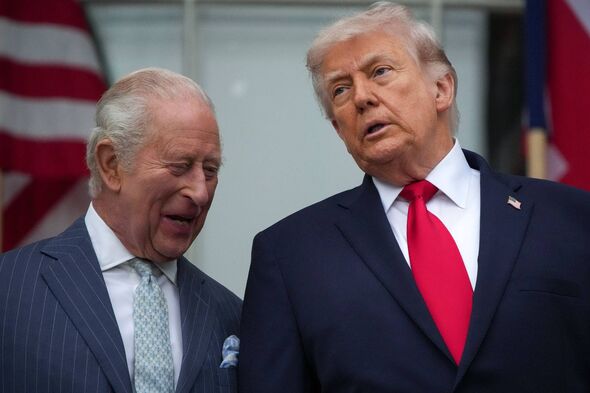
During the visit, the royal couple met with President Donald Trump and First Lady Melania Trump at the White House. According to professional lip reader Nicola Hickling, the first exchanges between the King and the former President carried a sharper edge than many might expect from such a carefully choreographed occasion. The atmosphere, shaped in part by the recent events at the Washington Hilton, reportedly turned more serious as the conversation opened.
Hickling says that Donald Trump began by referencing the frightening incident from a few days earlier, asking King Charles whether he was alright and acknowledging how sudden and unsettling the situation had been. From there, he reportedly moved to a wider theme, touching on international tensions and mentioning ongoing conversations with Vladimir Putin. That turn of subject, according to the lip reader, pushed the discussion toward geopolitics right away.
As the account describes it, King Charles did not want to go down that road at that moment. Instead, he offered a simple, polite redirection—three brief words—aimed at pausing or postponing the sensitive topic. The lip reader’s interpretation suggests the King’s response was calm and firm, the sort of concise nudge that diplomats and statespeople sometimes use to reset a conversation without causing offense.
When Trump continued, still voicing concern about the possibility of escalating conflict, King Charles reportedly repeated the same understated line. The goal, it seems, was to move the exchange back toward safer ground. From there, the conversation shifted toward more neutral territory, including pleasantries about the White House itself. In other words, what could have developed into a tense policy back-and-forth became, instead, a brief moment of etiquette—one person seeking to discuss a volatile subject, and the other gently choosing to step around it.
As with all reports based on lip reading, it is important to remember that such interpretations are best understood as informed readings rather than verbatim transcripts. Professional lip readers develop their skills over many years. They watch facial movements, study the shape and rhythm of words, and combine context with experience. Even so, room for uncertainty always remains. Accents, camera angles, and subtle differences in diction can make precise conclusions difficult. Still, these readings can offer a window into the tone and structure of an interaction, especially when no official microphone captures every aside.
What the moment suggests about leadership, tone, and timing
For those watching from home—especially anyone who lived through decades of changing political climates—this small, three-word reply may feel familiar. In many workplaces and families, there are moments when it is wiser to postpone a heavy conversation. The King’s approach, as described, seemed rooted in that common-sense wisdom: acknowledge the seriousness, but choose the right time and place.
Diplomacy often unfolds in gestures and glances as much as in speeches. A brief redirect can signal a desire to avoid misunderstandings, particularly when cameras are rolling and every remark can be amplified. It can also help preserve goodwill, allowing both sides to engage more productively when the setting is less public and the stakes are framed more clearly.
For Donald Trump, raising concerns about global tensions fit his reputation for speaking directly about high-stakes issues. For King Charles, guiding the talk back toward neutral ground fit the duties of a constitutional monarch, whose public role is to remain above day-to-day political debates. These different roles can produce friction, but they also create opportunities for balance: a frank perspective on one side, a steadying hand on the other.
A visit shaped by history and continuity
The timing of the royal trip gave the meeting its own larger context. Commemorating the 250th anniversary of American independence serves as a reminder that the U.S.–U.K. relationship has evolved from conflict to deep partnership. That journey has seen alliances in war, collaborations in science and culture, and a familylike closeness between societies that share a language but maintain distinct identities.
New York and Virginia, highlighted during the visit, symbolize that long arc of connection. New York stands as a global crossroads—a place where finance, media, and culture meet. Virginia carries layers of early American history, from colonial settlements to the founding era. By visiting both, the royal couple underscored how the relationship is built on memory as well as on modern ties that matter to everyday life.
In that bigger picture, a short, carefully chosen phrase between two high-profile figures becomes part of a wider story about steadiness, restraint, and respect. The United Kingdom and the United States continue to navigate world events together, even as politics and personalities shift. Politeness and patience still count, especially when the setting is public and emotions run high.
Safety, service, and the people behind the scenes
The swift response at the Washington Hilton—escorting attendees to safety, moving principals out of harm’s way, and relying on protective gear—offered a sobering reminder of the risks that security teams accept every day. The injured Secret Service agent’s protective vest likely made the difference between a tragedy and a survivable wound. For many of us watching these events from afar, that fact is both humbling and heartening. It also highlights how planning and training quietly protect public life in ways we seldom see.
In the days since, the focus on investigative details—documents, messages, and the suspect’s background—has tried to answer the central question of why. But no paper trail can fully explain violence. What it can do is help authorities understand how to prevent future harm and how to improve security while keeping civic life open and accessible. That balance is not easy. Yet it is essential for the gatherings that bring communities together, whether they are dinners for journalists, state visits, or neighborhood events.
Understanding lip reading and why it draws attention
For many people, lip reading can feel almost like a magic trick. In reality, it is a rigorous skill built over time. Professionals study the shapes that lips and tongues make, the way breath patterns shift, and even how the jaw moves on certain sounds. They also interpret within context—considering the setting, the history of the speakers, and the topic most likely to be discussed at that moment. Even then, some words look alike on the lips, and certainty is not always possible.
That is why reports based on lip reading are often framed as reasonable interpretations rather than ironclad quotations. They can reveal tone and direction: Was a comment more light-hearted or more serious? Was someone deflecting, reassuring, or pressing a point? In this case, the three-word reply attributed to King Charles reads as a gentle but clear boundary—an acknowledgment that a topic matters, paired with a request to return to it later. The exact phrasing, of course, was not captured on a microphone for the public, and responsible accounts keep that distinction in mind.
A calm close to a complicated week
By the end of the meeting, the conversation had settled into safer, more ceremonial topics, including polite remarks about the White House. That shift, modest as it may seem, helped bring the encounter back to where state visits usually thrive: goodwill, symbols, and shared history. After a week that began with shock and anxiety, a touch of normalcy had value of its own.
For those in the 45-to-65 age range who have watched public life change dramatically over the decades, this story may hold a familiar lesson. Big personalities draw attention. Breaking news can stir strong emotions. But in the long run, civility and timing still matter. Choosing the right words—not too many, not too few—can steady a conversation and keep relationships on track. The lip reader’s account suggests that, in a high-pressure moment, King Charles relied on a simple phrase to do exactly that.
As the United Kingdom and the United States continue to work together, moments like this one—quiet, quick, and courteous—remind us of what diplomacy looks like up close. It is not always dramatic. Often, it is the careful decision to pause, to listen, and to respond with restraint. In just three words, the meeting at the White House offered a small but telling example of how that restraint can guide the tone of an entire discussion.



