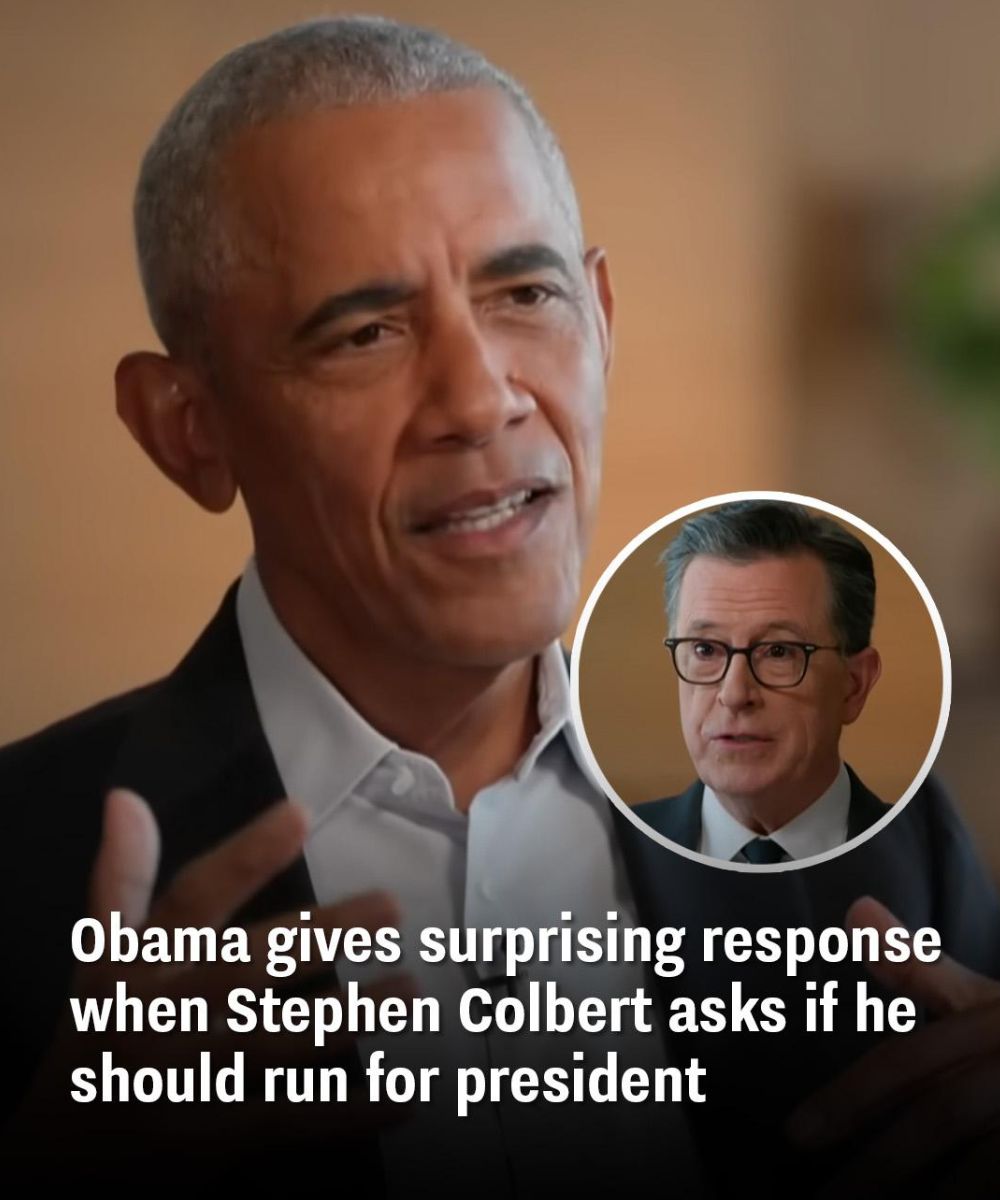
With the Democratic presidential nomination still open two years out, a lighthearted exchange between Barack Obama and Stephen Colbert turned into a moment that got everyone talking.
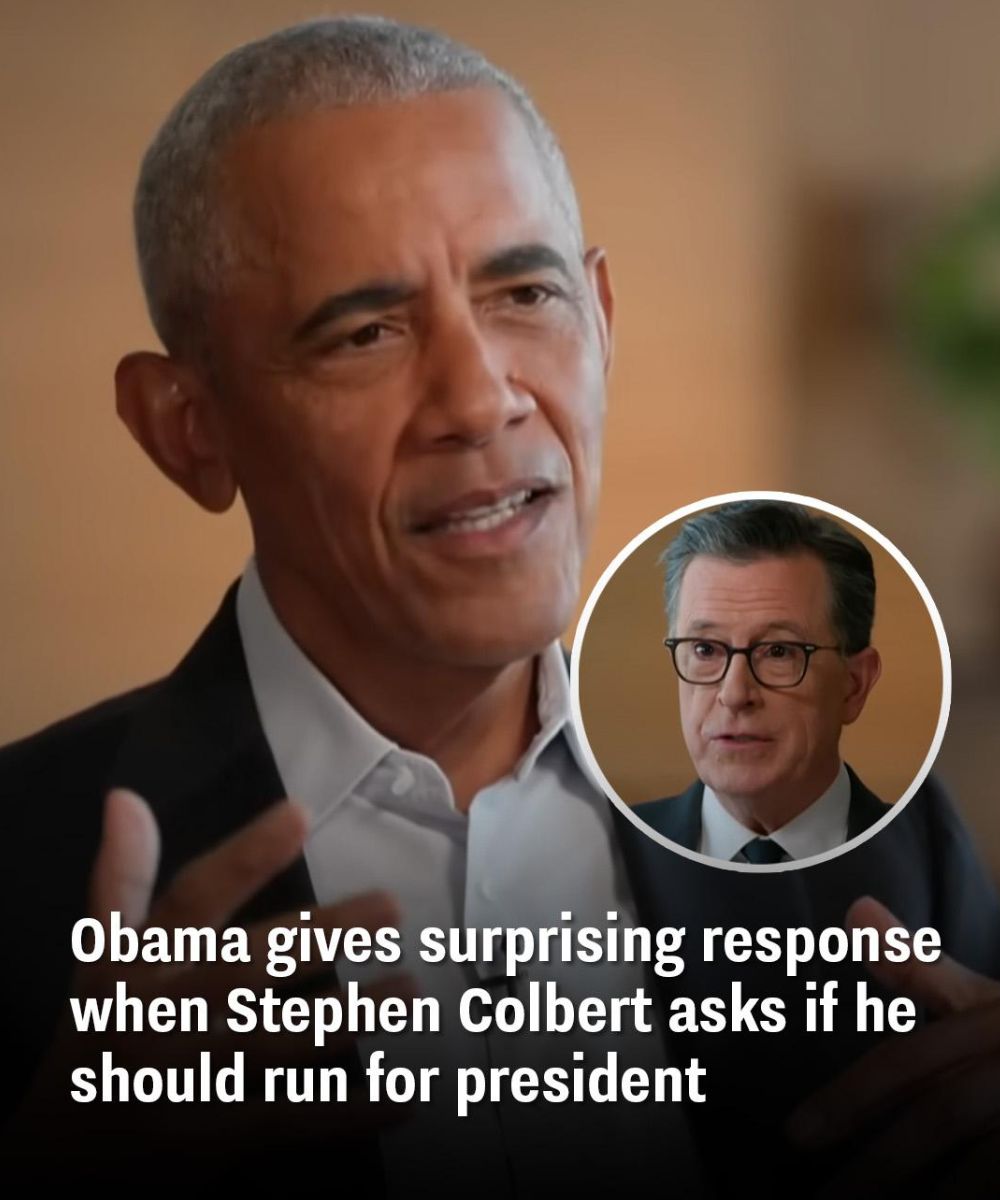
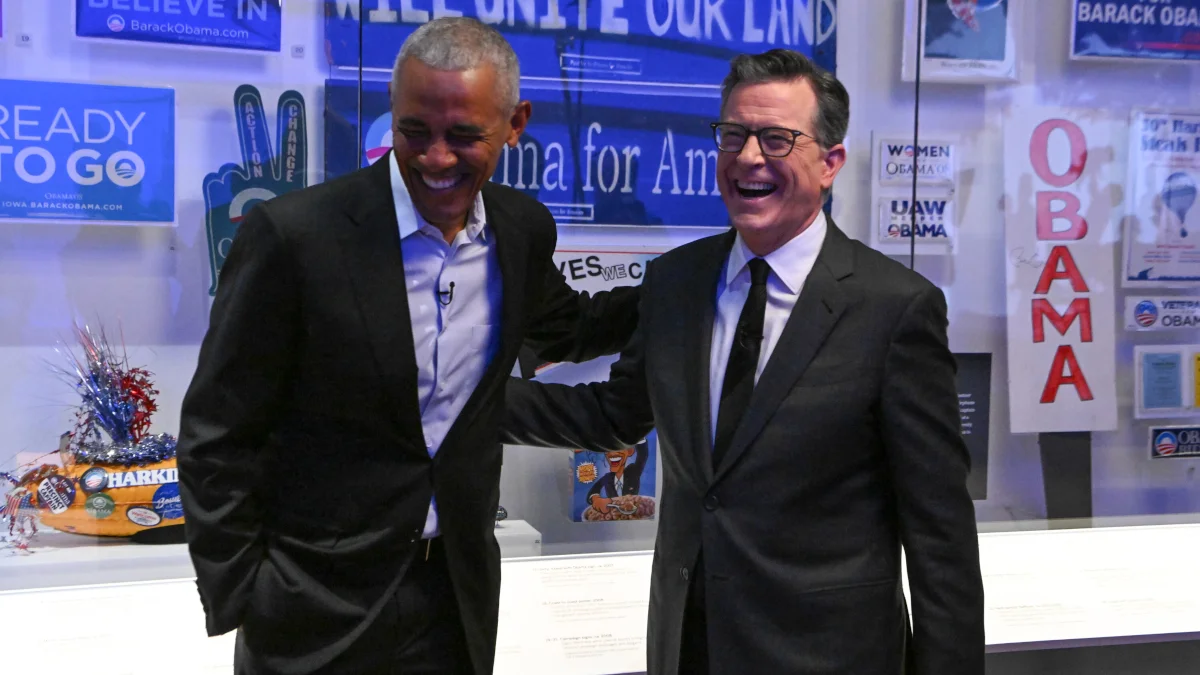
In a pre-recorded sit-down for The Late Show, taped at Obama’s presidential center not long before it opens to visitors, Stephen Colbert playfully floated an idea that has followed many high-profile figures in recent years. The conversation began as a bit of good-natured banter, the kind of comfortable back-and-forth that longtime viewers of late-night television recognize instantly. But within seconds, it produced a line that drew laughs, applause, and a knowing nod to the political mood of the moment.
Colbert, who has spent a career turning sharp wit into thoughtful conversation, joked that a career change might be in his future. Then he went one step further, telling Obama with a grin, “A lot of people tell me I should run for president.” The audience responded with the kind of gasps and chuckles that signal both surprise and curiosity, as if everyone was briefly entertaining the question: Why not?
Rather than dismiss the quip, Obama used it to make a larger point about politics today. He did not lecture or hedge. Instead, he met the moment with the dry humor that helped define his public persona, letting a single remark carry the weight of a broader observation.
When Colbert asked whether it would be “dumb” for a television personality to seek the highest office in the land, Obama smiled and replied, “Well, you know, the bar has changed.” It was a line delivered gently but unmistakably. The room broke into laughter and applause, not because it was cruel, but because it captured something many viewers already sensed about the modern political landscape.
He followed with a warm reassurance, telling Colbert, “Let me say it this way: I think you could do considerably better than some people we’ve seen.” He did not mention any names. He did not have to. The audience understood the reference instantly, and the applause returned, louder than before. Then, sounding like a supportive friend at the end of a long phone call, the 64-year-old former president added, “I have great confidence in that.”
For people who have watched late-night programs over the decades, the exchange had a familiar rhythm. Humor opened the door, and a candid point stepped through. It was a reminder of why these shows once served as a kind of national living room, where tough subjects could be softened with a laugh and still land with meaning.
Colbert asked if that counted as an endorsement. Obama, smiling, made sure everyone understood it did not.
There was no ambiguity in the way Obama handled the follow-up. He complimented Colbert’s intelligence, empathy, and quick mind—qualities that good leaders tend to share—while carefully stepping away from anything that sounded like a formal political nod. The moment was affectionate without being political, and generous without becoming a headline about 2028.
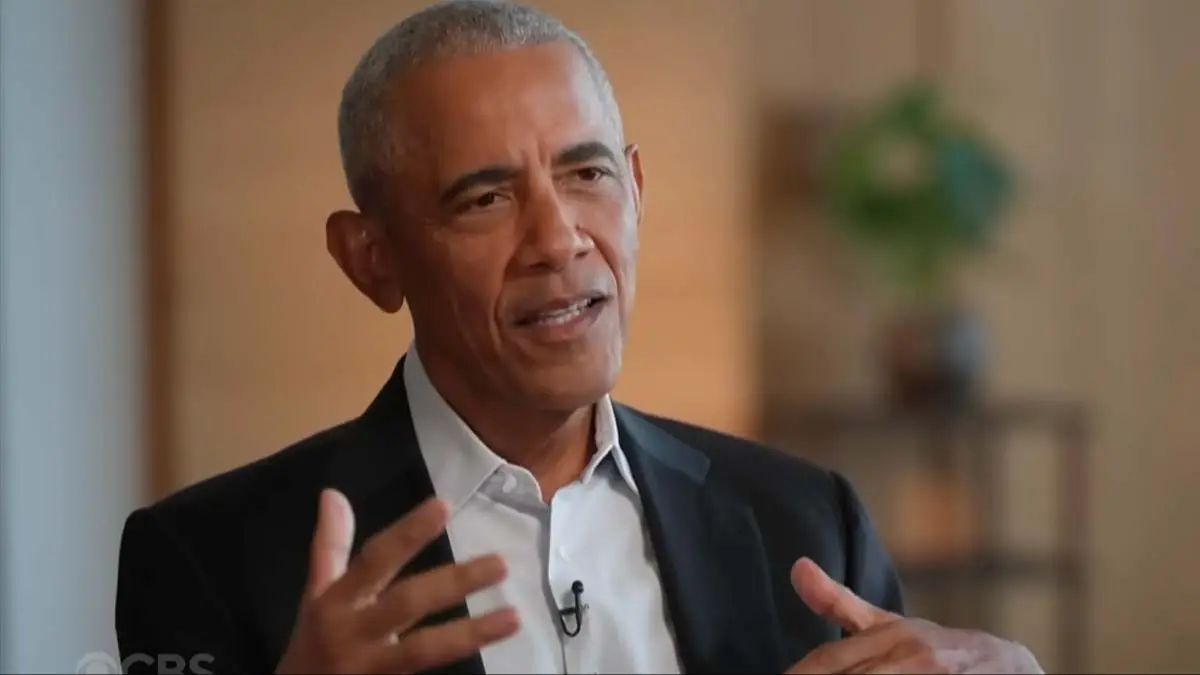
For Colbert, the timing of this conversation gives it extra weight. The Late Show is nearing the end of its run, a conclusion that has taken longtime viewers by surprise and stirred debate about why it happened and what it says about television now. After 33 years of that show’s late-night slot on CBS—first with David Letterman and then with Stephen Colbert—the network’s choice to wind it down landed like the closing of a chapter in American pop culture.
The decision, announced last July, arrived during a complicated moment for CBS parent company Paramount, which sought approval for a multibillion-dollar merger with Skydance. Critics questioned the timing and wondered whether worries about potential controversy were mixing with the bottom line. Skydance has ties to David Ellison, the son of Larry Ellison, a prominent business figure and ally of Donald Trump. All of this gave the cancellation a political shadow, the kind of speculation that late-night shows themselves often unpack for audiences.
Network executives have pushed back forcefully on the idea that politics played any role. They have said, again and again, that the decision was strictly financial. That explanation, however, did not satisfy everyone—especially people who have spent decades building that late-night tradition.
David Letterman, who defined the same time slot for 22 years before Colbert took over, told The New York Times that he did not buy the official story. His comments surprised some and reassured others who felt something more than budgets and ratings was in play. Letterman’s critique wasn’t an attack on colleagues so much as a defense of a form of television he helped shape: the kind of nightly gathering that asks viewers to relax, laugh, and think all at once.
Letterman said social media has eroded the cultural power of late-night TV, but he argued the format still matters because it is, at heart, “humans talking to humans.”
That description resonated in the studio and beyond, especially for those who grew up during an era when late-night shows were a shared experience. Before everyone had a phone in their hand and a dozen timelines to scroll, people tuned in to see a familiar face behind a desk guide them from the noise of the day toward a calmer night. Jokes set the tone. Conversations added heart. And every so often, a guest and a host would find themselves in a moment—like Obama and Colbert did here—where laughter and insight blended into something easy to remember.
Letterman also spoke plainly about why he thought Colbert was nudged aside. In his view, the network wanted to keep the waters smooth while the Skydance deal moved forward, which meant avoiding anything that might be labeled political turbulence. He said he believed the company was not fully open about its reasoning. Whether one agrees with Letterman or not, his willingness to say so out loud gave shape to a debate that had been simmering in whispers and headlines.
For viewers in the 45- to 65-year-old range, these shifts in late-night television may feel personal. Many can remember watching Johnny Carson hand the baton to Jay Leno and David Letterman, then seeing Letterman pass it to Colbert years later. Each change came with questions: Would the comedy feel different? Would the conversations be as warm? Would younger audiences stick around? With The Late Show ending its current run, those questions return, wrapped in new concerns about streaming, corporate consolidations, and the speed at which trends now rise and fall.
Back on Colbert’s stage, Obama’s remarks struck a careful balance between humor and perspective. The gentle jab—“the bar has changed”—landed because it spoke to a reality audiences have watched unfold over time. The path to power has shifted. Fame, television, and politics now share more air than they once did, and not just in the United States. What once seemed like a novelty has become part of the landscape.
Colbert, to his credit, did not let the punch line be the last word. He pressed for clarity, asking whether Obama’s kind words amounted to an endorsement. Obama, with the same even tone he brought to the presidency, said no. The exchange was a small reminder of how public figures can keep conversations light without losing their footing. It also showed something else about Colbert: he is as comfortable receiving a joke as he is delivering one.
For those who have followed Colbert from his early days through the present, that composure is familiar. His career has always balanced humor with an earnest interest in how people think, feel, and govern. That is why his interviews often draw real answers. And it is why a seemingly simple question about running for president turned into a one-liner with a deeper echo.
The setting also mattered. Filming at Obama’s presidential center gave the conversation a reflective quality. Museums and centers like it are built to help the public step back from headlines and look at a bigger picture—what changed, what stayed the same, and what still needs work. In that space, a remark about who belongs in politics becomes more than a quip. It becomes part of a bigger story about leadership, culture, and how people choose who speaks for them.
The moment was not a policy discussion. It did not need to be. By drawing a laugh and then offering reassurance to Colbert, Obama captured a feeling that many share: that public life should be serious without being joyless, and that humor can still bring people together when it is used with care. The audience’s response suggested relief—relief that someone could say something pointed without turning it into a fight, and relief that, at least for a few minutes, complicated questions could sit beside a good laugh.
As the final episodes of The Late Show approach, the conversations around the program have widened. Some people are focused on corporate decisions and bottom lines. Others are thinking about what late-night TV has meant in their lives—how it offered a daily routine, a familiar laugh, a sense that we were all watching together. In living rooms across the country, the show has been a gentle bridge from busy days into quieter nights. Regardless of the business logic, endings like this stir emotions because they close doors that have been open for a long time.
That is likely why Obama chose to end his time with Colbert on a note of gratitude. He kept the message simple and heartfelt: “Thank you for everything that you have done,” he said. “I know there are only a few shows left, but I know you’re going to make them count, because you always have.” It was a generous compliment, and it fit the mood—two men, both veterans of public life, acknowledging the end of a chapter with warmth and respect.
For viewers who have aged alongside these programs, that sentiment may ring true. Television has changed. Politics has changed. The ways we gather our news and laughter have changed. But the value of hearing one person talk to another, honestly and with good will, remains. Letterman’s phrase—“humans talking to humans”—is not only a defense of late-night TV; it is a reminder of what we look for in leaders, interviewers, and neighbors alike.
In the end, the headline from this exchange was a single, memorable line. But the reason it stuck had less to do with the joke itself and more to do with the way it was delivered: kindly, clearly, and with a wink toward the reality we all recognize. The bar may have changed, as Obama said, yet the qualities people hope for in public life—steadiness, empathy, humor used to heal rather than divide—still matter.
As Colbert considers what comes next, those qualities will likely follow him wherever he goes. And as viewers consider how they will spend their late evenings in the months ahead, many will carry this episode with them as a bright spot—a reminder that even as shows end and eras turn, a good conversation, shared with good faith, still has the power to make us smile and think at the same time.
So the exchange will linger: a host wondering aloud about a future beyond the studio, and a former president offering both a laugh and a gentle vote of confidence—without making it political. It was a small moment, yes, but also a fitting tribute to what late-night television at its best has always been: a nightly chance to catch our breath, hear something true, and head to bed feeling a little more connected to one another.