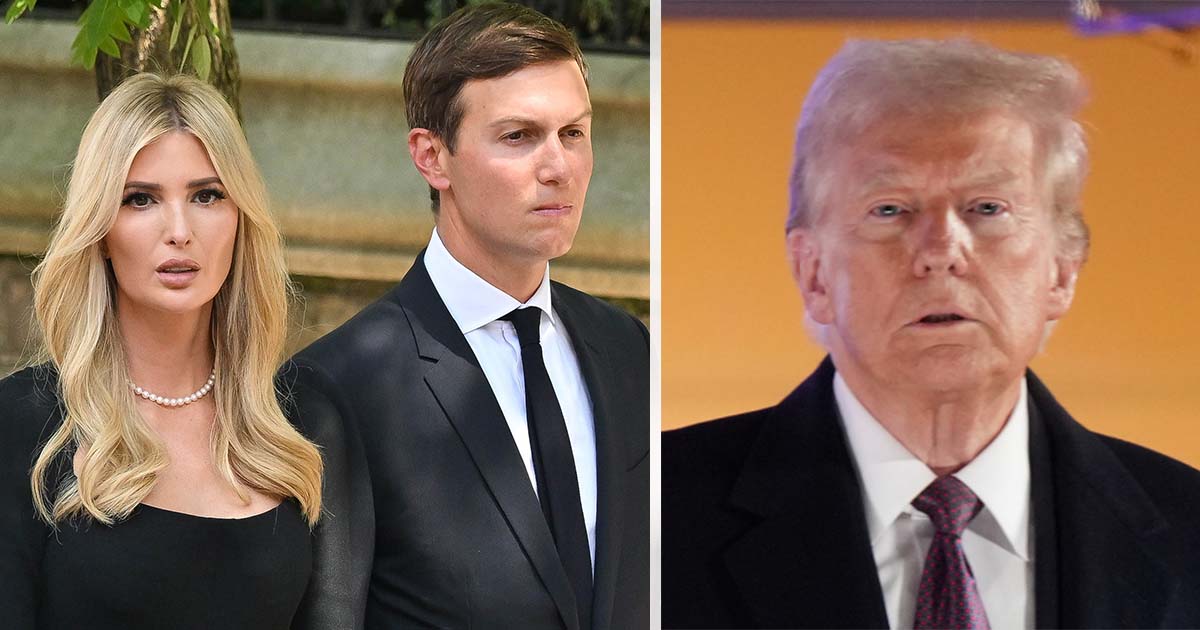
Ivanka Trump stood beside her father through his rise to the White House and much of his first term, taking on a highly visible role that blended politics, family, and public life. Over the years, she has been praised, criticized, and constantly in the spotlight as both a daughter and a senior advisor. A new book now adds another layer to that complicated story, claiming she declined to publicly vouch for her father on a sensitive issue.
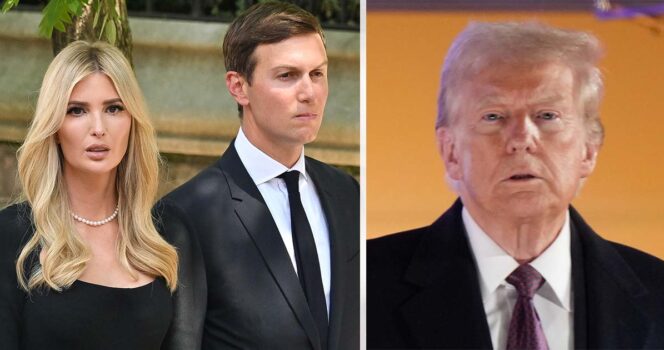
Before we get to that, it helps to remember how central Ivanka was to Donald Trump’s first presidential run and early days in office. From introducing her father at major campaign events to speaking at the 2016 Republican National Convention, she tried to present herself as a steady, modernizing voice. Those efforts meant long days, high expectations, and intense scrutiny, all while raising young children and juggling a marriage to fellow senior White House advisor Jared Kushner.
From campaign trail to the West Wing
Ivanka Trump’s transition from business executive and television personality to presidential advisor happened quickly after the 2016 election. Within weeks, she and Jared Kushner had formal roles in the administration. Ivanka’s focus, as the White House described it, was on expanding education and economic opportunities for women and families, job creation, and workforce development. It was an ambitious portfolio that touched on areas she had promoted in her private-sector work and public appearances.
At the same time, life did not slow down at home. Years later, Ivanka would describe that period as wonderfully rewarding but overwhelming, the sort of nonstop schedule familiar to many working parents. The stakes, however, were unique: every policy conversation and public appearance drew commentary, and every private moment risked becoming public.
Admiration, criticism, and friendships under strain
Holding a senior position in the White House brought visibility, and with it, sharp criticism from political opponents and even former friends. Some observers believed Ivanka could have influenced her father’s decisions more strongly, especially on hot-button issues, and they did not hesitate to say so. The pressure was not only professional; it reached into her social circle.
Public figures who had once moved in the same circles as Ivanka began to distance themselves. Some of those personal losses stung. Reports at the time described her disappointment as friends pulled away and social invitations disappeared. For someone known before politics as a fashion executive, philanthropist, and prominent New York social figure, the shift from welcomed guest to controversial presence was dramatic.
The reality of high-stakes politics is that people choose sides, often firmly. As the months went by, Ivanka became a symbol—admired by supporters for her poise and independence, criticized by detractors who wanted her to break more forcefully from her father. That divide made casual friendships and cordial acquaintanceship difficult to maintain.
Business backlash and a turning point
The political rift even reached Ivanka’s clothing and accessories brand. Several major retailers announced in 2017 that they would no longer carry her line, which she had launched in 2011 with a focus on accessible, office-ready styles for women. The brand had once been an extension of her personal image: polished, aspirational, and practical. With her father in the White House, it became a lightning rod.
Rather than try to ride out the controversy, Ivanka ultimately decided to shutter the business altogether later in 2017. It was a clear sign that the family’s political chapter had reshaped how the public and the marketplace saw her. In the glare of national politics, the lines between business, personal life, and public duty had blurred beyond recognition.
Inside accounts and a breach of protocol
Books about the Trump White House have offered a steady stream of insider anecdotes, and Ivanka appears regularly within those pages. One prominent account from the former White House press secretary Stephanie Grisham painted an unflattering picture, claiming that Ivanka and Jared sometimes pushed past boundaries and stirred tensions among staff.
Among the most notable stories was an episode during a presidential visit to the United Kingdom. According to that account, Ivanka and Jared sought to join a meeting with Queen Elizabeth II, something that would have been considered a significant breach of protocol. Logistical constraints reportedly blocked the effort. Whether seen as an overstep or a misunderstanding, the story underscored how complicated their presence could be in formal diplomatic settings where tradition and hierarchy are taken very seriously.
Grisham’s recollections also described internal frustrations over how projects were handled and who was responsible when things went wrong. Like many memoirs from former officials, her book combined detail with opinion. Still, the portrait that emerged was of a young couple exerting influence in a tightly run household and a high-pressure workplace—sometimes in ways that sparked friction.
Stepping away from the political front lines
After the 2020 election and a whirlwind term in Washington, Ivanka Trump signaled that she would not return to life in the political spotlight. She emphasized her devotion to her children and the pull of a more private, grounded day-to-day routine. It was a decisive statement, especially from someone who had once been central to her father’s pitch as a change-making outsider.
By choosing home life in Florida, Ivanka seemed to draw a line. She would still be a daughter, of course, and a trusted family confidant, but without the public-facing portfolio or the constant cameras. Any advice she might give her father, she suggested, would be offered quietly and within the family.
For many people in their middle years, that decision resonates. There are seasons in life when career takes the lead, and others when family is first. With growing children and a clearer sense of what the political arena demands, Ivanka showed that she was prioritizing the smaller, more personal moments that pass quickly.
A quieter life, but not a distant one
Even with her lower profile, Ivanka has occasionally appeared alongside her father at major events, such as the 2025 Super Bowl, where she attended with her son. Those appearances suggest a warm family connection remains intact, even as their public paths have diverged. The balance is delicate: respect for her father’s role on the national stage and a determination to shield her own household from the storms that can accompany it.
Friends have said that her focus now is on the everyday milestones that matter most to parents—school, sports, family dinners, and the endless stream of conversations that define the pre-teen and teenage years. She has described that stretch of childhood as short and precious, and she appears intent on not letting it slip by.
New claims from a seasoned Trump chronicler
Into this more private chapter comes a new book, adding a headline-grabbing claim to the story of Ivanka’s relationship with her father and his political demands. Author Michael Wolff, who has written several books about Donald Trump and his world, reports that during a tense period following the October 7, 2023 Hamas attack on Israel, the Trump campaign sought a clear, public affirmation that Donald Trump was not antisemitic.
According to the book, the campaign’s urgency stemmed from concerns that language Donald Trump had used in various settings over the years would be recirculated and interpreted in the harshest possible light. In that environment, Wolff writes, attention turned to Jared Kushner and Ivanka Trump, who are both Jewish and who had been central players during the first administration.
The claim is straightforward but striking: when asked for a formal statement or memo that would serve as a public endorsement of Donald Trump’s stance, Wolff says Jared and Ivanka declined. The reported rationale was simple. They did not want to put their names on something that would pull them back into the center of a political crossfire they had deliberately stepped away from.
Wolff characterizes this moment as emblematic of a broader battle between Donald Trump and the political establishment. In his telling, the stakes were total—either the system would undo Trump, or Trump would upend the system. Against that dramatic backdrop, the refusal to sign was not just a family decision; it was a sign of how carefully Ivanka and Jared were choosing their involvement going forward.
What the reported refusal suggests
If accurate, the episode underlines two truths about Ivanka Trump’s current approach. First, she has drawn a boundary around her private life and her children, resisting efforts to drag her back into the daily combative rhythm of national politics. Second, she understands how powerful her public endorsements can be—and how quickly they can reignite controversy.
It is important to note that the account comes from a journalist known for vivid, behind-the-scenes portraits that often rely on unnamed sources. Readers can and do debate the accuracy or interpretation of such reports. But even as a snapshot, the story fits with what Ivanka has said herself: that her role now is behind the scenes, if at all, and that she is not eager to repeat the most turbulent parts of her Washington experience.
For people watching from the outside, this kind of decision might look simple. For a public figure with deep family ties to the center of power, it is anything but. Signing a memo or stamping one’s name on a statement can change not only news cycles but personal relationships and children’s day-to-day lives. Declining, in that sense, is not necessarily a political rebuke—it can be a practical choice shaped by years of hard-earned experience.
Family, faith, and the weight of public words
There is another layer here as well. Matters touching on Israel, antisemitism, and Jewish identity carry intense weight for many families, including Ivanka’s. She and Jared are part of a faith community with its own history of perseverance and pain. Being invited to publicly arbitrate someone else’s intentions, especially on issues of bigotry, is a delicate position. Words can heal, but they can also be misused. They can reassure, but they can also be taken as political currency, especially in polarizing times.
By staying out of a formal endorsement role, Ivanka and Jared may have hoped to avoid having their faith or family life turned into a political instrument. That does not necessarily settle debates about anyone’s beliefs or statements, but it does honor a boundary that many people of faith try to keep: one’s spiritual life is not a prop, and one’s name is not a stamp to be applied on demand.
Remembering the path that led here
From a young age, Ivanka Trump learned what it means to be part of a family that draws attention wherever it goes. She turned that visibility into a career in design, real estate, and media. Then politics arrived, and the role shifted again—to advisor, surrogate, lightning rod, and, for a time, a symbol of what a new generation of conservative leadership might look like. The applause and the backlash came in equal measure.
Stepping back after 2020 was not a retreat so much as a recalibration. Many people in their fifties and sixties know that feeling: looking at a crowded calendar, the demands of work, and the pull of family, and deciding what matters most. The details are unique in Ivanka’s case, but the calculation is familiar to anyone who has weighed career, family, and personal peace.
Where things stand now
Today, Ivanka Trump maintains a careful distance from the day-to-day roar of national politics. She appears at family events, supports her children, and speaks rarely in public about policy or campaigns. If the newest reporting is right, she and Jared are determined to keep it that way, even when powerful people ask otherwise.
None of that erases her role in the past administration or the friendships and controversies that came with it. Those chapters remain part of her story. But the latest account suggests that Ivanka is writing the next one with different priorities. Private counsel instead of public pronouncements. Family before headlines. And a readiness to say no when the costs of saying yes feel too high.
A final word
Whether one admires Ivanka Trump or disagrees with her choices, the picture that emerges is of someone who has learned the price of visibility and is mindful of it. The claim that she declined to sign a memo vouching for her father’s views on antisemitism may be surprising to some, but it aligns with her stated desire to step out of the spotlight and protect her family’s privacy. In a world where every statement becomes a flashpoint, holding a boundary can be its own quiet kind of strength.
As with any account drawn from insider reporting, reasonable people will weigh the source, consider the context, and reach their own conclusions. What seems clear is that Ivanka Trump’s present life is shaped less by podiums and press briefings and more by school schedules, family routines, and the calm of a home removed from Washington’s constant noise. From there, any influence she chooses to have will be her choice alone—and likely far from the cameras.