The Knock That Changed Everything
Just after sunrise, when the house was quiet and the world still felt soft around the edges, someone knocked on my front door. I tightened my robe, certain it was a delivery or a neighbor with the wrong house. My husband, Marcus, had already gone out for his morning walk. I wasn’t expecting anyone.
I opened the door and saw a tall man with a steady stance and a neatly trimmed beard. He wore dark jeans and a navy sweater, simple and unassuming. For a split second, I thought I’d made a mistake and this stranger had come to the wrong porch.
Then I saw his eyes, and my breath caught. I would have recognized those eyes anywhere.
“Andrew?” I whispered.
He swallowed and gave me the smallest nod. “Hi, Mom.”
For six long years I had pictured this moment in a hundred different ways, often late at night when the house creaked and my mind wouldn’t rest. I had imagined glimpsing him in a grocery aisle, at church, or on the street. Sometimes he was older and world-weary; sometimes he looked exactly as he had on the night he vanished. But I had never imagined this version—calm, composed, and carrying a purpose that felt heavy in the air between us.
I stepped forward to embrace him. He lifted a hand and gently stopped me. His voice wasn’t angry; it was tired, as if it had traveled a long way to find me. “I’m here for one reason. I want him to tell you the truth—right now.”
I froze. “Who?”
“Marcus.” He glanced past me into the hallway, then into the living room where the morning light fell across the carpet. “Where is he?”
“Out walking,” I said slowly.
“I’ll wait.” Andrew stepped inside without another word and stayed on his feet, as if sitting would slow him down. I studied him, my mother’s mind taking inventory the way it always had: he looked healthy, disciplined, like someone who had learned to carry himself with care. The colorful clothes and makeup he’d enjoyed as a teenager were gone. It wasn’t better or worse—just different.
He caught my look and said, almost gently, “People get stuck on what I’m wearing and miss what I’m saying.”
“I’m sorry,” I said. “I’m just… so relieved you’re here.”
“I came to stop a lie,” he said. “It’s time.”
The Door Opens Again
We waited in a quiet that felt like a held breath. I had a thousand questions. Where had he been? Was he safe? Did he ever try to call? But I was afraid that if I asked the wrong thing, the moment would evaporate and I’d lose him all over again.
The front door opened. Marcus stepped in with a paper bag from the bakery. He looked up, saw Andrew, and stopped so quickly the bag slipped from his hand. Rolls scattered across the floor like startled birds.
“You,” Marcus said, his voice barely more than air.
Andrew didn’t move. “Tell her.”
“I don’t know what game you’re playing,” Marcus replied, smoothing his face into something that tried to look calm.
“Tell her,” Andrew repeated.
“There’s nothing to tell.”
Andrew reached into his pocket and pulled out his phone, holding it as if it were proof he’d carried for a very long time. Marcus went pale. I looked from one to the other.
“What is going on?” I asked, my voice shaking.
Andrew turned to me. “Mom, do you remember my 18th birthday?”
Of course I did. It’s a day that lives in its own drawer in a mother’s memory—one you don’t open unless you have to.
The Birthday That Broke Us
I had planned that party for weeks. I wanted so much to celebrate Andrew—he had just finished high school, and I hoped a warm evening with family would help soften the hard edges that had formed between him and Marcus. When Andrew came downstairs in black slacks, polished boots, and his favorite burgundy blouse, he looked nervous and proud at the same time. I hugged him and told him he looked wonderful. He smiled with relief. “I wasn’t sure I should wear it.” I told him he should always wear what made him feel like himself.
Marcus overheard. His face clouded, that familiar look that said he was collecting his anger like a bill to settle later. He stayed quiet for most of dinner. The table buzzed with conversation and laughter. For a while I believed we might make it through without a scene.
Then my sister asked Andrew about college. Before he could answer, Marcus cut in. “He needs discipline before he needs a degree.” The room stilled. Andrew set down his fork. “I’m doing fine.” Marcus didn’t look at him. “No, you’re confused.”
I reached for Marcus’s hand under the table. “Please.” He pulled away. Then he said the thing that burned a hole through the evening. “If he wants anyone to respect him, he should join the army. Maybe then he’ll finally become a real man. I’m trying to save him from a world that won’t be kind.”
It wasn’t anger I saw on my son’s face—just a quiet breaking. He stood. “I don’t have to sit here and listen to this.” Marcus leaned back, certain and sure. “You’ve been avoiding the truth your whole life.”
Andrew looked at me then. For one long second, it felt like he wanted me to stand up and walk out with him. I didn’t. I stayed seated, stunned and afraid of making things worse. He left the room, then the house. I told myself he needed air and would be back in an hour. By the time I found the note on his bed—“Mom, I love you, but I can’t keep living like this. Please don’t look for me. I’m sorry. Andrew.”—my hands were shaking so hard I could barely hold the paper.
Marcus came running, face tight with concern, and for weeks he played the part of the worried stepfather. He helped me print flyers, walked the parks with me, sat with me at the police station while they reminded us that Andrew was legally an adult and could leave if he chose. At home, when I cried, Marcus would say, “You have to let him go.” And slowly, painfully, I stopped talking about my son out loud because every conversation ended the same way: “He made his choice.”
The Messages I Never Saw
Back in my living room, six years later, Andrew held up his phone. “I kept these,” he said. “I always knew I would need them.” Marcus’s jaw tightened. “They don’t prove anything.”
“Then let Mom read them,” Andrew said.
Marcus stepped forward, and without thinking, I moved between them. “Move,” I told Marcus, my voice steadier than I felt. After a beat, he stepped aside.
Andrew placed the phone in my hands. The screen showed messages from the night of his 18th birthday—time-stamped less than 20 minutes after he’d walked out the door.
“Don’t come back tonight.”
Another followed. “Your mother deserves one peaceful day.”
My fingers went cold. I scrolled.
“She spends all her time defending you.”
“She’s exhausted.”
My eyes blurred. Then I read the line that made my heart collapse into itself.
“If you really love her, disappear.”
I looked up at Marcus. He said nothing. I looked down again.
“She’ll always choose me. I’m the husband. You’re the problem.”
“Give her a chance at a normal life.”
And finally, just before midnight: “Don’t contact her again. She’ll heal faster if you’re gone.”
Andrew’s voice shook. “I believed him. I already felt like I was tearing the house apart. When those messages came, I thought I was protecting you. I wrote you so many texts over the years, Mom. I deleted every one before I pressed send because I could hear his words in my head—telling me you’d be happier without me.”
My knees failed and Andrew caught me. I held on to my son and cried in a way I hadn’t cried since the day I first became a widow. Grief is heavy, but this was different—it was six years of love, lost to a lie.
The Reckoning
Marcus finally spoke. “I did what I thought was best.”
I turned to him slowly. “Best for whom?”
He lifted his chin. “For our family.”
“You destroyed our family,” I said, my voice quiet but unshakable.
He pointed toward Andrew. “He refused to listen.”
Andrew answered, steady and clear. “I refused to become someone I wasn’t. I expected home to be safe.”
Marcus looked at me, searching my face for his usual ally. “Liza, you’re only hearing one side.”
I held up the phone. “These are your words.”
He rubbed the back of his neck. “I was angry. I never meant for it to go that far.”
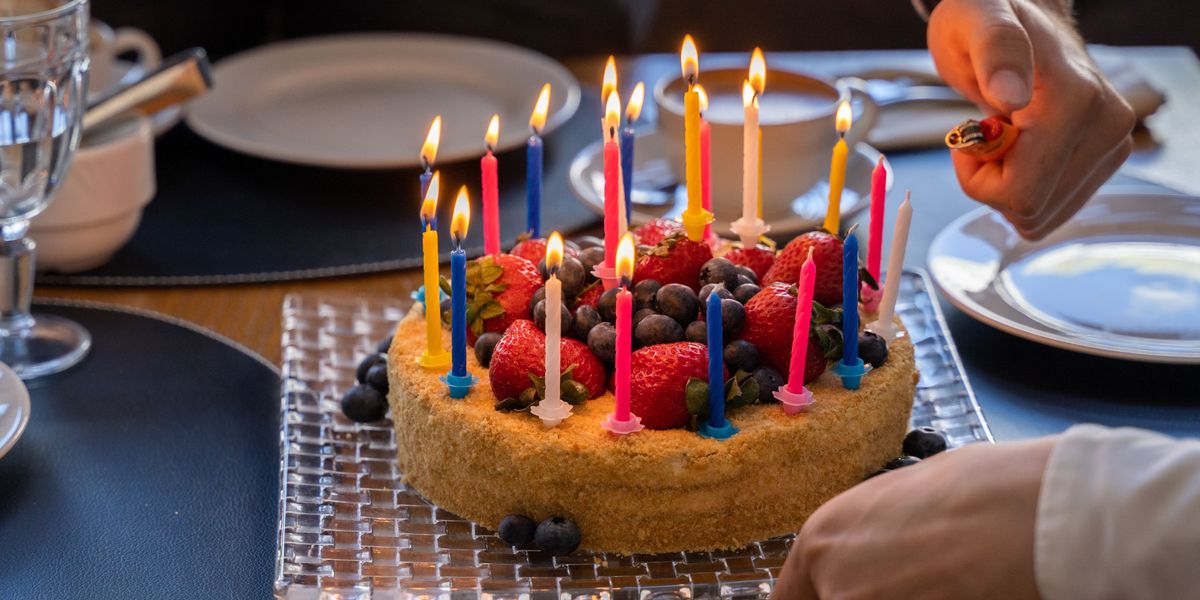
Something inside me hardened into resolve. For six birthdays, I had baked Andrew’s favorite chocolate cake and blown out candles for him alone. For six Christmases, I had wrapped presents I never mailed. I had scanned the faces in every crowd, hoping I’d see my son’s eyes again. Marcus had watched me do it all and told me to “let him go.”
“You watched me fall apart,” I said. “You let me believe my child abandoned me.”
He exhaled. “I thought time would make it easier—for you.”
“Easier?” I shook my head. “There’s nothing easy about convincing a child that his mother is better off without him.”
Drawing a Line
I walked to the hallway closet and pulled out the big suitcase we used to take on family trips. I set it at Marcus’s feet.
He stared at it, then at me. “You’re throwing me out?”
“You threw away six years of my life,” I said. “It’s time for you to leave.”
“We can fix this,” he tried, softening his voice. “You owe me that much.”
“I don’t owe you another minute,” I answered.
“I love you,” he said. I held his gaze. “If you loved me, you would not have made me believe my son stopped loving me.”
For the first time, he didn’t have a quick reply. He picked up the suitcase and went upstairs. I heard drawers opening and closing, the ordinary sounds of a life being packed away. Twenty minutes later he came down, paused by the door, and said, “I’m sorry.”
It was the first time he said the words out loud. It was six years too late.
I opened the door. He looked back once, then left.
What Love Sounds Like
When the house quieted, I noticed the bakery rolls still scattered on the floor. I didn’t hurry to gather them. The silence felt different—peaceful, like a window cracked open to fresh air.
Andrew was still standing where he’d first stopped, as if he wasn’t sure the room could hold him. I walked to him slowly this time, not rushing the moment we’d both been denied.
“May I hug you?” I asked.
His smile was small and brave. “You never had to ask.”
I wrapped my arms around my son and held him as tightly as he held me. “I’m so sorry,” I whispered into his shoulder. “I should have protected you.”
He shook his head gently. “You were lied to.”
“I still should have seen it,” I said.
He took a steadying breath. “We both believed someone who didn’t deserve our trust. That won’t happen again.”
We stood there for a moment, mother and child, both older than we were the last time we’d done this. The living room looked the same, but nothing about it felt the same. Something heavy had been carried out with the suitcase.
Filling the Missing Years
We sat at the kitchen table with two mugs of tea that went cold while we talked. He told me that the night he left, he had waited at the bus station for hours, reading and rereading those messages from Marcus. He had stood up once to come home and sat back down again when another message chimed—“If you come back, she’ll choose me. Don’t make her say it to your face.”
He told me about the tiny apartment he’d rented and the jobs he worked to keep a roof overhead. He told me how he tried to call me on holidays, drafted the words a dozen times, then deleted them all because he couldn’t stand the thought of hearing me say I was happier without him. He talked about the friends who became family and the ways he learned to be steady when the world felt unkind. He didn’t need me to be proud—I already was—but he needed me to know he had survived. And I needed him to know that in this house, his survival wasn’t the finish line; his belonging was.
When the sun climbed higher, he glanced toward the doorway. “It feels different here,” he said.
“It is,” I answered. “This has always been your home.”
His eyes filled, and he squeezed my hand. “I wasn’t sure.”
“You never lost your home,” I said. “We just lost time.”
A New Beginning, One Honest Word at a Time
We picked up the rolls together, one by one, and laughed the way people laugh after a storm when they can finally hear their own voices again. There was no plan beyond today—only the simple work of rebuilding, one honest word at a time. I knew there would be hard conversations ahead, questions to answer, and trust to earn back from each other. But the door was open. The silence had been broken by the only words that mattered: the truth.
That morning, my son didn’t return to a house; he returned to a mother. And I didn’t reclaim an empty place at the table; I reclaimed my voice. We can’t get back the six years we lost, but we can fill the years ahead with what we almost missed—warm birthdays with chocolate cake, quiet holidays with gifts we’ll actually open, and everyday mornings where a knock at the door means nothing more than family coming home.
When Andrew stood to leave that afternoon—only to grab a few things and come back for dinner—he paused at the doorway and looked back at me, the way he had when he was little and wanted to be sure I was watching.
“I’m here, sweetheart,” I said. “I am not going anywhere.”
He smiled through fresh tears, and for the first time in six years, I believed the same thing about him. He wasn’t going anywhere either. Not from me. Not from home.