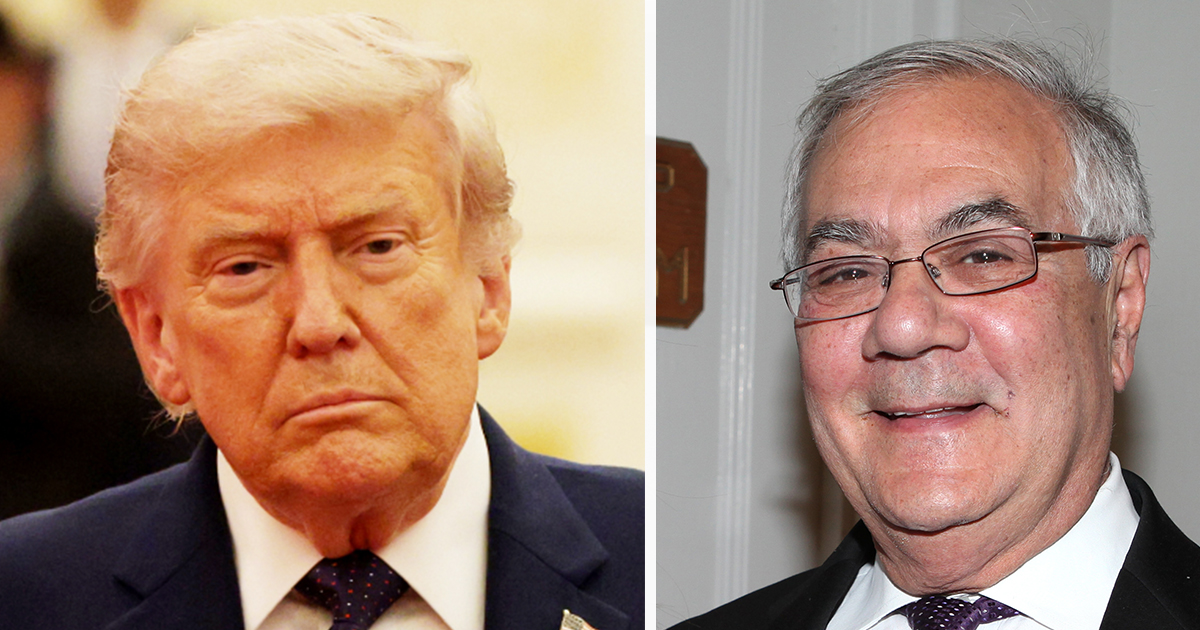
Barney Frank, the groundbreaking Congressman from Massachusetts who became the first openly gay member of Congress, has died at 86. In the days leading up to his passing, he reflected with his familiar candor on his life, his work, and one last regret involving former President Donald Trump.
Frank’s sister confirmed to a Boston news outlet that he died after spending his final weeks in hospice care. Over 32 years in the House of Representatives, he built a reputation as a sharp mind, a tireless advocate for ordinary Americans, and a voice who spoke plainly, even when his views stirred debate. He represented southern Massachusetts for decades and left an imprint on national policy, especially in the years after the 2008 financial crisis.
He will be remembered as a pioneer. Coming out as gay while serving in Congress at a time when very few public figures did so, he opened a door that had long been shut. His willingness to be honest about who he was helped Americans see their neighbors, friends, and family members in a new light, and it encouraged many other public servants to live openly as well.
Remembering a trailblazer in Congress
Barney Frank’s public life blended intellect with practicality. He was famous for asking pointed questions and for his quick wit, but he also knew how to do the methodical work of legislating. He believed government could help people live safer, more secure lives, and he focused on making that promise real, especially when the economy faltered and families needed stability.
Born in Bayonne, New Jersey, on March 31, 1940, he came to Massachusetts as a young man, studied hard, and found his way into public service. Before winning a seat in Congress, he worked in state and local government, where he learned how budgets, neighborhoods, and people’s daily concerns fit together. Those early lessons traveled with him to Washington, where he earned the respect of colleagues across the aisle, even when they argued, because he did his homework and showed up ready to solve problems.
Frank retired from the House in 2013 after more than three decades of service. By then, he had become one of the best-known and most consequential lawmakers of his generation. In a nation that can sometimes feel divided, he reminded people that progress requires a mix of principle and patience, and that public service is about both idealism and results.
A life of firsts and milestones
Barney Frank was the first member of Congress to marry a same-sex partner, wedding his longtime partner, Jim Ready, in 2012. For many Americans, that moment symbolized how the country had changed and how far it had come in recognizing the dignity of every person’s love and commitment. Reflecting recently on what coming out meant to him and to the country, Frank said it was “life-changing, lifesaving” and that the real shift came when people got to know gay and lesbian neighbors, coworkers, and family members as they truly were, not as they had been described by stereotypes.
His courage and his public example did not just inspire LGBTQ+ Americans. Many others watched his journey and took heart from it, because it showed that honesty could lead not to isolation but to connection. For many in his district and across the country, his openness made their own path a little steadier and their own voice a little stronger.
Service, reform, and results
Frank’s name is most closely tied to the sweeping financial overhaul that followed the 2008 crisis, commonly known as the Dodd–Frank Act. Working alongside Senate partners and colleagues in the House, he helped craft tighter rules for Wall Street and new protections for consumers. It was complicated, painstaking work that required balancing the needs of a modern economy with the duty to guard families from abuses that can strip away savings and stability in a matter of months.
Among many changes, the reform effort created new oversight aimed at preventing the kinds of risky behavior that had helped trigger the financial meltdown. It also set up a dedicated watchdog to help protect consumers against predatory lending and unfair practices. Frank often explained that the goal wasn’t to choke off legitimate business or healthy growth, but to build a sturdier foundation so that regular people would not be left holding the bag when things went wrong.
For older Americans who keep a careful eye on retirement accounts and home values, his work in that period carried a clear message: the financial system should serve people, not the other way around. Even those who disagreed with parts of the law often acknowledged Frank’s command of the details and his skill in negotiating a finished product at a difficult moment.
Leadership marked by candor and care
Frank could be brisk in debate, quick with a quip, and unafraid to challenge an argument he thought was weak. But there was a reason so many colleagues, staffers, and young lawmakers turned to him for guidance. Beneath the sharp smile was a mentor who took time to explain how an amendment might work or how an idea could become a real bill. He knew the value of listening as well as speaking. He would ask the right questions to find common ground, then push for a compromise that protected core values.
He also spent years pressing for more affordable housing, better support for working families, and stronger protections for people living on the economic margins. In committee rooms and late-night negotiations, he tried to put a human face on programs that can sound dry when reduced to line items in a budget. He never forgot that behind every policy there are people—parents, small business owners, caregivers, and retirees—who need a fair chance to get ahead and the confidence that the system is not rigged against them.
Tributes for a life of impact
In the wake of his passing, tributes poured in. A former president praised Frank’s decades of service, noting how he helped make housing more affordable, stood up for the rights of LGBTQ+ Americans, and shepherded one of the most far-reaching financial reforms in modern history. The message also saluted his passion and his wit, a combination that made him unforgettable on the House floor and in town halls back home.
A former Speaker of the House recalled a recent conversation in which Frank shared that he had begun hospice care. She described him as someone who blended idealism with pragmatism to get things done and as a mentor to many in Congress. That mix—dreams high and feet on the ground—was a hallmark of his long career and a reason his colleagues, even those who squared off with him in debate, respected his work.
Facing the end with honesty and heart
Barney Frank spent his final weeks in hospice, a setting designed to bring comfort, dignity, and peace to people and their families during serious illness. True to form, he did not retreat from the public conversation. He gave interviews from his home in Maine, looked back on the journey he had taken, and talked about the future of the country he had served for so long.
In one of those conversations, he made the comment that has caught so much attention. Speaking with a national political publication, Frank said that one of his regrets was that congestive heart failure would take his life before he could see what he called the continued implosion of Donald Trump. In other words, he believed the former president’s influence would keep waning, and he regretted that he would not be here to witness it.
In a separate interview with a Boston-area radio station, he elaborated on his view. He called Trump an “idiot savant,” a harsh phrase that he used to describe what he saw as a narrow kind of political talent. In Frank’s eyes, Trump had a gift for channeling anger into attention and power but lacked the steady hand needed for governing. Frank went on to say he thought Trump was now floundering, that he was not popular on major issues, and that the more visible parts of his personality—anger and self-regard—had overshadowed any positive vision.
A final assessment that reflects a lifetime in politics
Frank’s views on Trump were blunt, and they reflected the same plainspoken style he used throughout his career. Many Americans hold different opinions about the former president, and it is fair to acknowledge that our country includes a wide range of beliefs. Frank’s comments are best understood as the judgment of a veteran lawmaker who spent a lifetime studying how leaders rise and how they govern once they have power.
He had always believed that public service should aim for stability, fairness, and opportunity. In that light, his critique of Trump fits into a broader set of values he often discussed: respect for institutions, protection for people who lack influence, and a preference for practical solutions over showmanship. Whether one agrees with him or not, his words offer a window into the way he weighed leaders and measured their impact on everyday lives.
Those who watched Frank over the years knew he chose his words carefully, even when they were sharp. He learned early that politics is about translating complicated realities into choices people can understand. At the end of his life, he used that same approach to explain why he felt as he did about Trump, knowing full well that his assessment would stir conversation.
The man behind the microphone
Public figures can sometimes feel larger than life, but people who met Barney Frank often came away struck by how grounded he was. He could be funny, sometimes disarmingly so. He could also be impatient with arguments that did not add up. Yet he tried, especially in his later years, to make room for younger voices and changing times. He saw that progress is rarely a straight line. It bends, it pauses, it sometimes steps backward before moving forward again.
Friends and colleagues remember the phone calls, the handwritten notes, and the gentle nudges he gave when someone needed encouragement. They also recall the times he pressed them to tighten a proposal or strengthen a protection because he wanted a bill to work as intended, not just look good on paper. In all of this, you can see a portrait of a person who loved the work and respected the people it was meant to serve.
A legacy that reaches beyond politics
For LGBTQ+ Americans and their families, Frank’s legacy is deeply personal. Coming out in public life in the 1980s took courage, and it came with risks. He faced scrutiny, criticism, and headlines that were not always kind. Even so, he stayed the course, made amends where needed, and proved that a life of service could continue and even grow after very public tests. Over time, his perseverance helped reshape what seemed possible for others.
His 2012 marriage to Jim Ready, years before nationwide marriage equality was recognized, was a quiet but powerful symbol. It showed that love and commitment are values shared across communities, and it encouraged people who had not met many openly gay couples to see that their hopes and responsibilities looked very much like anyone else’s. For older couples who built a life together through decades of social change, that moment felt especially meaningful.
And for those who watched the financial crisis upend savings and strain communities, Frank’s work to rebuild safeguards was another kind of legacy. He wanted a system that rewarded effort and protected families from the worst shocks. That vision will continue to shape how lawmakers think about banks, markets, and consumer protections in the years ahead.
How he hoped we would carry on
As he reflected on his life in his final interviews, Barney Frank did not pretend that politics is easy. He knew how hard it is to hold a majority together, to find the will to compromise, and to accept imperfect progress while still keeping an eye on the bigger goal. But he also believed those efforts are worth it, because they can improve daily life in ways that really matter, from a safer mortgage to fairer lending to a community that welcomes every family.
His comments about Donald Trump were the words of a man who had spent a lifetime thinking about power and responsibility. They may spark debate, and that is part of our democratic tradition. In remembering Frank, it is also worth remembering what he tried to model: say what you believe, listen to what others believe, and get to work on solutions that make a concrete difference.
In gratitude and remembrance
Barney Frank served his district and his country with a combination of brains, backbone, and humor. He was a pioneer as the first openly gay member of Congress. He was a builder of big legislation during a time of crisis. And he was a mentor to many who wanted to learn how to turn ideas into action. In the end, he remained the same candid voice he had always been, sharing a final view of a political figure who has loomed large in our national story.
We say farewell to a leader who helped push the country to be more honest about who we are and more careful about how we manage the systems that affect our daily lives. His words, whether you agreed with them or not, invited people to think more deeply. His work left guardrails that will protect families for years to come. And his example showed that dignity and decency can grow even in the rough-and-tumble world of politics.
May he rest in peace. And may the conversations he started—about fairness, inclusion, responsibility, and the real purpose of public service—continue with the same clarity and care he brought to them for so many years.