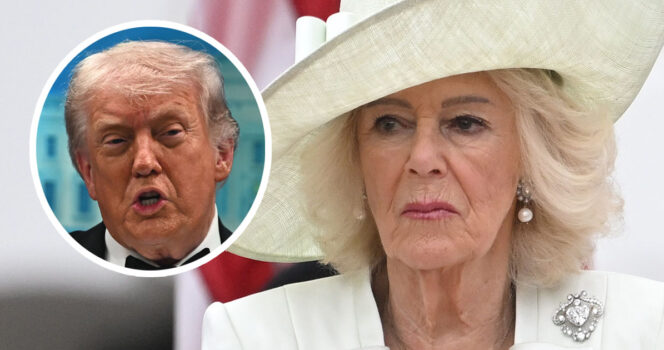
The state visit of King Charles and Queen Camilla to the United States was intended to shine a light on the long friendship between the two countries. Instead, one brief, awkward exchange at the White House drew outsized attention, as a circulating video clip showed President Donald Trump stepping ahead of Queen Camilla while she greeted guests. The moment triggered a wave of heated reactions online, with many calling the behavior disrespectful and, in some cases, labeling it “classless.”
A welcome steeped in ceremony and symbolism
The day began with a formal welcome on the South Lawn, a setting that traditionally puts the spotlight on protocol, precision, and courtesy. King Charles and President Trump reviewed military units that represent the best of American ceremonial tradition, including the United States Marine Corps Honor Guard. The occasion also featured the first appearance of the United States Space Force Honor Guard at a White House event, a sign of the evolving face of American service branches and the significance of the visit.
For many watching at home, the carefully choreographed pageantry was a reminder of the enduring ties between the United Kingdom and the United States. King Charles, who addressed Congress during the visit, emphasized the long arc of shared history and common purpose. He noted the breadth of connection across centuries and reflected on the responsibilities that come with such a deep relationship. His words were a nod to the past and a hopeful sign for the future.
The brief moment that stole the spotlight
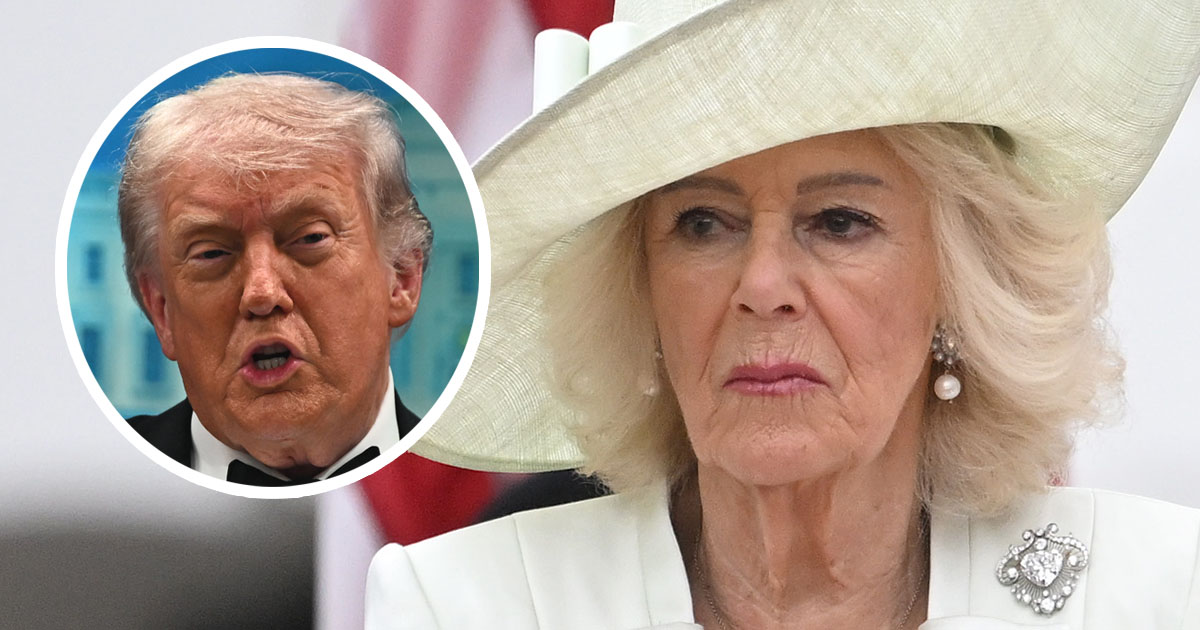
Despite the grandeur of the welcome and the warm words about partnership, attention quickly shifted to a short clip captured outside the White House. In the footage, Queen Camilla—wearing a bright, lime-green coat with a matching hat—was seen moving along a receiving line, extending her hand to greet dignitaries. As she advanced, President Trump stepped forward ahead of her and began shaking hands with the same guests.
The shift left Queen Camilla standing momentarily behind him, creating a pause in the flow of introductions. King Charles and the First Lady watched from nearby as the sequence unfolded. It was over in seconds, yet in the age of instant video and rapid reactions, those seconds were more than enough to spark an avalanche of commentary.
For some viewers, the sight of the Queen briefly stalled behind the President felt jarring, especially at a ceremony built around courtesy and respect. Others suggested it was a simple lapse in timing, the kind of misstep that can occur easily in a crowded, high-pressure setting. Either way, the clip ricocheted around the internet, and the conversation took on a life of its own.
Strong reactions across social media
The online response was swift and pointed. Many criticized the moment as discourteous and out of step with the spirit of a state welcome. Some argued that, as guests of the United States, King Charles and Queen Camilla should have been allowed to lead the greeting. There were comments highlighting traditional etiquette, including the notion that the distinguished guest—especially a royal visitor—typically completes formal introductions without interruption.
Others reacted emotionally, insisting the behavior showed a lack of grace. Variations on the same frustration appeared repeatedly, with users saying the gesture looked presumptuous and unnecessary. A handful reached back to memories of the previous state visit to the United Kingdom, when a similar controversy erupted after President Trump walked in front of the late Queen Elizabeth II during an inspection, briefly obscuring her path. For these observers, the White House moment felt like a repeat of a familiar pattern.
Not everyone agreed with the harshest interpretations. A number of viewers noted that lines can bunch up, even at the most carefully planned events, and that without hearing what aides or staff were signaling, it is difficult to judge intent. They suggested it might have been an awkward overlap rather than a deliberate slight, pointing out that such events involve many moving parts, multiple principals, and rapid split-second decisions.
What protocol typically expects
Ceremonies like these rest on a delicate balance between American and British customs. While the host nation sets the stage, visiting heads of state are usually given the lead in formal greetings. The intention is to show deference to the guest in the moment while also highlighting the hospitality of the host. In most receiving lines, aides coordinate who moves when, ensuring that each principal has a clear place and order.
Stepping aside to allow the visiting sovereign or consort to continue is considered a mark of courtesy. That said, protocol is a guide, not a law, and minor slips happen. In crowded settings—with television cameras, security, and staffers communicating from several directions—the choreography can falter. What looks stark on a short clip may feel far less dramatic when experienced in real time.
Queen Camilla, for her part, is known for a steady, unflappable presence. Even those who objected to the moment acknowledged that she appeared composed, ready to continue once the flow of introductions resumed. Such poise is often how protocol stumbles fade into the background.
Why the details matter to people
For many, the question is not just about who went first in a receiving line but about what that suggests regarding respect, tradition, and diplomacy. State visits are symbolic expressions of friendship. Every nod, gesture, and step can be read as meaningful, even when the individuals involved might not intend it that way. The United States and the United Kingdom have long called their partnership a special relationship. This visit was widely viewed as an opportunity to underline that phrase at a time when global politics can feel tense and unsettled.
King Charles’s appearance before Congress pointed toward a shared future shaped by common values and practical cooperation. The historic ties he referenced are not merely ceremonial; they are lived through defense agreements, intelligence cooperation, cultural friendships, and the millions of personal connections that span the Atlantic. When supporters of either country see protocol slip, they can interpret it as a sign of something larger, even if it is only a fleeting misstep.
A familiar flashpoint for a very public figure
Because President Trump has been at the center of protocol debates before, this moment tapped into existing memories and strong opinions. During his previous term, there was widespread discussion about etiquette with the late Queen Elizabeth II, with commentators in Britain and America weighing in on what should and should not happen when walking with a monarch. Those debates resurfaced now, influencing how people perceived this new clip featuring Queen Camilla.
There is also the reality that public figures often become lightning rods. Supporters tend to defend quickly, and critics tend to pounce. In that dynamic, a three-second interaction can feel like a grand statement. Experienced royal watchers often urge a more measured approach, reminding audiences that context and intent matter. Without the full sequence of what staff had planned, or what was said quietly between principals, it can be unwise to draw sweeping conclusions from a cropped video.
The look and feel of the day
Beyond the viral moment, the White House welcome offered plenty to savor for those who appreciate tradition. The Marine Corps Honor Guard presented crisp lines and immaculate drill, delivering the sense of ceremony that many Americans and Britons cherish. The debut of the Space Force Honor Guard added a modern note, showing how tradition evolves to include new chapters in national service. Music, pageantry, and careful timing stitched the proceedings together, offering a visual narrative of respect.
King Charles and Queen Camilla engaged with guests and dignitaries throughout the day, with photographers capturing moments of warmth and conversation. The First Lady joined in welcoming the royal couple, and the setting on the South Lawn—bathed in bright daylight—gave the event a celebratory backdrop. For most of those in attendance, the impression was of hospitality and formality in equal measure.
Intent versus impact
When etiquette stumbles, people often ask whether the action was intentional. Yet in diplomacy, intent and impact can both matter. A participant might not mean to interrupt, but if it appears to the audience that someone has been overshadowed, the effect can still sting. This is why staffers invest so much time in rehearsals and run-throughs, and why hosts and guests alike usually stick close to the plan.
The difficulty is that plans can change quickly on the ground. A camera position may shift, a guest may step out of line, or a principal may move toward someone unexpectedly. In such a fast-moving environment, a person stepping forward a moment early can look bolder on camera than it felt in real time. These are the splits of a second that often come to define public reactions, especially when shared on phones and screens without the rest of the scene.
Reading body language with care
Much of the online debate centered on the expressions of those in the frame. Some thought Queen Camilla looked displeased. Others saw only a brief pause. Body language can be a tricky business, and still images often exaggerate emotions that, when viewed in motion, pass in a blink. Royal family veterans are adept at masking discomfort and keeping the event moving, and Queen Camilla has a reputation for doing exactly that.
In moments like this, a courteous recovery becomes the story inside the story. Once the sequence resumed, the receiving line continued and the formalities proceeded. As is often the case, the principals carried on, which is usually the quiet signal that everyone should as well.
Placing the visit in a larger frame
State visits are packed with meaning from start to finish. There are meetings on security and defense, conversations about trade, and exchanges on cultural and educational ties. There are also private moments that rarely make it to television, where relationships are often strengthened most. The more enduring legacy of this trip is likely to be found in those deeper exchanges rather than in a single clip.
That perspective does not erase the sting that some felt when they watched the Queen pause. It does, however, remind us that diplomacy is a long game. One awkward step can cause a stir, but the substance of the visit—speeches, commitments, shared projects, and quiet words behind closed doors—ultimately carries more weight for both nations.
Lessons for public life
The reaction to this moment says something about the times we live in. We are all, in some sense, body-language experts now, ready to study micro-gestures and assign meaning. Social media accelerates those judgments and spreads them instantly. That can be a force for accountability, but it can also flatten nuance. A helpful habit is to watch the full sequence when possible and to remember that even the most seasoned leaders can misread a cue or step forward a beat too soon.
Good manners remain a common language. They are a way of saying, without words, that other people matter, and that their role in a moment is worth honoring. Whether you saw the White House clip as a lapse in courtesy or a minor mix-up, the conversation it sparked shows how much people still care about those small but telling gestures.
Moving forward
As the visit continued, the focus returned to the relationships and responsibilities that bind the United Kingdom and the United States. King Charles’s reflections on shared history, the careful dignity of the ceremonial welcome, and the visible warmth between hosts and guests all spoke to a partnership that runs deeper than a single awkward exchange. The hope among many, on both sides of the Atlantic, is that the trip helps ease recent strains and sets a calm, constructive tone for the months ahead.
In time, the sharp edges of this viral moment may soften, as protocol debates usually do. What will likely endure is the memory of two nations honoring each other with ceremony, conversation, and a sense of common purpose. Even when a step goes out of rhythm, the music of friendship tends to carry on.
Final thoughts
The video of President Trump moving ahead of Queen Camilla during the receiving line clearly touched a nerve. To some, it looked like a snub; to others, it was a brief, if unfortunate, overlap. The labels thrown around online were strong, and the word “classless” was used by more than a few voices. But beyond the uproar, there was also a day filled with respectful ritual, historic firsts like the Space Force Honor Guard’s debut, and a royal speech that reminded both countries how much they have built together.
Etiquette matters because it signals respect, especially in moments designed to celebrate friendship. Still, people are human, and public life moves fast. If there is a lesson to take from this episode, it may be the value of grace—grace in moving aside when someone else should lead, grace in carrying on with poise when plans falter, and grace in how we react when a few seconds of video ignite a storm. In that spirit, many will hope the rest of the visit is remembered not for a misstep in a line, but for the steady steps both nations continue to take, side by side.